

Working Principle of Energy-Saving Air Compressors: How Efficient Compression Reduces Power Consumption
2026-07-21
Energy efficiency lies at the heart of modern industrial operations, and air compressors play a starring role. Understanding the working principle of energy-saving air compressors reveals how smart design slashes power consumption without sacrificing performance. From optimized compression cycles to advanced control systems, these machines are reshaping how facilities manage compressed air. Seize Air stands at the forefront of this innovation, turning wasted energy into lasting savings. Let's dive into the mechanics that make efficient compression a game-changer for your bottom line.
Core Concept: How Energy-Saving Compressors Redefine Efficiency
The traditional view of compressor efficiency often stops at reducing kilowatt-hours. Energy-saving compressors flip this perspective by focusing on whole-system performance—where thermal recovery, pressure optimization, and intelligent load management converge to slash net energy demand. Rather than chasing a single efficiency percentage point, these machines turn wasted heat into process warmth, eliminate idle running through smart sensors, and maintain consistent output without the typical surge cycles. The result is a machine that doesn’t just consume less power; it reshapes the energy profile of the entire production line.
A key shift lies in decoupling output from energy spikes. Conventional units often alternate between full throttle and idle, creating invisible costs in maintenance and peak demand charges. Advanced designs employ variable-speed drives and adaptive control algorithms that match real-time air demand, holding the system in an optimal band where mechanical stress and thermal losses are minimal. This isn’t merely incremental improvement—it’s a fundamental redesign that treats compressed air as a finite resource, generating only what’s needed at the pressure that’s required. The efficiency gain comes from eliminating the waste built into the old on/off mindset.
Beyond the motor and airend, true efficiency emerges from connectivity. Modern compressors feed operational data into central management systems, enabling predictive adjustments before inefficiencies compound. Leak detection, pressure band tightening, and compressor sequencing happen automatically, turning a standalone unit into a responsive node in a wider energy ecosystem. This level of integration means that efficiency isn’t a static specification on a nameplate—it’s a dynamic, continuously optimized state that evolves with the facility’s needs, redefining what it means to be efficient in an era of smart manufacturing.
Inside the Compression Cycle: Minimizing Energy Waste
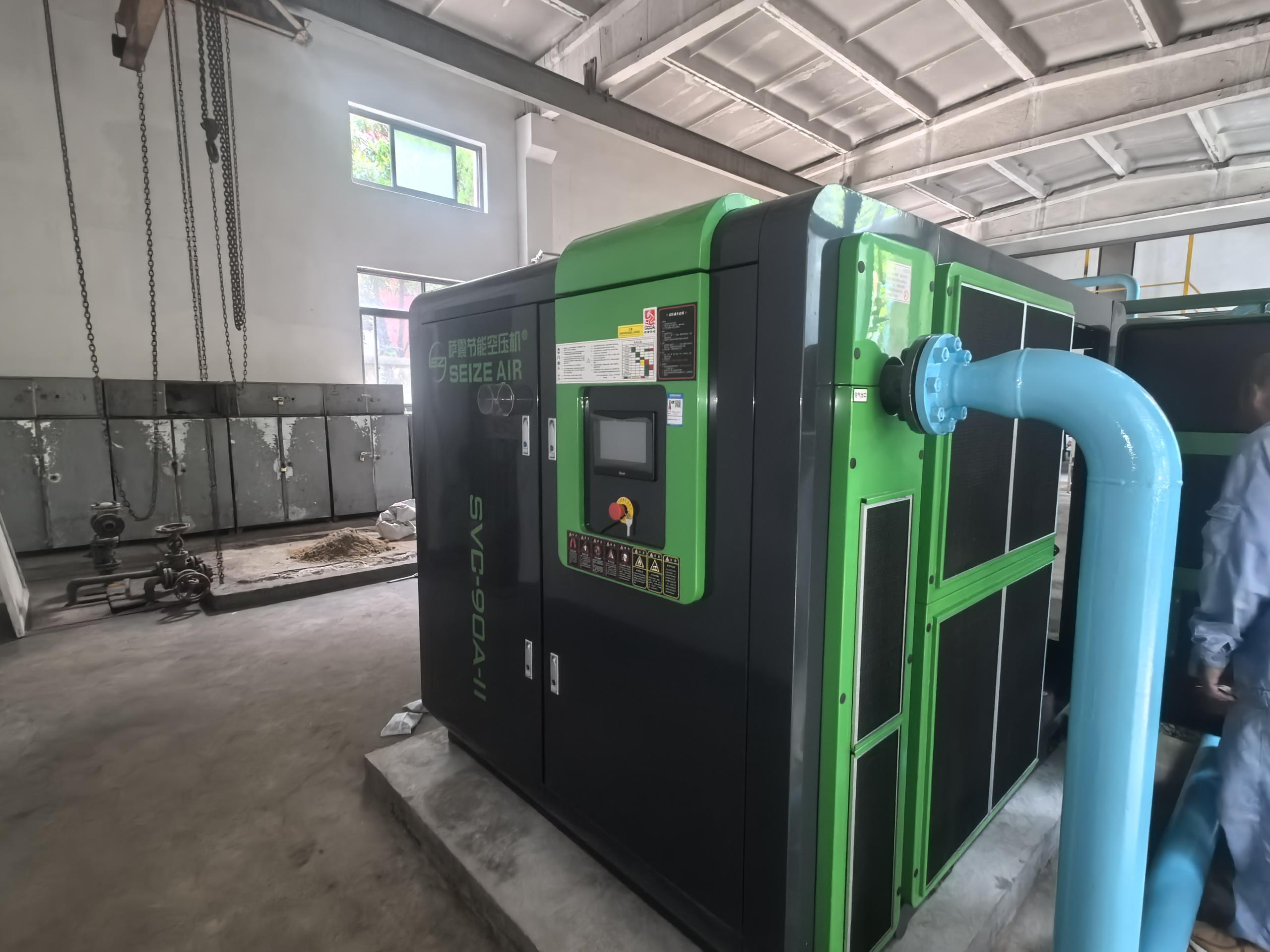
The compression cycle is essentially a dance of pressure and temperature, with energy flowing in and out at every stage. In a typical air or refrigerant compressor, the intake stroke draws in low-pressure gas, but without careful design, that initial gulp may already waste energy through turbulence or restrictive piping. As the piston or screw tightens its grip, the gas heats up rapidly. This is where much of the waste hides—heat that isn’t recovered must be dissipated, often using additional fan or water cooling systems that compound the energy drain. The key to trimming waste starts here: matching the compression ratio to the actual demand so you’re not compressing beyond what’s needed, and using intercooling between stages to shed heat before it saps efficiency.
Leaks and pressure drops in the distribution network can silently undo even the best compressor efficiency. A system operating at 100 psi but delivering only 80 psi at the point of use loses a fifth of its energy just overcoming friction and fitting losses. Piping that is too narrow, elbows that are too sharp, and filters that aren’t cleaned regularly all contribute. Beyond the hardware, control strategy matters enormously: a simple start–stop control might seem frugal, but repeated motor inrush currents and pressure cycling waste energy. Variable speed drives, combined with storage receivers, allow the compressor to run only at the speed required by real-time demand, cutting part-load energy waste dramatically.
Heat recovery transforms the compression cycle from a one-way energy consumer into a two-in-one utility. The vast majority of the electrical power input to a compressor ends up as heat, and instead of venting it outdoors, it can preheat process water, warm workspaces, or even feed into a facility’s hot water loop. In oil-injected screw compressors, for example, hot lubricant can be routed through a plate heat exchanger to capture over 70% of the input energy. Pairing this with better condensate management—sizing drains correctly and using no-loss drain valves—prevents compressed air from literally going down the drain. When every stage of the cycle is scrutinized, from intake to discharge, the cumulative savings are rarely incremental; they’re transformative.
Smart Drive Systems: Variable Speed and Load Matching
Modern industrial operations demand more than just turning a motor on and off—they require intelligence. Smart drive systems step in precisely here, using real-time data to continuously adjust motor speed and torque to match the actual load. Instead of running at a fixed, often wasteful, velocity, these systems adapt on the fly. Picture a conveyor belt that slows down when no products are present, or a pump that eases back as demand drops, all without human intervention. This seamless alignment between energy input and mechanical need cuts through the inefficiency that plagues conventional setups.
The heart of this adaptability lies in advanced algorithms and sensor feedback. Variable frequency drives don't simply vary frequency; they interpret current draw, temperature, and even vibration patterns to predict and prevent overloads or underload conditions. In an HVAC system, for instance, the drive might anticipate a rise in cooling load based on occupancy sensors and gradually ramp up the compressor, rather than jolting it to full power. Such nuanced control not only extends equipment lifespan but also maintains process stability—a critical factor in sensitive applications like pharmaceutical blending or precision machining.
Yet the real-world impact goes beyond energy savings. By matching speed to load, smart drives minimize mechanical stress, reducing belt wear, bearing fatigue, and cavitation in pumping systems. A fan operating at 80% speed consumes roughly half the energy of one at full throttle, and with the ability to fine-tune that curve, facilities unlock a new level of operational resilience. It’s not just about keeping up with demand; it’s about gently shaping the performance to avoid spikes, ensuring that from water treatment plants to automated warehouses, the machinery hums along in perfect sync with what’s truly needed.
Heat Recovery: Turning Lost Heat into Usable Energy
In nearly every industrial process or power generation cycle, a staggering amount of thermal energy simply drifts away—up smokestacks, into cooling towers, or dissipates into the surrounding air. Heat recovery systems aim to capture that otherwise wasted thermal flow and redirect it toward useful purposes such as preheating combustion air, generating additional electricity, or supplying district heating networks. Instead of letting expensive fuel go up in fumes, these setups can dramatically improve overall efficiency, often slashing energy bills by double-digit percentages while lowering emissions without extra combustion.
The actual hardware varies widely—from simple shell-and-tube heat exchangers that transfer warmth between two fluid streams, to elaborate waste heat boilers that produce high-pressure steam for turbine drives. More advanced configurations include organic Rankine cycle units, which can generate power from relatively low-grade heat that would otherwise be too cool to recover profitably. The key is matching the recovery technology to the temperature range and the cleanliness of the exhaust. For instance, a food drying oven might yield hot but relatively clean air perfect for preheating fresh intake, whereas a cement kiln exhaust, laden with abrasive particles, demands rugged designs that can handle fouling and erosion.
Beyond the immediate fuel savings, the ripple effects are just as compelling. Facilities with effective heat recovery often see reduced thermal stress on existing equipment because they aren't working as hard to meet demand. Maintenance intervals can extend when boilers and furnaces operate at steadier loads. And in a regulatory landscape where carbon pricing or strict emissions caps are the new normal, reclaiming lost heat isn't just a cost play—it's a practical step toward meeting compliance targets without overhauls. The constant challenge is ensuring that the capital outlay for recovery equipment pays back within an acceptable timeframe, which is why everyday engineering choices like insulation quality, ducting layout, and control strategies matter as much as the recovery unit itself.
Advanced Control Algorithms for Real-Time Optimization
Modern industrial processes demand tight integration of sensing, computation, and actuation under rapidly shifting loads. Advanced control algorithms address this by fusing predictive models with adaptive tuning, ensuring that setpoints are not just tracked but continuously reshaped in response to real-time data. For instance, model predictive control (MPC) leverages a dynamic process model to solve an optimization problem at each sampling instant, anticipating future disturbances and adjusting control moves before errors propagate. This proactive strategy contrasts sharply with classic PID loops, which react only after deviations occur and often struggle with multivariable interactions and constraints.
The shift toward real-time optimization (RTO) elevates control from mere regulation to economic performance driving. By embedding cost functions and operational constraints directly into the controller, advanced algorithms can autonomously balance trade-offs between energy consumption, throughput, and product quality. Techniques such as extremum-seeking control and self-optimizing control structures further reduce the need for frequent manual re-tuning. They continuously search for the optimal operating point even when process characteristics drift, making them indispensable in sectors like chemical processing, power generation, and autonomous vehicle guidance where milliseconds matter.
Adoption of these algorithms hinges on robust state estimation and efficient numerical solvers. Real-time execution on embedded hardware requires careful code generation and solver customization, often leveraging QP or NLP solvers optimized for sparse, time-critical problems. Recent advances incorporate learning-based components that refine process models online from sensor streams, bridging the gap between first-principles knowledge and empirical behavior. This symbiosis not only improves tracking accuracy but also enables faster recovery from unmeasured perturbations, unlocking levels of operational efficiency and reliability that conventional automation cannot match.
Case in Point: Energy Savings in Continuous Operation
A food processing plant in the Midwest upgraded its conveyor belt motors to a variable frequency drive (VFD) system, allowing precise speed adjustments based on real-time demand. Previously, the belts ran at a fixed speed regardless of load, but the retrofitted setup reduced motor energy consumption by 18% during overnight shifts when production volumes were lighter. The maintenance team noticed an unexpected ripple effect: lower belt speeds decreased friction-related wear on mechanical parts, cutting replacement part costs by roughly $2,400 annually.
The real breakthrough came from eliminating frequent starts and stops on a packaging line that handles fragile items. By shifting to a continuous, slower-paced operation during low-demand windows, the plant avoided voltage spikes and minimized peak demand charges on their utility bills. Engineers measured a 14 kW reduction in average hourly usage, and the smoother workflow actually increased throughput by 3% due to fewer micro-pauses for jam clearing. Operational data confirmed that minor adjustments to run durations yielded savings without sacrificing output quality, making the case that continuous operation, when smartly controlled, trumps intermittent cycling in terms of both energy drain and equipment longevity.
FAQ
Energy-efficient air compressors optimize the compression process by minimizing internal losses, reducing wasted heat, and using advanced drive systems. They often incorporate variable speed drives that match motor speed to air demand, avoiding the constant cycling and unloaded power draw typical of fixed-speed units. Improved sealing, cooler intake air, and precise pressure control further cut energy use.
During compression, energy is used to raise air pressure. Efficient compressors reduce power consumption by compressing air in stages with intercooling, which lowers the work needed per stage. They also recover heat generated during compression for facility heating, reducing overall plant energy. By maintaining tighter pressure bands, they avoid wasteful over-pressurization.
Variable speed drives adjust the compressor motor’s RPM based on real-time air demand. Instead of running at full speed and then idling or shutting down, the motor slows down during low demand, drastically cutting energy use. This eliminates frequent start-stop cycles that cause electrical surges and mechanical wear, leading to smoother operation and lower power bills.
Compressing air generates significant heat, which is often wasted in conventional systems. Energy-saving compressors capture this heat via heat exchangers and repurpose it for space heating, water preheating, or industrial processes. This offsets the energy that would otherwise come from boilers or heaters, making the entire system more efficient and reducing total site energy usage.
Efficient compressor systems are designed with correctly sized piping, minimal bends, and low-pressure drops to reduce resistance. Leak detection and repair are prioritized, as even small leaks force compressors to work harder. Air receivers are placed strategically to buffer demand spikes, allowing compressors to operate at optimal efficiency points without frequent cycling.
Yes, smart controllers continuously monitor parameters like pressure, temperature, and flow, and adjust multiple compressors in a network to run only the necessary units at their most efficient loads. They sequence compressors to avoid part-load inefficiencies, predict demand patterns, and shift to standby modes seamlessly, which can lower energy use by 20% or more.
Regular maintenance such as cleaning or replacing air filters, fixing leaks, checking oil levels, and inspecting belts keeps compressors running near peak efficiency. Dirty filters and clogged coolers force the motor to work harder, increasing power draw. Scheduled maintenance ensures that the compressor doesn't gradually slip into higher energy consumption without obvious signs of trouble.
Conclusion
Energy-saving air compressors fundamentally transform the compression process by targeting the root causes of energy waste. At their core, they redefine efficiency through a synchronized blend of advanced mechanical design and intelligent control. Unlike conventional units that run at constant speed regardless of demand, these systems employ variable-speed drives with precise load matching, ensuring motor output closely follows air demand in real time. This eliminates the wasteful on/off cycling or blow-off modes that plague fixed-speed compressors. Inside the compression cycle, every stage is optimized—from the profile of the rotors or pistons to the internal flow paths—reducing pressure drops and leakage. The result is a dramatic cut in specific power, often translating to 20–30% less electricity per cubic meter of compressed air compared to older models.
Beyond the core compression, smart drive systems play a pivotal role by continuously adjusting motor speed using high-resolution sensors and feedback loops. This allows the compressor to operate at its most efficient point across a wide range of loads. Simultaneously, advanced control algorithms analyze operating conditions, predict demand fluctuations, and fine-tune parameters like discharge pressure and interstage cooling to avoid over-compression—a common energy sink. An often-underestimated feature is integrated heat recovery, which captures the thermal energy generated during compression. Instead of being dissipated into the atmosphere, this heat can be redirected to warm process water, preheat boiler feed, or supply space heating, recovering up to 70% of the input energy. Real-world cases in continuous manufacturing show that combining load-matching drives, algorithm-driven optimization, and heat recovery can cut facility-level power consumption by over 35%, turning the compressor from a pure energy consumer into a high-efficiency utility asset.
Contact Us
Contact Person: Mia
Email: [email protected]
Tel/WhatsApp: +86 19821985894
Website: https://www.seize-air.com