

Waterproof Connector Company Evaluation Tips for Harsh Environment Designs
2026-11-16
Selecting a waterproof connector for harsh-environment designs often comes down to details that are easy to overlook until a field failure occurs. From chemical exposure and thermal cycling to vibration and intermittent submersion, the right choice depends on more than an IP rating. Drawing on practical evaluation criteria, this guide walks through what to check before committing to a part. For teams that need proven sealing performance, REUNION has focused on rugged connector solutions that hold up when standard components fall short. Here is how to assess your options with confidence.
The Weakest Link Is Rarely the Connector Body
People love to blame the shiny metal housing when a connection fails. It is the most visible part, easy to point at during a post-mortem. Yet field data tells a quieter story: the shell, the latch, the die-cast frame—these rarely crack first. What gives way is almost always the unseen junction, the crimp that looked fine under a quick glance, or the wire strain relief that was twisted one too many times during installation.
Think about how a connector actually dies in the wild. Corrosion creeps into the contact interface long before the body shows a scratch. Vibration works on the terminal retention fingers, not the outer collar. Temperature cycles stress the solder joint where the cable meets the pin, while the ruggedized housing sits there looking brand new. The body is a decoy—a sturdy shell protecting a much more fragile interior.
The lesson for anyone troubleshooting intermittent signals is simple: stop replacing the connector and start inspecting what feeds into it. A ten-dollar crimp tool used badly will defeat a hundred-dollar mil-spec shell every single time. The weakest link is buried in the backshell, hiding under heat shrink, waiting for the next thermal swing to make itself known.
Why a High IP Rating Does Not Mean It Survives Your Application
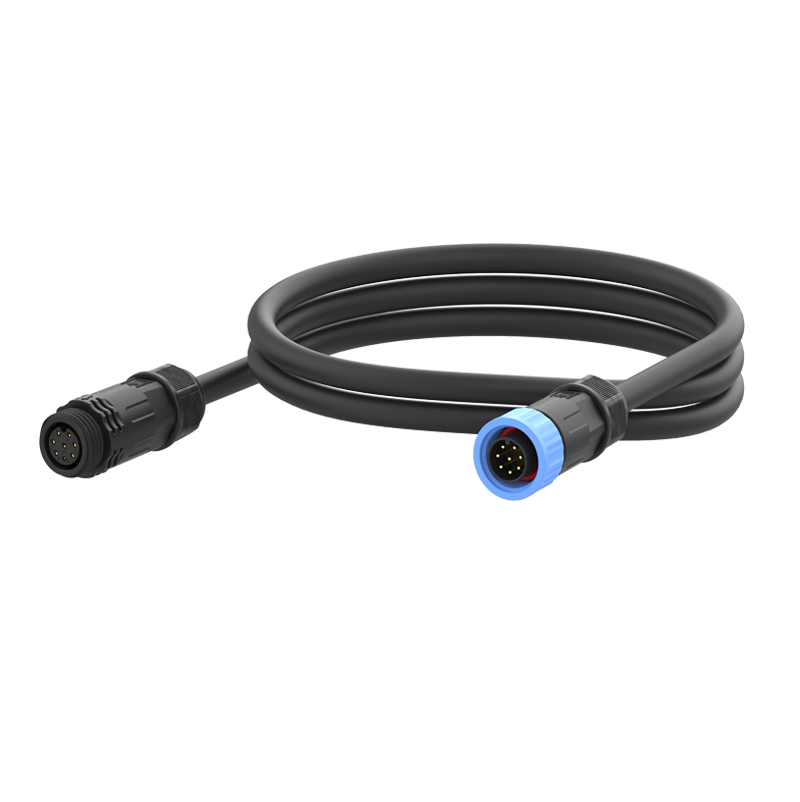
An IP rating comes from a short, carefully controlled lab dunk or spray test. The housing is usually clean, the water is fresh, the temperature is stable, and nothing is pulling at the seals. Real installations rarely behave that politely. A machine enclosure rated IP67 can still take on moisture when a hot housing gets hit with cold washdown water, or when a cable gland is flexed just enough to open a path past the gasket. The rating says the design passed one specific scenario, not that it will hold up under yours.
Seal materials are often the weak point that the rating sheet never mentions. Nitrile, EPDM, silicone, and polyurethane each react differently to cutting fluids, detergents, ozone, or even mild acids. A gasket that stays tight in freshwater may swell, shrink, or turn brittle after repeated contact with a cleaning agent used on your floor. Once the seal loses its shape, the housing can still carry the same IP label while quietly letting in enough moisture to fog a lens or corrode a board.
Condensation does not care about Ingress Protection numbers. When a sealed enclosure breathes through pressure changes, warm humid air gets pulled inside. As temperatures drop, that moisture condenses on internal surfaces. This is common in outdoor cabinets and washdown areas, and it can happen even when the enclosure has never been submerged or sprayed hard. If the application cycles between hot and cold, a high IP rating may give a false sense of security unless the design also manages pressure equalization and internal humidity.
Ask for Proof from the Test Lab, Not Just the Catalog
A slick brochure can make any pump look impressive on paper. But the numbers that matter are the ones measured under real operating conditions, not the idealized curves printed in a catalog. When comparing industrial pumps, ask the manufacturer for test lab reports that show actual performance data—flow rate, head, efficiency, and power draw at your expected duty point. If they hesitate or only offer theoretical calculations, treat that as a warning sign.
Independent test data reveals how a pump behaves when temperatures shift, viscosity changes, or suction conditions get messy. Request a witnessed performance test or at least a certified curve generated from a recent serial-number-matched unit. Smart buyers look beyond the glossy spec sheet and dig into the lab notebooks. That is where overhyped claims quietly fall apart and where genuinely robust designs prove their worth.
Thermal Shock and Vibration Will Find Bad Seals Fast
A seal that survives a slow, steady bench test often falls apart the moment conditions get uneven. Thermal shock works the material hard: rapid expansion and contraction tear at the bond line, open microcracks, and turn a slightly under-cured edge into a leak path. Add vibration on top and the failure shows up even sooner. The seal may not blow out completely; it just starts weeping fluid or letting air past at the exact point where the temperature gradient and the mechanical chatter meet.
What makes the combination so effective at exposing bad seals is that the two stresses don't simply stack. They alternate and concentrate. A housing flexes under vibration while the elastomer is still stiff from a cold snap, so the lip loses contact for a fraction of a second. That is enough. Once a small channel opens, thermal cycling pumps the fluid through it, widening the path with every cycle. Seals with poor adhesion, wrong compound selection, or uneven compression are usually found within a few hours, not weeks.
For anyone trying to weed out marginal parts before they ship, that is the point. You don't need a long-term endurance run to spot the problem. A short sequence of hot-to-cold transitions combined with a real vibration profile will push questionable seals past their limit quickly. If a seal can't handle that, it wouldn't have lasted long in the field anyway.
Custom Designs Need More Than a Willing Sales Team
A sales team can say yes to nearly anything, but custom work rarely fails at the handshake. It fails when the drawing moves from the proposal to the production floor and nobody has checked whether the material will deflect under load, whether the tolerances can be held on existing tooling, or whether the finish will survive assembly. Enthusiasm doesn't catch those details; a design review does.
Most one-off requests look simple on the surface and unravel only after someone starts changing dimensions. A slightly narrower slot might force a different cutter, which changes the corner radius, which then affects how two mating parts sit. That chain reaction is invisible to a rep who has never stood next to a machine. Custom work needs people who can trace the consequences before the first part is cut.
The suppliers worth keeping are the ones who pause before promising a delivery date. They ask for the assembly context, question the surface callouts, and sometimes push back on a spec that doesn't make sense. That kind of caution comes from experience, not from a sales script, and it usually saves more time than a quick yes ever will.
A Connector Is Only as Dry as Its Mating Routine
A connector’s IP rating tells you what the housing can resist under controlled conditions, but it says very little about what happens in the field when someone lines up the shells by feel, forces a slightly misaligned insert, or forgets to seat the latch. Water usually gets in through the mating interface after an O-ring has been nicked, rolled, or contaminated, not because the part suddenly lost its rating. The connector is therefore only as dry as the routine used every time it is connected.
Before joining the halves, the sealing faces and contact area should be dry and free of grit. A quick blast of clean air or a lint-free wipe is often enough to remove the film of moisture that later gets trapped inside. During insertion, keep the keyways aligned and push straight in without rocking; if resistance appears early, back out and look rather than forcing it. The final step is to confirm positive engagement, whether that means a click from the latch, a full thread run on the collar, or a visual line on the coupling ring.
The same discipline applies after the connector is open. Loose caps, wet boots, and different grease types can all undo a careful installation. If a connector is frequently mated in a washdown or outdoor area, its seals may need replacement long before a static connector would, and the mating cycle count matters more than the calendar age. Keeping that routine consistent keeps the interior dry, even when the environment is not.
FAQ
Most buyers focus on the IP rating and stop there. It is worth asking how the connector behaves after thermal cycling, because housing and seal materials expand at different rates and that is where leaks often start.
Look at the retention mechanism for the interface seal and whether the supplier controls groove dimensions tightly. A properly compressed O-ring or gasket can handle vibration, while an underfilled groove will leak once the harness flexes.
Request test reports that match your actual conditions, not just a generic ingress protection certificate. For example, ask for thermal shock, salt mist, and vibration results with photos of the cut cross-sections to see if water reached the contact area.
For housings, glass-reinforced PBT or PPS often work better than standard nylon if the application sits in direct sunlight or near saltwater. Seals should be silicone or EPDM with documented compression set resistance for the expected temperature range.
If a stock connector requires an adapter, extra potting, or a cable gland that adds another failure point, a custom overmolded design can reduce the total assembly risk. The decision should be based on installed cost and failure modes, not just unit price.
Pay attention to how they store and handle seals and contacts. Contamination from silicone oils or dust can ruin adhesion and sealing. Also check whether they log mold pressures and temperatures per batch rather than relying on visual inspection.
Ask for accelerated life test data that links test duration, temperature, and voltage to your use profile. A supplier that can show a clear acceleration model and known failure distribution gives you a better basis than one that only quotes a warranty.
Compare the cost of the connector plus any secondary sealing, rework, and field service across the expected life. A higher upfront part cost often disappears once you account for a single warranty call or production line stoppage.
Conclusion
Most engineers blame the housing when water appears inside a connector, but the body is rarely where the failure starts. Leaks usually begin at the cable entry, the mating interface, or the seal groove, so supplier audits should focus less on shell material and more on sealing path design, strain relief, and assembly tolerances. A high IP rating can also mislead. Passing a brief laboratory dunk test does not mean the connector will survive your thermal swings, chemical contact, or constant motion, so ask for real test reports from the lab: cycling data, vibration results, seal cross-sections, and failure photos rather than catalog claims.
Thermal shock and vibration expose weak seals very quickly, especially when a connector is cold-soaked, then powered, or mounted on moving equipment. During qualification, watch how the supplier reproduces those conditions instead of relying on static submersion. Custom designs need more than an eager sales team; ask who owns the design review, how prototypes are tested, and whether the company has in-house sealing and materials expertise. Finally, the real waterproof rating depends on the mating routine. Dirty threads, dry O-rings, or half-seated couplings will defeat the best design, so a credible vendor will discuss cleaning, lubrication, and maintenance habits openly instead of promising a perfect IP number.
Contact Us
Contact Person: Hayley Liang
Email: [email protected]
Tel/WhatsApp: +86 13480625451
Website: https://www.reunion-china.com/
