
Water Rescue Helmet Supplier Questions Every Safety Officer Should Ask
2026-11-25
Most water rescue helmet failures are bought, not manufactured. They begin in procurement meetings where safety officers accept vague phrases like 'high impact resistance' and 'quick-release buckle' without asking what either claim actually means under cold water, silt, or panic. This article turns those vague promises into a short list of supplier questions—and Jianghe Flood Prevention is here to show what honest answers sound like.
Can the Shell Handle Repeated Impacts From Floating Debris?
Repeated impacts from floating debris are rarely about one dramatic strike. The real issue is accumulated wear. Most marine shell materials, whether reinforced polymer, steel plate, or composite laminate, can absorb small bumps for a while. But after hundreds of low-energy hits, micro-cracks and delamination begin to spread around the contact zones. A shell that still looks intact from the outside may already have internal layers separating just beneath the surface.
The outcome depends heavily on energy transfer and contact shape. A rounded log or a chunk of ice usually spreads the force over a wider area, while a sharp piece of broken dock hardware can concentrate similar energy into a small point and cut through the outer skin. Because floating debris moves with the waves, impact speed is often modest, but the repetition rate can climb quickly during storms or strong tidal shifts. Many designs respond by adding local reinforcement, rub strips, or sacrificial panels in the areas that face the most traffic.
What makes prediction difficult is that failure usually comes from fatigue rather than a single overload. Field inspections tend to find hairline cracks at fastener holes, welds, or edges where stress concentrates. If those small cracks are left alone, water intrusion and freeze-thaw cycles can widen them until the shell needs more than a simple patch. That is why regular monitoring and timely replacement of worn sections matter just as much as the original material choice.
Does the Retention System Stay Secure in Rough Water?
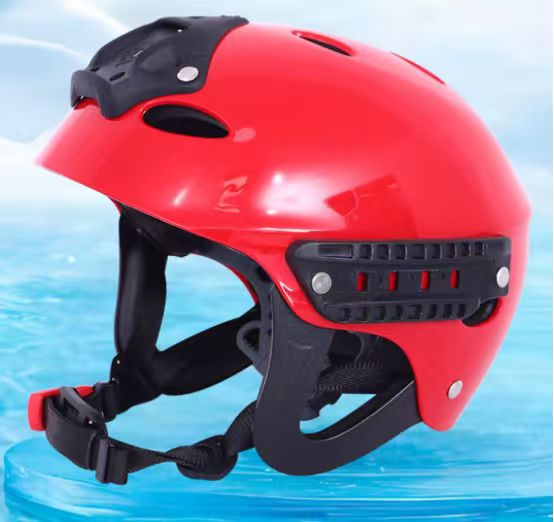
A retention system that holds up on calm days can quickly reveal its weaknesses once the water turns choppy. The real test isn't whether the strap or clamp feels tight when you first attach it, but how it behaves under repeated tugging, sudden drops, and the constant pull of moving water. Many designs rely on a single tension point, which tends to loosen as the material flexes. In rough conditions, that small amount of give accumulates fast, leaving your gear half-secured when you need it most.
What separates a dependable system from a frustrating one is how it distributes pressure. Instead of one high-stress spot, look for retention that spreads grip across a wider surface or uses a secondary locking feature. This reduces the chance of a single point slipping or snapping. The hardware also matters: coated or textured contact surfaces maintain friction even when wet, while smooth plastic or bare metal becomes slick. Small design choices like these keep the hold stable when the deck pitches and the waves keep hitting.
It's also worth checking how easy the system is to readjust mid-ride. In rough water, you won't always have time to stop and fiddle with loose straps. A retention method that lets you add tension with one hand, without removing the item, holds up far better than one that needs a full reset. If the system stays secure through sharp turns and sudden impacts without requiring constant attention, it's likely built for more than just flat-water outings.
Are the Reflective Panels Bright Enough at Night?
If you're expecting them to glow on their own, you'll be disappointed. Reflective panels don't produce light; they bounce it back. On a dark road with no traffic, they stay nearly invisible. But the moment headlights hit the surface, the brightness jumps enough to catch your eye from a good distance. That's really the test that matters for most people.
The actual brightness depends a lot on the backing material and the angle of the incoming light. Cheap panels can look decent in daytime photos but turn dull when the light source is low or off to the side. Higher-grade microprismatic surfaces tend to hold up better in rain and fog, returning a sharper reflection instead of a soft haze. If you ride or drive on unlit roads, that difference shows up quickly.
Mounting position plays a bigger role than it gets credit for. A panel tilted upward or twisted away from traffic loses most of its return reflection, which makes it seem weak at night. Keeping it clean and aimed roughly toward oncoming headlights usually gives you a visible warning several hundred feet out—plenty of time for someone to adjust, as long as you don't expect it to work like a powered light.
What Certifications Does the Supplier Actually Hold?
A supplier’s own compliance page rarely tells you which certificates are active, which product lines they cover, or whether the issuing body has any real oversight. Before placing an order, request the certificate number and verify it through the registrar’s lookup tool rather than accepting a logo pasted into a PDF.
Look closely at the scope section. A manufacturer may hold ISO 9001 for metal fabrication while quoting plastic components that fall outside the registration. The same applies to ISO 14001, REACH, RoHS, or industry-specific credentials: the named legal entity, facility address, and product category should match the quote exactly. Expired certificates and missing surveillance reports are common even among otherwise legitimate suppliers.
If you want a fuller picture, ask for the latest audit report and any corrective action summary. Suppliers with nothing to hide tend to send these without hesitation, sometimes including a short note about a minor nonconformity. When a vendor stalls, crops the document, or forwards an old certificate, that behavior usually tells you more than the paperwork itself would.
How Simple Is It to Replace Liners and Straps?
Most liners slide out after you undo a handful of snaps or strips of hook-and-loop tape. There is no need to wrestle with the frame; the fabric gives way with a gentle pull, and a fresh liner drops into the same grooves just as easily.
Straps are even more straightforward on the majority of seats. A small release tab or a folded end is all that holds the webbing in place, so you can thread a replacement through without touching a screwdriver. Once you see how the parts line up, the whole job takes about as long as finding a wet wipe.
What Support Do You Get When a Batch Arrives Defective?
When a batch arrives with defects, the first step is usually a documented inspection rather than an immediate return. You can flag the affected cartons, note the batch or lot number, and share clear photos or a short video with your account contact. That record helps the supplier separate a one-off packing error from a wider production issue before deciding what happens next.
From there, most suppliers will offer a practical remedy based on the defect type and quantity. Common options include a replacement run, a credit against your next order, or a partial refund if you can still use the goods. If the defect is borderline, a technical team may review your samples and advise whether the batch can be reworked locally instead of being shipped back.
The most useful support often comes in the form of logistics and timing. A responsible supplier will cover return freight for confirmed quality failures, put a replacement order at the front of the production queue, or split the cost of repacking if that is faster than a full return. Ask for a clear timeline in writing, including who arranges the return pickup and when the replacement will leave the factory.
FAQ
Ask for the full test report rather than a general CE mark. For swiftwater work, look for compliance with EN 1385 or an equivalent recognized standard, and confirm whether the helmet was tested for impact, penetration, retention, and buoyancy rather than marketed solely for recreational paddling.
Check that the liner is closed-cell foam or another non-absorbent material, that drainage ports actually let water out quickly, and that the chinstrap and hardware resist corrosion. A helmet that holds water becomes heavy and can shift during a rescue.
Look beyond the shell shape. Ask how the retention system is designed, whether the rear adjustment can be operated with cold or gloved hands, and whether the helmet fits securely over a neoprene hood without sitting too high.
Request references from agencies that operate in similar conditions, and ask about common failure points they have seen. Lab testing is useful, but prolonged exposure to river grit, sun, and chlorine from decontamination reveals issues that standards don't always cover.
Ask if the attachment points are molded into the shell or drilled afterward. Integrated rails or factory-installed mounts are preferable because aftermarket drilling can create stress risers and void the warranty.
A rescue helmet is only as good as the supply chain behind it. Ask about replacement liners, straps, buckles, and visors, and find out whether parts from older models remain available when you need to re-fit a fleet.
Request the material specification, such as polycarbonate, ABS, or a composite blend, and ask about UV stabilizers and chemical resistance. Some shells become brittle after repeated cleaning with disinfectants or prolonged sun exposure.
Conclusion
A safety officer evaluating a water rescue helmet should press the supplier on how the shell performs after repeated strikes from submerged logs, bridge debris, or loose gear in fast-moving water, not just on a single impact lab test. Ask for details about the outer material's long-term crack resistance, whether the edge coverage holds up after abrasion, and how the helmet behaves when hit from odd angles. Equally important is the retention system: the chin strap and rear adjustment points need to stay locked when a swimmer is thrown around in rough water or dragged against a current. Demand a demonstration of quick-release function with wet, cold hands rather than accepting a dry-land fit check.
At night or in low-visibility conditions, reflective panels should be positioned so a rescuer can be spotted from above, behind, and the side, and their brightness should not fade after repeated exposure to river water and sun. Certification claims also deserve scrutiny. Ask which specific standards the supplier actually holds for impact, buoyancy, and retention, and whether those certificates cover the exact model you are buying. Finally, look at long-term upkeep and accountability: find out how easily liners and straps can be replaced by your own team, whether spare parts stay available for several years, and what the supplier will do if a batch arrives with cracked shells or faulty buckles. A clear returns-and-replacement process matters as much as the helmet itself.
Contact Us
Contact Person: Kristin Zhang
Email: [email protected]
Tel/WhatsApp: +8615366239752
Website: https://www.jianghecn.com/