

Vertical Check Valve Exporter Insights for Smarter Procurement
2026-11-26
Sourcing vertical check valves often comes down to price and lead time, but smart procurement looks deeper. From material traceability to testing standards and after-sales support, the real cost of a wrong supplier shows up long after delivery. This guide unpacks what experienced buyers evaluate when comparing vertical check valve exporters, with practical insights from UPTAI to help you avoid costly oversights and build a more resilient supply chain.
The First Mistake in Vertical Check Valve Procurement Is Trusting a Polished Catalog
The polished catalog tells a convincing story: cutaway views with clean arrows, a spec table full of reassuring numbers, and a product shot that makes the valve look like it belongs in a museum display. But a vertical check valve isn't bought from a rendering. It's bought to survive what happens after the pump trips, after the flow reverses, after someone cycles it a few hundred times more than the datasheet assumed. The first procurement mistake is treating that catalog as evidence instead of advertising.
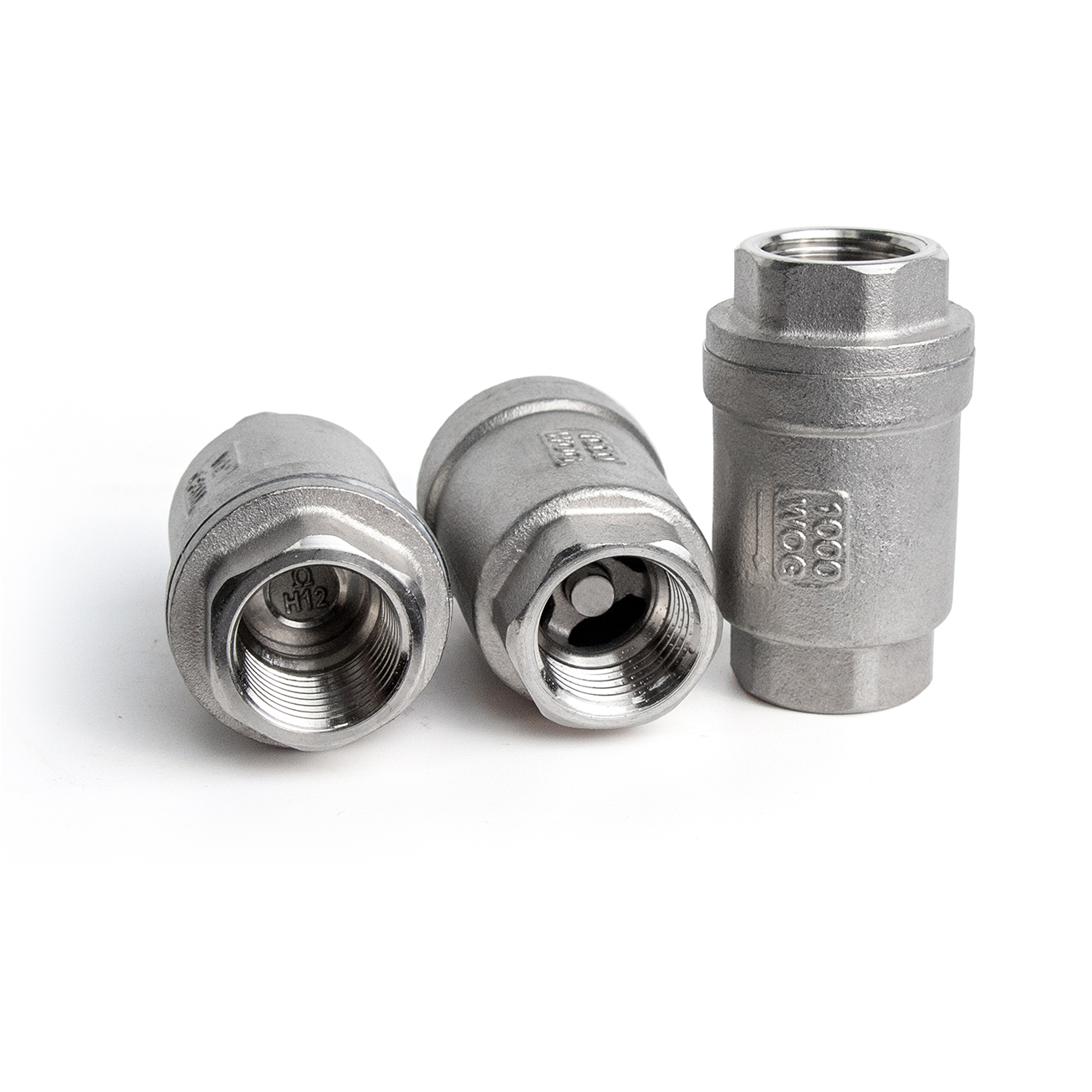
What the glossy pages leave out is the gap between ideal conditions and the ones waiting in your line. A vertical check valve that seats perfectly in still water may chatter under low flow or slam when the column comes back down. A disc that looks robust in cross-section may be just heavy enough to cause wear on the guide, or just light enough to stay half-open during surging. None of this shows up in a rendered explosion view. The only way to see it is to ask for a test report from a condition that matches yours, or better, to get the valve on a bench and watch it behave.
Experienced buyers learn to distrust the catalog's confidence and pay attention to the details that don't photograph well: the roughness of the seat finish, the tolerance between disc and guide, the actual material certificate for the spring, the casting porosity hiding under a thick coat of paint. A polished presentation doesn't mean a polished product. It means someone spent money on the brochure. Before trusting the valve, find out where the money went after the cover was printed.
Lead Time Estimates Go Wrong When Exporters Quote Factory Time Only
A common trap in export pricing is the assumption that factory lead time equals delivery lead time. A garment maker in Ho Chi Minh City might tell a buyer in Rotterdam that production takes four weeks. That number usually covers only the cutting, sewing, and finishing stages. It leaves out the days lost to fabric inspection, lab testing, pre-production samples, and waiting for trims to clear customs. The moment those hidden steps pile up, the original promise collapses and the buyer starts planning for delays that should have been visible from the start.
The gap grows wider when the quote crosses a border. Port congestion, carrier scheduling, customs holds, and inland trucking in the destination country are rarely included in a mill or factory estimate. Some exporters also forget that weekends and public holidays in two different countries do not move in sync. What felt like a comfortable buffer on a spreadsheet becomes a rushed air shipment. Buyers learn to read factory time as raw production time, then build their own buffer for everything else that happens between the loading dock and their warehouse.
Teams that get this right start by separating four different timelines: raw material lead time, production lead time, consolidation and transit time, and final delivery clearance. They quote a range instead of a single date, and they name the week the goods are likely to be ready for pickup rather than the week they will be produced. Small changes in wording, such as saying "ready for shipment in six weeks" instead of "production takes four weeks," do more than manage expectations. They prevent the kind of disappointment that quietly pushes a buyer to look for another supplier.
Ask for a Material Heat Number Before You Compare Prices
A heat number is a lot identification code assigned during the melting and casting of metal. It traces the exact chemical composition and mechanical properties of that specific batch. When you ask for it before comparing prices, you're not just verifying authenticity—you're making sure the material can actually be welded, machined, or certified for your application.
Suppliers who hesitate to share heat numbers often have something to hide, like mixed stock or untraceable remnants. Getting the heat number upfront lets you pull up the mill test report and check whether the grade matches what's stamped on the product. That small step prevents expensive rework later, especially if your project involves pressure vessels, structural work, or anything that requires traceable documentation.
Price differences only mean something when the material behind them is comparable. A low quote built on a heat with poor impact properties or a borderline chemistry can end up costing far more in rejected parts. So before you line up quotes side by side, get the heat numbers first—then compare what you're actually buying.
Witnessing a Pressure Test Beats Relying on a Standard Mark
A stamp on a valve body tells you someone, somewhere, ran a routine check under controlled conditions. But it doesn't show what happens when the system surges past its rated limit, or when a fitting wears just enough to start weeping at the threads. Standing next to a live pressure test flips that abstraction into something tactile: the faint hiss before the gauge steadies, the way a joint either holds its silence or gives itself away with a single bead of water.
There's a difference between trusting a certificate and trusting your own eyes. A standard mark confirms conformity to a snapshot in time, while a witnessed test exposes how the assembly behaves under actual stress curves, temperature drift, and the small irregularities every installation carries. You notice the flex in a bracket, the creep in a seal, the ninety-second window where pressure drops just enough to matter. No printed approval can capture those details.
Some of the most costly failures start with a component that passed its paperwork years ago. The mark didn't lie; it simply never promised to predict corrosion, vibration fatigue, or the hammering of an undersized pump. Watching a test forces you to ask the questions a standard can't answer, and that's the kind of certainty a label never earned.
After-Sale Support Is Where Low-Price Exporters Recover Their Margin
The invoice price on a low-cost export rarely tells the whole story. Smart suppliers know they can keep the upfront quote aggressive because the real earnings come later, hidden inside replacement parts, expedited troubleshooting, and extended service contracts. A buyer who saves eight percent on the initial order often ends up paying far more once a machine sits idle and the only available fix is a paid firmware update or a proprietary component shipped at a premium.
This model works only when the support is genuinely useful enough that customers accept the follow-on costs without feeling trapped. Successful exporters build a support layer that feels like a partnership: fast diagnostics, clear documentation, and optional maintenance tiers that uncover problems before they become expensive breakdowns. Over time, that turns a one-time transactional buyer into a repeat customer who no longer compares prices on the open market.
Margins recovered through support are also less visible to competitors. A rival can copy a product spec or undercut a unit price, but it is much harder to replicate a responsive service team, a well-stocked local spare parts hub, or a track record of keeping production lines running. That invisible infrastructure is what lets low-price exporters quote aggressively on the front end without destroying long-term profitability.
A Shortlist Built on Delivery Terms Outperforms One Built on Unit Price
A supplier's delivery terms often reveal more about operational reliability than a quoted unit price ever could. While a low price looks attractive on a spreadsheet, it rarely accounts for the hidden costs of late shipments, inconsistent lead times, or frequent stockouts. When procurement teams build a shortlist around delivery commitments first, they naturally filter for vendors whose warehousing, logistics, and production planning are already mature enough to support steady supply. This approach shifts the conversation from "how cheap" to "how dependable," which is exactly what matters when a single delayed component can stall an entire assembly line.
Comparing two otherwise similar suppliers makes the difference clear. One may offer a unit price five percent lower but only guarantees delivery within a ten-day window that has slipped twice in the past quarter. The other charges slightly more yet consistently delivers in four days, provides real-time tracking, and accepts penalty clauses for missed deadlines. Building a shortlist on unit price would push the first supplier to the top, even though the second reduces inventory buffer needs, prevents emergency freight charges, and protects production schedules. Over a full purchasing cycle, the supposedly expensive option often becomes the cheaper one.
Delivery terms also act as a proxy for how a supplier handles pressure. Firms that commit to precise lead times, defined incoterms, and transparent shipment milestones tend to have stronger internal controls. They are less likely to cut corners when demand spikes or raw material costs rise. For buyers, ranking potential partners by delivery performance before price turns a shortlist into a risk-management tool rather than a simple cost comparison. It prioritizes suppliers who can actually keep a promise, not just those who can quote the lowest number on day one.
FAQ
Confirm whether the exporter controls actual manufacturing steps such as casting, machining, and assembly rather than only trading. Ask for an in-house test video with the valve serial number or a recent third-party inspection report for a comparable order. This quickly filters out resellers who cannot explain how the valve is built or tested.
The body material tells only part of the story. The disc, seat, spring, and guide bushing material decide how the valve behaves with dirty, corrosive, or high-cycle media. A stainless body with a soft iron seat or an undersized spring can fail within months, so request a full trim breakdown instead of accepting a generic material grade.
It depends on the pressure class and destination market, but API 598 or API 6D, PED or CE marking, and ATEX are practical starting points. Ask for certificates that match the exact valve model and size you are buying. Some exporters share a valid certificate for one product while quoting a different line, which creates compliance risk at the port.
The gap usually comes from wall thickness reduction, lower-grade internal components, shorter hydrostatic test duration, skipped heat treatment, or looser inspection rights. Ask each exporter to list design wall thickness, trim material, test pressure, hold time, and acceptance criteria. A lower price is often just a narrower scope of verification.
Set sampling rates, third-party witness requirements, serial number stamping before painting, and packaging standards in the contract. Before shipment, ask for hydrostatic test curves with serial numbers, material certificates, and painting records. Build in clear rejection and replacement terms so a failed inspection does not turn into a long negotiation.
Ask for a previous warranty claim record from a similar project, the availability of spare parts from stock, and a defined response time for field issues. A supplier that only promises support but cannot describe how a claim is processed or how quickly springs, discs, or seals ship is not a reliable long-term partner.
Not necessarily. A very low cracking pressure can cause the disc to flutter under unstable flow, leading to noise, seat wear, and fatigue. Match cracking pressure to pump start-up behavior, flow velocity, and installation position. In many cases, a slightly higher but stable opening response lasts longer than an aggressive low-pressure setting.
Packaging affects more than transit damage; it influences customs clearance and on-site receiving. Require fumigation certificates for wood crates, a packing list tied to valve serial numbers, test reports, and material certificates. Missing or mismatched documents often delay acceptance more than the valve itself.
Conclusion
Procurement teams often start with the wrong benchmark. A polished catalog can hide inconsistent casting, thin wall sections, or substitute materials that only surface after installation. Before comparing prices, request a material heat number and trace it to the mill certificate; this single step filters out exporters who cannot verify what they are actually selling. Similarly, challenge lead time quotes that only cover factory production. Port congestion, customs inspection, and inland trucking can add weeks, so ask for a door-to-door timeline with named milestones. A factory audit or a witnessed pressure test is far more useful than a generic standard mark on a brochure — it forces the exporter to prove seat tightness and shell integrity under real conditions, not just claim compliance.
Price-focused shortlists usually reward the wrong supplier. Low-cost exporters tend to recover margin through spare parts, handling fees, or slow warranty responses once the valves are in service. Instead, evaluate after-sale support before signing: ask how quickly technical staff respond, where service kits are stocked, and whether the exporter takes ownership of field failures. Build your shortlist around delivery terms — payment milestones, penalty clauses for late shipment, and defined Incoterms — rather than unit price alone. A slightly higher quote with enforceable delivery dates and responsive support often costs less over the valve's life than a cheap offer that drifts past deadline or disappears after the container leaves.
Contact Us
Contact Person: Adonis
Email: [email protected]
Tel/WhatsApp: 8615858822657
Website: https://www.uptaivalve.com