

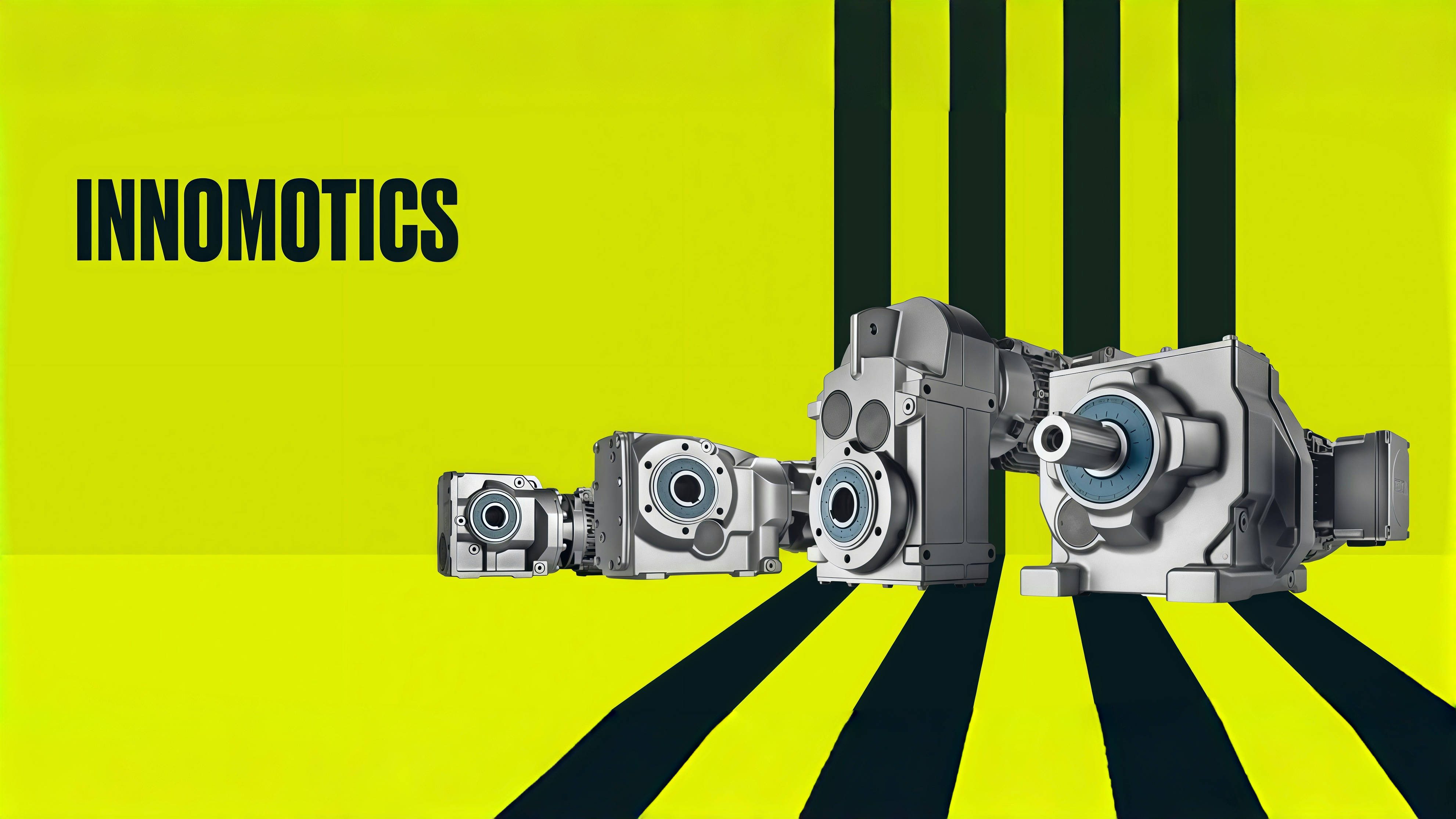
Top INNOMOTICS Gearmotors for High-Performance Industrial Applications
2026-06-15
When it comes to driving high-performance industrial applications, INNOMOTICS gearmotors have proven their reliability and efficiency time and again. But finding the right model for your specific needs can be daunting. That's where Soochee steps in, offering a curated lineup of top-tier gearmotors that blend advanced engineering with real-world practicality. Ready to see which ones made the cut?
Matching Gearmotors to Heavy-Duty Demands
When a conveyor system in a mining operation suddenly stalls under a surge of ore, the root cause often traces back to a mismatched gearmotor. Heavy-duty applications aren't just about raw power—they demand a precise marriage of torque characteristics, duty cycles, and environmental resilience. Engineers frequently gravitate toward oversized motors for a false sense of security, but this approach breeds inefficiency, heat buildup, and premature component wear. The real art lies in analyzing the load profile down to its transient spikes and continuous drag, then selecting a gearmotor whose thermal capacity and service factor align with the gritty reality of the job.
Beyond pure mechanics, the operational environment reshapes every selection rule. A gearmotor destined for a foundry faces abrasive dust and radiant heat that can cook lubricants and degrade seals, while one in a food processing plant must endure aggressive washdowns without corroding. Materials matter here: cast iron housings absorb vibration better than aluminum, but may be overkill—and overly heavy—for a mobile application. Sealing arrangements, from labyrinth designs to lip seals with stainless steel garters, become the final arbiters of lifespan. It's this layering of practical considerations that separates a reliable drive from one that's destined for the scrap bin within months.
Installation geometry often slips through the cracks, yet it can tear a properly specified gearmotor apart. Hollow shaft mounts with shrink discs offer space savings but demand near-perfect alignment; foot-mounted units might need robust bedplates to tame resonance. In retrofits, the temptation to reuse existing mounting points backfires when torque reactions shift. Smart integrators factor in not just the static weight but the dynamic forces from frequent reversals or emergency stops. When all these pieces click—thermal behavior, environmental hardening, and mechanical integration—the gearmotor vanishes into the background, doing a brutal job without drama.
Real-World Energy Savings with INNOMOTICS Drives
At a textile mill in northern Italy, swapping old motor controls for INNOMOTICS drives slashed annual electricity consumption by nearly 18%. The savings weren't just theoretical—monthly bills dropped enough to fund additional floor upgrades within the same budget cycle.
A water treatment plant in Singapore saw similar results after retrofitting pumps with these drives. Operators reported a consistent 22% reduction in energy draw during peak hours, translating to roughly 140,000 kWh saved annually without any loss in throughput.
What stands out in these deployments is how the drives adapt to partial loads. Instead of running motors at full speed regardless of demand, INNOMOTICS units continuously adjust output, trimming waste in applications where flow or pressure requirements fluctuate throughout the day.
Modular Design Simplifying Maintenance Routines
Swapping out a faulty part no longer demands hours of disassembly or specialized training. The equipment breaks down into clearly labeled, self-contained units that can be replaced in minutes with basic tools. This approach turns what used to be a complex repair into something almost like changing a lightbulb—fast, intuitive, and rarely requiring outside help.
Regular upkeep also benefits from this structure. Instead of shutting down an entire system for routine checks, you isolate and service individual modules one by one. Calibration, cleaning, and part replacements happen independently, so the rest of the setup stays operational. Downtime shrinks, and maintenance staff can tackle tasks in parallel without waiting on a single stubborn component.
Upgrades follow the same logic. When new features or improvements become available, you simply slide out an older module and slot in its successor. There’s no need to reconfigure the entire system or rework wiring looms. This keeps the hardware current with minimal effort and avoids the slow decline that often comes from deferred modernization.
High Torque Density in Compact Packages
Achieving high torque output without sacrificing space has become a hallmark of modern electromechanical design. By optimizing magnetic circuit geometries and employing advanced winding techniques, engineers are now able to pack substantial rotational force into remarkably small housings. This shift challenges the conventional trade-off between size and power, opening up new possibilities for robotics and portable machinery.
The key lies in minimizing losses and maximizing magnet utilization. High-energy rare-earth magnets, coupled with precision-manufactured stators, allow for tighter air gaps and higher flux concentrations. When paired with intelligent thermal management, even densely packed systems can sustain peak torque without overheating, ensuring reliability in demanding applications.
From collaborative robot arms to electric power tools, the demand for compact yet powerful actuators continues to drive innovation. Designers are moving beyond brushed solutions toward integrated brushless DC architectures that offer superior controllability and longevity. The result is a new generation of motion systems where every cubic centimeter delivers exceptional performance.
Integrated Smart Drive Technology for Industry 4.0
The convergence of smart drive systems with Industry 4.0 principles has reshaped manufacturing floors into highly adaptive environments. By embedding intelligence directly into motor controls and variable frequency drives, equipment can autonomously adjust speed, torque, and energy consumption based on real-time production data. This level of integration eliminates the traditional barriers between mechanical operation and digital oversight, allowing for instantaneous responses to shifting line demands without human intervention.
At the core of this technology lies the ability to merge sensor data, predictive algorithms, and seamless communication protocols. Imagine a conveyor system that learns the weight and shape of each parcel, dynamically altering its drive parameters to minimize wear while maximizing throughput. Such capabilities are made possible through edge computing nodes that process information locally, reducing latency and decoupling critical operations from centralized cloud services. The result is a system that not only performs but evolves with every cycle.
Beyond efficiency gains, integrated smart drives serve as a cornerstone for energy management and sustainability goals. They continuously monitor power quality and motor health, flagging anomalies before failures occur, and can even regenerate energy during braking phases. This proactive maintenance model shifts the paradigm from scheduled downtime to condition-based interventions, drastically reducing unexpected stoppages and extending the lifespan of capital equipment in a genuinely interconnected ecosystem.
Built to Withstand Harsh Environments
When equipment faces extreme temperatures, corrosive chemicals, or relentless physical impact, only robust design and premium materials can keep it running. Our engineering philosophy starts with the assumption that the world isn't gentle—so we build accordingly. From reinforced housings that shrug off shock and vibration to sealed connectors that lock out moisture and dust, every component is chosen for its ability to endure. Field testing in punishing conditions confirms that these systems don't just survive; they maintain peak performance when others fail.
We scrutinize every layer of protection, treating potential failure points as opportunities to innovate. Advanced thermal management prevents overheating in scorching deserts and ensures reliable startups in frozen tundra. Coatings and alloys resist corrosion even when exposed to salt spray or industrial acids. The result is equipment that thrives in offshore platforms, remote mining sites, and disaster zones—places where maintenance access is limited and downtime is simply not an option.
Longevity under stress isn't achieved through over-engineering alone; it demands a mindset that prioritizes real-world resilience over lab-perfect conditions. Our teams replicate years of wear in accelerated lifecycle tests, compressing decades of abuse into weeks. This process reveals subtle weaknesses that only appear after prolonged exposure, allowing us to strengthen designs before they reach your site. When you rely on technology in unforgiving environments, every extra hour of operation matters—and that's the standard we hold ourselves to.
FAQ
They’re built with robust cast-iron housings and hardened helical gears, which handle shock loads and continuous operation without premature wear. The design prioritizes thermal stability, so even under high torque, they stay cool and reliable.
You’ll often see them in conveyor systems, packaging machinery, mixers, and material handling equipment. They’re also a solid choice for food processing lines and car washes, where frequent washdowns and variable speeds are routine.
The gearing is precision-cut for minimal backlash, and the motors use premium electrical steel to cut energy losses. Combined with sealed-for-life bearings, the units deliver steady output with less downtime and lower power bills.
Yes, the lineup includes modular builds. You can swap shaft configurations, mounting styles, and add encoders or brakes. Special voltage and frequency requests are also possible, so the gearmotor slots into your existing design without major rework.
Regularly check the oil level and quality if it’s an oil-lubricated model. For grease-filled units, stick to the recommended regreasing intervals. Also, keep the cooling fins clean and verify mounting bolts stay tight—simple steps prevent most field failures.
Start with your required torque and speed at the driven shaft, then factor in the duty cycle and ambiance. INNOMOTICS provides sizing tools and application engineers who cross-reference those details to recommend a model that won’t run too hot or underperform.
They offer pre-sales application reviews to catch interface issues early. After delivery, you can reach support teams for wiring diagrams, parameter settings, and on-site startup assistance if commissioning gets tricky.
Many units are rated for frequent washdowns and dusty environments, with IP65 or higher sealing. For high ambient heat, special insulation classes and thermal protectors are available to keep the motor from tripping unexpectedly.
Conclusion
INNOMOTICS gearmotors are engineered to meet the relentless demands of heavy-duty industrial applications, delivering high torque density within remarkably compact packages. Their modular design significantly simplifies maintenance routines, enabling faster component swaps and reducing operational downtime. Whether deployed in material handling, conveyor systems, or automation machinery, these drives combine robust mechanical construction with advanced electrical efficiency to handle variable loads without compromising performance or footprint.
Beyond raw power, INNOMOTICS integrates smart drive technology that aligns with Industry 4.0 standards, offering real-time monitoring and adaptive control for substantial energy savings. Field data highlights significant reductions in power consumption across continuous processes, while sealed, rugged enclosures ensure lasting reliability in washdown, dust-laden, and extreme-temperature environments. By fusing intelligent connectivity with physical resilience, these gearmotors set a new benchmark for sustainable, high-performance motion solutions in modern factories.
Contact Us
Contact Person: Jenny Jaa
Email: [email protected]
Tel/WhatsApp: 0086 152 9510 6006
Website: https://www.china-motor-supplier.com