

Top DC Vibrator Motors for Precise Motion Control and Haptic Feedback
2026-11-16
When precision engineering meets the subtle art of vibration, the result is more than just movement—it's the core of intuitive haptic feedback and exact motion control. In applications ranging from medical robotics to wearable notification systems, the right DC vibrator motor quietly determines performance. Yet selecting one that truly excels in both precision and tactile response remains a challenge. This guide cuts through the noise, spotlighting top motors that deliver consistent torque, fine speed control, and lasting durability. Among the standouts is Guangling, whose motors have earned a reputation for bridging the gap between laboratory-grade accuracy and real-world reliability. Whether you're prototyping a smart glove or refining a surgical instrument, what follows will help you make a choice that doesn't just work—it feels right.
Counterweight Geometry as the Overlooked Lever for Fine Haptic Control
When engineers tune haptic feedback in a pen, mouse, or VR controller, they usually obsess over actuator bandwidth, damping materials, and sensor latency. Yet the physical counterweight—often a simple metal cylinder tucked inside the shell—rarely gets a second look. That’s a mistake. The way that mass is shaped and positioned acts as an invisible lever, changing how your fingers perceive every micro-adjustment during fine motor tasks. A counterweight that’s spherical versus elongated, or one placed near the grip versus out at the tip, can shift the rotational inertia enough to make a stylus feel either twitchy or rock-steady. Because users seldom verbalize this, designers often miss it. But your hand knows.
Think of the counterweight as a fulcrum for subtle forces. If you move a gram of brass from the barrel to the far end of a stylus, the moment of inertia around the grip point jumps dramatically, which damps high-frequency jitter and gives a sense of groundedness. But push that same mass too far out and the user starts fighting angular momentum during quick direction changes. Geometry matters just as much as placement: a ring-shaped counterweight spreads mass around the axis, lowering resistance to roll while increasing stability in pitch and yaw; a segmented or tapered weight can tune specific vibrational modes so that haptic pulses feel crisp rather than muddy. These aren’t exotic tweaks—they’re cheap levers that many product teams ignore because “it’s just a weight.”
The practical takeaway is to treat counterweight geometry as a first-class design variable, not an afterthought. Swap in prototypes with identical mass but different shapes—cylindrical, conical, split-ring, off-axis—and run quick blind tests with artists, surgeons, or competitive gamers who rely on fine haptic control. You’ll often find that a small change in weight distribution allows you to reduce actuator power or simplify damping, because the mechanical lever is doing more of the perceptual work. This approach costs pennies per unit and requires no firmware changes, yet it can differentiate a product in ways that pure sensor specs never will. Next time your prototype feels “off,” before touching code, try rotating the counterweight 15 degrees.
Why RPM Alone Misleads When Matching Stall Torque to Tactile Response
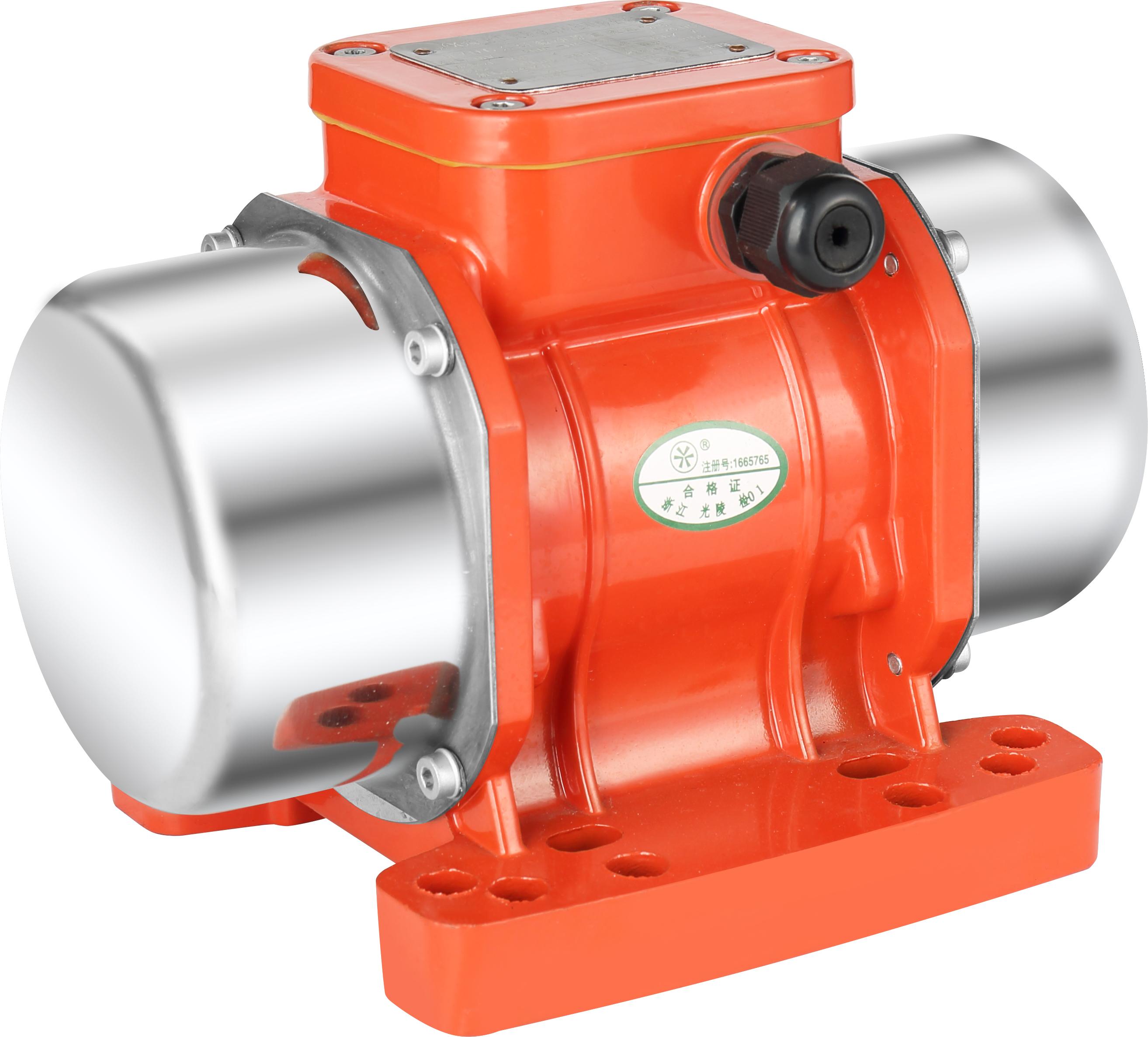
Chasing a higher stall speed on paper often starts with the assumption that more RPM at zero load equals harder launches or firmer shifts. But the number printed on a torque converter spec sheet only tells you where the engine flares before the turbine begins to move. It says nothing about how abruptly that motion arrives, how much torque is actually multiplied in the first few feet, or whether the coupling feels elastic, sluggish, or violent. Two converters with identical stall ratings can behave nothing alike once you factor in stator design, fluid flow, and the hydraulic path that shapes tactile feedback.
The real mismatch happens because stall torque is a static checkpoint, while driver feel is a dynamic event unfolding across a few tenths of a second. A converter that flashes to 3,200 RPM but then slips excessively under load will feel soft and disconnected, no matter how impressive the flash number looks. Meanwhile, a converter that reaches the same RPM with a firmer coupling and less slippage will deliver a sharper, more immediate push. The tach needle might read the same, but your spine gets a completely different story.
That's why matching stall torque to tactile response requires moving beyond RPM alone. You need to observe how the converter behaves in the transition zone between flash and lockup, how the stator reacts to part-throttle inputs, and how the hydraulic pressure curve translates into seat-of-the-pants feedback. Otherwise, you're tuning a driveline with a number that only makes sense on a brake stand, not during the moments that actually shape your impression of the car.
Pulse Shaping Without PWM Whine Keeps Vibration Crisp and Quiet
Most haptic drivers rely on raw PWM bursts to push a linear resonant actuator or eccentric rotating mass, but the hard switching edges produce a spectrum of harmonics that lands right in the audible band. That faint mosquito-like whine isn’t a defect in the motor—it’s the driver screaming through the coil. Pulse shaping rounds off those transitions, spreading the energy across a wider, lower-amplitude profile instead of concentrating it into a narrow audible spike.
The trick is keeping the rise and fall gentle enough to suppress the whine without turning the vibration into a mushy ramp. A well-tuned shaper preserves the sharp onset the user feels, while the quieter waveform still delivers the same displacement in the actuator. You get a click that registers in the fingertip, not in the ear.
This matters most in wearables and handheld controllers, where a device buzzing on a table can be as annoying as a notification sound. By shaping each pulse rather than chopping it at a fixed frequency, the vibration stays tight and tactile, and the only thing left audible is the mechanical click you actually want.
Enclosure and Mounting Choices That Make or Break Feedback Clarity
A cabinet that flexes even slightly under load will smear the very transient edges that feedback clarity depends on. Heavy internal bracing and a constrained-layer damping material between panels stop the enclosure from singing along with the driver, so the sound reaching the mic or the listener keeps its leading-edge definition. Skip the bracing and you get a low-level resonant wash that makes feedback tones blur together instead of standing apart.
How the driver is mounted matters just as much as the box itself. Flush-mounting the woofer on a thick, chamfered baffle reduces edge diffraction and keeps off-axis phase response tidy, which is critical when a feedback loop builds at a specific frequency. A decoupling gasket between the frame and the baffle isolates the motor from panel vibrations, while a rigid clamp without over-tightening avoids warping the basket and shifting the voice coil gap.
Placement and mounting hardware can introduce a second resonant path that ruins an otherwise clean design. Wall brackets with soft elastomer washers, tilted stands that minimize floor bounce, and avoiding direct coupling to hollow studs all keep structural energy from feeding back into the enclosure. In a rehearsal space or on stage, that mechanical isolation is often the difference between a feedback howl you can identify and fix, and one that wanders unpredictably as the whole room vibrates.
Tuning Vibration Amplitude for Skin Contact Versus Gloved Use
Getting vibration amplitude right starts with how the transducer meets the hand. Against bare skin, even modest drive levels can feel sharp because there is no material in the signal path to absorb movement. With gloves, especially thicker work or cold-weather gloves, much of that energy gets soaked up before it reaches the nerve endings, so the same setting often feels faint or muddy.
A practical approach is to tune a baseline on bare skin first, then raise amplitude in small increments while wearing the intended glove. Pay attention less to overall strength and more to whether the pulse reads clearly through the fabric. Some gloves also mute high-frequency detail more than low-end thump, so a slight downward shift in frequency can do more for perceived clarity than simply adding power.
If the device is shared or used in both conditions, preset profiles tend to work better than one compromise level. A bare-hand profile set too high quickly becomes annoying or even numbing, while a glove-optimized profile used on skin can feel harsh. Switching between the two only takes a moment and keeps the feedback legible without overdriving the motor.
Brush Wear and Bearing Play in Designing Consistent Haptics Over Years
The subtle degradation of haptic feedback over years of use rarely stems from a single dramatic failure. More often, it creeps in through two mechanical details: brush wear and bearing play. In small DC vibration motors, carbon or precious-metal brushes slide against a commutator, and microscopic material loss accumulates with every rotation. As the contact surface changes, so does the electrical resistance, altering the current waveform that drives the eccentric mass. The result is a gradual shift in vibration amplitude and frequency that users may only notice when comparing an old device to a new one.
Bearing play introduces a different kind of drift. Sleeve bearings, common in compact actuators, rely on a thin film of lubricant to keep the shaft centered. Over thousands of hours, that film thins and the radial clearance widens. The rotor begins to orbit slightly off-axis, creating asymmetric centrifugal forces that modulate the haptic output. Depending on the orientation of the device, the same motor can feel stronger or weaker, or emit an audible rattle that was absent at the start. This mechanical looseness also feeds back into the brush-commutator interface, accelerating uneven wear and compounding the inconsistency.
Designing for longevity therefore means treating these two factors as interacting, not isolated. Harder brush compounds reduce electrical erosion but can increase commutator scoring if paired with excessive bearing slop. Preloaded ball bearings or hydrodynamically stabilized sleeves keep the shaft centered and preserve brush contact geometry. In some designs, a slight over-compensation in initial drive voltage is tuned so that, as wear and play settle in, the perceived haptic intensity remains within a narrow band. Without such countermeasures, the promise of consistent haptics over years becomes an unspoken compromise.
FAQ
The main difference is how quickly and precisely you can vary the vibration. Haptic motors need to ramp up and down in milliseconds, hold a stable amplitude, and run quietly over thousands of cycles. Cheap alert motors often just spin at one speed when powered, but a good haptic motor responds well to PWM so you can create distinct patterns that feel like taps, pulses, or textures.
Start with your battery's voltage range. A single-cell lithium battery swings from about 3.0V to 4.2V, so a motor rated at 3V or 3.7V usually works fine as long as you use PWM to limit the average voltage. For RPM, most coin or cylinder ERM motors land between 8,000 and 12,000 RPM at rated voltage. If you need a stronger buzz, pick a motor with a larger eccentric mass rather than just pushing more voltage, because overvolting shortens brush life.
Yes, PWM is the standard approach. But keep the switching frequency above 20 kHz if you can, otherwise the coil or motor housing can produce an audible whine. Below 10 kHz, you might hear the PWM itself, which ruins the haptic effect. Some drivers also cause current spikes at each edge, so a small capacitor or a dedicated motor driver with slew-rate control helps keep noise out of the rest of your circuit.
You see them in VR gloves for finger feedback, game controllers with zone-specific rumble, surgical training simulators that mimic tissue resistance, and wearable navigation belts for visually impaired users. In these cases, the motor's response time and repeatability matter more than raw vibration strength, so people often test several ERM models to find one with minimal lag and consistent amplitude.
Mounting is half the battle. If you hard-mount the motor to a rigid PCB or housing, you get strong vibration transfer but also more audible buzzing because the whole structure acts like a speaker cone. Using a soft adhesive pad or rubber grommet can reduce high-frequency noise, but too much isolation makes the vibration feel mushy. The trick is to couple the motor firmly to the mass you want to shake but decouple it from thin covers that rattle.
ERM motors are still the go-to when cost, space, or design simplicity matters more than ultra-sharp haptic effects. They run on a simple DC voltage, need only a transistor to drive, and produce a broad-band rumble. LRA modules respond faster and give a cleaner vibration frequency, but they need an AC drive signal and a resonant frequency match. If your product doesn't demand high-fidelity haptics, an ERM saves time and money.
Look at the motor's rated current, say 100 mA at 3V. If your pulses average a 20% duty cycle, the average current draw is about 20 mA, but factor in startup spikes which can be double the rated current for a few milliseconds. For a 500 mAh battery, 20 mA average gives roughly 25 hours of motor-on time, though real-world quiescent current from the rest of the circuit will reduce that. Measuring actual current with an oscilloscope and integrating over a typical usage session gives the most reliable number.
Brush wear is the biggest killer. Frequent starts and stops create arcing that erodes the commutator and brushes, leading to intermittent operation. Precious metal brushes last longer than carbon brushes in small motors. Also check the eccentric mass attachment, because a loose mass can cause vibration drift or mechanical failure. For extreme cycle counts, some designs move to brushless vibration motors, but they cost more and need more complex drive electronics.
Conclusion
Selecting a DC vibrator motor for refined haptic feedback rarely comes down to a single spec on a datasheet. Counterweight geometry often matters more than raw speed: an asymmetric mass with a carefully placed center of gravity can deliver sharper onset or softer decay without changing motor RPM. Similarly, chasing higher revolutions per minute can mislead if the stall torque cannot overcome the inertial load of that counterweight during rapid start-stop cycles. The tactile result depends on how quickly the mass reaches its intended oscillation, not just how fast it spins once there. Pulse shaping adds another layer—modulating the drive signal to avoid abrupt square-wave edges prevents the high-frequency whine that makes otherwise strong vibration feel cheap. A motor driven with smooth ramps and controlled braking stays crisp and quiet in handheld or wearable devices.
Mechanical integration then decides whether that tuned motor behavior survives contact with the real world. Enclosure stiffness and mounting compliance either transmit vibration cleanly into the user's hand or damp it into mush; a rigid coupling with minimal gasket interference preserves feedback clarity, while overly soft mounts blur the signal. Amplitude must also be re-tuned for the intended contact surface—bare skin senses lower frequencies and gentler displacement differently than a gloved hand, which needs higher amplitude to cut through material. Finally, long-term consistency hinges on brush wear and bearing play. A motor that feels precise on day one may drift as brushes bed in or bearings develop axial slop, so designs should specify preloaded bearings and brush materials that maintain contact pressure over years, not just hours of bench testing.
Contact Us
Contact Person: ZHUO
Email: [email protected]
Tel/WhatsApp: 86-576-86320988
Website: https://www.cnguangling.com