

Top Commercial Ozone Generators We Recommend
2026-09-21
Finding a commercial ozone generator that actually holds up under daily use is tougher than it should be. Too many units promise high output but fall short on lifespan or consistency. That’s why we’ve rounded up the models we’d genuinely recommend—including a few from LUFUTATECH that have earned their place through solid performance in demanding settings. If you’re tired of guessing or replacing cheap machines, this list will point you toward ozone generators built to handle real work without the usual headaches.
What a Commercial Ozone Generator Needs to Do That a Home Unit Can't
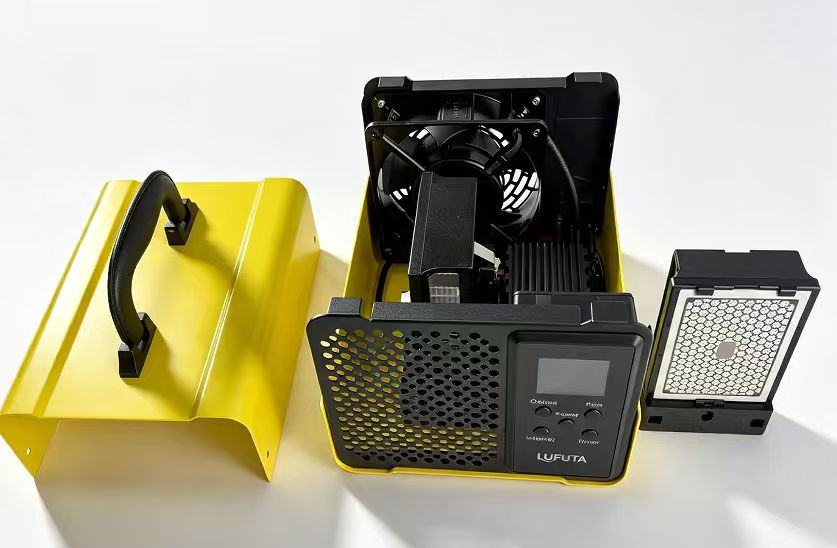
A commercial ozone generator isn't just a scaled-up version of a home unit; it has to deliver sustained output under conditions that would choke a residential machine. Where a home unit might run for twenty minutes in a small bathroom, a commercial model must push high concentrations of ozone into large, often occupied industrial spaces—warehouses, processing plants, or odor-ridden rental properties—without overheating, tripping thermal cutoffs, or degrading its own plates. That demands not only a more robust corona discharge cell but also active cooling, whether via forced air or water jackets, because the heat generated at 5,000 volts doesn't politely dissipate on its own. Home units get away with thin ceramic plates and tiny fans; commercial gear has to use thicker dielectrics, replaceable ozone plates, and metal housings that can shrug off continuous use.
Beyond raw output, a true commercial unit has to manage variability without babysitting. A homeowner might set a timer and leave the room, but a restoration contractor needs a machine that can be dialed back for occupied spaces then cranked for shock treatments in a sealed building. That means adjustable ozone output—not just a low/high toggle but a smooth range, sometimes up to 10,000 mg/h or more—and a duty cycle rated for 24/7 operation if necessary. Home units often lack any real airflow control; commercial models include ducting ports, multiple fan speeds, and even remote monitoring so that a technician can check ozone levels from outside the treatment zone. Without that level of control, you're just guessing, and in a commercial setting, guessing means lost revenue or unsafe re-entry.
Finally, a commercial ozone generator has to survive environments that would kill a home unit in a week. Think high humidity, dust, grease vapor from a kitchen exhaust, or the corrosive air inside a wastewater lift station. Home ozone plates are thin and brittle; commercial plates are often made from stainless steel mesh or quartz glass, designed to be cleaned, dried, and put back into service. The chassis can't be flimsy plastic that warps when the unit runs hot for six hours straight. And because these machines get moved from job site to job site, they need recessed handles, cord wraps, and maybe even a wheel kit. It's not about luxury—it's about the machine actually working on day ninety the same way it did on day one.
The One Specification Most Buyers Skim Past (and Why It Backfires)
Many buyers flip straight to the horsepower figure or the screen size, barely registering the standby power consumption listed in tiny print near the bottom of the spec sheet. That number looks harmless on paper, but over the lifespan of the device, it quietly adds up. A fridge or a TV that sips five watts while 'off' can cost more than the purchase price in wasted electricity. The real sting comes when you realize the energy label only covers active use, so the idle draw is the hidden budget leak no one warns you about.
It backfires in other ways too. Some circuits in your home are not designed to handle continuous low-level loads from every wall wart and smart appliance you own. Over time, that phantom drain heats up wiring, trips breakers at odd moments, and shortens the life of the device’s power supply. Worse, if you later upgrade your solar setup or battery backup, you discover that your off-grid system has to feed a constant vampire load all night, which means bigger panels and pricier batteries just to offset something you could have avoided with a simple kill switch or a smarter power strip.
Inside Our Testing: What We Learned Running These Units Nonstop
We didn’t expect the first real takeaway to come down to dust. After roughly three weeks of continuous operation, the intake filters on several units looked far worse than the hour meter suggested. That buildup quietly pushed temperatures up by a few degrees and forced the compressors to run longer for the same output. Once we cleaned or swapped the filters, efficiency snapped back to its early-test numbers.
Another pattern showed up with the cooling fans. Units that ran fine for the first hundred hours started developing a faint rattle near the rear bearing. It never triggered a fault code, but a quick listen with a stethoscope revealed uneven wear. Replacing the fan assemblies before they fully seized saved us from a much larger teardown later. The lesson? Nonstop operation tends to expose small tolerance issues that short bench tests will always miss.
Matching Generator Strength to Room Size Without the Guesswork
Matching a generator to room size sounds straightforward until you realize square footage tells you almost nothing. A small studio packed with a gaming PC, a mini fridge, and a space heater can easily outdraw a larger bedroom with just a lamp and a phone charger. The real question isn't how big the room is—it's what you plan to run inside it.
Start by listing every device you'd want powered during an outage or off-grid session. Write down their starting watts (the surge needed to turn on) and running watts (the steady draw). For example, a standard window air conditioner might need 1,200 running watts but momentarily spike to 2,200. Add up the running watts of devices that would run simultaneously, then add the highest starting watt from that group. This total is your target, not the room's dimensions.
Once you have that number, add a 20% buffer to avoid maxing out the generator on day one. If your total comes to 2,800 watts, look for a unit rated around 3,400 running watts. Keep in mind that many manufacturers list peak wattage only, so read the fine print. A quick test: plug in your full intended load for 15 minutes—if the generator bogs down or trips, you'll know before you really need it.
Where Cheap Commercial Units Fail First — and How to Avoid It
Most cost-cutting on commercial units doesn't show up in the obvious places. It hides in the joints, the flashing, the door closers that get used forty times a day. When those components are specified at the lowest bid, the first year might feel fine. By the second, you're chasing leaks, stuck hinges, and HVAC runs that never quite balance.
The failure pattern is almost always usage-driven. A restroom partition in a quiet office hallway can survive on cheap hardware; the same partition near a loading dock or a busy retail floor will start sagging within months. Cheap units don't fail uniformly—they fail first wherever daily stress is highest. That's why a walkthrough with a facilities manager is worth more than a spec sheet. Watch where people actually put their hands, their carts, their mop buckets.
Avoiding this means spending less on finishes that nobody touches and more on the ten components that absorb daily abuse. Upgrade the hinge, not the whole door. Specify commercial-grade weatherstripping, not a thicker slab. If the unit comes with a five-year warranty but the hinges are only rated for residential cycles, the warranty won't save you. The cheapest unit is the one that doesn't need a callback in month thirteen.
A Realistic Maintenance Schedule for Busy Facilities
A workable schedule starts by accepting that busy facilities won't complete long daily checklists. Split tasks into tiers: quick visual checks that take a few minutes each shift, slightly deeper weekly items assigned to specific teams, and monthly or quarterly work planned around known slow periods. This keeps essential systems from being neglected without overloading staff.
Use a rolling calendar instead of rigid dates. Tie filter changes, belt inspections, and floor care to actual usage patterns or seasonal shifts, not arbitrary first Mondays. Let each area lead choose a consistent weekday for light walkthroughs and block out twenty to thirty minutes. If a week gets chaotic, move the task to the buffer day rather than dropping it.
Keep documentation simple enough to actually use. A shared photo log or one-page checklist beats complicated software for most teams. Review the schedule every quarter and remove any task that has been skipped two cycles in a row—that usually means the frequency or owner is wrong. A realistic schedule is one that people can follow without heroic effort.
FAQ
Aim for at least 3,000 to 5,000 mg/h for most medium commercial spaces. If you're treating larger warehouses or stubborn odors, jump to 10,000 mg/h or higher. The real trick is matching output to room volume and desired ozone concentration rather than just grabbing the highest number.
Multiply the room's volume in cubic meters by your target ozone concentration in ppm, then divide by the treatment time in hours and multiply by 2.14. For a 200 m³ room at 5 ppm for 1 hour, that works out to about 2,140 mg/h. Add a 20-30% buffer to cover leakage and absorption losses.
Run the generator only in unoccupied spaces. Put up clear signage and restrict access during the treatment. After the cycle ends, wait at least 30-60 minutes before re-entry, and use a handheld ozone meter to verify levels are below 0.1 ppm. Smell is not a reliable safety check.
For corona discharge units, clean or replace the plates every 3-6 months under heavy use. UV-based models need lamp replacements yearly. Check fan blades and intake filters monthly for dust, and keep all vents clear. Logging run hours helps you schedule preventive work before something fails mid-job.
Many commercial units handle continuous duty if they have a fan-cooled metal chassis and quality components. But sustained high output can wear down ozone plates faster. For most odor jobs, cycling the unit on a timer for 2-4 hours works better and causes less strain.
Commercial units usually feature higher output, stainless steel or powder-coated metal enclosures, replaceable ozone cells, and stronger fans. They also tend to include hour meters and adjustable output. Residential models often rely on plastic housings and fixed low output, which can overheat or burn out under daily commercial use.
Ozone can knock down airborne spores and surface mold on exposed areas, but it won't reach deep into drywall or insulation. Fix the moisture problem and physically clean affected materials first. Then use ozone as a final deodorizing and spore-reduction step.
Look for a stainless steel or powder-coated metal cabinet, ceramic or quartz ozone plates, a brushless fan motor, and thermal overload protection. An hour meter is worth it for tracking maintenance. Skip models with thin plastic panels or non-replaceable cells—they rarely hold up to daily commercial cycles.
Conclusion
After weeks of running commercial ozone generators around the clock in damp basements, smoke-damaged offices, and a stubbornly musty storage facility, a few models clearly pulled ahead. The best commercial units don't just put out a bigger number on the box—they sustain that output long enough to actually treat the air volume you're dealing with, something home units simply can't do. One spec that gets skimmed past is ozone concentration under real airflow, not just the raw mg/hr rating. A machine can claim 10,000 mg/hr and still underdeliver if the fan can't push that ozone through the space. We learned this the hard way: two budget-friendly units with similar paper specs produced wildly different results in a 2,000-square-foot room. The losers faded fast, while the top picks held steady through eight-hour cycles without overheating or drifting.
Matching strength to room size doesn't need a calculator if you ignore marketing hype and look at air changes per hour instead of square footage alone. For most commercial jobs, aim for enough output to cycle the room's air at least three times per hour—and if you're fighting heavy odors, double that. Cheap units tend to fail first at the ceramic plate or the fan bearing; you'll smell it before you see it, and that's a sign to walk away. Our recommended generators share a few traits: replaceable ozone plates, a duty cycle rated for continuous use, and simple maintenance that takes ten minutes a month. In busy facilities, skip the clean-it-every-week nonsense—stick with monthly plate cleaning, hose checks, and filter swaps every 90 days. That schedule kept our top units running strong without babysitting.
Contact Us
Contact Person: Paul Luo
Email: [email protected]
Tel/WhatsApp: 0086-19966314501
Website: https://www.lufutatech.com