

Top Aromatic Carboxylic Acid Intermediates for Advanced Organic Synthesis
2026-11-02
Every synthetic route hinges on a handful of building blocks that quietly determine yield, purity, and scalability. Aromatic carboxylic acid intermediates sit at that crossroads—simple enough to modify, yet reactive enough to unlock complex architectures. Below, we break down the top intermediates worth your attention, from electron-rich benzoic acids to halogenated naphthoic derivatives. Whether you're optimizing a coupling step or scouting alternative scaffolds, these compounds deserve a closer look. For sourcing and technical support, DSL Chemicals offers a focused portfolio built around advanced organic synthesis.
Exploiting Ortho-Substituted Benzoic Acids for Regioselective C–H Activation
The carboxylic acid group in ortho-substituted benzoic acids is not just a spectator; it coordinates to palladium or ruthenium and dictates which C–H bond gets cleaved. When an ortho substituent is present, it forces the metal to approach from the less hindered side, and the resulting metallacycle often forms with complete regiocontrol.
Steric bulk can be a double-edged sword. A methyl group at the ortho position prevents coordination at the adjacent site, but too large a substituent can slow down C–H activation altogether. Electron-poor groups such as nitro or trifluoromethyl change the electronic landscape, making the ortho C–H bond more acidic and easier to metalate, while simultaneously reducing the risk of over-functionalization at the other ortho position.
Because the acid is removable via protodecarboxylation, the ortho substituent can serve as a temporary handle. This is particularly useful in medicinal chemistry, where a permanent directing group would be unacceptable. For example, 2-methoxybenzoic acid directs arylation cleanly at the less hindered ortho site, and the methoxy group can later be removed or converted to a hydroxyl.
Decarboxylative Coupling Strategies Using Aromatic Carboxylic Acid Derivatives
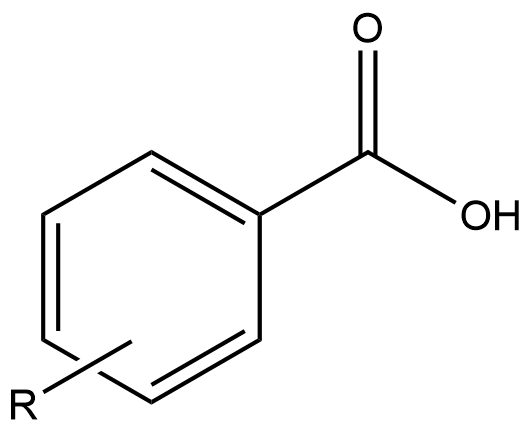
Converting an aromatic carboxylic acid into a coupling partner usually means installing a halogen or metal beforehand. Decarboxylative coupling flips that logic. The carboxyl group, often introduced early in a synthesis, becomes the leaving group itself. Under oxidative, thermal, or photochemical conditions, the C–C bond to CO2 breaks to deliver an aryl radical or an aryl–metal intermediate. That intermediate then enters cross-coupling manifolds with aryl halides, alkenes, or heteroatom nucleophiles. Because the starting acid is cheap, shelf-stable, and widely available, the approach often shortens synthetic routes and tolerates functional groups that would not survive prefunctionalization.
One of the most studied variants is the palladium/copper system reported by Goossen and co-workers. A copper(I) carboxylate undergoes decarboxylation to give an arylcopper species, which transmetallates to palladium. The palladium then couples with an aryl electrophile, producing biaryls without stoichiometric organometallic donors. Silver salts play a similar role in many protocols, especially when peroxide or persulfate oxidants are used. In these radical-type reactions, the aryl radical adds to an arene or a Michael acceptor, giving C–C bonds with regioselectivity that often complements traditional cross-coupling.
Redox-active esters such as N-hydroxyphthalimide (NHP) esters have widened the scope further. Under visible-light photoredox or electrochemical conditions, single-electron reduction fragments the NHP ester into an aryl radical and CO2. This radical can be trapped by olefins, alkynes, or nickel catalytic cycles. The mild conditions allow couplings on complex substrates, including late-stage functionalization of drug-like molecules. Because no strong base or high temperature is required, sensitive stereocenters and polar functional groups remain intact. These features make decarboxylative coupling a practical alternative when conventional organolithium or Grignard chemistry is too harsh.
Naphthalene-Based Carboxylic Acids in Polycyclic Natural Product Synthesis
The strategic incorporation of naphthalene-based carboxylic acids has emerged as a powerful motif in the construction of polycyclic natural products, largely owing to their rigid aromatic framework and predictable reactivity. These building blocks often serve as pre-organized scaffolds that can be elaborated through selective functionalization, enabling rapid assembly of complex ring systems. For example, the electron-rich naphthalene core permits regioselective electrophilic substitutions, while the carboxylic acid group offers a convenient handle for subsequent coupling or cyclization steps. This dual functionality proves especially valuable when targeting terpenoid or alkaloid architectures where dense stereochemical arrays and multiple fused rings are common features.
Beyond simple structural mimicry, naphthalene-based carboxylic acids frequently participate in key transformations such as Diels-Alder cycloadditions, oxidative dearomatizations, and transition-metal-catalyzed C–H activations. The planar naphthalene system can direct facial selectivity in intermolecular reactions, while the carboxylate moiety may act as a directing group for ortho-functionalization or as a traceless activator in decarboxylative couplings. In several total syntheses, a naphthalene carboxylic acid is first converted into a reactive intermediate—such as an acyl chloride or a mixed anhydride—then subjected to intramolecular Friedel-Crafts acylation to forge a new ring with complete control of regiochemistry. This approach has been successfully applied to the synthesis of members of the anthracycline and tetracycline families, where the naphthalene fragment ultimately becomes part of the final polycyclic core.
Recent advances have also highlighted the use of naphthalene-based carboxylic acids in asymmetric catalysis and cascade sequences. By tethering a chiral auxiliary or a stereodirecting group to the carboxylic acid, researchers have achieved highly enantioselective dearomative cycloadditions that convert the flat naphthalene into three-dimensional polycyclic intermediates. Furthermore, the carboxylic acid can be engaged in photoredox-mediated radical decarboxylation, generating carbon-centered radicals that undergo intramolecular cyclizations with pendent alkenes or alkynes. Such strategies have streamlined the synthesis of complex natural products like cortistatins and pleuromutilin analogs, demonstrating that naphthalene carboxylic acids are not merely passive aromatic platforms but versatile participants in bond-forming logic.
Halogenated Aromatic Acids as Modular Handles for Cross-Coupling Cascades
Placing a carboxylic acid next to a halogen on an aromatic ring might look like a recipe for selectivity headaches, yet this pairing opens a practical route to sequential bond formation. The acid can be activated first under decarboxylative coupling conditions, often with a palladium or iridium catalyst, while the halide remains dormant. Because the C–O bond in the carboxylate breaks cleanly and releases CO₂, the aryl–metal intermediate can then engage with an appropriate partner, leaving the halide untouched for a later step.
What makes this approach appealing is the orthogonality between the two functional handles. After the decarboxylative event, the halogen is still available for a classic Suzuki, Heck, or Buchwald–Hartwig coupling, effectively turning a simple haloarene carboxylic acid into a bifunctional linchpin. This avoids protecting-group manipulations and streamlines the assembly of polysubstituted arenes that would otherwise require separate building blocks for each C–C or C–heteroatom connection.
The practical value shows up in medicinal chemistry and materials synthesis, where complex biaryl or triaryl motifs need to be built with control over regiochemistry. Using bromo- or iodo-substituted benzoic acids as starting points, chemists can install one aryl group through decarboxylative coupling and a second through the halide, often in a single pot if the catalyst systems are compatible. The result is a shorter synthetic route with fewer isolations and a clearer map of how each fragment is introduced.
Terephthalic Acid Beyond Polymers: New Roles in Metal-Organic Frameworks
As a workhorse monomer in polyester production, terephthalic acid (TPA) rarely attracts attention beyond polymer science. Yet in metal-organic frameworks, its simple para-dicarboxylate geometry becomes a deliberate architectural tool. The two carboxylate groups sit at opposite ends of a rigid phenyl ring, offering a linear coordination vector that translates directly into predictable framework topology. When TPA binds to metal clusters—zinc, copper, zirconium, and others—it forms extended networks where pore size and shape can be tuned by changing the metal node or synthesis conditions. This is a fundamentally different job from chain growth; here TPA acts as a strut, defining void space rather than polymer chain length.
The value of TPA in MOFs comes not from novelty but from reliability. Its short, stiff backbone resists collapse upon solvent removal, which is critical for achieving permanent porosity. Frameworks built from TPA, such as UiO-66 and IRMOF-1, have become benchmarks for gas storage, separation, and catalysis studies. Moreover, the aromatic ring offers a convenient handle for post-synthetic modification—amino, bromo, or nitro groups can be introduced without altering the overall framework architecture. This modularity lets researchers fine-tune electronic properties and host-guest interactions while keeping the robust TPA scaffold intact. Given its low cost and abundant supply, TPA quietly enables the scale-up of MOF-based technologies that often struggle with exotic, expensive linkers.
Chiral Aromatic Carboxylic Acids: Resolution and Asymmetric Catalysis Applications
Handling enantiopure aromatic carboxylic acids often feels like coaxing order from a stubborn molecular tangle. Classical resolution still leans on diastereomeric salt formation with chiral amines such as cinchona alkaloids or 1-phenylethylamine, yet the real craft lies in picking solvents and counterions that force one diastereomer to crash out while the other stays dissolved. For acids bearing ortho-substituents or fused rings, this simple approach can fail spectacularly, pushing labs toward enzymatic kinetic resolution with lipases or esterases — a slower but often cleaner route when the acid functionality sits near a bulky aromatic system.
Once obtained in high enantiopurity, these acids transform from synthetic headaches into versatile asymmetric catalysts or chiral building blocks. Their planar aromatic core, decorated with a carboxylic acid handle, invites supramolecular interactions that simple aliphatic acids cannot match. In Brønsted acid catalysis, binaphthyl-derived phosphoric acids — though not carboxylic acids themselves — borrow heavily from the same design logic, while chiral aromatic carboxylic acids find direct use as ligands for metal-catalyzed C–H activation or as organocatalysts for aza-Friedel–Crafts reactions. The acid group can also be converted into amides, esters, or acylating agents without losing stereochemical integrity, making these compounds linchpins in medicinal chemistry and total synthesis.
What separates a routine resolution paper from a genuinely useful method is how well it tolerates scale and functional group variety. Chromatographic separation on chiral stationary phases offers convenience for milligram quantities, but few process chemists will embrace it for kilogram production. Meanwhile, diastereomeric salt resolution remains the workhorse for many commercial aromatic acids, despite its trial-and-error reputation. The asymmetric catalysis applications are equally pragmatic: rather than chasing exotic new reaction manifolds, the most cited work uses these acids to improve enantioselectivity in well-established transformations, where a modest change in the aromatic ring's substitution pattern can shift an er from 80:20 to 98:2.
FAQ
Benzoic acid, salicylic acid, 4-aminobenzoic acid, 4-nitrobenzoic acid, vanillic acid, and cinnamic acid are common. Their value comes from the carboxylic acid group being easy to derivatize into esters, amides, or acid chlorides, while the aromatic ring can be further functionalized through halogenation, nitration, or cross-coupling.
The carboxylic acid group is strongly electron-withdrawing, so it deactivates the ring toward electrophilic aromatic substitution and directs incoming groups to the meta position. In practice, chemists often convert the acid to an ester or amide first to tune reactivity or use the acid as a directing group in metal-catalyzed C-H activation.
Salicylic acid has both a carboxylic acid and an ortho hydroxyl group, which can cooperate in chelation, intramolecular hydrogen bonding, and directing metalation. It can be converted into aspirin-like esters, salicylamides, or used in decarboxylative couplings and Kolbe-Schmitt type chemistry to access more heavily substituted phenols.
Cinnamic acid derivatives contain an α,β-unsaturated carboxylic acid, which opens up conjugate addition, Heck coupling, Diels-Alder, and cyclopropanation reactions. This means they can serve as three-carbon building blocks while still retaining the aromatic ring for later functionalization.
A nitro group strongly withdraws electrons and can be reduced to an amine, which then allows diazotization and Sandmeyer, Buchwald-Hartwig, or amide bond formation. An amino group is electron-donating and can be used directly for azo coupling, amidation, or protected to control reactivity. The choice between the two often depends on whether you need an electrophilic or nucleophilic partner.
They often have poor solubility in low-polarity solvents, can be difficult to purify by standard silica gel chromatography, and may require derivatization or acid-base extraction. Phenolic acids like gallic acid are also prone to oxidation, so inert atmosphere or antioxidants may be needed.
Starting from 4-nitrobenzoic acid, one can reduce the nitro group to give 4-aminobenzoic acid, convert the amine to a diazonium salt, and then perform Sandmeyer iodination to obtain 4-iodobenzoic acid. That aryl iodide can then undergo Suzuki coupling with an arylboronic acid to build a biphenyl carboxylic acid, which is useful in liquid crystal or pharmaceutical intermediates.
Terephthalic acid and trimesic acid are critical monomers for polyesters and metal-organic frameworks. Gallic acid and its esters are used to introduce antioxidant phenolic groups into polymers, while 4-hydroxybenzoic acid is a precursor to liquid-crystalline polyesters.
Conclusion
The strategic value of aromatic carboxylic acid intermediates lies in their ability to redirect bond-forming events away from conventional functional group patterns. Ortho-substituted benzoic acids, for instance, exploit steric and electronic biases to achieve regioselective C–H activation, enabling late-stage modification of arenes that would otherwise require prefunctionalized substrates. Decarboxylative coupling strategies further expand this toolbox by converting readily available carboxylic acid derivatives into carbon-centered radicals or organometallic species, forging C–C bonds under mild, often transition-metal-catalyzed conditions. Meanwhile, naphthalene-based carboxylic acids offer rigid, electron-rich scaffolds that streamline the assembly of polycyclic natural products, where control over ring fusion and oxidation state is critical. These three classes illustrate how aromatic acids serve not as passive end groups but as active participants in complexity-generating sequences.
Halogenated aromatic acids represent another modular handle, with the carboxylic acid moiety acting as a temporary directing or protecting group while aryl halides undergo sequential cross-coupling cascades. This dual reactivity allows chemists to build highly substituted biaryl and heteroaryl systems without isolating intermediates. Terephthalic acid, long associated with polyester production, has found unexpected utility in metal-organic frameworks, where its linear dicarboxylate geometry and coordination modes create porous architectures for gas storage, separation, and catalysis. Finally, chiral aromatic carboxylic acids bridge the gap between resolution and asymmetric catalysis: enantiopure acids serve as resolving agents for racemic amines, yet many also function as Brønsted acid catalysts or ligands, transferring stereochemical information in C–C and C–heteroatom bond formations. Together, these intermediates underscore how aromatic carboxylic acids—once viewed as commodity chemicals—now drive advanced organic synthesis through tunable reactivity and structural diversity.
Contact Us
Contact Person: Wei Zhang
Email: [email protected]
Tel/WhatsApp: 862163529955
Website: https://www.dslchem.com