

TFT Screen Module Supplier Selection: Key Factors for High-Quality Displays
2026-05-08
Choosing the right TFT screen module supplier can make or break your product—especially when display clarity and durability are non-negotiable. From brightness and resolution to touch integration and supply chain stability, the decision goes far beyond spec sheets. A trusted partner like Jingda-Display brings deep engineering support and consistent quality, helping you avoid the pitfalls of second-rate panels. In this guide, we’ll walk through the key factors that separate reliable suppliers from the rest, so you can source displays that truly shine in the real world.
Reading Between the Lines: How to Spot Genuine Display Quality
Spec sheets love throwing around terms like 4K, HDR, and a billion colors, but those numbers rarely paint the full picture. You have to look past the marketing gloss and pay attention to the subtle cues—like how smoothly motion is rendered or whether shadow details vanish during dark scenes. A display that truly excels won't just tick boxes on paper; it will feel effortless to watch, letting you sink into the content without eye strain or distraction.
One overlooked trick is to pull up a grayscale ramp and look for banding or color tints in the transitions between black and white. Many panels stumble here, introducing unnatural jumps that betray poor processing. Also, try off-axis viewing: a great screen holds its color and contrast surprisingly well even when you're not dead center. It's these real-world tests, not the spec-sheet contrast ratios, that separate the gems from the also-rans.
Finally, trust your instincts with motion handling. Slow panning shots in movies or scrolling through text can immediately expose a panel’s weaknesses, like excessive blur or stutter that specs never mention. The best displays keep everything crisp without resorting to ugly over-processing that makes film look like cheap video. When you find a screen that combines fluidity with naturalism, you've likely found one where the engineers cared about details beyond the datasheet.
The Supplier Factor: Why Your Display Partner Makes or Breaks the Product
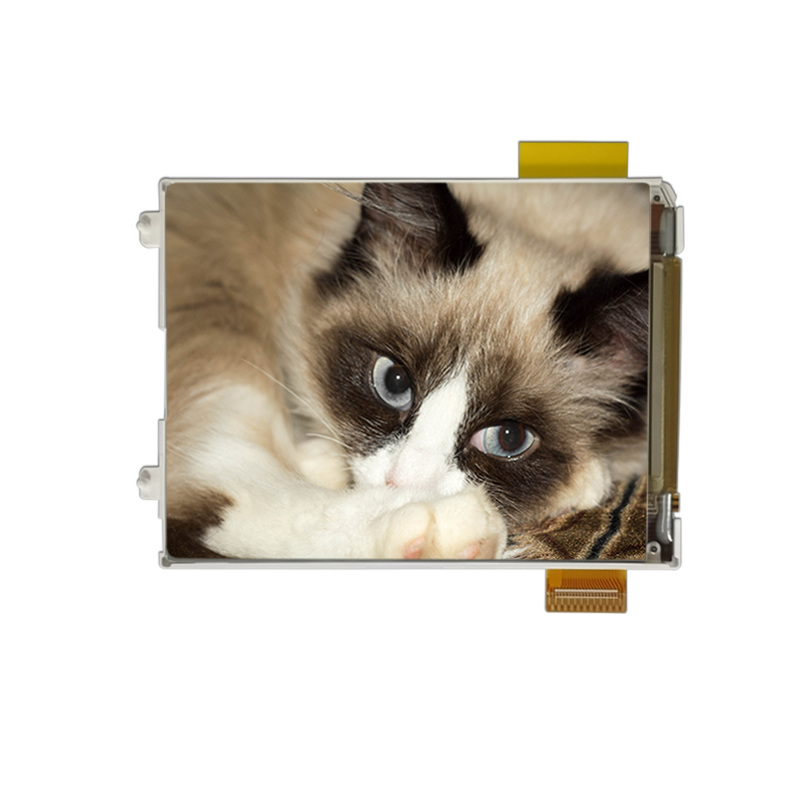
Behind every crisp, vibrant screen on a device lies a partnership that either elevates the user experience or drags it down entirely. Your display supplier is not just a vendor; they are a critical architect of your product's first impression. When the display fails—whether through poor color accuracy, inconsistent brightness, or fragility—the entire product gets judged, no matter how brilliant the internal engineering is.
A supplier with deep expertise in optical bonding, backlight design, and custom touch integration can transform a standard panel into a signature interface that sets your brand apart. Conversely, a partner who cuts corners on quality control or lacks the R&D muscle to solve integration challenges will pass defects down the line, leading to higher return rates and a tarnished reputation.
Ultimately, the right display partner acts as an extension of your team—collaborating on early-stage design, pushing the boundaries of what’s possible, and ensuring consistent performance across every unit. That level of commitment doesn’t just prevent product failure; it creates a foundation for market leadership where the display becomes a key reason customers choose your product over another.
Color Fidelity: Beyond Marketing Jargon to Real-World Performance
When manufacturers tout color fidelity, they often lean on impressive-sounding specs like Delta E < 1 or 100% DCI-P3 coverage. But the true test of color accuracy doesn't happen in a controlled calibration lab—it unfolds in the unpredictable lighting and varied content of everyday use. A display might nail its primary colors on a test pattern, yet still render skin tones with a slight greenish cast or struggle to maintain shadow detail in a dark movie scene. The gap between measured precision and perceptual quality is where real-world performance either shines or falls flat.
Beyond the spec sheet, factors like viewing angles, ambient light reflection, and panel uniformity come into play. A monitor that's perfectly calibrated head-on might shift hues when viewed slightly off-axis, turning deep reds into muddy oranges. Similarly, glossy screens can intensify reflections that wash out subtle gradients, while matte coatings can introduce a grainy haze that softens fine details. Truly reliable color fidelity means consistency across different content types and environments, not just a marketing badge on a product page.
For professionals and enthusiasts alike, the real benchmark is whether a display can sustain accurate colors over time and under shifting conditions. This demands robust factory calibration that holds its integrity after dozens of power cycles, and processing engines that intelligently adapt to signal variations without oversaturating or crushing tones. When the spec matches the experience, you stop thinking about the numbers and simply trust what you see.
Built for the Long Haul: Durability Testing That Actually Matters
When we say a product is built to last, we don't just toss it in a box and hope for the best. Our durability testing mimics the chaotic, unpredictable nature of everyday use—think keys scraping against screens in a crowded pocket, drops onto unforgiving concrete from exactly the wrong angle, and the slow, silent strain of being sat on day after day. Instead of relying on theoretical wear models, we built a multi-axis tumble rig that cycles through 10,000 random impacts, complete with dust and lint injection to replicate pocket debris. Every scuff and micro-fracture teaches us where to reinforce, so the final design shrugs off the small stuff and survives the worst-case scenario.
Temperature extremes are the silent killers of electronics, so we push well beyond the spec sheets. Our thermal shock tests swing from -40°F to 185°F in under two minutes, repeated for weeks—not just to check if it turns on, but to expose solder joints on the verge of cracking and batteries that subtly swell. We also run humidity-soak sessions at 95% RH while components are under full load, because condensation inside a seam is often what spells the end for outdoor gear. These aren't pass/fail checkboxes; they're tools that force us to reseal adhesives, rethink vent placement, or swap to a more resilient alloy until the prototype stops flinching.
Real longevity isn't about surviving one dramatic event—it's about holding up to the thousand tiny insults of daily life. That's why we subject our products to a relentless push-button endurance test, where actuators press every key and switch until they've surpassed a lifetime of use. Cables get yanked and twisted in a custom-built flex machine that rotates and bends them through millions of cycles, while charge ports see more insertions in a week than most devices endure in a decade. By the time you unbox yours, we've already lived through its worst days, and it's ready for the long haul.
Custom Engineering: When Off-the-Shelf TFT Modules Don’t Cut It
Standard TFT modules work well for common applications, but when you need a display that fits a unique form factor, operates reliably in extreme conditions, or integrates specialized touch and bonding, the off-the-shelf options often fall short. It could be a curved surface, a tight mechanical envelope, or a requirement for sunlight readability that generic panels simply can't meet. That’s where custom engineering steps in, tackling the physical, optical, and electronic details that make a display truly suit the product—not the other way around.
The process goes beyond just picking a different resolution or brightness level. It might involve custom cover glass with precise anti-reflective coatings, optically bonded to eliminate internal reflections and improve durability. Or it could mean designing a flexible printed circuit that snakes into an impossibly narrow bezel, or refining the touch sensor pattern to work with thick gloved hands. In environments where shock, vibration, dust, and moisture are everyday realities, a tailored solution ensures the display survives and performs without compromise.
From initial concept sketches to prototyping and final validation, a collaborative engineering approach strips away unnecessary complexity while delivering exactly what the application demands. Whether it's a medical device that must stay readable after repeated sterilization, or a marine chartplotter that endures salt spray and direct sun, custom TFT engineering turns constraints into a coherent, reliable interface. The result isn't just a display—it's a component that feels inseparable from the product itself.
The Logistics Behind the Screen: Ensuring Timely and Consistent Deliveries
Behind every effortless online purchase lies an invisible choreography of inventory checks, route planning, and real-time tracking that few customers ever see. It’s not just about moving boxes from A to B—it’s about predicting demand spikes, rerouting shipments around weather disruptions, and keeping a synchronized flow across warehouses, carriers, and last-mile hubs. When it works, packages appear as if by clockwork, with no hint of the split-second decisions made to avoid delays.
The real challenge is consistency. A single delayed truck can cascade into missed delivery windows and disappointed customers, so logistics teams rely on a blend of automated alerts and human judgment. They monitor traffic patterns, scan for port congestions, and negotiate capacity with multiple carriers to avoid dependence on any one route. It’s a constant balancing act: stock enough inventory nearby to promise next-day delivery without overcommitting valuable shelf space, all while fuel costs and labor shortages keep shifting the math.
What sets dependable delivery apart isn’t just speed—it’s the quiet redundancy built into the system. Duplicate fulfillment centers, backup carriers, and dynamic routing software create a safety net that absorbs the unexpected. When your doorbell rings on the promised day, you’re witnessing the final, polished step of a process that has absorbed a dozen near-misses already. That’s the art of logistics: making the backstage chaos invisible so the front stage feels effortless.
FAQ
Focus on the supplier's track record with display consistency and defect rates. You want a partner that delivers uniform brightness and color accuracy across batches, not just a single perfect sample.
Wide viewing angles ensure readability from different positions, critical if the device is often viewed off-axis. Without this, operators might miss alerts or data in bright sunlight.
Optical bonding eliminates air gaps, vastly reducing reflections and improving contrast. A supplier lacking advanced bonding may deliver screens that look washed out under harsh lighting.
Low upfront prices often mask higher total costs from frequent failures, inconsistent supply, or poor after-sales support. Factor in rework, delays, and the risk of damaged brand reputation.
Very heavily if your project deviates from standard specs. An experienced supplier navigates challenges like EMI shielding or extreme temperature ranges more smoothly, saving you time and iteration.
Request a detailed process control plan and visit their facility unannounced. Look for in-line testing, statistical process control, and how they handle non-conforming units—not just certificates on the wall.
Conclusion
Selecting a TFT screen module supplier goes far beyond comparing datasheets. Genuine display quality reveals itself in the subtleties: uniformity under low brightness, viewing angle stability without color washout, and the tactile response of a touch panel under varying environmental conditions. A supplier that encourages rigorous, hands-on evaluation—supplying engineering samples and sharing detailed optical test reports—signals a commitment to transparency. Displays often look impressive in controlled showroom lighting, but real-world performance demands consistency across thousands of units. That's where color fidelity becomes critical; it's not about the highest gamut numbers, but about how accurately a panel reproduces skin tones, brand colors, or subtle gradients in actual use. Look for partners who calibrate against standard color spaces and can provide per-unit calibration data if your application requires it. Durability is equally telling: meaningful testing involves more than a datasheet's temperature range. Accelerated aging, vibration, thermal shock, and cyclic humidity tests—conducted to recognized standards—expose weaknesses early. A supplier who openly discusses their test protocols and failure modes proves they build for the long haul, not just for the first power-on.
When standard modules fall short, custom engineering capabilities define a true partner. The ability to modify glass sizes, design custom FPCs, integrate cover lenses, or tune firmware for specific touch controllers turns a generic component into a bespoke solution. This technical agility must be backed by responsive project management and transparent communication. Beyond the tech specs, logistics form the backbone of a reliable supply chain. Consistent lead times, regional warehousing, and proactive shortage alerts prevent production line stoppages. A supplier who treats your forecast as a commitment and offers buffer stock options demonstrates they understand the cost of a missing screen. Ultimately, selecting a TFT module supplier is about finding a collaborative extension of your team—one that aligns with your quality standards, adapts to your engineering needs, and delivers on time, every time. The right partner doesn't just provide a display; they help your product tell its story with clarity and reliability.
Contact Us
Contact Person: Vincent
Email: [email protected]
Tel/WhatsApp: 86 135 5485 1379
Website: https://www.jda-display.com/