

Strong Magnet Factory Insights to Help You Choose the Right Supplier
2026-09-18
Choosing a strong magnet supplier often comes down to what's hidden behind the spec sheet. You can read about grade and coating all day, but the real story is on the factory floor—how batches are tested, how tolerances are held, and how a team reacts when something drifts. At DAWA, we open up those insights so you can pick a partner, not just a vendor.
What the Factory Floor Reveals Before You Ever Ask
Step onto a busy factory floor and the first thing you get isn't a spoken briefing—it's rhythm. The steadiness of a CNC spindle, the way carts get parked, whether a tool shadow board has empty hooks or missing outlines. Long before a manager explains throughput or quality metrics, the floor has already answered the questions you didn't ask. Machines that run hot but don't chatter, aisles that stay clear without anyone announcing it, raw material staged right where the next operation needs it—these are the unscripted signals of a process that's actually under control.
Look at where maintenance tools live. A torque wrench with fresh grease on the handle and a clean spot on the rack says it was used, wiped down, and returned in the last hour. A corner pile of mismatched clamps and a cardboard box labeled 'spare parts—do not throw away' tells a different story: the formal checklist might exist, but the real work is being held together by improvisation. No one will volunteer that on a tour, but the evidence sits out in the open.
Then watch the material itself. Does it creep forward in steady, small batches, or does it surge and stall? Frequent, short queue lines in front of each station usually mean balanced takt times and flexible sequencing. If you see pallets stacked three high at the end of a shift, someone is optimizing for machine uptime at the expense of flow. That trade-off is never printed in the brochure—it's just lying there on the floor, waiting to be read.
The Magnet Grade Trap: When Specs Don't Match the Pour
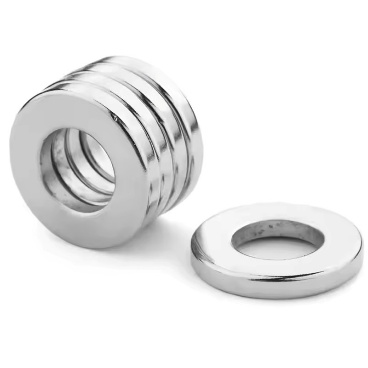
A magnet's grade label, like N42 or N52, is often treated as a hard promise of performance. But that number is derived from a specific set of test conditions on a fully dense, properly aligned sample—not from every pour that leaves the foundry. The trap is that the grade doesn't always reflect what actually happened in the melt or during casting. If the alloy chemistry drifts, if the cooling rate isn't controlled, or if the grain structure ends up uneven, you can end up with a magnet that barely clears a lower grade while still wearing a higher-grade stamp.
The real trouble shows up in the details that a single number hides. For example, the pour itself can introduce subtle variations: slight oxidation of neodymium, segregation of the rare-earth-rich phase, or the formation of soft magnetic α-iron in the grain boundaries. Any of these can drop the intrinsic coercivity (Hcj) or the remanence (Br) below what the grade promises. A datasheet might list an N48 with an Hcj of 12 kOe, but if the actual pour had a higher oxygen pickup, the real Hcj could sit at 10.5 kOe. The magnet still looks like an N48 on paper, but it won't survive the same temperature or demagnetization stress.
The way out is to stop trusting the grade as a complete description. Ask for the actual demagnetization curve from the specific production lot, or at least the measured Br, Hcj, and BHmax from a sample taken after that pour. If the supplier can't provide batch-level data, you're gambling on consistency. Also, pay attention to the test method—some labs use a Helmholtz coil on a finished magnet, others use a closed-circuit permeameter on a machined cube. The numbers won't line up perfectly. In the end, a grade is a shorthand, not a material certificate. The pour doesn't care what the label says, and neither does your application when the magnet gets hot.
Batch Consistency Isn't a Bonus, It's the Real Product
The first batch of any product always attracts obsessive attention. Founders tweak the recipe, adjust the finish, and fuss over details until it feels perfect. But the second batch? That's where the real test lives. If customers can't tell batch two from batch one, you don't have a fluke—you have a process. And a process is the only thing that scales. Most small brands treat consistency like a quality-control checkbox, but it's actually the product itself. The taste, the feel, the moment someone opens the package—that's the promise. The second and third and fiftieth batch are simply whether you kept it.
Think about why people pay premium prices for commodity goods. It's not because the raw materials are rare or the packaging is pretty. It's because they know exactly what to expect, every single time. That predictability is harder to manufacture than the item itself. Temperature shifts in the warehouse, a new supplier for the same spec, a different person on the line—each one can silently break the pattern. Brands that survive don't just document steps; they build in redundancy, test at every stage, and treat variation as a defect rather than a quirk. When consistency slips, customers don't complain immediately. They simply stop reordering, and by then the damage is invisible.
The real craftsmanship isn't in the first batch. It's in the hundredth batch made on a rainy Tuesday when nobody is watching. That's why the best operators obsess over boring things: logged temperatures, batch sheets, supplier audits, and the exact same fold in the same corner of the box. It looks like monotony from the outside, but it's actually the foundation of trust. Without that repetition, the product is just a prototype with good marketing. With it, the product becomes a habit—and habits are what people pay for.
Raw Material Shortcuts That Show Up Six Months Later
You swap a supplier to shave a few cents off per unit, and the savings show up on the spreadsheet instantly. Nobody notices the slight change in grain structure, the thinner coating, the resin that cures a little faster than it should. For a while, everything runs fine. Machines don’t complain, tolerances hold, and the quarterly report looks better than expected. Then six months down the line, the warranty claims start trickling in—hairline cracks, premature wear, discoloration no one can explain. The shortcut never announces itself at the moment of purchase; it waits until your product is in the field and your reputation is on the line.
The tricky part is that raw material substitutions rarely look like shortcuts on paper. A different ore source, a recycled content blend that’s just slightly off spec, a heat treatment that skips a secondary pass to cut furnace time—each decision gets justified with data, cost models, and supplier assurances. Maybe the tensile strength tests still pass, barely. Maybe the viscosity looks fine on day one. But aging, fatigue, and environmental exposure don’t care about your initial inspection. Six months of UV, humidity, or thermal cycling will expose what a quick lab test can’t. By then, the batch numbers are already mixed into finished goods across three continents, and tracing the root cause becomes a forensic exercise you never budgeted for.
Smart teams don’t wait for failure to teach them. They build lagging indicators into their material qualification process—requiring accelerated aging data before approval, retaining samples from every incoming lot, and running periodic teardown audits on products that have been in service for a quarter or two. It costs more upfront, sure, but it’s a fraction of what a recall or a class action settlement will eat later. The honest truth is that raw material shortcuts always show up. The only question is whether you’re the one discovering them in your own lab, or your customer is discovering them on a jobsite six months after the sale.
Custom Tooling That Works on Paper and Nowhere Else
There's a particular breed of internal tool that looks flawless in a flowchart and collapses the moment someone tries to use it for real work. The spec is airtight, the diagrams are crisp, and every edge case has been given a name—yet the tool itself sits in a repository, untouched, because nobody can figure out how to make it run on an actual machine.
What makes these tools so seductive is that they're built for an audience of one: the person who designed them. They solve problems as they appear in documentation, not as they appear in the messy, interrupt-driven reality of daily operations. The result is a kind of cargo cult engineering, where the appearance of capability is mistaken for capability itself.
Killing such a project is harder than it should be. It has already consumed budget, headcount, and a dozen meetings where everyone nodded along. But the kindest thing you can do is treat it as a prototype that taught you what not to build—and then go build something uglier that actually works.
The Exit Cost of a 'Good Enough' Supplier Relationship
Most procurement teams treat a stable supplier relationship as a win—until they realize the price of not switching. The real exit cost isn't spelled out in the contract; it's the innovation you never pushed for, the pricing review you skipped, and the process improvements that were always 'next quarter.' A supplier who is just good enough quietly freezes your baseline.
There's also the internal cost of leaving a comfortable arrangement. Stakeholders have built routines around that supplier's quirks. Finance knows their invoice format, engineering has tuned specs to their tolerances, and nobody wants to restart discovery. Walking away means admitting the last three years of 'good enough' could have been better—and that admission carries political weight.
Over time, the organization loses its exit muscles. When a real disruption hits or a competitor negotiates better terms elsewhere, the team discovers it no longer knows how to run a proper RFP or pressure-test an alternative. The most expensive part of a good enough supplier relationship is not the money you pay them; it's the capability you stop building for yourself.
FAQ
Watch how raw materials are stored and whether the floor is clean enough for precision work. Ask to see the magnetization and coating line in action, not just a showroom. A factory that hesitates to let you near the actual production area usually has something to hide.
Request their latest inspection reports for a batch similar to yours, including dimensional checks and coating thickness measurements. Follow up by asking what happens when a batch fails—if they can't describe a clear corrective action loop, that's a warning.
Don't just ask for total monthly tonnage. Ask how many custom orders they run simultaneously and what their average lead time is for a new tooling design. A plant that quotes huge volumes but can't name recent custom jobs may be inflating its capability.
Often the difference comes from using recycled or lower-grade raw material, skipping surface treatment steps, or cutting corners on dimensional tolerance. Ask for a full material datasheet and compare the remanence and coercivity values, not just the price per piece.
It matters a lot if you're building motors or sensors where consistency affects safety. A good factory keeps heat lot records linked to each finished batch, so you can trace a field failure back to the exact powder shipment.
Have the factory send samples from a production run, not handpicked prototypes. Then test them under your actual operating temperature and measure pull force after thermal cycling, since many magnets lose strength more than spec sheets suggest.
Look out for vague answers about plating thickness, reluctance to share failure analysis data, or sudden changes in contact person after you ask technical questions. Also be wary if they promise any grade, any size, any coating with no lead time discussion.
A capable supplier will ask about your working temperature, humidity, and mating components before quoting. If they simply repeat your drawing back without pointing out tolerance risks or suggesting a better grade, they're likely just a trading middleman.
Conclusion
Walking a magnet factory before signing anything tells you more than any datasheet. Look at how raw powder is stored, whether furnaces are clean, and if every melt gets a sample pulled for chemistry. Many suppliers will show you a certificate that says N52, but the actual pour might be closer to N48 once you measure it at operating temperature. That gap isn't a rounding error—it changes pull force, holding torque, and demagnetization risk. Ask to see the spectrometer readout from the same lot you're buying, not a reference curve. Batch consistency is where most vendors fall apart. One great sample means nothing if the next ten shipments drift in coercivity or plating thickness. You're not buying magnets; you're buying repeatability.
Raw material shortcuts rarely show up at incoming inspection. A factory that quietly switches to lower-grade recycled rare earths will still pass a simple gauss meter test, but six months later you'll see corrosion bloom under the nickel coating or unexplained flux loss in a motor. Custom tooling has the same trap: a fixture that works in a CAD model can fail on the shop floor because of tolerance stacking, springback in the magnet press, or plating buildup. And the worst cost is hidden—a supplier that was "good enough" until they weren't. Every rejected batch, every rework order, every field return eats your margin and your reputation. Pick the factory that shows you the floor, the melt logs, and the lot data without being asked. That's the only kind worth keeping.
Contact Us
Contact Person: Kelvin Lo
Email: [email protected]
Tel/WhatsApp: 0769-88561131
Website: https://dawamagnetic.com/