

Professional Laser Cutting Machine Features That Improve Cut Quality
2026-09-26
Cut quality isn't just a spec on a data sheet—it's the silent judge of every finished part. Yet too many shops accept micro-dross, edge roughness, or heat distortion as unavoidable. What if the right laser cutting machine features could systematically erase those flaws? At HUNSONE, we've zeroed in on the engineering details that separate acceptable cuts from flawless ones, from real-time beam shaping to adaptive gas pressure control. This post breaks down the professional-grade features that actually move the needle on cut quality—and why they matter more than horsepower alone.
Why Stable Laser Output Is Non-Negotiable for Clean Edges
When cutting or engraving materials like acrylic, wood, or metal, any fluctuation in laser power directly shows up as ragged, charred, or wavy edges. A stable output isn't just a nice-to-have; it's the difference between a crisp, finished edge and a piece that needs hours of post-processing sanding or scraping. Small power dips cause uneven melting, while sudden spikes can over-burn thin sections, leaving behind a frosted or cracked surface that's nearly impossible to fix.
The real challenge is that most operators only notice instability after the damage is done. You might see a perfectly straight line on one part of the bed, then a distorted, wave-like edge on another, all because the laser tube or power supply couldn't maintain consistent current. For thin or layered materials, even a 2% drift in output can alter the kerf width just enough to ruin a tight-fit joinery or a delicate inlay. That's why high-quality machines use closed-loop feedback systems and regulated drivers to hold the beam within a fraction of a percent of the set value.
Once you've worked with a truly stable laser, you stop thinking about edge quality as a variable and start treating it as a given. Clean edges come from repeatable vaporization along the cut path, not from guessing at speed and power compensations. If your current setup forces you to sand or polish every single edge before assembly, the problem isn't your technique—it's the unstable output you've been tolerating.
Auto-Focus Keeps Thick and Thin Cuts Sharp Without Manual Tweaks
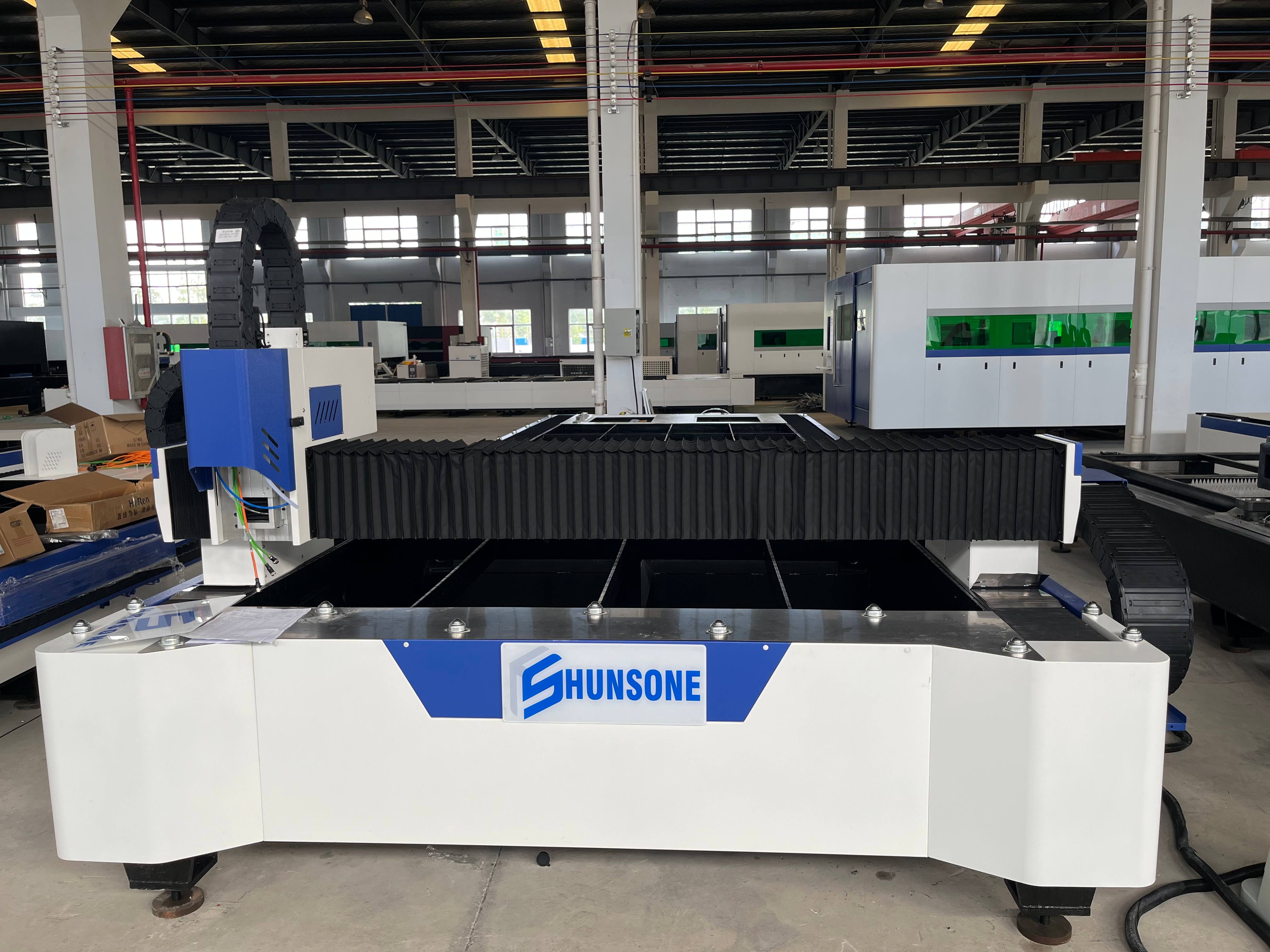
The auto-focus mechanism responds to material thickness in real time, so switching from dense hardwood to thin plywood no longer means pausing to recalibrate. It reads the surface at the start of each cut and adjusts the focal length on its own, keeping the beam tight whether you are slicing through 18 mm oak or 3 mm acrylic. That consistency shows up most in fine details and sharp corners, where even a slight drift can leave charred edges or incomplete cuts.
Operators can run a full sheet of mixed materials without touching a single dial, which cuts down on setup mistakes and wasted test pieces. The system also compensates for slight warping or uneven beds, maintaining focus across the entire work area. For shops that handle varied stock day to day, this means less downtime and cleaner results from the first pass to the last.
Gas Pressure Precision: The Difference Between Dross and a Clean Break
On thicker mild steel plate, the line between dross and a clean break lives in a surprisingly narrow pressure window. When assist gas pressure sags even half a bar below the sweet spot, the molten slug stops ejecting fully from the kerf. It cools at the bottom edge and freezes into hard dross that takes a chisel or angle grinder to remove. The frustrating part is that the cut may look fine from the top, so operators often blame focal position or nozzle wear while the real culprit is pressure decay from a dirty regulator, undersized hose, or a compressor cycling too slowly.
Run that same gas too high, and the cut gets its own set of problems. Excess pressure creates turbulence inside the kerf, widening the heat-affected zone and rounding the top edge. You also burn through nitrogen or oxygen at an absurd rate, and the loud, ragged exhaust stream tells you the energy isn't focused on ejecting the melt cleanly. A correctly tuned pressure produces a steady, almost pencil-line bright spot at the piercing point, while an overblown cut throws sparks and slag outward in all directions.
In practice, the difference often comes down to adjustments so fine that a 0.2 bar change shifts the result from dross attached along the whole underside to a clean, uniform break line you can run a gloved finger across without catching. Material thickness, nozzle diameter, and even sheet coating all move that optimum, so a setting from yesterday's job won't necessarily transfer to today's batch. Watch the underside while cutting, not just the top seam. When the bottom shows a smooth, slightly darker break with no bead, you've found the pressure that makes cleanup disappear.
Cooling Consistency You Can't See but Your Parts Will Feel
Most machine operators never think about the coolant temperature swinging by a degree or two. It happens quietly, inside the lines, while the spindle keeps turning. But that small drift is enough to nudge a bore diameter out of tolerance or leave a taper where there shouldn't be one. The parts don't care that the variation was invisible—they just reflect it back in measurements and scrap rates.
Achieving this kind of consistency isn't about adding more sensors or flashing dashboards. It's about designing a thermal loop that stays stable under real shop conditions—variable ambient temperatures, long cycle times, and changing flow demands. A well-tuned chiller with proper reservoir sizing and smart pump control can do more for repeatability than any operator adjustment. The system simply holds its line, hour after hour, without needing attention.
Where it shows up is in the parts themselves. Tighter dimensional spread, better surface finish after milling or grinding, and fewer rejects on the CMM. Tool life often improves too, because the cutting edge isn't being shocked by hot and cold cycles. It's the kind of improvement that never makes the evening shift report, but the machinists notice when they stop reworking the same features every morning.
Motion Control Micro-Adjustments That Pay Off in Every Cut
Most editors treat motion keyframes as set-and-forget. But nudging the easing curve even a few percentage points can change the entire feel of a push-in or a slide. Instead of leaving a linear interpolation, spend fifteen seconds pulling the handles into a gentle ease-out. The movement breathes instead of lurching, and that difference shows up in every frame you cut.
The real payoff comes at the edit point. When two shots carry motion in the same direction, match the velocity, not just the action. Slide the second clip a frame or two earlier or later until the motion vectors align, then add a tiny scale or position offset so the eye never stops. A one-pixel shift can hide a cut that would otherwise feel like a hiccup.
Speed ramps benefit from micro-adjustments too. A ten percent ease before the ramp makes the acceleration feel intentional instead of jarring. For fast whip pans or action bursts, try a quarter-frame motion blur on the outgoing shot. These tweaks are nearly invisible on their own, but stacked together they give your edit a polish that viewers feel without noticing.
Real-Time Flaw Detection Before the First Pierce
The moment before a pierce is deceptively quiet. The cutting head is poised, the assist gas is ready, and the material sits under the beam. Any flaw in that last millimeter of surface—a rolled-in scale, a micro-lamination, a pit from storage—turns the first pierce into a gamble. Real-time detection changes that by scanning the exact spot where the beam will land, comparing the local surface signature against the surrounding area, and flagging anomalies before the shutter opens.
What makes this different from post-cut inspection is timing. Instead of finding a failed pierce after the fact, the system looks for the precursors that cause one: hard inclusions, uneven coating, or residual stress patterns. A short burst of structured light or a high-speed thermal snapshot can reveal a shallow defect that would otherwise stay hidden until the molten pool reacts violently. Because the check happens milliseconds ahead of the beam, there is no added cycle time—only the removal of uncertainty.
On the shop floor, that translates into fewer aborted starts, less nozzle damage, and cleaner first parts. The operator no longer has to watch for a dull flash or listen for a sputter to know something went wrong. The detection step quietly vetoes the pierce, moves the head a few millimeters to a clean zone, or adjusts the pierce parameters for the imperfection at hand. It is a small shift in sequence, but it removes the most expensive kind of mistake: the one you only see after the damage is done.
FAQ
It keeps the focal point locked at the material surface even when the sheet has slight warping or thickness variation. Without it, the spot size drifts and you get inconsistent kerf widths and more dross. A good autofocus system samples the nozzle-to-material distance in real time and moves the lens before the cut degrades, so edge squareness stays tight across the whole sheet.
Laser cutting is a high-acceleration process. If the gantry or bed flexes during direction changes, the beam path shifts and corners overshoot or round off. A stress-relieved, welded steel frame with precision-machined mounting surfaces keeps the motion system and optics in alignment. That means the cut path follows the programmed geometry almost exactly, and you don't see vibration marks on the cut edge.
Different material thicknesses and cut geometries need different assist gas flows. Fixed pressure often leaves slag on small holes or burns thin sections. Adaptive control adjusts pressure based on the cutting head's movement, cornering speed, and pierce sequence. It keeps the molten metal ejection steady, so you get bright, oxide-free edges on mild steel and cleaner dross-free cuts on stainless.
A lens with low absorption and good thermal stability doesn't shift its focal length as it heats up. Cheaper lenses expand and move the focus, especially during long runs, which turns a clean cut into a rough one halfway through the job. Premium lenses maintain focus stability and deliver a smaller, more consistent spot, which directly lowers the heat-affected zone and gives sharper corners.
Yes, because temperature changes affect more than just the laser source. The resonator, optics, and even the machine frame expand and contract. A stable chiller with tight temperature control keeps the beam mode consistent and prevents thermal drift in the cutting head. Without that, you might start a job with a perfect beam and end it with a slightly shifted focal point and wider kerf.
Look for direct-drive or high-precision rack-and-pinion with low backlash, plus a control system that handles acceleration ramping smoothly. When the head has to stop and reverse on tight curves, any mechanical slop or jerky acceleration shows up as striations on the cut edge. A well-tuned servo loop with high-resolution encoders keeps the cut speed constant through small features, so the edge finish stays uniform.
A lower M² value means the beam can be focused to a tighter spot with a longer depth of focus. On copper or aluminum, that extra power density overcomes the reflection threshold faster and creates a narrow, stable kerf. Poor beam quality spreads the energy, so you need more power and get a wider cut with more burr. For thin reflective sheets, a high-quality beam is often more important than raw wattage.
Height sensing isn't just about avoiding collisions. Capacitive or optical sensors track the exact nozzle-to-material gap during piercing and cutting. If the gap changes because of a small bump or slag blob, the sensor tells the Z-axis to compensate immediately. That keeps the assist gas flow focused and the beam waist at the right position, which prevents edge roughness and lost cuts.
Conclusion
A laser cutter only earns its place on the floor when the beam stays rock-steady from first pierce to final edge. Fluctuations in output—even brief ones—turn a clean profile into a jagged mess, so a machine that actively regulates power delivery is the baseline for any shop serious about edge quality. Equally important is auto-focus, which removes the guesswork when switching between thick plate and thin sheet. Instead of pausing for manual lens adjustments, the head reads material height and adjusts on the fly, keeping the focal point locked where the cut demands it. Then there’s gas pressure: too little leaves dross welded to the bottom edge, too much blows the kerf ragged. Precision valves and closed-loop flow control make the difference between a part that needs hand filing and one that drops clean off the nest.
What you can’t see matters just as much. Cooling consistency prevents thermal drift in the resonator and optics, so the beam diameter and mode stay put over long runs—your parts feel it in repeatable dimensions and smoother faces. Motion control micro-adjustments, like jerk limiting and backlash compensation, also earn their keep on every contour: they stop the head from overshooting tight corners or hesitating at pierce points, which is where most edge defects creep in. On top of that, real-time flaw detection before the first pierce checks nozzle condition, focus offset, and assist gas flow, flagging problems when they’re cheap to fix rather than after a sheet full of scrap has been cut. Together these quiet safeguards deliver the kind of cut quality that doesn’t need a secondary operation to look finished.
Contact Us
Contact Person: James Chen
Email: [email protected]
Tel/WhatsApp: 86 13770803946
Website: https://www.hunsone.com/