

Professional 5G Core Network: Architecting the Next Wave of Connectivity
2026-05-24
The shift to 5G isn’t just about faster speeds — it’s a fundamental rethinking of network architecture. At its heart lies the 5G core, a cloud-native powerhouse designed to unlock slicing, edge computing, and seamless service agility. But building a truly professional 5G core means balancing standards with real-world innovation. That’s where IPLOOK comes in, redefining what’s possible when connectivity meets purpose-built design. In this post, we dive into the blueprint of next-gen networks and why the core matters more than ever.
Redefining the Core: A Blueprint for 5G’s Architectural Shift
The move to 5G isn't just about faster speeds on your phone. It's forcing a fundamental rethink of the network's backbone. Traditional cores were built like monolithic fortresses, tightly coupled hardware and software that made upgrades a nightmare. Now, the blueprint tears that down, embracing a cloud-native, service-based architecture where network functions are broken into discrete, independent services that communicate over APIs. This isn't a minor tweak—it's a complete dismantling of the old hierarchy, enabling agility that was previously unthinkable.
At the heart of this shift is the concept of slicing. The new core can carve itself into multiple virtual networks, each tailored to wildly different demands—ultra-low latency for autonomous vehicles, massive device density for IoT sensor fields, or high-bandwidth pipes for augmented reality. The old one-size-fits-all approach simply couldn't handle such diverse needs without grinding to a halt. By abstracting the physical infrastructure, operators can now partition resources on the fly, dedicating compute, storage, and connectivity exactly where it's needed, when it's needed.
Perhaps most striking is the move to a stateless, distributed design. Session data is decoupled from processing, so any function can handle a request without having to route back to a central point. This not only slashes latency but builds in resilience—if one node fails, another steps in seamlessly. Edge computing becomes native, pushing intelligence closer to users and devices, reducing the backhaul burden and unlocking real-time applications. It's a blueprint that doesn't just upgrade the core; it redefines what the network can be.
Cloud-Native Agility: Building Networks That Adapt in Real Time
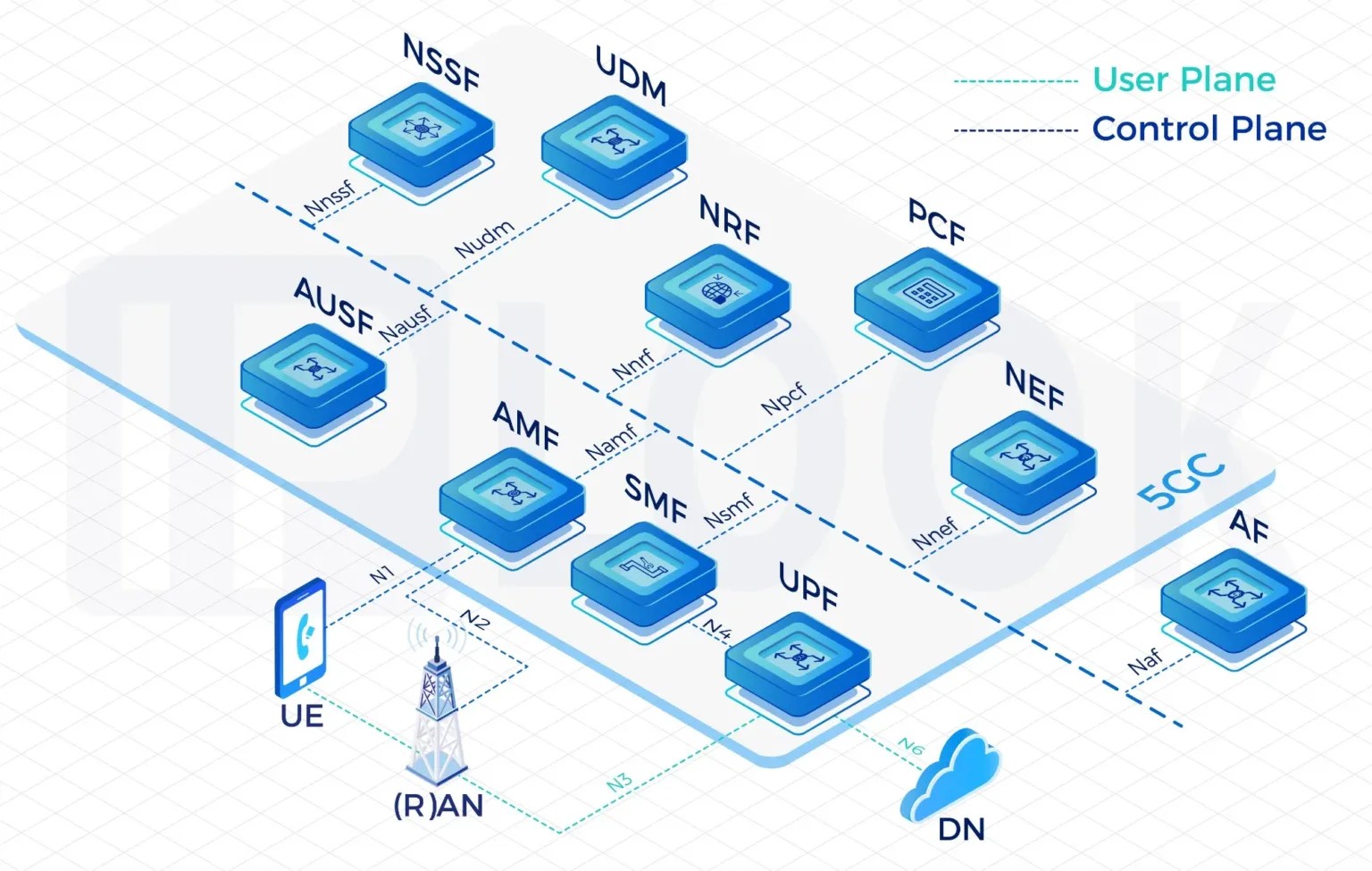
Real-time adaptation in networking isn't just about speed—it's about intelligence woven into every layer of the stack. Traditional networks react to conditions after they've occurred, fumbling through predefined thresholds and manual interventions. Cloud-native agility rewrites this script by embedding continuous reconciliation loops and event-driven architectures directly into the control plane. The result is an infrastructure that feels almost anticipatory, responding to traffic shifts, policy changes, and security events the moment they happen, not minutes later.
What makes this approach genuinely different is the shift from static configuration to dynamic intent. Instead of hard-coding routing rules or firewall policies, you express the desired state, and the platform constantly works to maintain it, even as the underlying environment churns. This isn't automation alone—it's autonomous operation. Pods spin up and down, user demand spikes unexpectedly, and yet the network fabric reshapes itself without a single engineer typing a command. The old brittleness vanishes, replaced by something more organic.
Perhaps the most overlooked aspect is how this agility compounds when you stop treating the network as a separate concern. In a cloud-native world, application teams describe connectivity requirements alongside their workloads, and the infrastructure simply provisions what's needed. Observability is built in, not bolted on, so you don't just see that something went wrong—you understand why, often before users notice. That's the real-time promise delivered not as a feature list, but as a quiet, resilient presence that lets everyone focus on building, not babysitting.
Tailored Connectivity: How Network Slicing Meets Diverse Demand
Network slicing transforms a single physical network into multiple virtual networks, each precisely tuned to meet the unique performance requirements of different applications. Rather than treating all data traffic identically, this approach allows carriers to carve out dedicated slices with customized characteristics—such as ultra-low latency for autonomous vehicles, massive bandwidth for virtual reality, or high reliability for industrial automation. The result is a shift from one-size-fits-all connectivity to a fabric of purpose-built pathways, each optimized for a specific task without interference from other traffic.
What makes this possible is the dynamic orchestration of resources across the entire network stack, from the radio access to the core. Each slice operates as an isolated end-to-end logical network, complete with its own service-level agreements and security policies. For instance, a slice supporting remote surgery can guarantee jitter below a millisecond, while a slice for smart metering might prioritize energy efficiency and massive device density over peak speeds. This level of granularity ensures that diverse demands coexist harmoniously on shared infrastructure, avoiding the cost and complexity of building separate networks for each use case.
The real power of tailored connectivity emerges when slices adapt in real time to changing conditions. Advanced analytics and automation enable the network to anticipate demand surges, reroute resources, or adjust slice parameters on the fly—say, expanding bandwidth for a stadium live stream or hardening a slice against sudden interference. This flexibility not only enhances user experiences but also unlocks new revenue opportunities for service providers, who can offer customized network-as-a-service solutions to enterprises, event organizers, and vertical industries. Ultimately, network slicing turns connectivity into a responsive, shape-shifting asset rather than a rigid pipe.
Fortifying the Foundation: Security Embedded in Every Layer
Building true resilience means weaving protection into the architecture from day one, not bolting it on after the fact. Every component—whether it's the kernel, the container runtime, or the API gateway—needs to carry its own safeguards. This shift transforms security from a checkpoint gatekeeper into a natural property of the system, where guardrails are baked into the logic itself. The result is an environment that doesn't just react to threats but inherently resists them, closing gaps that patching alone can't reach.
Embedding security at each layer forces teams to rethink defaults: network policies become part of workload definitions, identity checks are woven into service meshes, and data handling is governed by context rather than perimeter. It's a deliberate design choice that relies on rigorous isolation, minimal privileges, and constant verification. When done right, these layers don't just stack—they reinforce each other, creating a fabric where even if one thread frays, the whole holds. The goal isn't a fortress wall; it's a living system that adapts without losing integrity.
From Centralized to Distributed: The Rise of Edge-Centric Cores
For decades, computing architecture revolved around monolithic data centers—vast, centralized hubs where all processing, storage, and decision-making occurred. This model made sense when latency wasn't a deal-breaker and bandwidth was plentiful. But as applications grew more interactive and data exploded at the edge, pushing every byte back to a distant core became untenable. The shift toward distributed frameworks didn't happen overnight; it was a gradual recognition that not everything needed to be in one place. Early IoT deployments and content delivery networks hinted at what was possible when you moved computation closer to the action, but the real inflection point came when latency-sensitive workloads like autonomous vehicles and real-time analytics demanded instant processing without a round trip to the cloud.
Now we're seeing an architectural reimagining where the center of gravity moves outward—edge nodes aren't just satellite outposts but become the primary compute fabric for critical tasks. This edge-centric approach doesn't completely abandon the core; rather, it reshuffles responsibilities. The core handles heavy batch processing, model training, and long-term storage, while edge cores take on rapid inference, local decision loops, and data filtering. What's interesting is how this arrangement often emerges organically from necessity rather than top-down design. A factory floor doesn't need to consult a cloud server to stop a robotic arm when a safety beam is tripped; the logic lives right next to the sensors. Across industries, similar patterns keep surfacing, driven by the same basic constraints: physics still imposes speed limits, and reliability often demands local autonomy.
The implications stretch beyond just technology. When you distribute intelligence to edge cores, you change the economics and resilience of systems. It's no longer about buying bigger pipes to the center; it's about smarter software that knows what to process where. Some of the most compelling deployments today blend 5G, tiny ML models running on microcontrollers, and opportunistic meshing of nearby devices—turning neighborhoods into impromptu compute clusters. The centralized model isn't dead, but its dominance has faded. What's rising is a hybrid, pulsing ecosystem where core and edge trade roles fluidly based on context. And while the tools are still maturing, the direction is unmistakable: compute is following data, and data is everywhere.
Harmonizing Industries: Orchestrating a New Era of Seamless Interaction
The convergence of industries is reshaping our world, blending once-distinct sectors into a fluid tapestry of collaboration. This shift isn’t about a single breakthrough technology but a cultural rethinking of how we connect systems, people, and processes. By weaving together capabilities from manufacturing, tech, energy, and healthcare, we’re crafting an ecosystem where interactions feel intuitive and barriers dissolve. It’s a move from rigid silos to an adaptive, responsive network that mirrors the complexity of real-world demands.
At the heart of this transformation is the art of orchestration—not a top-down command, but a dynamic, real-time coordination that allows each element to play its part in harmony. Imagine a supply chain that self-corrects during disruptions, or a smart city where transportation, energy, and public services respond as one living organism. This requires more than integration; it demands a shared language between machines and a design philosophy that prioritizes human experience. The result is a seamless flow that hides the intricate ballet behind the scenes, making complexity feel effortless.
The ripple effects extend beyond efficiency. When industries harmonize, they unlock novel solutions to stubborn problems—customized healthcare that blends AI diagnostics with traditional medicine, or sustainable manufacturing that fuses renewable energy with circular economy principles. This new era isn’t about technology for its own sake, but about creating a responsive, empathetic foundation that elevates how we live and work. The challenge now is to foster the trust and collaboration needed to turn these possibilities into everyday reality, ensuring the orchestration serves people, not just systems.
FAQ
The shift to a Service-Based Architecture (SBA) is the real game-changer. Instead of rigid point-to-point interfaces, network functions communicate via a common bus using HTTP/2 APIs. This makes the core inherently modular, cloud-native, and far easier to scale or update than the tightly coupled nodes in 4G's Evolved Packet Core.
Cloud-native principles allow network functions to run as microservices inside containers, orchestrated by platforms like Kubernetes. Operators gain automated healing, rolling updates without downtime, and the ability to scale individual functions elastically, slashing operational costs and enabling continuous delivery pipelines that aren't possible with legacy monolithic appliances.
Think of network slicing as carving out dedicated logical networks from a single physical infrastructure, each tailored to a specific business need. A factory gets an ultra-reliable low-latency slice for machine control, while a stadium event uses a high-capacity slice for video streaming. This turns connectivity into a customizable product, letting operators offer differentiated SLAs and tap into new enterprise revenue streams beyond flat-rate data plans.
The UPF acts as the distributed data plane anchor. By deploying it closer to users at the edge, traffic shortcuts directly to local applications instead of hauling back to a central data center. This physical proximity, combined with flexible traffic steering rules at the UPF, can bring round-trip times down to single-digit milliseconds for immersive AR or autonomous system controls.
The core's access-agnostic design means it can integrate trusted and untrusted Wi-Fi, fixed broadband, even satellite links under a common framework. The Access and Mobility Management Function (AMF) handles authentication and mobility across all these, while the Session Management Function (SMF) manages sessions regardless of the access type. This lets users move seamlessly between a campus Wi-Fi and a macro cell without dropping the service session.
Beyond just stronger encryption algorithms, it introduces a unified authentication framework that supports Extensible Authentication Protocol (EAP) and home control, meaning the home network can enforce security policies even when users roam. Security Edge Protection Proxy (SEPP) encrypts sensitive header information between networks, and the SBA's API exposure is guarded by the Network Exposure Function (NEF) with robust authorization, shrinking the attack surface compared to scattered 4G interfaces.
Many are following a phased coexistence mode, running the Evolved Packet Core and 5G Core side-by-side while linking them through interworking functions. Devices that support both get steered to the 5G Core for new slicing or low-latency features, while legacy devices stay on 4G. Voice often relies on EPS fallback until full VoNR coverage matures. This dual-homing strategy allows a gradual migration, testing enterprise use cases early without sacrificing broad consumer coverage.
Conclusion
The shift toward 5G standalone architecture demands a fundamental reimagining of the core network, moving beyond mere capacity upgrades to a blueprint that embeds flexibility and intelligence at its heart. At the center of this transformation is a cloud-native design ethos, enabling the core to become a living, breathing entity that scales and adapts in real time to unpredictable traffic patterns and service demands. This architectural pivot introduces network slicing as a native capability, allowing operators to carve out logically isolated, purpose-built virtual networks that cater to everything from massive IoT sensor grids to ultra-reliable low-latency industrial controls. Security, far from being tacked on, is woven into every layer from the outset, with encrypted signaling, strict access controls, and automated threat detection forming a resilient immune system for the entire network.
The evolution doesn’t stop at centralization; the core now extends its intelligence outward, embracing edge-centric deployments that bring processing power closer to where data originates and actions happen. This distributed edge-core continuum is what makes autonomous vehicles, smart factories, and immersive augmented reality not just possible but practical and performant. Underpinning all these technical shifts is a broader mission: harmonizing previously siloed industries through a common service-based framework. By exposing network functions as consumable, programmable resources, the 5G core becomes a platform for seamless interaction across healthcare, logistics, entertainment, and beyond, orchestrating a new era where connectivity isn’t just fast—it’s inherently tailored, secure, and deeply integrated into the fabric of daily life.
Contact Us
Contact Person: Shimmy
Email: [email protected]
Tel/WhatsApp: 85253392231
Website: https://www.iplook.com