

Preserved Moss Types: Which One Is Right for Your Space?
2026-10-08
Preserved moss has a way of making a room feel alive without asking for a single drop of water. The catch? Choosing between the fluffy, almost cushiony reindeer moss and the flat, forest-floor look of sheet moss can stop a project before it starts. Each type has its own texture, color payoff, and best-use scenario, and not all mosses are created equal when it comes to walls, planters, or low-light corners. PHLEEYA works with these materials daily, so we've put together a straightforward breakdown of the most popular preserved moss types to help you stop scrolling and start creating.
Reindeer Moss Isn't Just a Filler—It's a Color-Shifting Star
Most people see reindeer moss as the quiet stuff tucked between flowers, but leave it alone for a few days and it starts to perform. Dry, it settles into a dusty sage or silvered grey. Add a fine mist of water and the same clump shifts toward deep olive, sometimes with a faint blue undertone. That shift happens not over seasons, but within minutes.
Interior stylists have begun to use this as a living dimmer switch for texture. In a bright, dry room the moss reads almost white, reflecting light like a soft carpet. When humidity rises or you mist it deliberately, the surface turns richer and darker, changing the mood of a bowl or wall panel without touching a single other element.
None of this requires dyes or chemical treatments—just the plant's own response to moisture. It's why reindeer moss is moving out of the filler bin and into the center of arrangements, where its color drift can do the talking.
Sheet Moss: The Quiet Foundation That Anchors Every Design
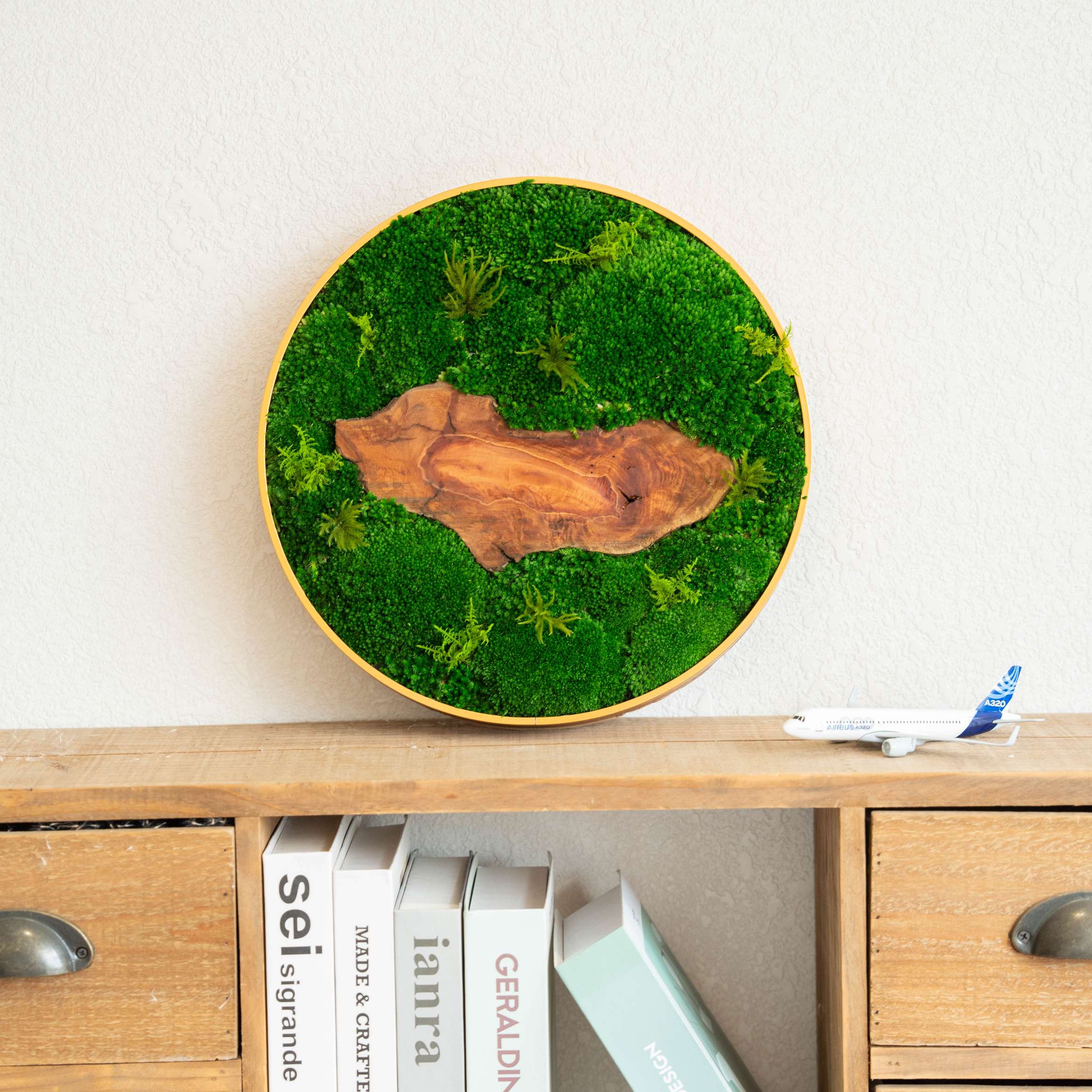
Sheet moss rarely demands attention, and that is precisely its strength. Unlike showier mosses with upright tufts or feathery fronds, this low-growing variety spreads in dense, velvety mats that soften hard edges and hold the eye at ground level. In a terrarium, a kokedama wrap, or a shaded garden path, it acts like a visual weight—steadying the composition without competing for the spotlight. Designers lean on it the way a painter leans on a neutral ground: not as an afterthought, but as the layer that lets every other element breathe.
What makes sheet moss especially useful is its adaptability to unusual surfaces. It clings happily to stone, bark, and even vertical boards, creating the impression that a space has aged naturally into place. You can press it around the base of a potted orchid, tuck it between stepping stones, or use it to hide the mechanics of a living wall. Because it tolerates lower light and consistent moisture better than many other mosses, it survives where more delicate species falter—making it a forgiving choice for both beginners and seasoned growers who want a reliable backdrop.
Beyond its practical role, sheet moss carries a quiet narrative. Its flat, even texture evokes old forest floors and misty stream banks, bringing a sense of settled time to modern interiors. When you add it to a design, you are not just filling a gap; you are anchoring the whole scene in a subtle, organic rhythm. The best arrangements often hide their most important piece in plain sight.
Mood Moss: Why Its Curled, Wavy Texture Feels More Alive
Most mosses sit flat and polite, but mood moss refuses to be a background texture. Its leaves have a habit of twisting, curling, and waving in several directions at once, which gives the whole cushion a restless, almost breathing quality. Run your fingers over it and the surface feels less like a plant and more like a head of hair that got caught in a light wind.
That movement isn't random—it's a moisture response. When humidity drops, the leaves tighten into coils and kinks; when water returns, they slowly relax and spread open again. This visible shift between tense and loose makes the moss seem to remember something. Add a little water and you'll watch it wake up, uncurl by uncurl, as if it's stretching after a long nap.
Cushion Moss: The Plush, Sculptural Accent You Can't Ignore
Some plants demand attention with bright flowers or towering height. Cushion moss does it with pure texture. Its dense, rounded hummocks look like tiny upholstered ottomans scattered across the forest floor. Up close, the leaves are soft and almost fur-like, shifting from silvery blue-green in dry shade to a deeper emerald after rain. This is Leucobryum glaucum, a slow-growing moss that naturally forms plush, sculptural mounds instead of spreading flat. That three-dimensional habit is what separates it from sheet mosses and makes it feel more like a living sculpture than a groundcover.
In a terrarium, rock garden, or shaded planter, a single clump of cushion moss can anchor an entire design. It pairs well with delicate ferns and dark stones, creating a contrast between soft and sharp, light and shadow. Because it grows so slowly, you don't have to worry about it smothering neighboring plants, which means you can place it right where its rounded profile will catch the eye. Just remember it dislikes full sun and soggy roots. A well-drained mix, bright indirect light, and occasional misting keep the mounds tight and plump rather than stretched or brown.
One of the less obvious pleasures of cushion moss is watching it respond to moisture. When the air gets dry, the cushions pull inward slightly and take on a paler, frosted look. Add water and they relax, plumping back into soft domes within a day. This small drama makes it a satisfying plant for people who enjoy hands-on care. If a section turns brown, simply trim it away and tuck a healthy piece into the same spot. Over time, those fragments will root and grow, letting you spread the plush effect to other corners of your garden or collection.
Spanish Moss: The Airy, Hanging Look That Adds Instant Drama
Draped over branches, porch eaves, or a simple wire frame, Spanish moss creates that effortless, ghostlike curtain that softens hard lines and makes any corner feel older and wilder. Its thin, tangled strands catch the light differently through the day—silver in the morning, deep gray-green by dusk—so the same arrangement never looks static.
The trick to keeping it dramatic rather than messy is restraint. Instead of covering an entire wall, let a single generous clump hang from a high hook or loop it loosely around a bare branch in a tall vase. The airy gaps between the strands do the work: they break up blank space, add motion with the slightest breeze, and bring a humid, Southern-gothic mood without a single leaf of maintenance.
Because it is so lightweight, you can use it in places where heavier greenery would feel overwhelming—above a bed, over a doorway, or trailing from a shelf. Pair it with raw wood, aged metal, or pale linen to keep the look intentional, and avoid anything too glossy or symmetrical that would fight its tangled, wind-swept character.
Sphagnum Moss: The Unsung Layer That Ties Everything Together
Most people walk past sphagnum moss without a second glance, yet this pale, spongy carpet quietly engineers entire wetlands. Its cells are built like tiny water tanks, letting a single clump hold twenty times its dry weight in moisture. That slow, steady release keeps bog surfaces damp even during dry spells, shaping conditions that few other plants can tolerate.
What really sets sphagnum apart is how it alters its surroundings. As lower layers die, they compress into peat without fully rotting, because the moss creates an acidic, oxygen-starved environment. This locks away carbon that would otherwise return to the air, making sphagnum bogs some of the most efficient land-based carbon stores on the planet.
The living mat also stitches the community together. Sundews and cranberries root into it, frogs shelter in its cool folds, and dragonfly larvae hunt in the water it holds. Remove the moss and the whole web slackens—proof that the least showy layer often carries the most weight.
FAQ
Plenty of types take dye well. Reindeer moss soaks up bold shades like deep teal and mustard because of its spongy texture, but sheet moss and bun moss can also be tinted in softer greens, burgundy, or dusty blue. The trick is checking whether the dye has been sealed properly, otherwise you might end up with stained fingers during installation.
Sheet moss is your best bet for dim corners. It has a flat, carpet-like look that doesn't need brightness to read as lush, while reindeer moss can look a bit flat in shadow. If you want a little height, add small clusters of cushion moss; it holds its shape without demanding sun.
They're surprisingly varied. Reindeer moss is springy and almost spongy, cushion moss is dense and soft like a pin cushion, and mood moss has a looser, woodsy feel that looks like it was just lifted from a forest floor. For a wall you want people to touch, mix the three and let the contrast do the work.
Yes, but not all types handle humidity equally. Reindeer moss and bun moss tend to tolerate occasional steam better because they don't flatten as quickly. Avoid large sheets of flat moss directly above the shower; it can absorb too much moisture and lose that crisp, velvety surface.
A quick pass with a hair dryer on the cool, low setting every month or two pushes dust off without damaging the moss. Don't use water, and don't be tempted to mist it, that's a common mistake. For deeper cleaning, a soft makeup brush works well on textured types like cushion moss.
Small projects benefit from types with defined shapes. Bun moss and cushion moss give you neat, rounded forms that read clearly through glass, while sheet moss works as a flat base layer. Reindeer moss can overwhelm a small vessel because it's so airy and branching.
Undyed types usually keep their natural green longer, often five to eight years before noticeable fading if kept out of direct sun. Dyed moss can fade faster, especially vivid colors, but if you keep it away from UV light, you can still get several good years before it looks washed out.
Cushion moss and mood moss hold together much better than reindeer moss, which can drop small pieces from its branching tips. If you're cutting shapes for a frame or logo, go with sheet moss; it's the most forgiving and produces clean edges with a sharp craft knife.
Conclusion
Choosing preserved moss rarely comes down to picking a single best variety—it’s more about understanding the visual and structural role each type plays in your space. Reindeer moss, for instance, is far more than filler; its rounded, almost coral-like clusters hold dye exceptionally well, so colors can shift from soft sage to deep teal depending on the light and surrounding palette. Sheet moss works in the opposite way, offering a flat, even ground that quietly anchors larger arrangements and gives the eye a place to rest. If you want something that feels less like a static panel and more like a living patch of forest floor, mood moss brings curled, wavy edges that catch shadows and add a subtle sense of motion. Meanwhile, cushion moss adds a plush, sculptural quality—it’s the one you reach for when a design needs a bold, tactile focal point rather than a supporting layer.
Spanish moss changes the dynamic entirely by introducing airy, hanging texture; it works beautifully draped over edges or suspended in vertical installations, creating instant drama without bulk. Sphagnum moss often goes unnoticed, but its fine, fibrous structure is what ties the other textures together, filling gaps and softening transitions so the composition doesn’t feel disjointed. In practice, the right choice depends less on a single quality and more on how these textures interact in your specific room—low-light corners benefit from the reflective surface of reindeer moss, while larger walls feel balanced when sheet or sphagnum moss provides a quiet backdrop for mood and cushion accents. Layering two or three types usually yields a more natural, less manufactured look than relying on one alone, so consider your space’s existing materials and light before committing.
Contact Us
Contact Person: Mr. Luo
Email: [email protected]
Tel/WhatsApp: 86 18100895505
Website: https://www.feiliyaflowers.com/en/