

OEM Transcatheter Aortic Valve Solutions: Advancing Minimally Invasive Cardiac Care
2026-11-03
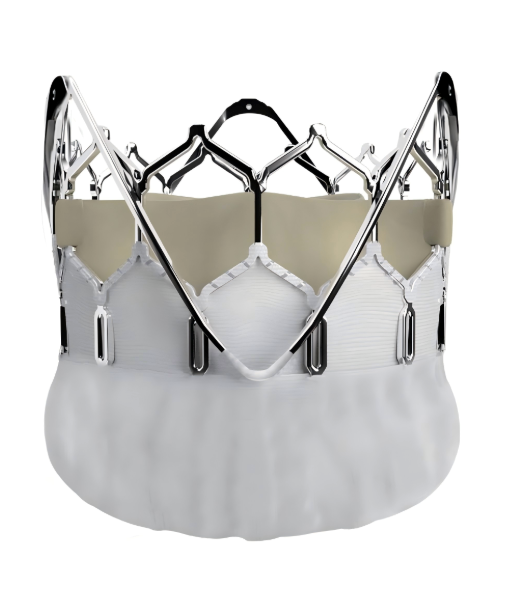
As transcatheter aortic valve replacement reshapes how we treat severe aortic stenosis, the demand for precision-engineered components has never been greater. But what does it take to turn a breakthrough concept into a reliable, minimally invasive therapy? That’s where specialized OEM partners step in—and INT Medical is at the forefront, delivering tailored valve solutions that help clinicians push the boundaries of cardiac care.
Annular Conformability Starts With Frame Geometry
Getting an annular component to conform reliably isn't just about material softness or surface pressure. The shape of the supporting frame dictates how evenly that ring can flex, twist, and settle against a mating surface. A frame with sharp corners or abrupt thickness changes creates local stiff spots, so the ring bows outward where you least expect it. Smooth, continuous geometry lets the annulus breathe as one unit, distributing any mismatch across its whole circumference.
Designers often overlook the fact that frame stiffness varies around the ring. A rectangular cross-section may look tidy on a drawing, but it forces the annulus to hinge at discrete points rather than deform smoothly. By tapering the frame's wall thickness and blending junctions with generous radii, you lower the bending resistance in the critical zones. That encourages the ring to adopt the counterpart's profile without fighting its own structure.
When pressure or thermal load comes into play, the frame's geometry becomes even more decisive. A well-proportioned conical or curved frame can convert axial force into a gentle radial spread, helping the annulus follow surface irregularities. If the geometry is off, no amount of elastomer compression will correct a stiff backbone. Start with the frame, and conformability stops being a guess.
Durability Is a Leaflet Processing Decision
Durability rarely comes from the design file alone. It's decided later, when the leaflet moves through cutting, folding, and finishing. A heavy text stock may feel substantial in hand, but if the grain runs against the fold, the paper weakens quickly along the crease. Scoring depth and pressure matter just as much: too shallow and the fold cracks under repeated handling; too deep and the sheet becomes fragile at the exact point where it should flex.
Coatings and laminates are often treated as add-ons, yet they change how a leaflet survives in the real world. A soft-touch aqueous coating improves scuff resistance without adding stiffness, while a film laminate offers better moisture protection for menus or outdoor handouts. But a thick laminate can fight against a fold, lifting at the edge if the score isn't adjusted. The processing decision isn't simply about adding a coating—it's about matching the finish to the fold geometry and the expected wear pattern.
Even smaller finishing choices shift durability. Rounded corners resist dog-earing in pockets and bags. Perforations need enough tie strength to keep the sheet intact until someone deliberately tears it. If the leaflet is meant to be opened flat repeatedly, a lay-flat binding or a well-planned accordion fold will outlast a forced perfect bind. Each of these calls happens at the production stage, not on the designer's screen, which is why durability belongs to processing as much as to materials.
Trackability Without Compromising Deployment Force
Getting a catheter or delivery system to follow a tortuous path usually means softening the distal section until it almost flops. That same softness, though, becomes a liability the moment you need to transmit force proximally. The trick is to stop treating flexibility and pushability as a trade-off and start engineering them as a single continuous curve. Durometer shifts, braid angle changes, and a tapered core can each be adjusted so the device bends where it should and stays firm where it must.
What you feel in your hands is the difference. The tip tracks through turns without prolapsing, yet the shaft still delivers enough deployment force to seat a stent or open a lesion. There is no dead zone where input gets absorbed and nothing happens. Instead, the system responds predictably, which reduces the tendency to overcorrect or shove harder than necessary.
None of this is accidental. It comes from bench testing that measures force transmission across multiple curve radii, then iterating on material transitions until the tracking loss is negligible. When the design is right, it disappears from your attention. You just point the device, and it goes there with enough force left to finish the job.
Pulsatile Flow Loops Reveal What Bench Tests Miss
Steady-flow bench tests give a clean, repeatable picture of how a device behaves, but the human circulatory system never operates in a steady state. Pulsatile flow loops recreate the natural pressure and flow waveforms of the cardiac cycle, exposing failure modes that flat-line testing simply cannot see. In a steady flow rig, a valve or graft may look perfectly stable, yet under the rhythmic acceleration and deceleration of systolic and diastolic phases, fatigue cracks, hinge wear, or flow separation zones become glaringly obvious.
What often gets missed is not just mechanical stress, but the subtle interplay between fluid dynamics and device geometry. Pulsatile conditions drive secondary flows, vortex formation, and transient pressure gradients that alter shear stress on blood cells and endothelial linings. A bench test with constant flow might measure acceptable pressure drop, while the same device under pulsatile load shows localized high shear that could trigger platelet activation or hemolysis. This gap matters because regulatory submissions and clinical predictions rely on bench data—if the test misses pulsatility, it misses reality.
Designers who only validate with steady flow risk over-optimizing for a static environment. By adopting pulsatile loops early, engineers catch resonance effects, check valve flutter, and compliance mismatches before animal studies. The loop becomes a truth-teller: it forces you to confront how the device performs beat after beat, not just in one frozen moment. In that sense, pulsatile testing does more than reveal missed flaws—it reshapes what “passing” a bench test actually means.
Lot-to-Lot Uniformity Under High-Volume Demand
High-volume demand tends to expose even minor inconsistencies between production lots, and the usual response is to tighten specifications. But tightening alone rarely solves the problem if the root cause sits in raw material variation that shifts with each supplier delivery. A better approach is to map how each incoming lot behaves under stress conditions, not just at ambient checkpoints. For instance, a resin that passes a standard melt-flow test can still show a subtle change in heat stability that only appears after extended extrusion. Catching that difference before it reaches a full production run requires a short, targeted stress test per lot, and the data from those tests forms a rolling fingerprint rather than a one-off gate.
Under sustained high demand, process drift accelerates because equipment runs longer between maintenance windows and operators rotate more frequently. Small deviations in barrel temperature or screw speed that were once insignificant become magnified when you are trying to hold lot-to-lot variation below a narrow band. Some plants counter this by building a reference batch archive, where a retained sample from each accepted lot is used to calibrate in-line sensors for the next run. This creates a closed loop: the sensor sees the archived lot as a baseline, and any shift in dielectric response or torque signature triggers an automatic adjustment to the feed profile. It is not about chasing a perfect setpoint, but about keeping the next lot within the same behavioral envelope as the last accepted one.
One overlooked factor is that high-volume purchasing often pulls in material from multiple production lines at the supplier, each with slightly different equipment histories. Two drums of the same grade can carry identical certificates of analysis yet differ in particle size distribution or moisture uptake rate. Rather than relying on the supplier's averaged data, a practical move is to run a quick composite test on each incoming lot that mimics your downstream conditions. If the process is sensitive to hydration, a short desiccant-drying curve per lot can reveal differences that a single moisture number misses. Once those per-lot curves are stored, procurement can flag which supplier lines are drifting and shift orders before a full failure occurs.
Design Files That Translate Into Audit-Ready Submissions
Regulatory teams rarely see the messy middle of a design process, but they feel its consequences. When source files are scattered across drives, versioned by gut feeling, and annotated in personal shorthand, preparing a submission becomes archaeology. The fix isn't to hire more coordinators—it's to build design files that already carry the structure auditors expect. That means every screen, component, and state change links back to a requirement ID, a risk assessment, or a test protocol without someone manually stitching spreadsheets later.
Think of the design file not as a canvas, but as a controlled document with a narrative. Each layer name, symbol override, and prototype trigger should map to something a regulator can trace. Instead of a generic "button_v2_final," name it "BP_Check_Confirm_Dose_02" and attach a comment linking to the design control record. When a file is organized this way from the first wireframe, the audit-ready export isn't a fire drill—it's just a different view of the same data. Teams that adopt this mindset stop treating documentation as a tax and start seeing it as a byproduct of disciplined design.
The most underrated tool here is restraint. A design file stuffed with exploratory mocks, half-baked interactions, and orphaned artboards creates noise that auditors will question. Keep the working file for exploration, but maintain a parallel "submission view" where only validated flows and approved states live. Tag every element with its status—draft, in-review, released, superseded—and prune relentlessly. When the submission deadline arrives, you won't be exporting screenshots at 2 a.m.; you'll be pulling a package that was ready all along, because the design file itself was written like an audit trail, not a sketchbook.
FAQ
They are customizable valve systems manufactured by one company but branded and distributed by another. Typically used by medical device firms, hospital networks, or distributors who want to offer a transcatheter aortic valve replacement product under their own label without building the entire R&D and production infrastructure from scratch.
Instead of opening the chest, the replacement valve is compressed onto a catheter and guided through a small incision, usually in the groin or chest. This reduces hospital stay, recovery time, and risk of major complications like sternal wound infections. Patients often go home in a few days and resume normal activities within weeks rather than months.
Look beyond price. Check the partner's track record with regulatory approvals, quality systems like ISO 13485, material sourcing for leaflet tissue and stent frames, and whether they offer design flexibility for sheath size or valve diameter. Also ask about post-market surveillance support and supply chain redundancy.
Yes. Most programs offer a range of valve sizes, typically from 20 mm to 29 mm or more, and can adjust stent frame height, skirt design, or leaflet material. Some partners also provide multiple delivery catheter profiles, so clinicians can choose transfemoral, transapical, or transaortic access routes depending on patient vessels.
In the US, you'll need FDA clearance or approval, often through a 510(k) if a predicate exists, or PMA for novel designs. In Europe, MDR compliance is mandatory. The OEM partner should supply technical files, biocompatibility data, and clinical evidence. Expect at least 12-24 months for most regulatory pathways, depending on the market.
Durability testing simulates years of cardiac cycles, often beyond 200 million cycles, to verify structural integrity. Materials like bovine pericardial tissue are treated to resist calcification. Manufacturers also perform hydrodynamic testing, fatigue analysis, and MRI compatibility checks. Real-world data from TAVR registries supports durability comparable to surgical valves at mid-term follow-up.
A strong solution integrates the valve, delivery catheter, and loading tools as a complete system, not just a standalone valve. It includes clinician training, imaging protocol guidance, and responsive engineering support for iterative design changes. Generic offerings often cut corners on leaflet anti-calcification treatment or lack comprehensive usability testing with interventional cardiologists.
Conclusion
In transcatheter aortic valve development, the smallest geometric choices determine how well a device adapts to irregular annuli. Frame geometry is not just about radial stiffness; it shapes annular conformability and reduces paravalvular leak. At the same time, durability begins long before final assembly. Leaflet processing methods—crosslinking, washing, and crimp conditioning—drive long-term fatigue resistance, so an OEM partner must control every step rather than relying on incoming material specs alone. That combination of frame adaptability and controlled tissue processing sets the foundation for consistent clinical performance.
Delivery system performance reflects an entirely different set of trade-offs. Trackability and deployment force are balanced through catheter construction and handle mechanism design, allowing smooth navigation without excessive push or recoil. Pulsatile flow loop testing then adds physiologic realism that bench tests cannot capture, exposing valve dynamics under variable pressure and cardiac output. Under high-volume manufacturing, lot-to-lot uniformity becomes its own engineering discipline; raw material sourcing, process windows, and in-line inspection must align so every device behaves like the validation sample. Finally, design files have to be more than engineering outputs. They need to be organized, traceable, and ready for regulatory review, turning complex development history into a clean audit-ready submission that supports predictable market entry.
Contact Us
Contact Person: Jeffrey
Email: [email protected]
Tel/WhatsApp: 86-0633-2230056
Website: https://www.sd-intmedical.com