

ODM Miniature Circuit Breaker Factory: Engineering Precision Protection for Global Electrical Networks
2026-11-16
Behind every stable power grid, there's a component working silently to prevent disaster—often no larger than a hand's width. At SINGI, that component is engineered with an obsession for precision most factories never attempt. Their ODM miniature circuit breakers don't just trip when they should; they challenge the very assumptions of response time, endurance, and compact protection. As global networks strain under modern loads, this is a look inside the facility that redefines what a miniature breaker can be.
Inside Our Approach to High-Precision MCB Manufacturing
Precision in miniature circuit breaker production isn't a single checkpoint — it's a rhythm that runs through every stage, from raw material selection to final assembly. We start with carefully sourced alloys and thermoplastics, chosen not just for compliance but for how consistently they behave under thermal and mechanical stress. Each batch is tested beyond standard requirements, ensuring that the bimetal strips, contacts, and arc chambers meet tolerances that most would consider excessive. This early investment in material integrity removes variables long before the first component takes shape.
On the floor, our calibration and assembly processes blend automated consistency with a craftsman's attention to threshold behavior. Rather than relying solely on end-of-line testing, we embed micro-adjustments into the production flow — laser trimming of bimetal elements, dynamic contact force verification, and real-time thermal imaging during trip curve simulation. Every breaker is profiled individually, so its tripping characteristic aligns with the design curve under both gradual overload and sudden short-circuit conditions. The result isn't a batch of identical parts; it's a series of breakers that each hold their assigned protective signature with minimal drift.
What really distinguishes our approach is the refusal to treat high precision as a fixed target. We continuously feed performance data from field returns, long-term endurance runs, and in-line measurements back into the manufacturing logic. Tooling wear, ambient shifts, even subtle spring fatigue are modeled and compensated before they translate into variability. This closed loop turns precision from a specification into a living practice — one that keeps our MCBs performing predictably not just on the day they ship, but years into service.
How Custom Engineering Shapes Smarter Circuit Protection
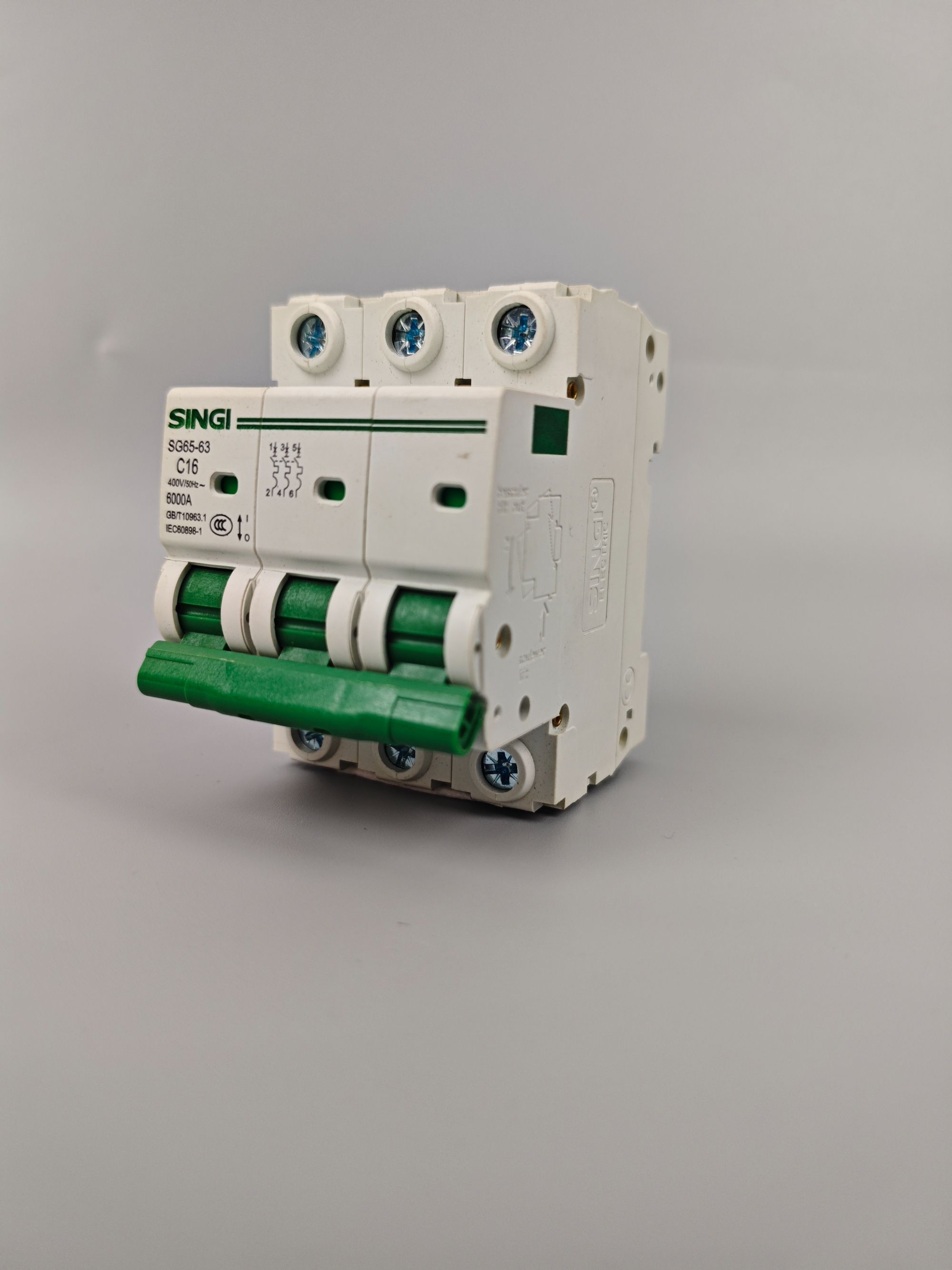
Every circuit board tells a story of compromise—until custom engineering steps in. Off-the-shelf protection components often force designers into uncomfortable trade-offs, squeezing in a fuse that's almost right or accepting voltage thresholds that are close enough. Custom solutions flip that narrative. By tailoring the exact trip characteristics, form factor, and material set, circuits can be shielded in precise, non-negotiable ways. This isn't about reinventing the wheel; it's about machining it to fit a specific axle, eliminating the tiny gaps where faults sneak through.
The real magic happens when protection stops being an afterthought and becomes an embedded feature. Custom-engineered circuit protection works proactively, sensing subtle shifts in current or temperature that generic parts would ignore. Consider a high-density industrial controller—a standard protector might nuisance trip under a brief surge, causing costly downtime. A bespoke design, however, can ride through harmless transients while clamping down hard on genuine overloads. That intelligence comes from iterative collaboration between protection specialists and system designers, merging the physics of failure with the realities of the end application.
Miniaturization adds another layer of complexity. As devices shrink, the space for safeguarding them shrinks faster. Custom engineering untangles this by integrating multiple protection functions into a single, compact assembly. Instead of stringing together discrete components, a unified protection module handles overcurrent, overvoltage, and thermal hiccups in one breath. The result is cleaner layouts, fewer points of weakness, and a protection narrative woven so tightly into the product that it becomes invisible—until the moment it saves the entire system from a catastrophic fault.
Connecting Reliability Across International Grid Demands
Grid reliability isn't just a technical benchmark—it's a constantly shifting target that varies wildly between regions. In one country, it might mean weathering extreme heatwaves that push infrastructure to its limit; in another, it could involve seamlessly integrating renewable sources that fluctuate by the minute. The real challenge lies in designing systems that are neither over-engineered for mild conditions nor fragile when faced with sudden demand spikes. Engineers must decode local consumption patterns, regulatory quirks, and even cultural energy habits to build a foundation that remains stable across borders without imposing a one-size-fits-all solution.
What often gets overlooked is how reliability standards themselves can become barriers to international cooperation. A transformer designed to meet North American performance specs may struggle under the frequency tolerances common in parts of Asia. Instead of forcing alignment, forward-thinking projects now embed adaptive logic into hardware and software layers—allowing equipment to recalibrate its protection thresholds and response times based on the grid it feeds into. This shift from fixed standards to context-aware resilience is quietly reshaping cross-border energy corridors, turning potential points of failure into flexible handshakes between incompatible systems.
Bridging these divides also demands a rethinking of maintenance philosophies. In regions where skilled technicians are scarce, reliability has to be achieved through self-diagnosing components and remote intervention rather than scheduled truck rolls. Meanwhile, areas with dense urban grids benefit from real-time load-sharing algorithms that can isolate faults before they cascade. True international reliability emerges when these disparate strategies are woven into a single operational playbook, capable of keeping the lights on in a downtown data center and a rural clinic with equal consistency.
The Quiet Backbone of Modern Electrical Safety
Reliability in electrical systems isn't about flashy innovations; it's often found in the components we never notice. Behind every outlet that powers a hospital ventilator or a child’s nightlight, a network of circuit breakers and protective devices sits in silent vigilance. They don't just prevent overloads—they absorb countless small faults, tiny surges that could otherwise degrade wiring over years. This quiet backbone operates on a simple principle: interruption before catastrophe, a shield that rarely needs to announce itself.
The materials and engineering in these safeguards have evolved in ways most people never see. Early fuses were crude, often replaced with whatever metal was at hand. Today's miniature circuit breakers and arc-fault detectors rely on precision-machined contacts and sophisticated thermal-magnetic trip mechanisms. They distinguish between harmless inrush currents—like a refrigerator starting up—and the sputtering arc of a frayed cord behind drywall. It’s a balance of physics and material science, tuned to react before a human ever senses danger.
Maintenance of this backbone relies less on regular checkups and more on design longevity. In commercial buildings, panels hum quietly for decades, their only sign of life a faint heat signature. The real testament to their role is how unremarkable they make electrical safety feel. When a breaker trips from a hair dryer overload, it’s tempting to see an inconvenience. But that instant separation of contacts has likely stopped a chain reaction—fire, shock, loss of critical systems. Its quietness isn't weakness; it's the sound of constant, unsung protection.
Rethinking Scale Without Sacrificing Component Integrity
The instinct to simply enlarge every module when demand spikes often backfires. It produces brittle systems where one cracked joint triggers cascading failures. True scale lies in preserving the discrete, well-defined responsibilities of each component. Instead of inflating a database instance until it buckles, you restructure query patterns so that the instance remains a clean, single-purpose element. Growth then becomes a matter of multiplying coherent units, not stretching them past their design limits.
Component integrity means a service, queue, or storage layer continues to behave exactly as its contract promises, regardless of whether it handles ten requests per minute or ten thousand. Achieving this requires a shift in mindset: treat scaling as an orchestration problem rather than a size problem. You introduce coordinators that route work to fresh, identical copies of a component, but you never mutate the component’s internal logic to absorb more load. The coordinator remains thin and replaceable, leaving the core components pristine.
Fidelity to the original design is what makes long-term maintenance possible. When every piece stays true to its initial scope, you can reason about the system without mentally unpacking layers of adaptation hacks. Teams are free to iterate on isolated elements without fear of disturbing adjacent functions. The result is an architecture that feels almost stubbornly simple in its individual parts, yet handles massive scale precisely because no part has been stretched beyond recognition.
From Design Intake to Final Test: Where Consistency Takes Over
The journey begins the moment a new idea lands on the table. Raw requirements, rough sketches, and a few bullet points are all we have. Instead of rushing into pixels or prototypes, the first real step is translating that initial intake into a single source of truth. Every assumption gets questioned, every edge case noted. It’s not glamorous work, but it’s the quiet foundation that prevents chaos later. When everyone anchors to the same clarified vision, decisions stop drifting and start stacking.
As the concept moves through wireframes, visual design, and into development, consistency becomes the invisible thread holding it all together. Pattern libraries and shared language don’t just speed things up—they keep the intent intact. A button isn’t just a button; it behaves the same way, carries the same tone, and serves the same purpose whether it appears on a landing page or buried in a settings panel. This alignment means that when new features are layered on, they feel native, not bolted on.
The real payoff surfaces during the final test phase. UI snapshots align with designs, interactions feel predictable, and quality checks uncover fewer surprises. Teams spend less time arguing about discrepancies and more time refining the nuance that users actually feel. It’s not about rigid processes; it’s about building a rhythm where each handoff strengthens the last. By the time a product ships, the consistency forged from intake to final validation feels less like a guideline and more like second nature.
FAQ
ODM stands for Original Design Manufacturer. In our factory, this means we don't just produce breakers to a client's spec—we collaborate on design, refine technical parameters, and often create completely new models tailored to specific regional standards or application needs, all while safeguarding the customer's brand identity.
Precision is engineered from the component level up. We use automated calibration rigs for thermal and magnetic trip units, laser-engraved bimetal strips for consistent deflection curves, and in-line X-ray inspection of critical welds. Every batch undergoes a 100% endurance test on computer-controlled load banks before final packaging.
Our product range covers residential, commercial, and light industrial networks worldwide. We have families compliant with IEC/EN 60898 for European markets, UL 1077 and CSA C22.2 for North America, and specific variants for markets requiring high short-circuit ratings or wide operating temperature ranges, from the chill of Nordic winters to the humidity of Southeast Asia.
Absolutely. As an ODM factory, custom branding is a core service. We print custom logo, model numbers, and technical data directly onto the breaker body and label. Packaging is fully configurable—from retail blister cards to bulk industrial crates—and we can include multilingual instruction sheets exactly as needed for the destination market.
We maintain a comprehensive portfolio of international certifications, including CB Scheme, CE, UKCA, VDE, and cULus for the North American line. Our in-house lab is ISO/IEC 17025 accredited, which allows us to conduct most conformity assessments internally, speeding up project timelines significantly.
The process starts with a technical consultation where we assess your application requirements and target standards. We then provide 3D drawings and a functional prototype typically within 15 working days. After approval, a dedicated project engineer oversees the pilot run and mass production, ensuring consistency from sample to shipment.
We source silver-graphite contacts from certified suppliers for arc-erosion resistance, high-purity copper for coil and terminal parts, and flame-retardant thermoplastic housings rated V-0. Internal mechanisms use heat-treated stainless steel springs that maintain constant contact pressure over decades of operation. Nothing is left to chance with material quality.
It's the combination of deep engineering knowhow and flexible manufacturing. We don't ask for impossibly high MOQs on customized designs, and we keep proprietary designs strictly confidential. Plus, our in-house toolmaking shop allows us to create and modify molds quickly, which means faster design iterations and a shorter time-to-market for your branded product.
Conclusion
At our ODM miniature circuit breaker factory, precision is not just a specification — it’s a rhythm that runs through every mold, coil, and calibration step. Our approach to high-precision manufacturing starts well before the first cut of metal, in the quiet dialogue between design intake and the production floor, where custom engineering reshapes raw requirements into protection logic that fits the exact fault profile a client’s network demands. Rather than chasing scale for its own sake, we have built a production culture where component integrity holds firm even as volumes rise: automated optical inspection sits alongside tactile human checks, and every batch of breakers carries the fingerprint of consistent thermal-magnetic tuning that field engineers rely on across continents.
This blend of repeatability and adaptability forms the quiet backbone of modern electrical safety, something that reveals itself not in loud claims but in the absence of nuisance tripping in a Singapore data center or uninterrupted service in a Scandinavian wind farm. Connecting reliability across disparate grid demands means understanding that a breaker destined for a humid coastal substation faces a different life than one protecting a high-altitude solar array, so material plating, contact alloys, and enclosure sealing are fine-tuned case by case. From initial tolerance stack analysis to the final endurance test where mechanisms are cycled thousands of times, consistency takes over, turning individual components into an invisible armor that global electrical networks have learned to trust without a second thought.
Contact Us
Contact Person: Jack
Email: [email protected]
Tel/WhatsApp: (+86) 13757759651
Website: https://www.singi.com