
Laser Safety House Company: Your Ultimate Guide to Protecting Your Home from Laser Hazards
2026-06-04
Lasers have become a staple in modern homes, from entertainment systems to DIY tools, but their hidden dangers often go unnoticed. Without proper safeguards, even low-powered devices can pose serious risks to your eyes and skin. That's where LASERPAIR steps in—offering innovative, reliable solutions to keep your living space safe. In this guide, we'll explore practical strategies and cutting-edge products to shield your home from laser hazards, ensuring peace of mind for you and your family.
Spotting Everyday Laser Sources You’d Never Suspect
Tucked inside your dusty CD or DVD player is a tiny semiconductor laser, silently reading microscopic pits on a disc. Every time you reminisce with an old album or fire up a classic game, that near-infrared beam is dancing across the surface, transforming light patterns into sound or video. It’s so seamlessly integrated that you’d never guess such precision optics are humming just a tray away.
Your friendly laser printer doesn’t just shoot toner—it paints with an invisible beam first. A spinning mirror scans a modulated laser across the drum, etching away static charge to form the exact image you expect on paper. That red glow you catch through the vent isn’t just an indicator; it’s a full-fledged laser engine crafting your documents at blinding speed.
If you’ve ever stepped through automatic sliding doors, you’ve broken an infrared laser curtain designed to detect motion. Beyond retail entrances, similar laser sensors linger in elevator safety edges, some robotic vacuums for room mapping, and even the facial biometric rig in your smartphone—measuring depth with a grid of invisible dots. Lasers are quietly offering guidance and protection in places you’d least anticipate.
Why Toy Lasers Can Pack a Grown-Up Punch
Those inexpensive laser pointers sold as cat toys or presentation gadgets often carry a rating label that suggests a harmless Class 2 or 3R output. In practice, many units exceed their stated power significantly, sometimes by a factor of ten or more. A beam labeled as 1 milliwatt can actually emit upwards of 10 milliwatts—and at these levels, even a split-second accidental glance can cause retinal burns that you won’t feel because the retina lacks pain nerves.
The damage mechanism is photothermal: the focused spot on the retina heats up rapidly, destroying photoreceptor cells before the eye’s blink reflex can kick in. What makes toy lasers especially risky is that their beams stay tight over long distances, so a direct hit from across a room can be as harmful as one at arm’s length. Children and teens are the typical users, yet they’re also the most vulnerable—their clearer optical media lets more light through, and they’re more likely to misuse the device, staring into the beam or pointing it at others.
There’s also a compounding factor: the human eye perceives green light far brighter than red, so a green 5 mW pointer may visually resemble a far more dangerous one, leading users to underestimate the hazard. Meanwhile, regulatory oversight remains spotty, with bulk imports flooding online marketplaces where verification of compliance is almost nonexistent. All of this means that a device marketed as a playful toy can, in reality, deliver a lifelong visual disability.
Shielding Your Space Without Darkening Your Life
Modern protective measures often feel like a trade-off between safety and vibrancy, but it doesn't have to be that way. Think of it less as building a fortress and more as curating the light that enters your world. By integrating transparent barriers or smart films that adapt to sunlight, you can filter out harmful elements while maintaining an airy, open ambiance. It's about preserving the warmth of natural illumination without sacrificing the peace of mind that comes with robust protection.
The key lies in selecting materials and designs that work with your lifestyle rather than against it. For instance, advanced coatings on glass can block UV rays and reduce glare, yet remain virtually invisible. Similarly, retractable screens or perforated metal panels offer physical security without making your space feel caged. When these solutions are tailored to your specific environment, they fade into the background, allowing you to focus on what truly matters—living fully, without the constant reminder of the barriers you've put in place.
When Home Tech Turns Risky: Laser Sensors Unveiled
Laser sensors have quietly become a staple in modern homes, tucked into robot vacuums, smart locks, and even health monitors. They map rooms, detect obstacles, and measure with remarkable precision—but that same precision can be turned against you. Researchers have shown that the lidar units in some vacuums can be tricked into revealing detailed floor plans. An attacker outside your window, armed with nothing more than a laser pointer and a receiver, could reconstruct every nook of your living space without ever stepping inside.
The trouble doesn't stop at mapping. By analyzing the minute vibrations that lasers can capture off a window pane or a shiny object, conversations can sometimes be extracted. It's not just spy-movie fiction—acoustic eavesdropping via laser is a known surveillance technique, now potentially in reach of anyone with a few hundred dollars and the right know-how. Even more alarming, some home devices use lasers that, when manipulated, could physically damage your eyes or those of a curious child, yet they ship with minimal warnings.
Staying safe isn't about ditching the convenience, but about layering common sense on top of it. Keep firmware updated, enable any privacy shutters physically present on sensors, and be mindful of where devices with laser components face. If you live in a ground-floor apartment or a house with large windows, consider adding a film or curtain that scatters light. The goal isn't paranoia—it's recognizing that when lasers leave the lab and enter our homes, they bring along a double-edged beam.
Quick Actions That Save Eyes After an Accident
When something gets into your eye, your first instinct might be to rub it. Resist that urge—rubbing can grind debris deeper, turning a minor irritation into a corneal scratch. Instead, blink rapidly to encourage tears to flush out the particle. If that doesn’t work, gently pull your upper lid over the lower one and roll your eye; the lashes may sweep away the culprit. A clean stream of lukewarm water can also help, but never use tweezers or cotton swabs near the eye’s surface.
Chemical splashes demand an entirely different reaction. Seconds matter. Immediately tilt your head so the affected eye is lower than the other, then flood it with water from the inner corner outward. Keep rinsing for at least 15 minutes, using whatever safe water source is nearby—a faucet, shower, or bottle. Don’t bandage the eye or apply ointments; they can trap the chemical against delicate tissues. While one person rinses, another should call emergency services or find details about the substance for the medics.
For blows or cuts, the priority is protecting the eye from further harm. Lightly cover it with a rigid shield—a paper cup taped in place works in a pinch—without putting pressure on the eyeball itself. Avoid any attempt to wash out the eye or remove objects stuck in it. Keep movement to a minimum and head to urgent care or an ER. Even if the injury seems minor, hidden damage like a detached retina can steal vision silently, so a prompt professional exam is non‑negotiable.
Building Habits That Make Laser Safety Stick
Habits don’t form from a single memo or annual refresher. They take root when we anchor protective actions to the routines already baked into a day’s work. Think about when you first walk into the lab: make reaching for the right eyewear as thoughtless as turning on the lights. Tuck a lens cleaning station right by the door, not buried in a drawer. Pair that initial pause—before the beam even powers up—with a mental check: “Are all interlocks engaged? Are beam stops in place?” The trigger isn’t a warning sign; it’s the simple act of crossing the threshold. Repeating this sequence every time builds a rhythm that doesn’t rely on willpower.
Environment design often matters more than education alone. You can explain the dangers of Class 4 scatter until you’re blue in the face, but if the lab layout makes it easier to bypass curtains than walk around them, shortcuts win. Move protective barriers so they’re just as accessible as the path behind them. Paint hazard zones on the floor in a way that naturally guides movement—nobody wants to step into the red zone if it means an awkward shuffle. Even small tweaks, like placing a non-reflective tool holder where you’d normally set down a stray wrench, nudge behavior toward safety without nagging. Over time, you stop thinking “I must be safe” and simply move safely.
The last piece is social friction—or rather, its absence. When a senior researcher casually mentions, “I grabbed the wrong goggles once and spent a weekend worrying about retinal damage,” it lands differently than a rule in a binder. Encourage conversations that start with, “Here’s a dumb thing I did…” instead of lectures. A quick, low-stakes huddle every Monday, where someone shares a near miss or a clever workaround, turns caution into collective muscle memory. And when a new hire sees everyone else doing the same small things—capping fibers, checking interlocks, calling out “laser on”—they absorb the norm without a single line of text. Safety sticks not because it’s enforced, but because it becomes the group’s unspoken rhythm.
FAQ
You might not realize it, but things like high-powered laser pointers, outdoor laser light shows, or even reflections from nearby construction equipment can send stray beams through your windows. These can cause eye injuries, distract drivers if they hit the road, or damage sensitive electronics over time.
They focus on practical solutions—think window films that block harmful wavelengths, automatic blinds triggered by laser detection, and simple sensor setups that alert you when a beam hits your property. It’s not just about gadgets; they help you understand what’s risky and fix it.
Absolutely. They offer things like laser-blocking curtains that still let in natural light, stick-on window layers that cut over 99% of dangerous rays, and compact detectors that sit on your sill and ping your phone if a beam is detected. Everything is made to blend into a normal home setup.
First, avoid looking directly at the source or trying to block it with your hand—eyes are precious. Draw your curtains if you can, or move to an interior room. Then, contact Laser Safety House Company; they can assess the situation and suggest a permanent fix, like retrofitting that window with protective film.
Yes, even the small ones. A class 3B or 4 laser pointer can bounce off a mirror or a polished floor and hit someone’s eye faster than you’d blink. Prolonged exposure can also fade artwork or ruin camera sensors. It’s smart to treat them like you would a sharp tool.
Start by figuring out where the biggest exposure is—maybe it’s a home office with a big window facing a busy street, or a child’s room near a popular drone-flying area. The company usually does a quick walkthrough (in person or via video call) and then recommends custom options that don’t make your home feel like a bunker.
Some products are peel-and-stick and you can handle them in an afternoon. But for things like automated detection systems that integrate with your smart home, or precision-cut window films, you’ll want a pro. A messy install can leave gaps that let beams through, so it’s often worth the extra help.
They’re not just repackaging industrial gear for homes. They spend time understanding how people actually live—cooking, reading by a window, letting pets sunbathe—and design around that. They also keep up with the weird stuff, like new types of outdoor laser projectors or medical devices used at home, so you don’t have to chase after safety updates yourself.
Conclusion
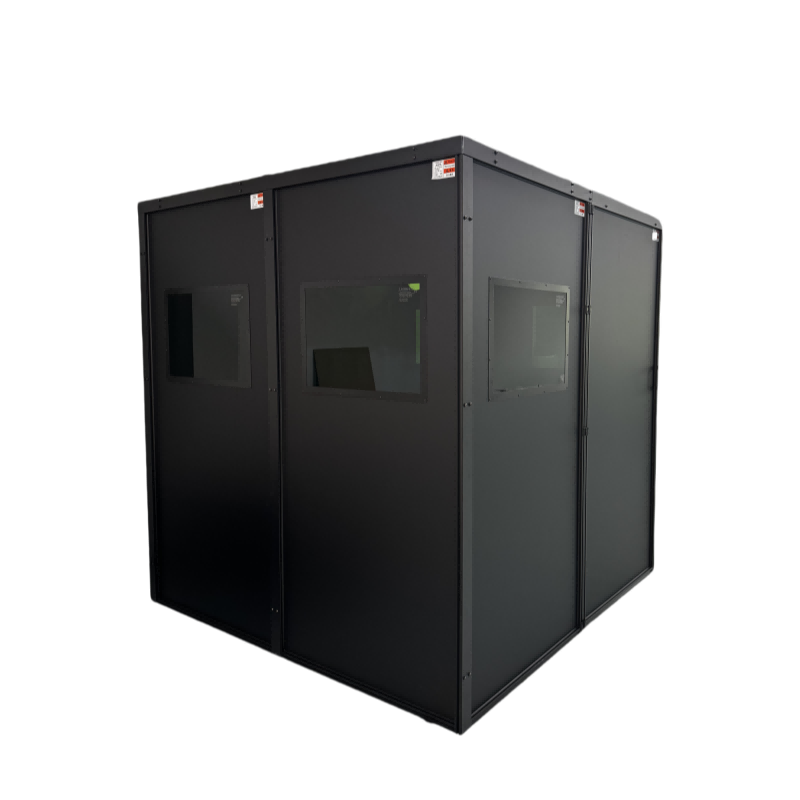
Laser Safety House Company steps beyond fear-mongering to deliver practical, eye-opening advice on hidden dangers lurking in everyday life. From laser pointers tucked in desk drawers to motion sensors woven into smart home systems, many devices emit beams powerful enough to harm vision before you even sense a threat. The guide highlights why toy lasers labeled as harmless can exceed safe exposure limits, turning playtime into a gamble with retinal health. Rather than suggesting you live in a darkened bunker, it explores clever shielding techniques—window films, strategic furniture placement, and diffusion filters—that block or scatter stray beams while keeping your space bright and inviting. It also decodes the technology behind laser-based gadgets like robotic vacuum lidar and security sensors, revealing when their invisible light crosses from convenient to risky.
What sets this resource apart is its unwavering focus on real-world readiness. It maps out immediate, nerve-steadying actions to take after an accidental exposure—simple steps like dimming lights, resisting the urge to rub eyes, and seeking an ophthalmologist who understands laser trauma. Equally valuable is its behavior-driven approach to prevention: building small, sticky habits like capping unused devices, checking IEC ratings before letting kids play with a new gadget, and teaching family members to aim beams away from reflective surfaces. By blending technical insight with everyday routines, Laser Safety House Company transforms a foreboding topic into an achievable safety culture, empowering you to protect what matters most without upending your life.
Contact Us
Contact Person: Jenny
Email: [email protected]
Tel/WhatsApp: +86 13537713281
Website: https://www.laserpair-safety.com/