

Investment Casting Exporters: What Global Buyers Need to Know Before Sourcing
2026-11-02
Before you commit to an investment casting exporter, ask yourself: do you really know what happens after the purchase order is signed? Too many global buyers discover hidden weaknesses in process control, alloy purity, and dimensional consistency only after production starts. This guide walks you through the exact questions to ask and documentation to demand before sourcing—from material test certificates to on-site audit reports. At BOYIKUN, we've seen how these checks prevent costly rework and supply chain delays, so you can move forward with confidence.
Demand Melt Records, Not Just Alloy Names
Any foundry or service center can tell you they're shipping 4140 or 316L, but the alloy name is only a starting point. What actually matters for repeatable machining, welding, or heat treating is the melt record behind that bar or plate. A proper melt record ties each piece to a specific heat number, lists the actual chemistry that came out of the furnace, and includes the mechanical test results from that heat. Two heats of "the same" alloy can sit at opposite ends of the allowed composition range, and that spread can change how the material cuts, forms, or responds to thermal processing.
When you accept material without asking for melt records, you're essentially buying a promise. That promise falls apart the moment there's a field failure, a mix-up in the warehouse, or a customer audit. Melt records give you a trail you can follow from the finished part all the way back to the original heat and even the raw material supplier. For anything load-bearing, pressure-containing, or safety-critical, that traceability isn't a nice-to-have; it's the only way to prove the material is what the paperwork says it is.
So before you cut a purchase order, change the conversation. Don't just ask for "6061 aluminum" or "Grade 5 titanium." Ask for the certified melt records with each shipment, and check that the heat numbers on the paperwork match the physical markings on the stock. If a supplier hesitates or sends a generic certificate without heat-specific data, treat that as a red flag. The alloy name tells you what family of metal you're dealing with. The melt record tells you exactly what you're putting into your product.
Read Surface Finish Specs Like an Inspector
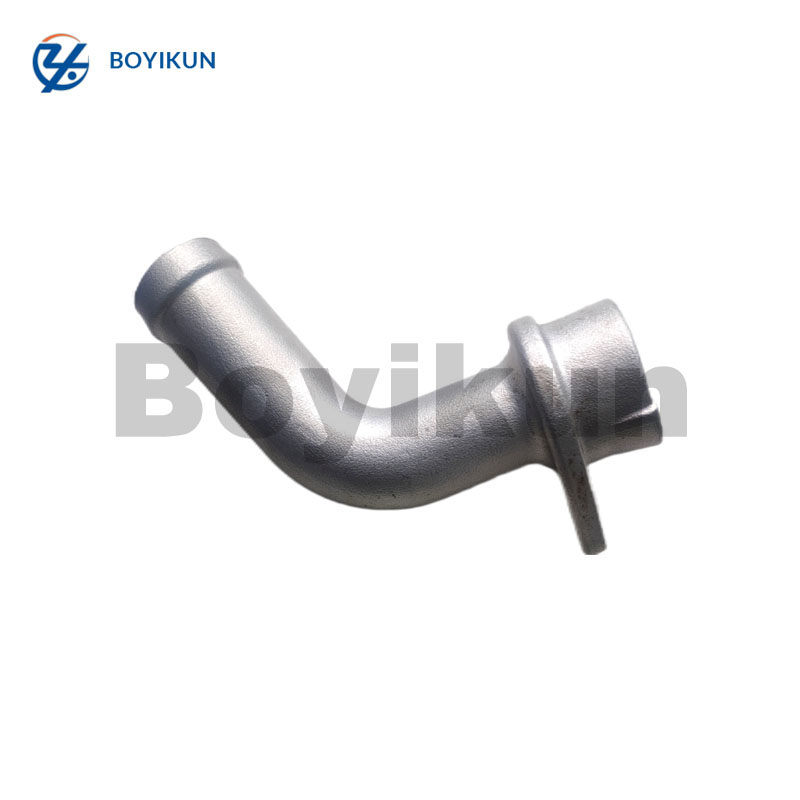
Before trusting any Ra number on a print, identify which surface texture standard the drawing references. ASME Y14.36, ISO 1302, and older ANSI B46.1 each treat symbols, defaults, and limits a little differently. An inspector will check the title block or general notes first, then look at the symbol itself, the lay direction mark, the cutoff, and whether the value is a maximum, a range, or a nominal target. Skipping this step turns a clear callout into guesswork.
A common mistake is reading only the number and ignoring geometry. Surface finish is not a single property; Ra is just the arithmetic average roughness. Two parts can share the same Ra but have completely different peak heights, valleys, and bearing ratios. Inspectors also compare the specified cutoff length with the traverse length on the profilometer. If your instrument uses a 0.8 mm cutoff but the print calls for 2.5 mm, the measured value cannot be compared directly to the spec.
Finally, treat any surface finish callout as a claim that needs verification, not decoration. Look for notes like 'all over,' 'unless otherwise specified,' or a symbol next to a specific face. Confirm the lay direction makes sense for the function, and use a comparator plate or a calibrated profilometer on real surfaces, not just a single quick pass. When in doubt, read it the way an inspector would: standard first, symbol second, number third, and context last.
Use Thin-Wall Samples to Test Process Control
Thin-wall samples strip away the cushion that usually hides small process shifts. When the wall section drops below about one millimeter, there is almost no room for fill hesitation, melt temperature drift, or inconsistent packing to go unnoticed. A standard test plaque might still look acceptable while the process has moved several percentage points off center. The same drift on a thin-wall part shows up as a short shot, a blush mark near the gate, or a sink that appears twenty minutes later as the part cools.
To use this as a control tool, pick a mold with a consistent flow path and a wall thickness that is at the low end of what your shop actually runs. Monitor cavity pressure curves across a shift, not just peak values. Thin walls amplify the shape of the curve, so a delayed velocity-to-pressure switchover or a drifting check ring becomes obvious long before it would on a thicker part. Record the fill time, switchover position, and cushion with each shot. If those three numbers stay flat while the cavity pressure curve keeps its shape, the process is genuinely stable.
One caveat is that thin-wall samples react faster to material and environmental changes, so you need to control those inputs more tightly during the test. Drying consistency, regrind percentage, and mold surface temperature all matter more at reduced thickness. That extra sensitivity is exactly why the sample works. It gives an early warning, but only if you separate a true process shift from a material or ambient change. Run the sample at fixed intervals with the same lot of material, and you get a readable trend line instead of a confusing scatter plot.
Uncover the Hidden Costs in Cross-Border Quotes
A supplier might quote you $4,800 for a shipment, but the actual amount leaving your account can easily climb past $5,600 once the bank takes its cut. Cross-border payments often pass through one or two intermediary banks, each deducting a flat fee before the funds reach the vendor. On top of that, the exchange rate you see on a currency converter is not the rate your payment processor applies; spreads of 2–4% are common, and they're rarely itemized on the invoice.
Customs clearance introduces a separate layer of costs that sit outside the initial quote. Import duties, value-added tax, and a customs broker's handling charge are typically billed after the goods land. If a single digit in the harmonized system code is wrong, the shipment can be held at the port and begin accruing storage or demurrage fees by the day. These charges don't appear in the seller's quote because they fall on you as the importer of record.
Then there are the quieter costs: the extra insurance rider for goods in transit, the fuel surcharge that fluctuates monthly, and the residential delivery fee if the freight forwarder decides your warehouse is 'limited access.' Even a simple change to the delivery address after the bill of lading is cut can trigger a reconsignment fee. To uncover these, ask the supplier for a door-to-door breakdown instead of a port-to-port figure, and confirm which Incoterm they're actually quoting.
Test Engineering Response Time Before You Order
Before you place an order, ask the engineering team how quickly they respond to a new test request. Some shops take days just to acknowledge a quote, while others pick up the phone within the hour. That gap matters more than most buyers realize.
A fast response usually signals a well-staffed lab with clear internal routing. Slow replies often mean the engineers are overloaded, or your job will sit in a queue behind larger clients. One practical test: send a short technical question before ordering and time the reply.
You don't need an SLA promise. Just watch the actual pattern. Do they ask clarifying questions right away? Do they flag potential issues with your test plan? That early back-and-forth is a preview of how the whole project will go.
Plan Packaging for Castings That Arrive Intact
Every casting brings its own set of fragile projections, so we start by mapping the part's actual silhouette rather than assuming a standard crate will work. Thin walls, machined bosses, and threaded holes get isolated with custom-cut polyethylene or laminated paperboard, and the casting is bolted to a rigid base plate to prevent any sliding. This removes the most common failure point: metal-to-metal contact during transit.
Moisture and vibration are just as damaging as impact. We wrap each piece in VCI film or add desiccant packs to handle condensation when shipments cross climate zones. For hollow or oddly balanced castings, inflatable air bags fill internal voids and dampen harmonic shaking, which cuts down on fretting wear that can ruin a mating surface before it reaches the customer.
Before a box gets sealed, we run a quick handling trial with a forklift and a short drop onto a rubber mat to check for any shift or denting. The outside of the crate then carries only what the receiving crew needs: a center-of-gravity mark, lift points, and a clear 'do not stack' warning if the casting has an unsupported overhang.
FAQ
Focus on ISO 9001 for general quality management, but if you're in aerospace or automotive, insist on AS9100 or IATF 16949. Also check whether their material test reports come from an in-house lab or an accredited third party—this tells you a lot about how seriously they take traceability.
Request a trial run of a complex geometry that's similar to your own parts, not just their standard samples. Ask for dimensional inspection reports using CMM or 3D scanning, and if possible, visit the foundry unannounced or hire a local inspection agent to watch the process from wax injection to finishing.
Most experienced exporters work with stainless steel, carbon steel, aluminum, and copper alloys. But if you need superalloys like Inconel or Hastelloy, or titanium, confirm they have dedicated shell-building and melting capacity—those alloys often require vacuum induction melting and tighter process controls.
Break down the quote into tooling, unit price, and post-casting operations. A low unit price might hide extra charges for heat treatment, machining, or non-destructive testing. Also ask about scrap rate assumptions—suppliers who assume high scrap rates are either inexperienced or pushing risk onto you.
Tooling usually takes 2-4 weeks, and first article samples another 2-3 weeks after that. Production runs for medium complexity parts often take 4-6 weeks. To avoid delays, lock down the 3D model and tolerances before tooling starts, and clarify who owns the tooling if the project goes on hold.
Yes. Investment casting can produce very complex shapes with thin walls down to about 1.5 mm in stainless steel, but you need to avoid sharp corners, sudden section changes, and isolated heavy sections that cause shrinkage porosity. Work with the supplier's engineering team to add fillets and gates in the right places early on.
Ask how they protect machined surfaces during sea freight—vacuum packing, VCI paper, or foam inserts? Also confirm whether they can handle consolidation with other parts, provide proper HS codes, and arrange shipping on FOB or CIF terms. A supplier who only quotes EXW might not have much export experience.
Look at their communication habits: do they respond with technical details, not just sales talk? Ask for references from buyers in your region and time zone. Also check how they handle documentation like certificates of origin, mill test reports, and PPAP if required. A mature exporter will have a process for these, not improvise.
Conclusion
When vetting investment casting exporters, insist on actual melt records for every heat, not just a mill certificate that recycles the alloy name. These records show trace elements, deoxidation practices, and furnace history—factors that directly influence weldability and corrosion resistance. Surface finish specifications deserve the same scrutiny: a drawing might state Ra 3.2 µm, but without knowing the comparator standard or measurement location, you could accept parts that look acceptable yet fail functional sealing or fatigue tests. Ask for measured values on critical surfaces and, if possible, request a first-article layout. Thin-wall test castings are the most honest check of process control. A foundry that can fill a 0.8 mm wall consistently across a 300 mm span without cold shuts or distortion has tight wax injection, slurry control, and shell drying. If they hesitate to run such a sample, walk away.
Cross-border quotes rarely tell the full cost story. Freight, customs brokerage, port fees, and local taxes can add 15–25% to the invoice, and some exporters quote ex-works to appear cheaper. Always request a breakdown by incoterm and ask who bears the risk if a container is inspected or rerouted. Then test how quickly the exporter's engineering team answers technical questions before placing a firm order. Send a drawing with a deliberate ambiguity and see if they catch it, or ask for a gate/finish recommendation. Slow or evasive replies now predict trouble during production. Finally, packaging often decides whether those castings arrive intact. Thin sections, machined bosses, and tapped holes need custom cradles, VCI paper, and desiccant, not just foam peanuts. Request packaging photos or a drop test report for fragile features, and verify that container loading plans prevent shifting in transit. These overlooked details separate reliable export partners from costly surprises.
Contact Us
Contact Person: Xianchen Hu
Email: [email protected]
Tel/WhatsApp: 86-13248645200
Website: https://www.hexnb.com/