

Industrial HVLS Fans Makers: Top Manufacturers for Efficient Air Circulation Solutions
2026-06-24
In large industrial spaces, stagnant air and uneven temperatures can quietly undermine productivity and comfort. The right HVLS fan transforms these environments, but choosing a reliable maker is the real challenge. Among industry leaders, VINDUSFAN stands out—not just for powerful airflow, but for smart engineering that rethinks efficiency. This guide cuts through the noise to spotlight the manufacturers truly moving air differently.
Why HVLS Fans Dominate Large-Space Airflow
Moving air in vast industrial or commercial settings poses a unique challenge that small, high-speed fans simply cannot meet. HVLS fans, with their exceptionally long blades, turn slowly yet move tremendous volumes of air in a gentle, column-like pattern. This isn't about brute force; it's about physics. A single HVLS unit can stir the entire air mass from floor to ceiling, breaking up thermal stratification and eliminating dead zones. The result is a consistent, building-wide breeze that makes the environment feel naturally comfortable without harsh drafts or noisy operation.
What truly sets these fans apart is their unmatched energy efficiency. Instead of relying on dozens of smaller units drawing constant high amperage, one properly placed HVLS fan operates at a fraction of the cost while delivering a cooling effect equivalent to a 5–7°F temperature drop. That perceived cooling means thermostats can be set higher in summer, slashing air-conditioning loads. In winter, the same slow rotation pushes warm ceiling air back down to the occupied zone, reducing heating demand. Facility managers quickly discover that the payback period is remarkably short, making the upfront investment a clear operational win.
Beyond the numbers, HVLS technology quietly improves the day-to-day experience of anyone working indoors. The gentle, enveloping airflow minimizes dust accumulation, reduces condensation on floors, and even discourages pests that favor stagnant conditions. Employees report less fatigue and higher comfort, which studies link to better focus and fewer mistakes. Architects and engineers increasingly specify these fans not as an afterthought but as a core element of modern building design—proof that when it comes to large-scale air movement, smart, low-speed circulation simply outperforms the outdated array of noisy pedestal fans.
Key Features That Set Leading Manufacturers Apart
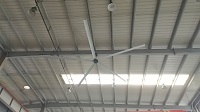
What truly distinguishes top-tier manufacturers isn't just their equipment or capacity—it's how they blend precision engineering with genuine flexibility. The best partners move beyond one-size-fits-all solutions; they listen first, then tailor every aspect of production to fit the project's unique demands. Whether it's adapting tooling mid-run or rethinking a supply chain bottleneck on the fly, their responsiveness feels less like a service and more like an extension of your own team. This adaptability, paired with an almost stubborn commitment to tolerances that most would call overkill, creates a foundation of trust that's hard to replicate.
Another hallmark is the depth of expertise that runs through their organization—not just in the C-suite, but on the floor where decades of hands-on knowledge collide with modern technology. These manufacturers invest heavily in cross-training, so when a challenge arises, you're not waiting on a single specialist who's out that day. The result is a culture where innovation isn't a buzzword; it's a daily byproduct of people who genuinely understand materials, processes, and the physics behind them. This collective wisdom means they can spot potential issues before they become problems, often suggesting improvements that even the client's own engineers haven't considered.
Finally, the willingness to stand behind their work with radical transparency separates the exceptional from the merely competent. Leading manufacturers don't hide behind contractual fine print when something goes sideways—they own it, fix it, and learn from it. This accountability extends to how they communicate, offering real-time visibility into every stage of production instead of polished reports that gloss over delays. It's this uncommon blend of skill, agility, and integrity that turns a vendor relationship into a strategic advantage, and it's why the best manufacturers often become partners for decades, not just for a single project run.
Breaking Down Blade Design and Aerodynamic Efficiency
The heart of any modern wind turbine lies in the geometry of its blades. Every curve, twist, and thickness variation is a deliberate compromise between structural demands and aerodynamic performance. The airfoil shapes are not simply scaled-up airplane wings; they are optimized for the messy, turbulent low-altitude winds that turbines actually encounter. A blade that looks elegant in a computer simulation can be torn apart by gusts if the design doesn’t account for real-world fatigue loads. This is why designers obsess over the chord length distribution—wider near the root to handle massive bending moments, tapering to a narrower tip to reduce drag and noise. The twist along the span is another critical variable: it adjusts the angle of attack to maintain an efficient lift-to-drag ratio from hub to tip, compensating for the fact that the blade’s rotational speed varies with radius. Even a one-degree deviation can cost several percentage points in annual energy production.
Efficiency isn’t just about extracting more from the wind; it’s about surviving long enough to deliver a return on investment. Leading-edge erosion is a silent killer of aerodynamic performance—pitting from rain, dust, and insects roughens the first few millimeters of the airfoil, disrupting the laminar flow that designers worked so hard to achieve. Modern blades incorporate protective tapes, thermoplastic coatings, or even active field-repair strategies to preserve the original profile. At the trailing edge, serrations inspired by owl feathers have become common, breaking up the turbulent vortices that would otherwise create a low-frequency hum. These serrations add a small amount of drag but drastically cut noise, allowing turbines to run at higher tip speeds without annoying nearby communities—a classic trade-off between pure aerodynamic efficiency and social license to operate.
Beyond the blade itself, the aerodynamic system extends to the way turbines interact with each other. In a wind farm, upstream rotors leave behind a wake of slower, swirling air that can rob downstream turbines of up to 30% of their expected output. This has spurred a wave of innovation in wake steering: by intentionally yawing the upwind turbine a few degrees away from the incoming wind, the wake can be redirected, giving the downwind machines cleaner air. Early trials show that this sort of coordinated control can boost total farm output by a few percent—a huge gain for an industry that deals in single-digit efficiency improvements. Blade-root extensions, vortex generators, and flexible trailing edges that morph under load are all part of the same relentless hunt for aerodynamic edge. Each tweak is a tiny bet against the chaotic force of the wind, and together they form a quiet revolution in how we capture energy from the sky.
Motor Innovations Driving Energy Savings
Modern motor technologies are breaking away from traditional fixed-speed designs by embracing advanced variable frequency drives and intelligent controls. These systems continuously adjust motor speed and torque to match real-time load demands, eliminating wasteful constant-speed operation in pumps, fans, and compressors. For instance, a retrofit with a smart VFD can cut energy use by 30% or more in HVAC applications, while integrated sensors now predict maintenance needs and fine-tune performance on the fly, making energy savings both automatic and substantial.
Material science is reshaping motor efficiency from the inside out. The adoption of amorphous metal stators and copper rotor die-casting has slashed core and resistive losses that plagued older aluminum designs. When combined with optimized slot geometries and precision air gaps, these innovations push efficiency boundaries—some premium motors now exceed IE5 standards. Beyond the motor itself, direct-drive configurations eliminate gearbox losses in applications like conveyor systems, while synchronous reluctance motors offer a rare-earth-free path to high efficiency, challenging the dominance of permanent magnet machines in many sectors.
Digital integration is turning motors into connected assets that actively manage energy profiles. Embedded power electronics capture granular consumption data and feed it into facility-wide analytics, enabling operators to spot inefficiencies like oversized motors or throttled valves. In one real-world case, a beverage plant retrofitted 200 motors with wireless monitoring and immediately identified several running unloaded during breaks, recovering thousands in annual energy costs. Coupled with regenerative braking in hoists and elevators that returns power to the grid, these system-level innovations prove that the biggest savings come not from the motor alone, but from how it’s integrated and controlled.
Smart Controls and Integration in Modern Facilities
Modern buildings are no longer static shells; they've evolved into responsive environments where every system—lighting, HVAC, security, and even occupancy sensing—communicates seamlessly. The intelligence lies not just in individual smart devices but in how they intertwine through open protocols and adaptive logic. Instead of siloed operations, a unified platform interprets real-time data to adjust conditions proactively, often learning from patterns without explicit programming.
This integration extends beyond the physical plant. Facilities teams now leverage cloud analytics and edge computing to predict maintenance needs or automatically reconfigure spaces for changing uses. For example, a conference room can detect a scheduled meeting, prep the AV equipment, and tailor climate settings based on headcount—all without manual intervention. The result is a fluid, user-centric experience that also trims energy waste and operational overhead.
What sets truly advanced setups apart is the human factor. Voice commands, mobile apps, and intuitive dashboards give occupants agency over their immediate surroundings while allowing facility managers to oversee thousands of points from a single interface. It's about creating a living ecosystem that balances comfort, efficiency, and adaptability without requiring constant human micromanagement.
Real-World Applications: From Warehouses to Hangars
In a busy distribution center outside Memphis, autonomous mobile robots weave through aisles without bumping into workers or shelving. These aren't science-fair prototypes—they're part of daily operations, shuttling totes from picking stations to packing lines. The warehouse floor hums with machines that learn traffic patterns, adjust routes on the fly, and even conserve battery by coasting downhill on ramps. It’s less about replacing people and more about eliminating the miles of walking that wear down a workforce, turning an eight-hour shift into something manageable.
Step onto the tarmac of a regional airfield and you'll see a similar shift. Hangars that once echoed with the clang of hand tools now host robotic platforms sliding beneath fuselages, running sensor checks on hydraulics or spotting hairline cracks in landing gear before a pilot ever kicks the tires. Drones lift off from a corner of the hangar, scanning rooftop equipment for a healthcare campus nearby, then return to dock and recharge without a human touching them. The jump from warehouse to hangar isn't a stretch—it's the same core need for repeatable, precise work in spaces where downtime costs real money.
What ties these places together isn't just the hardware. It's the quiet logic that guides the machines: a combination of onboard cameras, lidar, and plain old common sense baked into code. A forklift in a freezer warehouse operates in sub-zero temperatures, navigating slick floors with the same ease as a drone dodging guy wires in a hangar. These tools don't need climate-controlled server rooms or five years of planning. They show up, map the environment in a few hours, and get to work—whether that's moving pallets of frozen peas or inspecting a Gulfstream's wing flaps.
FAQ
HVLS stands for High Volume, Low Speed. These are oversized ceiling fans, typically with diameters from 7 to 24 feet, that move massive amounts of air at low rotational speeds. The name comes from their design principle: they generate a huge column of slow-moving air that spreads across the floor, creating a gentle but effective breeze throughout large industrial spaces.
The market leaders include Big Ass Fans (now Delta T), MacroAir, and Rite-Hite. Other notable names are Horton, Hunter Industrial, and Entrematic. Each has carved out a niche—some focus on customization, others on energy efficiency or easy installation—so the 'best' really depends on what you need for your specific facility.
By pushing air down and outward in a floor-jet pattern, they break up temperature layers. In winter, they push warm air trapped near the ceiling back down, and in summer, the moving air makes people feel cooler through evaporative cooling on their skin. It’s not just about wind—it’s about evening out conditions from floor to ceiling.
Start with the build quality—blade material, motor type, and mounting options. Then check for variable speed controls, noise levels, and integration with building management systems. Also look at the warranty and the company’s track record for service after installation. A 15-year warranty on the motor is pretty standard among top-tier manufacturers.
Yes, quite a few. Some use proprietary airfoil blade designs that are quieter and more efficient. Others focus on gearless direct-drive motors that require less maintenance. You’ll also see differences in control interfaces—some brands offer smart sensors that adjust fan speed based on temperature and humidity automatically.
Absolutely. By destratifying the air, they can reduce heating costs by up to 30% in winter. In summer, they can make a space feel 10–15°F cooler, often letting you set the thermostat higher. Most facilities see a payback period of 2 to 4 years, depending on local energy prices and how much you run them.
They’re common in aircraft hangars, gymnasiums, distribution centers, and even dairy barns. More recently, they’ve been installed in large retail spaces, auto service centers, and outdoor covered patios. Anywhere with high ceilings and a big footprint can benefit, as long as the fan is sized and mounted correctly.
Conclusion
Industrial HVLS fans have become the backbone of air circulation in cavernous spaces because they move massive volumes of air at low speed, creating a gentle, floor-level breeze that equalizes temperature and humidity without the noise and energy waste of high-velocity alternatives. Top-tier manufacturers distinguish themselves through precision-engineered blade profiles that maximize aerodynamic efficiency while minimizing drag, often using proprietary airfoil designs refined through computational fluid dynamics. These blades, coupled with advanced direct-drive motors that sidestep gearbox losses, deliver substantial energy savings—often cutting cooling costs by 30% or more compared to conventional systems. Leading makers also embed smart controls that sync with building management platforms, enabling automated speed adjustments, scheduling, and real-time diagnostics, which transforms these fans from simple air movers into intelligent environmental management tools.
The real-world versatility of purpose-built HVLS fans becomes evident in settings as diverse as aircraft hangars, where they combat fume buildup and heat stratification, to distribution centers, where consistent airflow protects inventory and improves worker comfort. Unlike generic industrial fans, equipment from established manufacturers undergoes rigorous lifetime testing and incorporates features like modular components for simplified maintenance and corrosion-resistant finishes for demanding environments. Whether it’s a livestock barn requiring gentle circulation to reduce moisture and ammonia, or a manufacturing plant needing targeted cooling at workstations, the adaptability in mounting heights, blade sizes, and control integration allows these systems to be tailored precisely. The shift toward energy-efficient, quiet, and connected large-space ventilation underscores why these specialized manufacturers continue to set the standard for modern airflow solutions.
Contact Us
Contact Person: Michael Danielsson
Email: [email protected]
Tel/WhatsApp: +1 951 565 7769
Website: https://www.vindusfans.com