

IBC Tank Factory: Crafting Durable Solutions for Your Bulk Storage Needs
2026-05-29
In the world of bulk liquid storage, reliability isn't just a feature—it's a necessity. Whether you're handling chemicals, food-grade liquids, or industrial solvents, the integrity of your IBC tanks can make or break your operations. That's why choosing the right manufacturer matters. At DYE, we engineer every IBC tank to exceed expectations, blending cutting-edge production techniques with rigorous quality control. But what truly sets our factory apart? Join us as we explore the craftsmanship behind durable solutions that protect your products and your peace of mind.
Engineering Resilience: How Our IBC Tanks Withstand Extreme Conditions
When a chemical storage tank fails, the consequences ripple far beyond a simple leak. Our IBC tanks are designed from the molecular level up to resist the very forces that dismantle ordinary containers. The polymer structure uses a high-density polyethylene that remains flexible even as temperatures plummet to -40°F, preventing the micro-cracks that typically form in rigid plastics under thermal stress. This flexibility is paired with a UV-stabilized outer layer that deflects years of solar degradation, keeping the inner wall protected without the brittleness that plagues standard tanks left in the sun.
Reinforcement goes deeper than the material itself. A galvanized steel cage, arranged in a stress-mapped grid, absorbs impact energy across its entire framework rather than concentrating it at a single point. After a ten-foot drop test, you won't find a hairline fracture or a deformed valve port—just a few scuffs on the powder coating. Inside, the tank's seamless blow-molded body eliminates weak seams where chemical attack often begins. Even the discharge valve is nested within a protective recess, shielded from forklift strikes that would shear off a less thoughtfully positioned fitting.
Extreme conditions don't always announce themselves with drama. It's the relentless vibration on a truck bed, the corrosive mist in a coastal facility, or the constant chemical soak that silently eats away at lesser tanks. We subject every design to accelerated life-cycle testing: repeatedly filling with aggressive acids, vibrating at transport frequencies, and cycling through rapid temperature swings that mimic a decade of service in a single month. The result is a container that holds its integrity when the unexpected happens—because in the real world, extreme is just another Tuesday.
Tailored to Your Operation: Customizable Features for Any Industry
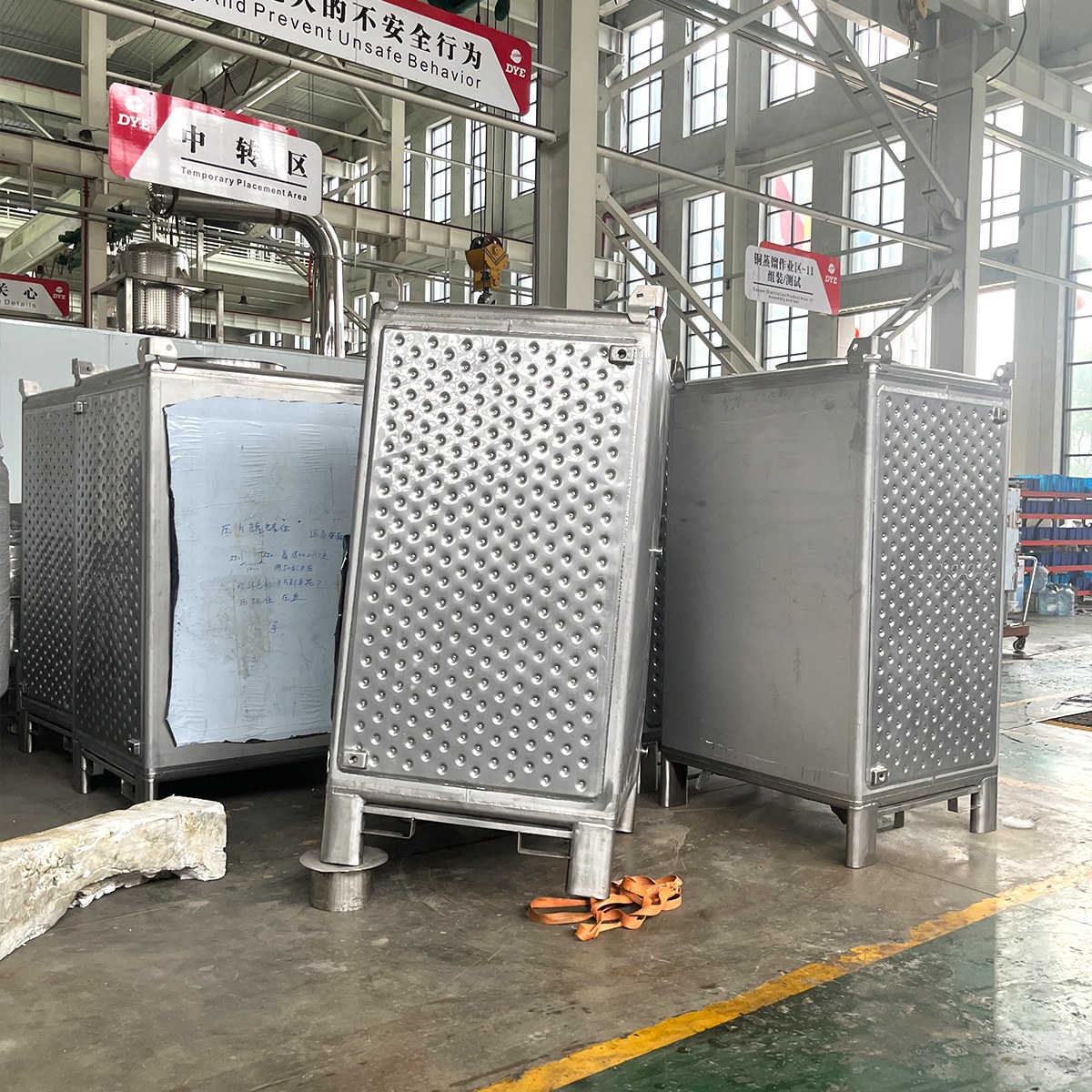
Every business has its own rhythm, its own quirks, and its own way of getting things done. That’s why we’ve built a foundation that bends to your workflow, not the other way around. From adjusting dashboards to match your team’s daily priorities, to setting permissions that reflect your actual organizational structure, the system evolves with you. You’re not stuck with a one-size-fits-all setup that forces you into a mold—our tools give you the freedom to shape the interface and processes until they feel like a natural extension of how you already work.
Behind the scenes, the customization runs deeper than surface-level tweaks. You can define custom data fields that capture exactly what matters in your field—whether that’s patient intake details in a clinic, load dimensions in a logistics yard, or batch codes in a food processing plant. Reporting and automation rules adapt accordingly, so the insights you pull are always relevant and actionable. And because industries shift over time, these customizable layers aren’t static—they can be adjusted as your focus changes, without needing a developer or a lengthy migration project. It’s about giving you a living toolkit, not a rigid instruction manual.
From Raw Material to Final Product: A Closer Look at Our Manufacturing Precision
Every project begins with the careful selection of raw materials. We don’t just check a box—our team physically inspects each batch, looking for inconsistencies that others might miss. This hands-on approach sets the stage for everything that follows.
Once the right materials are in place, our engineers and machinists take over. Using a blend of time-tested techniques and modern equipment, they shape each component with a level of attention that goes beyond standard tolerances. It’s not about speed; it’s about getting every detail right, even the ones you’ll never see.
The final product then moves through a series of quality checks that mirror real-world use. We test, measure, and sometimes even push things to failure, just to understand the limits. By the time it leaves our floor, it’s more than a finished product—it’s proof that precision isn’t a buzzword here, but a practice we live by every day.
Beyond Standard Containers: Innovations That Redefine Bulk Storage
Bulk storage has long been synonymous with towering silos and rigid metal bins, but a quiet revolution is challenging that static image. Designers are now borrowing from nature and aerospace to create containers that expand and contract on demand, morphing their capacity as inventory levels shift. Imagine a tank that breathes with the seasons, its polymer skin flexing to accommodate harvest surges or material drawdowns, all without the cumbersome footprint of traditional structures. This is not science fiction—early adopters in agriculture and chemical processing are already testing vessels that combine lightweight composite shells with tensioned membrane systems, slashing material costs and installation time.
At the same time, the industry is waking up to the potential of shape-shifting logistics. Intermodal standards once boxed us into rectangles, but new approaches treat bulk materials as dynamically configurable flows. Some innovators deploy collapsible geodesic modules that can be flat-packed for transport and popped open at remote sites, turning a single flatbed trailer into a high-capacity storage array within hours. Others are rethinking containment entirely: using smart fabrics laced with sensors to create temporary domes that monitor humidity, temperature, and structural stress in real time, sending alerts before a leak or spoilage event ever materializes. These concepts sidestep the drawbacks of concrete and steel—corrosion, weight, permanence—while opening storage possibilities in locations previously deemed impossible.
Perhaps the most overlooked frontier, however, is the integration of living systems. Biodegradable polymers infused with microbial cultures can now serve as short-term storage liners that actively break down residues after use, eliminating costly cleaning protocols for sensitive materials. Meanwhile, researchers are experimenting with mycelium-based insulating panels that regulate internal temperatures passively, drastically reducing energy consumption for climate-controlled storage. These bio-integrated designs don’t just hold materials; they interact with them, creating a symbiotic relationship between container and content. As regulations tighten and environmental consciousness deepens, such living containers may well shift from experimental novelty to mainstream necessity, proving that the future of bulk storage is not about bigger boxes, but smarter, more adaptive ones.
Built for the Long Haul: Durability Testing and Quality Assurance
We don’t just hope our products last—we make sure they do. Each design is subjected to a gauntlet of real-world simulations, from repetitive stress cycles to extreme temperature swings, pushing materials and components far beyond everyday use. If a seam is going to split or a circuit is going to fail, we want to see it happen in our lab, not in your hands.
Our quality checks aren’t a one-time stamp of approval; they’re embedded at every stage of production. Incoming materials are inspected down to the fiber or micron, and finished products are pulled at random for exhaustive life-cycle testing. This isn’t about meeting a specification sheet—it’s about catching the subtle inconsistencies that only emerge when a product is truly put through its paces.
The result is gear that develops character, not defects, over time. By blending meticulous engineering with an almost obsessive battery of tests, we build for the years ahead, ensuring that what you rely on today remains just as dependable tomorrow.
Seamless Integration: IBC Tanks Designed for Your Existing Workflow
Adapting your operations to accommodate new equipment can often feel like an unnecessary disruption. That’s why our IBC tanks are built to slot right into the systems you already rely on. From standard connection sizes to pump and piping compatibility, every detail is considered so you spend less time retrofitting and more time focusing on throughput.
The modular design of these intermediate bulk containers means they work harmoniously with your current filling, discharge, and storage setups. Yard ramps, forklifts, and pallet jacks interface effortlessly because we haven’t reinvented the wheel—we simply refined it. The footprint is deliberate, maximizing cube utilization in your existing warehouse racking without forcing layout changes.
Beyond physical fit, the integration extends to your operational protocols. Customizable valve placements and accessory mounting points let you mirror the flow patterns your team is accustomed to. There’s no need to rewrite handling procedures or invest in specialized training—just unbox, place, and continue the day’s work with minimal friction.
FAQ
Our tanks are built with a reinforced galvanized steel frame and a high-density polyethylene inner bottle that resists cracking under extreme temperatures. We also double-weld critical joints and apply a proprietary anti-corrosion coating, so they hold up longer in rough environments like chemical processing or remote construction sites.
Absolutely. We offer modular discharge valves, camlock adapters, and even bottom outlets with splash guards. Tell us your flow rate and connection type, and we’ll configure the tank so it plugs right into your existing pumps or manifold.
Every tank goes through a triple-stage pressure test: first the inner bottle alone, then the assembled unit, and finally a simulated road-vibration test on a shaker table. We also fuse the valve boss directly to the HDPE wall, eliminating gasket failure points that cause micro-leaks.
Typically we ship within 15 business days, even with full UN 31A/Y certification. We keep pre-tested cage subassemblies in stock, so the final build moves quickly. Rush orders can go out in 10 days if the schedule allows.
Yes, we have a dedicated cleanroom molding line for food-grade bottles. The resin is FDA-compliant and we use virgin material without regrind. Each unit comes with a lot-traceable purity certificate, so you can match it to your batch records.
Standard models range from 250L to 1500L. Our 1000L and 1250L tanks get an extra-wide frame footprint and a low center of gravity design. We also weld cross-braces on the pallet base to prevent swaying when stacked three high.
We reclaim all HDPE scrap through in-house regranulation and reuse it for non-critical structural parts. Our galvanizing line operates a closed-loop rinsing system recovering 95% of the water. And we ship tanks with reusable corner protectors instead of one-time foam.
Conclusion
At the heart of our IBC tank factory lies a commitment to durability that goes far beyond simple ruggedness. Every container is engineered to endure the harshest conditions—from scorching heat to freezing cold—thanks to advanced material science and reinforced structural design. We start with premium raw materials, carefully inspected and processed through precision manufacturing steps that leave zero room for compromise. Our quality assurance isn’t just a checkpoint; it’s a rigorous, ongoing process of stress testing, impact simulations, and long-cycle fatigue analysis that ensures each tank delivers reliable performance year after year.
But durability alone isn’t enough. We know your operation is unique, so we’ve moved past one-size-fits-all solutions. Our tanks can be customized with specific fittings, capacities, and chemical resistance profiles, while clever integration features let them slide right into your existing workflow without costly modifications. Whether you’re storing food-grade liquids, corrosive chemicals, or high-purity ingredients, we tailor everything from valve placement to frame design. Meanwhile, our innovation team constantly rethinks conventional bulk storage, bringing new features that prevent contamination, simplify handling, and extend service life—giving you a container that truly works the way you need it to.
Contact Us
Contact Person: Ada Xu
Email: [email protected]
Tel/WhatsApp: 0577-86806088
Website: https://www.dayuwz.com/