

Household Air Purifier Supplier: 7 Key Questions to Ask Before Ordering
2026-09-28
Ordering household air purifiers in bulk seems simple—until you’re sorting through dozens of suppliers who all promise the same CADR, the same filter life, and the same vague ‘factory-direct’ pricing. The differences that actually matter rarely show up on a spec sheet. That’s why, before you place an order, you need to pressure-test your supplier with seven targeted questions. At LUFUTATECH, we’ve seen how the right questions separate dependable manufacturing partners from costly surprises. Here’s what to ask to protect your margins, your schedule, and your customers’ trust.
Ask About the Specific Filter Media and Its Lifespan
When you're looking at a purifier or filtration unit, don't settle for vague terms like 'high-efficiency filter' or 'advanced media.' Ask exactly what the filter is made of—whether it's granular activated carbon, catalytic carbon, KDF, pleated polyester, or a layered synthetic blend. Each material targets different contaminants, and some degrade faster when exposed to certain water or air conditions.
Lifespan claims on the box are usually based on ideal lab conditions, not your actual home. Get a straight answer on how many gallons or months the media is rated for, but also ask what shortens that window: sediment load, chlorine levels, humidity, or heavy usage. A cheaper filter that needs replacing twice as often can end up costing more than a pricier one with a longer realistic service life.
If the seller or manufacturer hesitates to name the media or gives a vague range, treat that as a warning sign. Knowing the material and its expected degradation pattern helps you plan replacements instead of guessing. It also prevents the all-too-common mistake of running a filter past its useful point, which does little more than recirculate the very particles you wanted removed.
Request Third-Party Performance Data Beyond Basic CADR
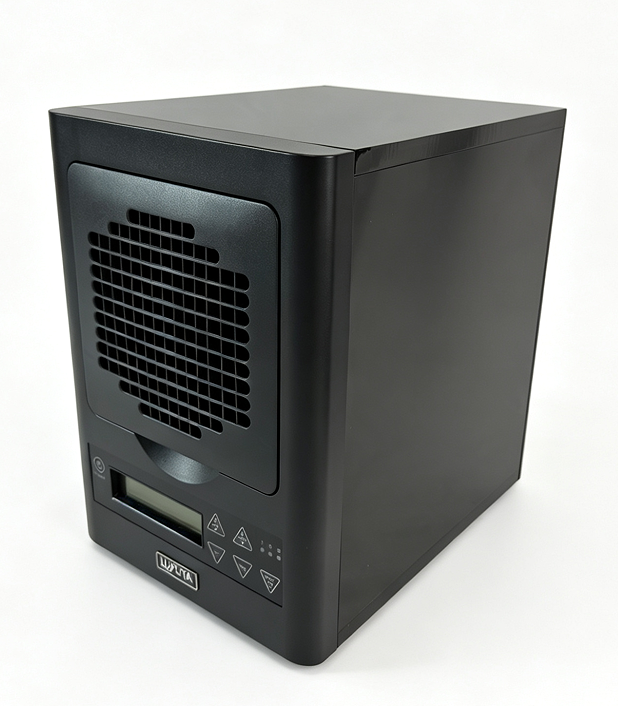
A single CADR number tells you how quickly a purifier clears smoke, dust, or pollen in an ideal lab setting, but it rarely reflects what happens in your living room. To get a clearer picture, ask the manufacturer or retailer for independent test reports from labs like Intertek or SGS. These documents often reveal how the machine performs after weeks of continuous use, when filters begin to load and airflow drops. Without this kind of third-party data, you're essentially trusting a marketing claim that may only hold true for the first hour of operation.
Look beyond the headline CADR by requesting measurements taken at different fan speeds, not just turbo mode. Many purifiers achieve impressive numbers on their highest setting but become nearly silent and far less effective on the speed you'd actually tolerate in a bedroom. Also ask for long-term particle decay curves rather than a single 20-minute snapshot. A quality report will show how quickly PM2.5 levels fall and then stay low, while a weaker machine might spike again once the sensor resets. Noise levels and energy draw at each speed should be part of the same dataset, so you can weigh cleaning power against everyday comfort.
Don't hesitate to compare third-party results across different brands, even if the manufacturers don't publish them directly on product pages. Independent consumer organizations and university labs sometimes release their own roundups with standardized testing protocols. When you do receive a report, pay attention to the test chamber size, air exchange rate, and whether the results were adjusted for natural decay. A purifier that performs well in a 100-square-foot sealed room may struggle in a larger open-plan space. By insisting on robust, independently verified performance data, you shift the conversation from marketing hype to what the device actually delivers over months of use.
Compare Filter Replacement Costs Over Three Years
Replacing filters isn't just about the sticker price on the box. A HEPA filter that costs $25 might need to be swapped every four months, while a washable pre-filter only asks for soap and water. Over three years, that $25 filter repeats nine times and totals $225, not counting shipping or the time spent hunting for the right size.
Manufacturer-brand replacements often carry a premium without a clear performance edge. In many cases, third-party filters made to the same dimensions and media rating run 30–50% less. Buying a two- or three-pack can push the per-unit cost down further, but only makes sense if you have dry, dust-free storage and won't forget where you put them.
Some brands offer a subscription that trims 10–15% off each order and removes the need to remember replacement dates. That convenience is worth calculating: if a subscription saves $6 per filter and you order four filters a year, the three-year saving is $72. For homes with pets or high pollen seasons, the equation shifts because filters clog faster, making cheaper bulk buys less valuable than a reliable delivery schedule.
Measure Noise at the Speeds You’ll Actually Use
A noise rating taken at full throttle rarely matches what you hear during everyday use. If a fan spends most of its time below 1,500 RPM, the manufacturer's 45 dB(A) figure at 2,200 RPM tells you almost nothing about your actual environment. Start by identifying the speed range you genuinely operate in, then set up a sound meter at the same distance and angle you'll experience in real life.
Once you've locked in those speeds, run repeated measurements across the lower, middle, and upper ends of that range. Small changes in blade shape or motor control can produce noticeable differences at specific RPMs, even when peak numbers look identical. Write down the results for each speed instead of relying on a single average, because a resonance spike at 1,100 RPM could be far more irritating than a slightly higher overall level.
Finally, compare products or configurations under the same conditions rather than trusting generic lab data. A fan that reads 30 dB(A) on an open test bench might behave very differently inside a cramped case or behind a dust filter. Measuring at the speeds you actually use, in the mounting position you'll keep, gives you numbers that match what your ears will eventually live with.
Look for Certifications That Go Beyond the Minimum
A certification that barely clears the bar rarely tells you much about how a product is actually made. The labels worth paying attention to are the ones that set thresholds most producers struggle to reach—think organic standards that require building soil health over multiple years, or fair trade models that guarantee a living wage rather than just a floor price. If a brand is eager to show you the exact percentage of recycled content or the independently audited supply chain behind a claim, that's usually a stronger signal than a generic "eco-friendly" badge.
It also helps to look past the logo and check what the certifying body actually measures. Some certifications focus only on a single attribute, like energy use in manufacturing, while others look at the entire life cycle, including worker safety, water stewardship, and end-of-life disposal. The more inconvenient the requirements sound for a company to meet, the more meaningful the certification tends to be. A meaningful standard often forces trade-offs—saying no to cheaper materials, shorter supply chains, or faster production cycles.
Finally, compare certifications within the same category rather than treating them as interchangeable. In building materials, for instance, a product that meets the highest tier of a well-known green building program is not the same as one that meets the entry-level criteria. When the distinction is hard to find on the packaging, it's often buried in the certification's technical manual, and that's where the real difference between leadership and compliance becomes clear.
Clarify What Happens After the Sale—Warranty and Support
The moment you pay, the relationship shouldn't end. Most buyers quietly wonder: if this breaks in three months, who do I call? Answer that before it's asked. Spell out the warranty length, what it covers, and what it doesn't—like physical damage or third-party modifications. If you offer a 30-day replacement or a two-year repair promise, say it flatly. Don't bury the details in a PDF link they'll never open.
Support matters just as much as the product. Tell them how to reach a real human—email, chat, phone, or a ticketing system. Include average response times if you can stand behind them. If you offer free troubleshooting for the first year, make that clear. Customers often pick the vendor who explains the post-sale path, not the one with the flashiest feature list.
One trick that builds trust: share a short example of a past warranty or support case. Something like, "Last month a customer's unit failed on day 29—we shipped a replacement the same afternoon." It turns an abstract policy into proof. And remember, a confusing warranty can scare away more buyers than a short one. Keep the terms plain enough to read aloud without stumbling.
FAQ
Look for AHAM Verifide, Energy Star, and CARB compliance. If a supplier hesitates to share certificates or test reports, that's a red flag. I always ask for digital copies tied to the exact model I'm ordering, not just a generic PDF on their website.
Some brands hide the real cost in replacement filters. Ask for the filter lifespan in months, the price per filter, and whether generic third-party filters fit. A good supplier will give you a clear annual maintenance estimate before you commit.
Decibels on a spec sheet are often measured at the lowest setting. Request noise readings for medium and high speeds too. If the unit will sit in a bedroom or office, anything above 50 dB at medium becomes annoying fast.
If you want your own brand on the unit, ask about MOQ for logo printing, packaging design, and whether they charge tooling fees. Some suppliers only offer OEM at 500+ units, while others can do small batches with a simple sticker.
A 1-year warranty means little if you have to ship the unit back to China at your own cost. Clarify who pays for return shipping, how replacement parts are handled, and whether they have local service centers or just email support.
Don't settle for marketing claims like 'removes 99.97% of particles.' Ask for the full lab report showing CADR for smoke, dust, and pollen, plus the test standard used. If the numbers come from the supplier's own in-house test, treat them with caution.
Lead times change with season and component shortages. Get a written quote that states MOQ, deposit terms, production days, and shipping method. Also ask if they keep buffer stock for repeat orders, which can cut reorder lead time significantly.
Conclusion
Before you commit to a household air purifier supplier, dig into the details that most sales sheets gloss over. Start with the filter itself—ask exactly what media it uses and how long it lasts under real-world conditions, not just lab estimates. Then push for third-party performance testing that goes beyond a single CADR figure; you want data on pollen, dust, and smoke at different fan settings. The real cost of ownership often hides in replacement filters, so compare those expenses over a three-year period rather than focusing on the upfront price. Noise matters too, especially for bedrooms or home offices, so measure decibel levels at the speeds you will actually run the machine, not just the lowest setting.
Certifications are another area where minimum standards rarely tell the whole story. Look for marks like Energy Star, AHAM Verifide, or CARB compliance, but confirm they cover the specific model you are ordering. Finally, clarify what happens after the sale: how long the warranty lasts, what it covers, and whether support is reachable by phone or chat. A supplier that hesitates on these points or offers vague reassurances is not one you want to rely on for years of indoor air quality. Taking time to ask these questions will help you avoid overpaying for weak filtration and disappointing aftercare.
Contact Us
Contact Person: Paul Luo
Email: [email protected]
Tel/WhatsApp: 0086-19966314501
Website: https://www.lufutatech.com