

High Precision Shunt Resistor Recommendations: The Essential List
2026-07-07
When precision is non-negotiable, every micro-ohm matters. High-precision shunt resistors are the unsung heroes behind accurate current measurements, yet choosing the right one can feel like finding a needle in a haystack. In this curated list, we cut through the noise with top-tier recommendations that balance performance, stability, and real-world practicality. Whether you're designing battery management systems or precision instrumentation, these picks—backed by deep testing and insights from Milliohm—will steer you toward the ideal component without the guesswork.
The Role of High-Precision Shunts in Modern Electronics
High-precision shunts quietly power the accuracy behind countless electronic systems we rely on daily. Unlike generic current-sensing resistors, these components are engineered with ultra-low temperature coefficients and tight tolerances, often down to 0.01% or better. This allows engineers to measure current with minimal voltage drop and negligible self-heating, which is critical when monitoring battery charge states in electric vehicles or ensuring stable power delivery in sensitive medical equipment. The materials—typically manganin or specialty metal alloys—are chosen not just for conductivity, but for their long-term stability, resisting drift over thousands of thermal cycles.
In modern metrology and industrial automation, the shunt is far more than a simple resistor. Its design involves precise geometric shaping and strategic placement of sense terminals to eliminate errors from lead resistance, a nuance often missed in standard current measurement. High-end shunts integrate directly into feedback loops of control systems, enabling real-time adjustments in motor drives, solar inverters, and semiconductor fabrication tools. Without this level of precision, energy efficiency benchmarks would falter, and the pulse-by-pulse control needed in fast-switching power converters would become erratic.
Reliability under extreme conditions sets high-precision shunts apart. They are expected to hold their calibration despite vibration, humidity, and wide temperature swings, making them indispensable in aerospace and downhole drilling equipment. The testing process alone involves accelerated aging, overload simulations, and characterization of parasitic inductance. As electronics shrink and power densities rise, the ability of these shunts to deliver unwavering reference signals ensures that next-generation devices—from 5G base stations to advanced robotics—operate safely and efficiently, often without any user ever knowing they’re there.
What to Look for When Choosing a Shunt Resistor
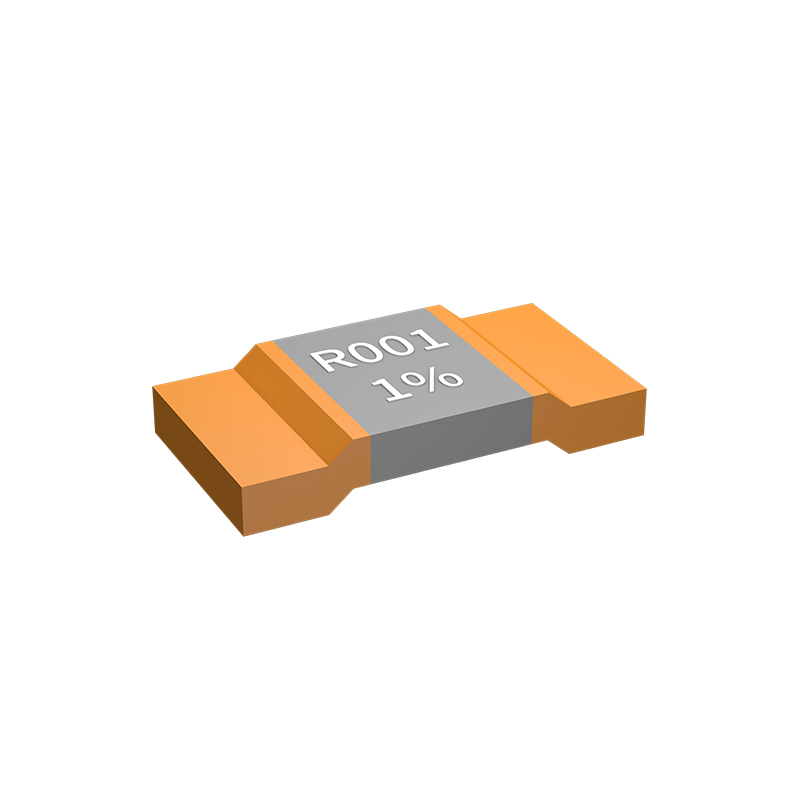
Picking the right shunt resistor starts with a clear grasp of your current range and the voltage drop your circuit can tolerate. You’ll want to balance a low enough resistance to minimize power loss and heat, while still generating a measurable voltage for your sensing circuitry. There’s a sweet spot where the resistance gives you a clean signal without cooking the board, so don’t just default to the smallest value—think about the full operating envelope, including surge currents that can push a seemingly fine resistor past its limits.
Precision isn’t just about the initial tolerance printed on the datasheet. A shunt’s temperature coefficient of resistance (TCR) can completely undermine accuracy if you’re not careful. In high-current scenarios, the device will self-heat, and if the TCR is too steep, your readings will drift as the temperature shifts—rendering a 0.1% initial tolerance useless. Look for low-TCR alloys like manganin or specialized metal-strip constructions, and always verify stability over the temperature range your product will actually see, not just the air-conditioned lab bench.
Finally, don’t let the physical design trip you up. Thermal management often dictates the layout more than the electrical specs: a four-terminal Kelvin connection can circumvent lead resistance errors, but only if you route it correctly. Board copper can act as a heatsink, so think about where the heat goes under sustained load. The footprint, clearance requirements, and even the solder joint quality become critical when you’re pushing amps through a component the size of a grain of rice. Sometimes a larger, bulkier part is the savvy choice simply because it stays cooler and more stable over time.
Exploring Common Shunt Resistor Technologies
Shunt resistors come in a variety of forms, each tailored to specific measurement demands. Metal alloy current sense resistors, for example, are prized for their low temperature coefficient of resistance (TCR) and minimal parasitic inductance—making them ideal for high-precision applications where stability matters more than cost. These components often use manganese-copper or nickel-chromium alloys to keep thermal drift in check, even under heavy loads.
For high-current scenarios that demand ruggedness and thermal durability, metal plate resistors enter the picture. They’re typically fashioned from a single piece of metal—often a copper alloy with a welded or pressed resistance element—and can dissipate significant heat without performance degradation. This construction handles current surges gracefully, an advantage in power supplies, motor drives, and automotive battery management systems.
On the opposite end of the spectrum, thin-film and thick-film chip resistors shine in compact, low-cost designs. Thick-film variants, with their screened resistive pastes on ceramic substrates, offer wide resistance ranges at budget-friendly prices. Thin-film counterparts deliver tighter tolerances and superior noise performance—valuable in precision analog front-ends. Choosing between them almost always hinges on the trade-off between accuracy requirements and budget constraints.
Where Precision Shunts Make the Biggest Impact
Placing a high-precision shunt at a critical measurement point can completely transform system insight. In battery management, a slight drift in current sensing can lead to premature aging or safety risks. A well-positioned, low-drift shunt eliminates guesswork, enabling accurate state-of-charge estimation and extending pack life without costly over-engineering.
Motor drives tell a similar story. When a shunt sits right at the phase output, it captures real-time current with minimal noise. This immediacy allows the control loop to tighten torque ripple and improve efficiency under dynamic loads. Engineers find that simply relocating the shunt from a bus bar to the phase leg can unlock performance gains that expensive components alone cannot deliver.
In renewable energy systems, shunts often mean the difference between stable grid feedback and erratic power delivery. A precision shunt installed before the inverter catches subtle imbalances and harmonics, enabling faster correction. This proactive measurement prevents cumulative losses and reduces wear on transformers, proving that the biggest impact often comes from a component many overlook.
A Handpicked Selection of Precision Shunt Resistors
Precision shunt resistors are the unsung heroes behind accurate current measurements in demanding applications. This collection brings together components that excel in low resistance values and minimal temperature drift, ensuring stability when it matters most. From battery management systems to industrial motor controls, each resistor is chosen for its ability to maintain integrity under fluctuating loads.
What sets these selections apart is the careful balance between power handling and compact footprints. You’ll find metal alloy and foil elements that stay linear across wide temperature ranges, often with kelvin connection options for four‑wire sensing. Whether you need an ultra‑low value for high‑current sensing or a higher precision option for a feedback loop, the variety here avoids the pitfall of one‑size‑fits‑all thinking.
Getting Accurate Readings: Tips for Using Shunt Resistors
Shunt resistors are deceptively simple components, but getting consistent measurements from them relies on a handful of practical techniques that often go overlooked. The most critical rule is to treat the current path and the sense path as completely separate circuits. High-current traces must be kept short and wide to minimize voltage drop and self-heating, while the sense traces should be routed as a differential pair directly from the resistor's Kelvin connection pads—if available—all the way to the amplifier or ADC. This four-terminal sensing method cancels out parasitic resistances in the solder joints and PCB, which can otherwise introduce errors larger than the shunt's own tolerance.
Placement and thermal management demand equal attention. Even a small temperature rise can shift a shunt's resistance by 20–50 ppm/°C, so it's wise to position the resistor away from hot regulators or switching nodes and, where possible, use copper pours as makeshift heatsinks. When designing the PCB, orient the shunt so that its long axis aligns with natural airflow or thermal gradients to avoid uneven stress. Thermocouple effects at the junction of dissimilar metals—like copper traces and nickel-plated shunt terminations—can also inject microvolt-level offsets. One counterintuitive trick is to avoid symmetry in trace lengths: deliberately introducing a small thermoelectric gradient cancellation loop can sometimes null out these parasitic voltages better than perfect mirroring.
Finally, the choice of shunt value itself is a balancing act. A higher resistance gives a larger sense voltage, improving signal-to-noise ratio, but it also increases power dissipation and can alter the circuit's behavior. For dynamic loads, a shunt that works beautifully at 10 A may cause unacceptable voltage droop at 50 A. Metal-alloy current-sense resistors with low inductance and a flat temperature curve are preferred for fast-switching applications. A practical sanity check is to measure the shunt's voltage under zero-current conditions while the system is fully energized—any offset here is systematic error, not drift, and must be calibrated out in firmware or with a precision trim.
FAQ
High precision shunts typically hold extremely tight tolerance (often 0.1% or better) and exhibit a very low temperature coefficient of resistance (TCR), sometimes down to ±15 ppm/°C. This means their resistance value barely drifts as current or ambient temperature fluctuates, making them reliable for accurate current sensing in demanding circuits.
Metal foil shunts excel in low-noise, high-accuracy instruments thanks to excellent stability and minimal self-heating drift. Wirewound types handle high pulse power well but can introduce series inductance—problematic for fast-switching converters. Metal strip shunts offer very low resistance and low inductance, making them a versatile pick for compact power modules and battery monitoring.
People often fixate on resistance value and tolerance but forget about the power coefficient (PCR) and the impact of PCB copper on overall accuracy. Thermal EMF (thermocouple effects between the resistive element and lead material) can also skew readings at low signal levels, so checking the junction materials matters in microvolt-sensitive designs.
The Vishay Dale WSL series (metal strip) appears in countless precision power supplies. For metrology-grade work, the Vishay VCS series bulk metal foil parts are popular. Isabellenhütte’s ISA‑PLAN and BVR ranges also get frequent nods for their stable TCR and four‑terminal options in high‑current sensing.
A four‑terminal (Kelvin) shunt separates the current-carrying path from the voltage measurement leads. This eliminates the impact of lead and contact resistance—errors that can easily exceed 1% in a two‑terminal setup when dealing with resistances under 10 milliohms. The result is a much truer voltage drop reading proportional only to the shunt resistance and current.
Keep trace lengths to the sense pads symmetrical and as short as possible to avoid adding unintended resistance. Using a thermal relief pattern helps prevent excessive heat from drifting the resistance value during hand soldering, and always let the part cool naturally—quenching a hot shunt can permanently shift its TCR performance.
Conclusion
Precision shunt resistors have become the silent workhorses powering breakthrough accuracy in everything from electric vehicle battery management to medical imaging. For engineers who design energy metering, motor controls, or high-stability power supplies, picking the right shunt isn’t just a checkbox—it’s the foundation of reliable current sensing. The ideal choice balances several critical factors: a low temperature coefficient to maintain resistance stability across thermal swings, minimal self-heating effects under load, and a four‑terminal Kelvin connection to eliminate lead-resistance errors. Metal foil and bulk metal‑element technologies often lead the pack here, leaving behind traditional thick‑film solutions when demanding drift specs call for single‑digit ppm/°C performance. This essential selection guide strips away the guesswork, spotlighting components where thermal EMF and long‑term stability are engineered into every design from the start.
Where do these precision shunts truly shine? You’ll find them in precision battery testers that cycle lithium‑ion cells with micro‑amp resolution, in DC fast chargers that demand unyielding accuracy over millions of load cycles, and inside surgical robots where a milliamp sensing error simply isn’t an option. Our handpicked list zeroes in on resistors that combine rugged construction with laboratory‑grade precision—think alloy sheets potted in epoxy for harsh industrial environments or chip‑style shunts with integrated heat sinks. To extract the full performance envelope, practical tips matter just as much: always keep sense traces symmetrical and thermally coupled, allow ample settling time after current steps, and never overlook the PCB’s copper pour as a temperature‑stabilizing element. Together, these practices and the curated components they support turn a simple shunt into a measurement chain you can trust without constant recalibration.
Contact Us
Contact Person: Yuying Gao
Email: [email protected]
Tel/WhatsApp: +86 18926013721
Website: https://en.milliohm.net/