

Giant Press Brake Factory: A Behind-the-Scenes Look at Heavy Fabrication
2026-10-19
There’s a moment in every heavy fabrication shop when a raw steel plate stops being inventory and starts becoming a machine. At HUNSONE’s giant press brake factory, that moment happens under cranes, between flame-cut ribs, and inside weld seams that will never be seen once the covers go on. This isn’t a clean-room story. It’s a look at how massive press brakes get their bones—and why the people building them still matter more than the tonnage.
Where Steel Meets Its Match: Inside the Bending Bay
The air inside the bending bay carries the faint tang of hot hydraulic oil and sheared metal. Here, a 20-millimeter steel plate doesn't get to keep its shape for long. The press brake waits with the patience of a predator, its upper die poised above the workpiece like a steel claw. When the ram comes down, the scream of metal surrendering fills the space for a heartbeat—then silence, as the plate folds into a perfect 90-degree angle.
Operators don't wrestle with the machine; they negotiate with it. Each bend starts with a calculation: material thickness, grain direction, springback allowance. Wrong guesses leave kinked corners or micro-cracks that hide until load testing. So the old hands run a test coupon first, measuring the inside radius with a gauge that's seen better decades. Only when the numbers line up do they commit the full production run to the bay's relentless rhythm.
What leaves the bay isn't just bent steel—it's proof that force, aimed with enough precision, becomes craft. The racks along the wall hold brackets, chassis rails, and reinforcement plates, each one wearing the same crisp crease. No two jobs feel identical, though. Different alloys fight back differently; stainless pushes harder than mild steel, and high-tensile plate sometimes snaps if rushed. Knowing which is which is what separates a button-pusher from someone who actually listens to the steel.
The Art of Controlling a 2,000-Ton Machine
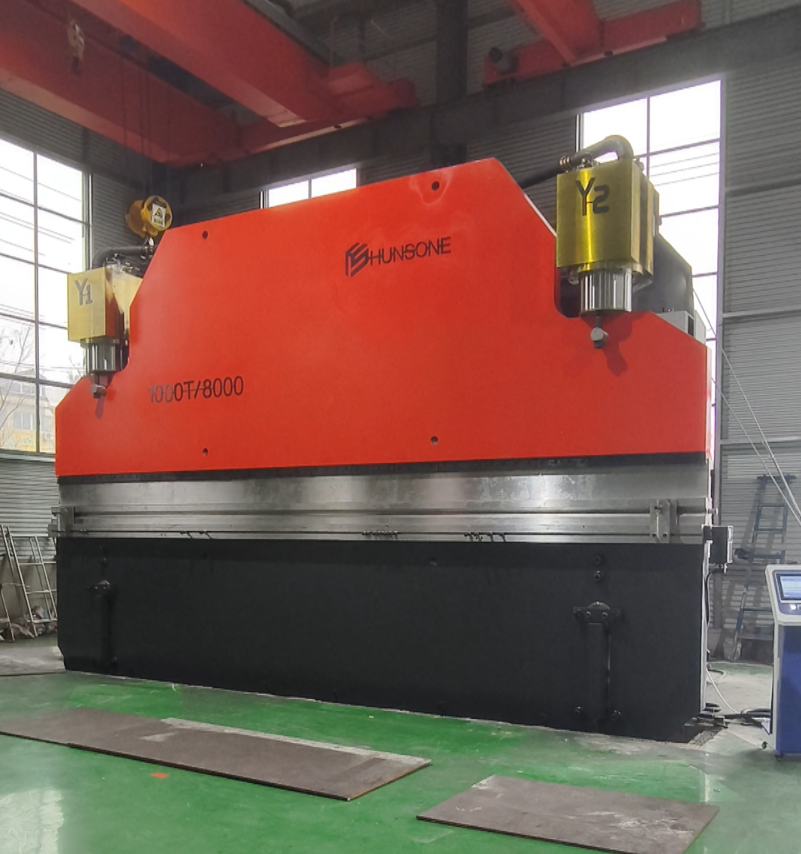
There is a moment when the levers stop feeling like levers and start feeling like extensions of your own arms. A 2,000-ton machine does not respond to force; it responds to intention. You learn to read the faintest tremor in the joystick, the almost imperceptible lag between command and movement, until the giant becomes an instrument rather than an obstacle.
Most operators try to overpower the machine. That never works. The real skill is in the millimeters—easing a bucket edge into soil without stalling the hydraulics, feathering a swing brake so the load does not pendulum. You develop a second sense for weight distribution, the way the tracks settle into soft ground, the sound of a pump beginning to strain. It is less about strength and more about patience, like coaxing a reluctant animal to move in the direction you want.
The hardest part is not the control itself, but the awareness. You must watch the bucket, the boom, the surrounding crew, the edge of the trench—all at once, while your hands move on their own. After enough hours, the machine disappears and you are simply moving earth with your mind. That is the art. Not fighting two thousand tons, but becoming part of them.
Why Precision Dies Never Get a Day Off
Precision dies are the unsung workhorses of high-volume manufacturing, but their relentless schedule isn't a choice—it's a physical necessity. Every time a die closes, it forces sheet metal into micron-level conformity, and any pause lets temperature gradients, lubricant viscosity, and even microscopic debris settle into new positions. Restarting after downtime means recalibrating against thermal expansion and clearing oxide films that quietly form on polished surfaces. The die doesn't get a day off because its own geometry demands constant motion to stay stable.
Even overnight shutdowns introduce real risk. Bearings and guide pins cool unevenly, causing slight misalignment that compounds into burrs or cracked sections the next morning. Lubricants drain away from high-pressure zones, leaving surfaces vulnerable to galling on first stroke. Many toolrooms learned this the hard way—letting a precision progressive die sit idle for a weekend often triggers more maintenance hours than running it continuously for two shifts. The economics are brutal: downtime costs more than wear.
In practice, high-end stamping facilities keep precision dies warm and cycled even when production orders pause. Operators might run dummy strokes with scrap material or maintain a slow idle cadence, not for output but to preserve the die's thermal equilibrium and keep mating surfaces polished by controlled friction. A die that stops moving starts degrading; motion is its default state, not an exception.
From Blueprint to Bend: A Workflow That Never Sleeps
Most design-to-fabrication pipelines assume a clean handoff: someone draws, someone else builds, and the two meet only at the end. This workflow refuses that pause. The blueprint is not a static artifact but a live set of instructions that evolves with every bend, cut, and weld. A change made at 2 a.m. in the model updates the bending machine's parameters before the next shift clocks in. The result is a continuous loop where design intent and physical output stay in lockstep, even when no one is watching the screen.
What makes it feel less like automation and more like collaboration is the way feedback gets folded back in. Sensors on the press brake report actual springback angles; the system compares them to the predicted values and nudges the next blank's overbend factor accordingly. No dramatic recalibration, just small, silent corrections that compound into tighter tolerances. The workflow doesn't sleep because it's always listening to the metal, not just the model.
In practice, that means a job quoted on Friday can be cut, bent, and stacked by Monday without a single email thread asking for clarification. The blueprint has already anticipated the questions—material thickness variance, grain direction, tooling wear—and baked the answers into its evolving logic. It's not magic, just a refusal to treat the handoff as a finish line. The workflow ends only when the part is ready to ship, and by then it has already started thinking about the next one.
The Unsung Heroes Behind Every Perfect Bend
A flawless bend rarely gets traced back to the quiet adjustments made long before the tube ever meets the die. The mandrel, often overlooked, sits inside the workpiece and controls the inner radius, keeping it from flattening into an oval when the curve tightens. Wiper dies, with their subtle shaving action, prevent the telltale wrinkles that would otherwise ripple along the throat of the bend. Each piece of tooling has a specific tolerance, and those tolerances shift with material hardness, wall thickness, and even the temperature of the shop floor.
Then there are the hands that set it all up. Experienced operators learn to read the sound of the machine—the faint groan of a pressure die that needs a little more assist, the slight hesitation that suggests the clamp isn’t gripping as it should. They know that a perfect bend isn’t just about hitting the angle; it’s about compensating for springback before the first trial piece is measured. Their notes, scribbled on setup sheets and worn pocket notebooks, carry the kind of tribal knowledge that no simulation software fully captures.
Without these behind-the-scenes elements, even the most advanced CNC bender would produce scrap. The hero isn’t the shiny machine or the final product; it’s the unglamorous combination of precise tooling, patient calibration, and human intuition that quietly makes every perfect bend look effortless.
When a Press Brake Test Goes Wrong (and How the Factory Responds)
The operator heard the groan of metal a fraction of a second before the upper die slammed into the workpiece. Instead of a clean 90-degree bend, the steel plate twisted sideways, the back gauge jumped, and the ram stopped mid-stroke with a hydraulic shudder. In the sudden quiet, everyone on the floor knew the test bend had failed—not because of a bad drawing, but because someone had reused a worn punch from the previous job without checking the radius. The scrap bin got another donation, and the line supervisor walked over not to yell, but to pull up the last maintenance log on the tablet.
What happens next is rarely dramatic, but it is disciplined. The press brake is locked out, the hydraulic pressure is bled, and the dies are removed for inspection. A small team measures the bend angle with a protractor, compares it to the tolerance sheet, and then traces the error back through the setup sheet, tooling list, and operator notes. In many shops, this is where the real root cause shows up: a missing shim, a misread angle indicator, or a back gauge that was never re-zeroed after the night shift. The fix is often mundane—replace the die, recalibrate the gauge, or add a checkmark to the setup checklist. But the factory response is not about assigning blame; it is about changing the sequence so the same mistake cannot repeat.
Some factories go further. They photograph the failed bend and tape it to the control cabinet as a visual reminder. They update the tooling library so the old punch is flagged as "do not use for material over 6 mm." They may even run a short training huddle at the start of the next shift, showing the bent sample and asking operators to spot the telltale marks of misalignment. The point is not to create a culture of fear, but to treat every failed test as a free lesson. A press brake that bends wrong is not just a machine problem—it is a process problem with a human signature. And in a healthy factory, the response is quick, quiet, and aimed at the next bend, not the last one.
FAQ
You hear the deep thrum of hydraulic pumps before you see anything. Massive sheets get lifted by overhead cranes, then an operator guides a 20-foot bend with a joystick and watches the backgauge lock into place. It's less about brute force and more about choreography between crane, brake, and quality checks.
A single lower die segment can easily weigh over 200 pounds, and some upper punches need a small hoist just to slide into the clamp. That's why you see tool carts with built-in lift assists rolling between machines - nobody's dead-lifting that more than once a shift.
Most large brakes use hydraulic crowning or a wedge system that adjusts along the bed in real time. The machine senses deflection under load and compensates so the bend angle stays true from one end to the other, even on a 30-foot work piece.
Huge. Beyond the tonnage, you have to consider springback, bend radius, and how the material reacts to heat from previous cutting. Often the operator will run a test coupon first, measure it, then offset the program before committing to a full sheet.
They expect sparks and chaos, but a well-run press brake area is surprisingly quiet and methodical. The real skill is reading a part drawing, setting the right dwell time, and knowing when to pause and check the angle with a protractor rather than trusting the readout.
Light curtains, two-hand controls, physical guards, and strict lockout procedures are standard. But the best line of defense is training - operators are taught to respect the pinch point, never reach across the die, and always verify the ram is fully down before loading.
It turns a complex multi-bend part into a series of screen prompts. The operator still has to place the material against the backgauge and hit the pedal, but the control handles ram depth, speed changes, and angle corrections far faster than any manual setup.
Conclusion
Walking into the bending bay of a giant press brake factory, you quickly realize this is where steel meets its match. Plates that weigh more than a family car are maneuvered onto the bed, then a 2,000-ton machine eases down—not with brute force alone, but with the kind of finesse you'd expect from a watchmaker. Operators read the metal's grain, adjust crown and tilt, and coax an exact angle out of a slab that would shrug off lesser tools. Those precision dies, ground to tolerances tighter than a human hair, never get a day off because even a few microns of wear can turn a clean bend into scrap. Every shift starts with checking die alignment, lubrication, and tonnage settings; the machine may be massive, but the real control is in the details.
Behind that control is a workflow that never sleeps. Blueprints move from engineering to the floor with digital nesting and tooling maps already sorted, so raw sheet becomes finished part in hours, not days. The unsung heroes are the tool setters, maintenance crews, and quality inspectors who catch a misloaded die or a hairline crack before it becomes a problem. And when a press brake test does go wrong—maybe a ram drifts, a backgauge binds, or the material springs back unexpectedly—the factory doesn't point fingers. It stops the line, pulls the part aside, and runs a quick failure analysis. The goal is to fix the process, not just the piece. That mindset, as much as the mammoth machinery, is what keeps heavy fabrication moving.
Contact Us
Contact Person: James Chen
Email: [email protected]
Tel/WhatsApp: 86 13770803946
Website: https://www.hunsone.com/