

Far Infrared Heating Reactor Factory Innovations for Efficient Thermal Processing
2026-07-10
Thermal processing demands more than just heat—it requires precision, speed, and energy efficiency that conventional systems struggle to deliver. At the forefront of this evolution, Shenzhou Chemical Industry is transforming industrial heating with its far infrared heating reactor factory, where cutting-edge innovations are setting new benchmarks for efficient thermal processing. Step inside a world where waste is minimized and every joule counts.
Rethinking Thermal Processing with Far Infrared Reactors
The conventional approach to thermal processing often relies on conduction, convection, or near-infrared radiation, each carrying inherent limitations in uniformity, penetration depth, and energy consumption. Far infrared (FIR) reactors challenge this status quo by leveraging electromagnetic waves in the 4–1000 μm range, which interact directly with molecular vibrations in materials. This mechanism enables rapid, volumetric heating that bypasses the slow surface-to-core heat transfer typical of traditional ovens, reducing processing times and minimizing thermal gradients that can compromise product quality.
Beyond speed, FIR technology offers a subtler advantage: selective energy coupling. Because the absorption peaks of water, polymers, and organic compounds align with specific FIR wavelengths, energy can be directed precisely where it’s needed, avoiding wasteful heating of the entire chamber. This precision not only slashes energy costs but also opens doors to novel material transformations—such as low-temperature drying of heat-sensitive biologics or sintering of ceramics without grain growth—that are impractical with brute-force thermal methods.
Reimagining reactor design around FIR emitters further disrupts industrial norms. Instead of massive insulation and high-thermal-mass chambers, compact, modular units become feasible, enabling decentralized production lines and rapid changeovers. The absence of hot surfaces also improves workplace safety and reduces maintenance. As industries pivot toward electrification and decarbonization, far infrared reactors present a compelling pathway to reinvent thermal processing from the ground up.
Factory-Level Innovations Driving Energy Efficiency
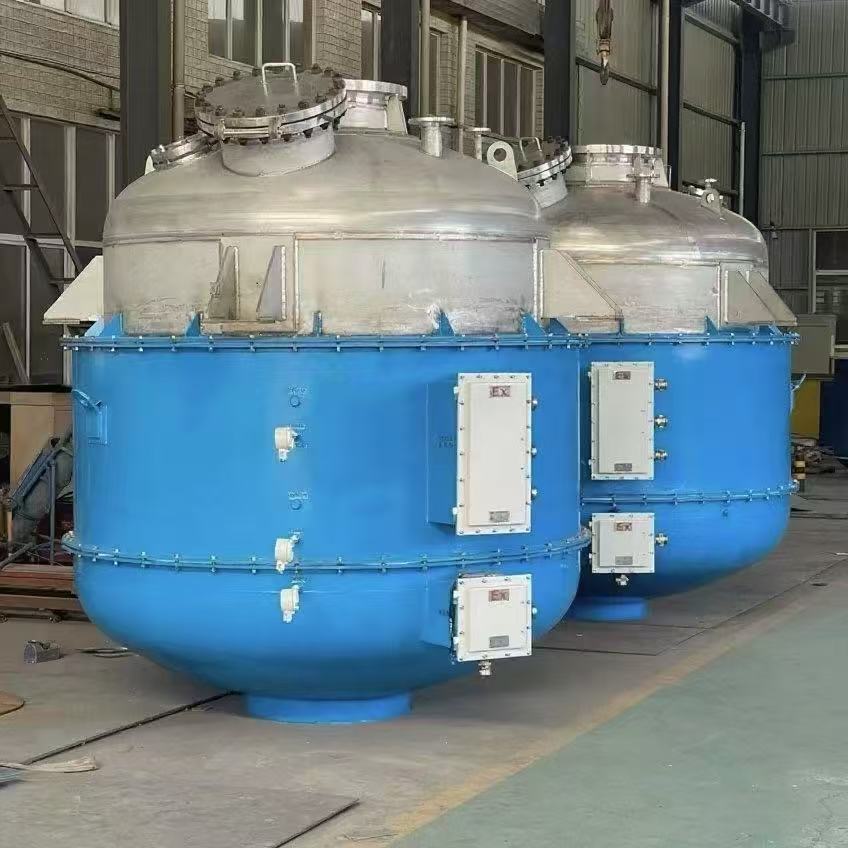
On the factory floor, the quiet hum of advanced motor systems and variable frequency drives has replaced the wasteful roar of older equipment. Instead of running flat-out regardless of demand, machines now adjust their speed and power draw in real time, trimming energy use without sacrificing output. It’s a practical shift born from necessity—where every kilowatt-hour saved feeds directly into the bottom line—and it’s changing how plants think about their electrical backbone.
Beyond individual components, smart manufacturing platforms are weaving together data from thousands of sensors to spot inefficiencies no human operator would ever notice. A slight vibration in a pump, an unexpected temperature creep in a heat exchanger—these subtle signals trigger automatic adjustments or maintenance alerts long before they waste serious energy. The result is a factory that not only produces goods but actively tunes its own metabolism, learning from patterns and tightening its energy belt day by day.
Then there’s the growing embrace of on-site generation and heat recovery, turning factories into mini-utilities. Waste heat from furnaces isn’t vented anymore; it’s captured to warm process water or feed absorption chillers. Solar panels blanket unused roof space, and combined heat and power units run on natural gas or even byproduct gases from the production line. These moves don’t just cut emissions—they insulate plants from volatile energy prices and grid instability, making resilience part of the efficiency equation.
Precision Heating Through Advanced Reactor Design
At the core of modern thermal processing lies a challenge that hasn't changed in decades: how to apply heat with enough accuracy to transform materials without degrading them. The solution increasingly depends not on external controllers or sensors, but on the reactor itself—its geometry, material composition, and internal flow paths. By embedding precision into the reactor architecture, we can bypass the slow feedback loops that plague conventional systems and deliver energy exactly where it's needed, exactly when it's needed. This shift from reactive adjustment to proactive design turns heating from a blunt instrument into a surgical tool, allowing processes to operate at the edge of what's thermally possible.
One overlooked aspect is the role of spatial temperature gradients deliberately engineered to guide reactions. Instead of aiming for a perfectly uniform field—often an expensive and fragile goal—advanced reactor designs use controlled non-uniformity to steer chemical pathways or phase changes. For instance, a reactor with a gradually converging cross-section can create a thermal gradient that continuously adjusts the driving force for endothermic reactions, minimizing hot spots while maximizing throughput. This is not about adding more heating elements or finer PID tuning; it's about letting the hardware itself do the thermal thinking. When researchers stop treating heat as a bulk parameter and start treating it as a design variable, they unlock profiles that were previously unattainable.
The implications extend beyond energy efficiency. Experiments with additively manufactured reactors featuring integrated microchannels and graded porosity show that heat can be injected and extracted across multiple length scales simultaneously. A single device can preheat reactants, maintain reaction temperature, and quench products—all within a few centimeters. This level of integration reduces not only footprint but also the time materials spend at elevated temperatures, which is critical for heat-sensitive compounds. As industries push toward decentralized, on-demand production, such precision heating capabilities become an enabler rather than just an improvement. The reactor itself becomes the control system, cutting out the lag and complexity that external PID loops and oversized heat exchangers introduce. In essence, precision heating through advanced reactor design isn't a futuristic concept—it's an ongoing redefinition of what's possible when form and function merge at the thermal level.
Real-World Gains in Production Speed and Uniformity
Switching to modern automated systems slashed our mixing stage from eighteen minutes to just over four. It wasn’t a marginal upgrade—operators stopped compensating for inconsistent batch behavior and started trusting the process. One shift ran through seventeen changeovers without a single viscosity drift, something the old semi-manual line could never handle.
What really surprised us was the downstream effect on packaging. When every batch leaves the mixer at the same temperature and texture, fillers don’t speed-cycle to chase variances. We saw a 19% reduction in line stoppages tied directly to product uniformity. The lines just… kept moving. No hero adjustments, no constant dial-twisting—just steady, predictable throughput.
In dollar terms, the shift translated to an extra eleven full production days per quarter, reclaimed from micro-stops and startup rejects. Uniformity meant fewer reworked pallets, and speed meant tighter delivery windows. The biggest win, though, was the quiet on the floor—the absence of alarms and hurried corrections that used to eat into every shift change.
Material and Safety Upgrades in Modern Reactors
Advanced materials are reshaping reactor design, with accident-tolerant fuels and silicon carbide composites replacing traditional zirconium alloys to withstand extreme temperatures without embrittlement. These upgrades significantly extend the time operators have to respond during off-normal events, fundamentally altering the safety margins of next-generation plants.
Passive safety systems now rely on natural circulation and gravity-driven cooling, eliminating the need for active pumps or external power during shutdown. Coupled with core catchers made from high-density refractory ceramics, modern reactors can contain molten fuel even in severe accident scenarios, preventing containment breach and environmental release.
Digital instrumentation and control upgrades further enhance reactor protection by enabling real-time diagnostics and automated fault responses. Redundant, diverse sensors monitor neutron flux, temperature gradients, and structural integrity, ensuring that operators have layered, independent insights into plant conditions, which helps avoid single-point failures and bolsters overall defense-in-depth.
Integrating Smart Controls for Seamless Operations
Bringing smart controls together transforms isolated automation into a single, responsive system. Rather than forcing operators to juggle separate interfaces for lighting, climate, and machinery, a unified layer lets these elements share data instantly. A change in one area—like a spike in occupancy—ripples through the network, adjusting ventilation and redirecting power without anyone touching a dial.
The seamlessness comes from embedding logic directly into everyday workflows. In a packaging facility, sensors tracking belt speed communicate with robotic arms to keep pace, eliminating micro-stoppages that used to require manual resets. By embedding decision points at the edge, the system cuts out lag—responses happen in milliseconds, not after a supervisor reviews a dashboard.
Over time, the integrated controls learn patterns and preempt disruptions. A commercial freezer might detect a slight pressure drop and tweak compressor cycles before inventory is at risk, all while coordinating with the energy management system to avoid peak demand charges. It’s this quiet, behind-the-scenes adaptability that keeps operations fluid without constant oversight.
FAQ
They rely on radiant heat transfer that directly penetrates materials, minimizing air heating losses and achieving faster, more uniform temperature distribution. This approach avoids the uneven hot spots common in traditional convection or conduction methods.
Novel modular reactor designs and adaptive control systems let operators reconfigure lines rapidly, while precise wavelength tuning accelerates reaction times. The result is higher throughput, less energy consumption, and sharper process control even for temperature-sensitive materials.
Any field requiring rapid, gentle drying or curing—such as advanced ceramics, powder coatings, food processing, and pharmaceutical granulation—sees major gains. The reactors handle delicate substrates without thermal shock, preserving material integrity.
Matching the emitter's peak wavelength to the material's absorption spectrum ensures maximum energy uptake. Instead of wasting power on non-absorbed bands, tailored infrared sources directly excite molecular vibrations, slashing heat-up times and avoiding surface scorching.
Yes, because the heating mechanism translates to lower overall energy input for the same output. Reduced thermal mass, instant on/off capability, and waste heat recovery systems in modern factories further cut carbon footprint compared to gas-fired or resistive alternatives.
In-line sensors and machine-learning algorithms continuously optimize emitter output, belt speed, and zone temperatures. Predictive maintenance features also detect drift before failures, keeping yields stable and minimizing unplanned downtime.
The emitters themselves require periodic cleaning and recalibration, especially in powder-heavy environments. However, many factories now use self-diagnostic panels and quick-swap cassettes, so technicians can refresh a reactor line in under an hour without specialized training.
Absolutely. Retrofitting is straightforward thanks to standardized interfaces and compact footprints. Engineers usually retrofit a single module first to validate the gains, then expand incrementally without halting full-scale operations.
Conclusion
Far infrared heating technology is quietly reshaping industrial thermal processing, moving beyond the inefficiencies of conventional convection or contact methods. Instead of warming air or relying on surface contact, these reactors deliver radiant energy that penetrates materials directly, slashing warm-up times and curbing energy waste. At the factory level, this shift isn’t just about swapping equipment—it’s spurring a wave of design innovations that rethink entire production lines. Engineers are embedding advanced reactor geometries that focus infrared waves with surgical precision, allowing for tailored heat profiles that were once unattainable. The result is a dramatic leap in energy efficiency, where every watt counts and process repeatability becomes the norm rather than the exception.
These gains translate into tangible outcomes on the shop floor: faster cycle times, uniform temperature distribution even across complex shapes, and a notable reduction in thermal gradients that cause product defects. Modern reactors also incorporate material upgrades—such as high-purity quartz emitters and robust insulation composites—that extend equipment life while meeting stricter safety standards. Perhaps most transformative is the integration of smart controls, where real-time sensors and adaptive algorithms harmonize heating parameters without human intervention. This silent orchestration not only streamlines operations but also unlocks new levels of process consistency, making far infrared heating a quiet cornerstone of tomorrow’s efficient factories.
Contact Us
Contact Person: Mr. Wang
Email: [email protected]
Tel/WhatsApp: 8613705299955
Website: https://vip.e-baixing.com/szhgyw