

Diesel Generator Factory: How Modern Manufacturing Delivers Dependable Power
2026-07-26
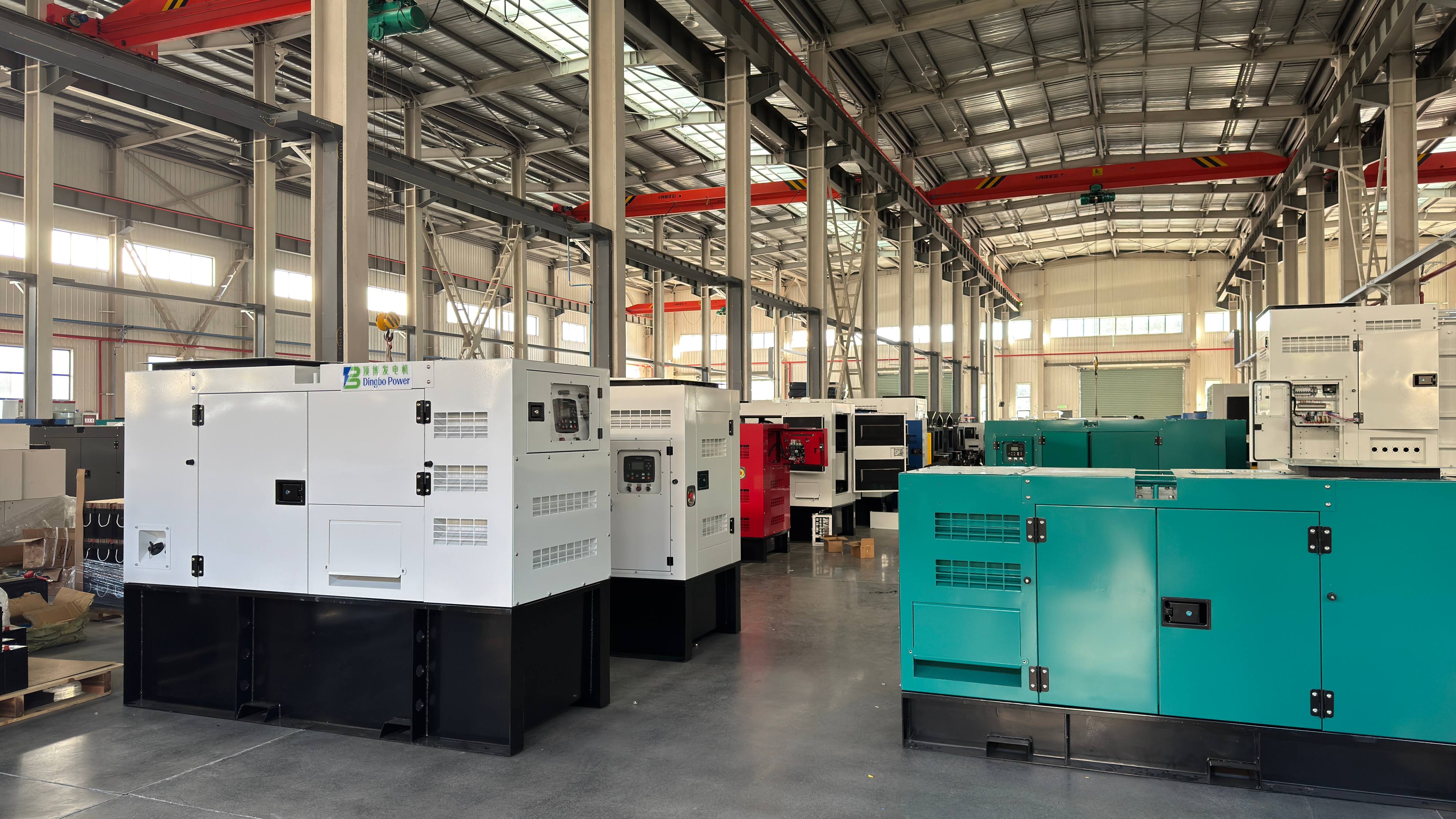
Behind every reliable backup power system is a manufacturing process that most people never see. At the core, a diesel generator factory transforms raw engineering into the machines that keep hospitals, data centers, and industries running when the grid fails. DINGBO POWER has spent years refining this craft, combining precision production with rigorous testing to ensure every unit delivers uncompromising performance. In a world where downtime is not an option, understanding how modern manufacturing shapes dependable power is more relevant than ever.
Blueprint to Blackout Rescue: The Making of a Dependable Generator
Designing a generator that won’t let you down when the lights go out starts with a mindset shift: instead of aiming for “good enough,” we map out every possible failure point and build multiple layers of defense around them. This blueprint begins with a brutally honest assessment of what actually kills engines and alternators—moisture, vibration, dust, low oil, fuel degradation—and then integrates solutions that are mechanical rather than purely electronic, because in an emergency you need resilience that doesn’t depend on a delicate circuit board.
The heart of the machine is a tuned, low-RPM powerplant married to an oversized alternator, which reduces stress and heat buildup. We spec fully encapsulated windings, high-grade bearings, and replace every standard fastener with stainless steel hardware to fight corrosion from day one. The fuel system gets dual filtration and a water-separating pre-filter, while the cooling path is rerouted to keep electronics out of high-heat zones. Every sensor used for shutdowns is cross-checked against a secondary reading, so a single false signal can’t cripple the unit.
Testing isn’t just a final check—it’s woven into every step of assembly. Prototype rotors are spun up to 125% of rated speed while deliberately unbalanced to confirm containment integrity. Completed units face a cumulative 72-hour burn-in under step loads, including rapid transitions from no load to full rated capacity, while monitoring oil pressure, temperature, and frequency fluctuation in real time. Only after a cold-soak start at -20°F and a simulated 100-hour fuel-starvation recovery does a generator earn its badge as a genuine blackout rescue tool.
Material Matters: Why Steel Quality Defines Generator Lifespan
In generator construction, the steel used in core components like the rotor, stator, and shaft isn’t just a structural afterthought—it’s the backbone of longevity. Lower-grade alloys may contain impurities that lead to micro-cracks under constant thermal cycling and mechanical stress. Over time, these imperfections grow, causing premature fatigue and, eventually, catastrophic failure. Premium steel, formulated with controlled levels of carbon, chromium, and molybdenum, resists this degradation, maintaining its integrity even after decades of start-stop cycles.
The magnetic properties of the steel directly influence efficiency and heat generation. Electrical steel with high silicon content reduces core losses, meaning less energy is wasted as heat. Excessive heat accelerates insulation breakdown and weakens mechanical strength. By choosing steel that balances permeability and resistivity, manufacturers ensure that the generator can run cooler and longer, sidestepping the downward spiral of overheating that plagues units built with cost-cut materials.
Corrosion resistance is another silent factor. Generators often sit in humid, salty, or chemically aggressive environments. Steel that isn’t properly alloyed or treated will rust, pitting surfaces and creating stress risers. This isn’t just about appearance—a corroded rotor or stator can throw off balance, increase vibration, and chew through bearings. Marine-grade or specially coated steels act as an insurance policy, preserving the tight tolerances that keep a generator humming for years instead of months.
Torture Tested: The Brutal Trials That Prove Generator Endurance
We don’t just run these generators in a lab and call it a day. Each unit gets pushed way past its comfort zone—run at full throttle for days on end under loads that would fry most machines. It’s not unusual to see them churning through desert heat, salt spray, and choking dust, just to see if they’ll flinch. They rarely do.
There’s a particular test that operators talk about in low voices: the thermal shock sprint. The generator runs at peak output until every part is screaming hot, then gets blasted with near-freezing water. The sound that follows is either a smooth hum or a death rattle. Only the ones that keep humming make it to the next round.
Beyond the obvious electrical torture, we rig them to uneven terrain to see how the internals cope with vibration and tilt. Bearings, windings, circuit boards—they’re all expected to hold tight while the frame twists and bucks like a rodeo bull. Passing here isn’t a checkbox; it’s a quiet nod from the engineers who’ve seen too many failures to trust anything less.
Silent Power: How Modern Factories Tackle Noise and Emissions
Walking through a modern factory, you might expect a cacophony of machinery, yet many now hum with a muted efficiency that feels almost surreal. Advances in acoustic engineering have turned the tide, with sound-absorbing materials integrated into walls and equipment enclosures that swallow noise before it escapes. Think of it as architecture working in harmony with industry—double-glazed windows, rubberized flooring, and precision-engineered gears that reduce vibration at the source, turning what was once a roar into a whisper.
Emissions are getting a similar rethink, moving beyond the old smokestack image to something far more inventive. Factories are adopting closed-loop systems that capture and repurpose waste gases, while advanced filtration units scrub pollutants down to near-zero levels. Some facilities even use biofilters—living layers of microorganisms—that naturally break down volatile compounds, blending biology with heavy industry in a way that feels less like a compromise and more like a quiet revolution.
What’s striking is how these shifts come together into a seamless operation, where noise control and emission reduction aren’t afterthoughts but core design principles. Electric machinery, long reserved for smaller tasks, now powers entire assembly lines with a fraction of the sound and exhaust, while smart sensors continually adjust processes to minimize waste. It’s a new kind of factory floor—one where the silent hum and clean air are signs of a deeper, more intentional craftsmanship.
The Chain of Perfection: Assembly Line Secrets for Flawless Output
When Henry Ford introduced the moving assembly line, he transformed manufacturing not by adding complexity, but by breaking tasks into microscopic, repeatable steps. Each station along the line is a universe of its own, where one misaligned bolt or a sluggish hand can cascade into hours of rework. The secret lies in designing stations that eliminate decision fatigue—workers don’t think about what to do next; the process dictates it. This leaves mental bandwidth free for precision, turning human variability from a liability into a finely tuned instrument of consistency.
Beneath the rhythmic hum of conveyor belts, the real magic is in the invisible handoffs between stages. A perfect assembly line doesn’t just move products; it orchestrates timing, tools, and talent so that each component meets its assembler at the exact moment of need. Jigs and fixtures are understated heroes here, locking pieces into place with zero tolerance for error. When every movement is anticipated and every tool is within an arm’s reach, even complex assemblies become a dance rather than a struggle, and quality stops being inspected in—it’s built in from the start.
Perhaps the most overlooked element is the feedback loop that hums quietly behind the scenes. On an effective line, every defect is a data point, immediately traced back to its source—a worn alignment pin, a poorly lit station, or a subtle drift in worker posture. Continuous improvement isn’t a slogan; it’s a living system where micro-adjustments are made mid-shift, not after a batch of failures. This vigilance turns the line into a self-correcting organism, where perfection is not a one-time achievement but an ongoing, almost effortless rhythm.
Beyond Standard: Custom Configurations That Match Real Needs
Standard configurations often feel like a one-size-fits-all solution, but with a few tweaks they can become incredibly adaptable to actual use cases. Whether it’s fine-tuning performance thresholds or reordering workflow steps, these small adjustments turn a generic template into something that just clicks with the daily grind. It’s about respecting that no two teams or projects are truly alike, and letting the system bend without breaking.
Real needs rarely fit into neat checkboxes, and that’s where custom configurations shine. Instead of wrestling with rigid presets, people can set their own pacing, define alert logic that actually makes sense, and hide the dashboard clutter they never touch. This level of control keeps things intuitive and surprisingly calm, even when the work scales. It’s less about adding endless features and more about subtracting friction from the ones that matter most.
The beauty of moving beyond standard is that it encourages a deeper ownership of the tools. When a configuration matches a genuine routine, there’s a natural rhythm that replaces frustration with flow. It’s not about being different for the sake of it—it’s about making the tool feel like an extension of the thought process, not a hurdle in front of it.
FAQ
Reliability starts with stringent material selection and continues through precision CNC machining, automated assembly lines, and comprehensive load testing under simulated real-world conditions. Every unit must pass a final inspection before it leaves the plant.
Advanced techniques like robotic welding and laser cutting create tighter tolerances and stronger joints. Computer-aided design optimizes airflow and fuel efficiency, while real-time monitoring during testing fine-tunes engine parameters for peak output.
We produce the alternator housings, control panels, and base frames in-house to maintain quality control. Engine blocks and fuel systems are sourced from trusted partners but undergo rigorous incoming inspections before integration.
Absolutely. From voltage and phase configurations to sound-attenuated enclosures and remote monitoring packages, our engineering team works directly with clients to adapt standard designs or create entirely bespoke solutions.
Beyond routine visual inspections, we conduct insulation resistance tests, hi-pot tests, and vibration analysis at multiple stages. Completed generators run at full load for several hours to verify temperature stability and voltage regulation.
We integrate exhaust after-treatment systems and use lean-burn technology to meet Tier 4 and Stage V regulations. In-house emission testing ensures compliance before shipment, and we offer hybrid-ready configurations for future adaptability.
Every generator includes remote diagnostics capability and a warranty with defined response times. We maintain regional parts warehouses and a network of trained service technicians for on-site repairs or scheduled maintenance.
Hospitals and data centers demand zero-failure tolerance. Our automated processes eliminate human error in winding electrical components and tightening fasteners, while data-driven traceability ensures any defect can be isolated to its source batch instantly.
Conclusion
In a world where power reliability is non-negotiable, modern diesel generator factories have transformed from simple assembly plants into high-tech hubs of precision engineering. The journey begins long before the first bolt is tightened, with meticulous blueprint designs that anticipate emergency scenarios—ensuring each generator can spring into action during a blackout rescue. Material selection is foundational: high-grade steel and robust components are non-negotiable, as they directly determine lifespan and resilience under stress. But theory only goes so far; every unit must survive a battery of brutal trials. From extreme temperature cycling to sustained overload testing, these “torture tests” replicate years of wear in days, weeding out any weakness before a generator ever leaves the factory.
Beyond brute strength, today’s facilities prioritize refinement. Assembly lines operate as chains of perfection, with each step quality-gated and documented, blending robotic precision with skilled human oversight to eliminate defects. Simultaneously, engineers combat noise and emissions aggressively—using advanced acoustic insulation, precision fuel injection, and exhaust after-treatment systems to produce generators that are not only powerful but also environmentally considerate and neighbor-friendly. Finally, the reality that no two power needs are identical is embraced through custom configurations. Whether it’s a remote hospital needing ultra-reliability or a construction site demanding portability, factories now seamlessly adapt voltage, cooling systems, and control panels, delivering bespoke solutions that truly match real-world demands and keep the lights on, no matter what.
Contact Us
Contact Person: Rita
Email: [email protected]
Tel/WhatsApp: +8613481024441
Website: https://www.dbdieselgenerator.com/