

Custom CNC Angle Head Factory Delivers Precision Machining Solutions
2026-07-06
Achieving precise angles in complex machining often feels like solving a puzzle with missing pieces. That’s where a specialized custom CNC angle head makes all the difference. In this post, we explore how WINNRUI CNC pushes the boundaries of precision engineering, delivering tailored solutions that transform challenging setups into seamless operations. Discover what sets their factory apart and why their approach might be the missing link in your production line.
How Do Angle Heads Enhance Machining Flexibility?
Angle heads break the rigidity of traditional machining axes by enabling tools to approach workpieces from multiple orientations without repositioning the part. This innate capacity to mill, drill, or tap at compound angles within a single setup dramatically streamlines complex part production. Instead of designing intricate fixtures or relying on slower multi-machine processes, shops can achieve more in a single clamping, directly translating to fewer handling errors and tighter tolerances.
The true flexibility comes from the way angle heads adapt standard machines to execute operations that would otherwise demand dedicated five-axis or specialized equipment. By mounting directly into the spindle and redirecting power, they convert a three-axis mill into a quasi-five-axis system, enabling undercutting, side machining, and deep cavity access that would be impossible with in-line tools alone. This means even older machines can tackle complex geometries, extending their useful life and reducing capital investment.
Beyond geometry, these attachments empower machinists to optimize toolpath strategies creatively. For instance, a right-angle head can finish internal bores without the tool length limitations of standard holders, or a custom angle head can eliminate long, chatter-prone setups. The ability to quickly swap heads also encourages adaptive manufacturing, where a single machine seamlessly pivots between jobs that would have previously required extensive tear-down and re-fixturing. Ultimately, this agility turns manufacturing responsiveness into a concrete competitive advantage.
Inside Our Precision Manufacturing Process
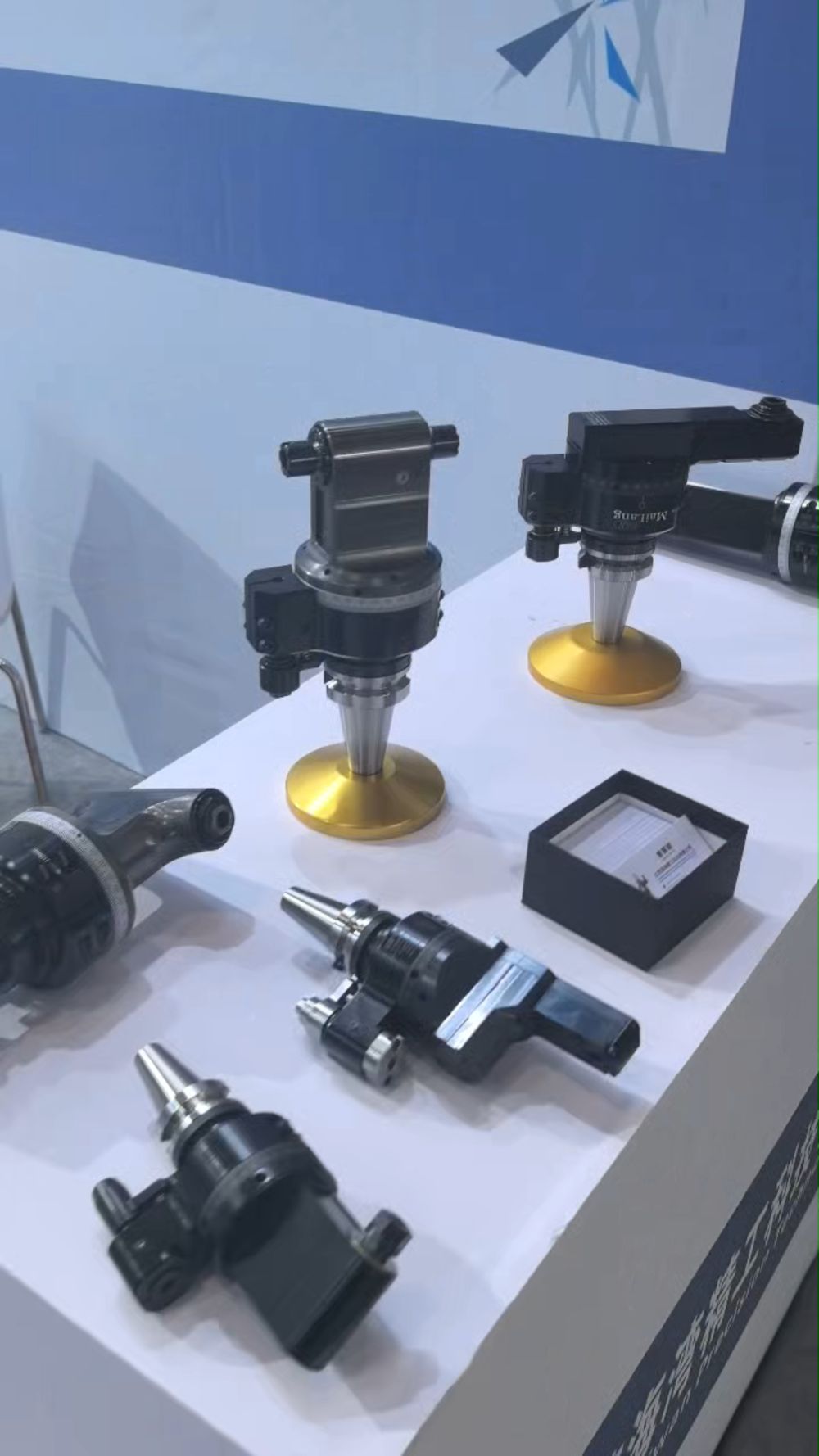
Every component begins its journey as raw material selected with an almost obsessive attention to purity and structural integrity. We don’t just check certifications—we watch how the metal behaves under the first cut, listen to the sound of the spindle, and feel for vibrations that tell us more than any datasheet ever could. This hands-on intimacy with the material sets the tone for everything that follows, ensuring that each part carries the signature of genuine craftsmanship from the very start.
Our machining floors hum with a rhythm that only decades of collective experience can produce. The operators here don’t simply load programs; they interpret the real-time feedback from tool wear sensors and surface finish probes, making micro-adjustments that a purely automated system would miss. It’s a dance between human intuition and digital precision, where tolerances are held so tightly that the gap between success and scrap is thinner than a human hair. This constant, unspoken dialogue between person and machine is what turns a blueprint into a part that fits perfectly, every single time.
Before any part leaves the shop, it passes through a gauntlet of inspections that happen at the pace of production, not as an afterthought. We’ve built custom gauging stations that measure critical dimensions in seconds, not minutes, while still detecting anomalies that standard CMMs might overlook. The final sign-off is an old-school ritual: the lead machinist personally wipes the part clean, holds it under calibrated light, and takes a long, quiet look. If it doesn’t feel right in their hands, it simply doesn’t ship. That’s the standard we’ve set, and it’s the only one we trust.
Custom Engineering for Unique Applications
Every project comes with its own set of challenges that off-the-shelf solutions simply can't address. That's where custom engineering steps in—designing systems from the ground up to meet the precise demands of your application. Whether it's adapting to extreme environments, integrating with legacy equipment, or creating a component that doesn't exist in any catalog, our approach revolves around understanding your operational reality first. We dig into the specifics: the material constraints, the space limitations, the thermal dynamics, and the performance thresholds that keep you up at night. This isn't about tweaking a standard design; it's about building a solution that feels like it was born from your requirements.
The process begins with listening. We collaborate directly with your engineers, maintenance teams, and operators to map out exactly what success looks like—not just on paper, but on the floor, in the field, under real-world conditions. From there, we prototype rapidly, using advanced simulation tools and in-house fabrication to iterate without dragging out timelines. Every weld, every sensor placement, every material choice is deliberate. The result is equipment that fits your workflow like a key in a lock, often improving efficiency in ways you hadn't anticipated. And because we document every step, you're not left with a black box; you own the design, the schematics, and the knowledge to maintain and evolve it over time.
What sets this apart is the refusal to compromise. When a standard conveyor can't handle the corrosive slurry in your mine, we engineer a corrosion-resistant conveying system with self-cleaning mechanisms. When a medical device needs to operate in a sterile field without EMI, we craft shielded, compact actuators that meet regulatory hurdles. These aren't hypotheticals—they're the kind of puzzles we solve daily. The value isn't just in the finished product; it's in the partnership that gets you there. You gain a thinking partner who anticipates the secondary challenges and designs with an eye on the entire system, not just the isolated component. That's how custom engineering turns unique applications into reliable, scalable realities.
Real-World Performance Across Industries
From manufacturing floors to hospital corridors, performance metrics have taken on a distinctly human dimension. A packaging line in Stuttgart no longer tracks just units per hour—it now measures how quickly operators can switch between product variants without fatigue. In healthcare, emergency departments in Melbourne redesigned their triage workflows after discovering that 40% of treatment delays stemmed from equipment layout, not staff shortages. These aren't textbook case studies; they're everyday realities where performance hinges on understanding how people, tools, and environments actually interact.
Financial services in Singapore tell a similar story. When a major bank analyzed why its digital onboarding process had a 28% abandonment rate, the culprit wasn't slow servers—it was the psychological friction of requesting too much personal data upfront. By restructuring the flow to mirror natural conversation patterns, completion rates jumped to 89% within six weeks. Meanwhile, a logistics company in Rotterdam reduced warehouse picking errors by 17% simply by adjusting lighting temperatures to reduce eye strain during afternoon shifts, a finding that emerged from shadowing workers rather than analyzing spreadsheets.
Perhaps most telling is the energy sector, where a Norwegian offshore platform cut safety incident reports in half after they stopped treating compliance as a checkbox exercise. Instead of generic training modules, they built scenario simulations based on near-miss stories shared by veteran technicians. Performance here wasn't measured in abstract targets but in the seconds shaved off emergency response times and the quiet confidence of a crew that felt genuinely prepared. Across industries, the pattern is unmistakable: real-world performance thrives when we measure what matters to the people doing the work, not just what's easy to count.
Quality Control from Raw Material to Final Inspection
Our approach to quality begins the moment raw materials arrive. We don’t just check a sample—every batch is tested against detailed specifications before it can enter production. The inspection team logs the results, and only materials that meet the strictest thresholds make it to the shop floor. This early checkpoint catches issues long before they can become costly problems downstream.
During manufacturing, quality checks are built into each stage rather than treated as an afterthought. Operators verify critical dimensions and surface finish in real time, with random audits by QA staff to keep everything on track. By the time a product reaches final inspection, it has already survived multiple layers of scrutiny. That final review is the last seal of approval—testing functionality, appearance, and packaging—so nothing goes out the door that doesn’t meet our promises.
Getting the Right Angle Head for Your Machine
Selecting an angle head isn’t just about picking one off the shelf. It’s about matching the tool to the specific geometry your part demands and the constraints of your spindle. You’ll need to consider the direction of the output—90 degrees is common, but custom angles can open up entirely new machining strategies without complicated setups. The taper size, tool retention method, and maximum RPM all play into whether the head will actually perform in your application or just become an expensive paperweight.
Think about how the head will live in your machine long-term. Clearance around the spindle nose, coolant through-spindle compatibility, and even the weight of the unit can affect tool changes and positioning accuracy. A lighter, compact design might sacrifice some rigidity, while a beefier head could limit your work envelope. It’s a balance that often requires a frank assessment of your typical jobs—not just the one-off tricky part.
Don’t overlook the drive mechanism. Some angle heads use bevel gears, others rely on a universal joint or a belt inside. Each has its own noise level, maintenance needs, and torque characteristics. If you’re pushing heavy cuts, a gear-driven head might be the only way to go, but for fine finishing, a smoother-running belt system could give you the surface finish you need without the headache of constant adjustments.
FAQ
A CNC angle head is an attachment that changes the direction of the spindle on a milling machine, allowing tools to approach workpieces from various angles without repositioning. This capability drastically reduces setup time, enables complex multi-axis machining on 3-axis machines, and improves access to deep cavities or angled features that would otherwise require costly, slow-moving equipment. It essentially expands a standard CNC's versatility, letting shops handle intricate parts with greater accuracy and fewer operations.
We tailor angle heads to fit specific machine spindles, tool holders, and coolant systems, even adapting to unusual flange patterns or torque requirements. Customers can choose custom body lengths, output angles from standard 45° or 90° to any precise angle, and request features like internal coolant-through capability, high-speed ceramic bearings, or coatings that resist abrasive materials. Every design starts with a close look at the work envelope and the production goals, so the final unit slides seamlessly into the existing workflow.
Aerospace shops rely on them for tight-tolerance pockets and multi-surface drilling in large structural parts. Automotive powertrain and mold-making operations use angle heads to machine undercuts and side features that normal spindles simply can't reach. Medical device manufacturers also benefit when creating small, complex components that need angled holes or fine contouring. In short, any sector dealing with complex geometries in metals, composites, or even hard plastics sees immediate process improvements.
Every head is assembled from high-grade alloy steel bodies and precision-ground gears, then run through a strict break-in cycle that simulates full production loads. We measure runout, backlash, and vibration signature against design tolerances that are typically tighter than OEM specs. Long-life bearings and sealed lubrication paths protect against contamination, and we test with real tooling to confirm cutting performance before shipment. That hands-on verification catches subtle issues that automated checks might miss.
Beyond the standard warranty, we offer on-site setup assistance, remote troubleshooting, and a direct line to the engineers who designed the unit. If wear parts need replacing, we keep spares in stock and can ship within 24 hours. We also maintain a service history for each head, so if a customer’s application changes, we can reconfigure or upgrade the existing unit rather than starting from scratch.
While every design has physical constraints, we focus on minimizing the head’s profile to fit into cramped fixtures and deep cavities. By using smaller gear housings, slim output spindles, and compact taper systems, we’ve managed to reach areas that standard catalog heads can’t touch. The real limit usually comes down to the minimum bending radius of the drivetrain, but we often find clever workarounds, like extended noses or offset drives, to push that boundary further.
A bespoke head naturally carries a higher upfront price than a stock model because of the engineering effort and one-off manufacturing. However, the long-term return is often much stronger: it can eliminate secondary operations, reduce scrap, and maybe even avoid buying an entire 5-axis machine. Lead times vary with complexity, but we’ve delivered fully custom units in as little as six weeks. If the need is urgent, we prioritize the build and work with the customer’s production schedule, something you won’t get with off-the-self catalog parts.
Our team comes from a background of machine tool building, not just accessory production, so we think about the whole system rather than a standalone part. We don’t push cookie-cutter solutions; each inquiry starts with a detailed technical discussion about the shop floor, the parts being made, and the bottlenecks. After delivery, we stay involved until the head is running at full capacity—and we’ve even retrofitted competitors’ units to correct performance issues. That combination of deep engineering, true customization, and long-term partnership is hard to find elsewhere.
Conclusion
In today’s high-precision manufacturing landscape, custom CNC angle heads have become essential for achieving complex geometries without repositioning workpieces. A specialized factory dedicated to these attachments offers a pathway to greater machining flexibility, enabling multi-axis operations on standard 3-axis machines. The secret lies in precision engineering—from the initial design phase through rigorous manufacturing processes. By integrating advanced tool paths and rigid construction, these angle heads allow mills, drills, and taps to reach confined spaces and angled surfaces with minimal setup changes. Beyond off-the-shelf models, bespoke solutions are developed in close collaboration with clients, tailoring spindle tapers, output styles, and coolant systems to unique applications. This custom engineering ensures that even the most challenging part configurations can be machined accurately and efficiently.
The value of a dedicated angle head factory extends beyond the production floor. Real-world deployments across aerospace, automotive, and heavy equipment sectors prove their durability and performance under demanding conditions. Every unit undergoes meticulous quality control, from raw material verification through to final inspection, ensuring each assembly meets exacting standards for runout, torque transmission, and thermal stability. This controlled process eliminates the unpredictability often found in generic tooling. Finally, selecting the right angle head for your machine is simplified through expert guidance, considering factors like spindle interface, maximum speed, and torque requirements. The result is a seamlessly integrated solution that enhances productivity and part quality, making complex machining more accessible than ever.
Contact Us
Contact Person: Tim
Email: [email protected]
Tel/WhatsApp: +86 15522553731
Website: https://www.winnrui-cnc.com/