

Column Still Exporter Insights: Choosing the Best Equipment for Your Distillery
2026-06-02
Choosing the right column still is a pivotal decision for any distillery aiming to scale production without compromising spirit quality. Whether you're expanding operations or refining your craft, the equipment you select shapes efficiency, flavor profiles, and long-term profitability. At DYE, we understand that navigating global suppliers and technical specs can be overwhelming. This guide cuts through the noise, offering actionable insights to help you evaluate exporters, compare configurations, and secure a column still that truly fits your distillery's vision.
What a Column Still Actually Does to Your Spirit
Most people think a column still simply purifies alcohol through repeated distillations, but that's only half the story. The true magic lies in how it interacts with the vapor at a molecular level. As the alcohol-rich vapor rises through those towering copper plates, it isn't just being stripped of impurities; it's undergoing subtle chemical transformations. Esters develop, undesirable sulfur compounds are scrubbed away by the copper, and heavier, oilier components get left behind. What emerges isn't just purer — it's fundamentally changed, carrying the imprint of every inch it traveled.
The spirit that drips from the column has a distinct personality. Unlike pot still spirits that often boast a wider, more rustic flavor spectrum, column still output tends to be lighter, cleaner, and more focused. It's a matter of degree: the column's design allows you to target specific flavor windows. By adjusting the plates, reflux ratios, and draw points, a skilled distiller can decide exactly which volatile compounds make the cut. You can pull out a spirit that's ethereally crisp, perfect for a London dry gin, or allow just enough richness for a versatile white rum. It's control, not just concentration.
But don't mistake precision for sterility. The copper itself plays an active role, coaxing out a softness and savory edge that define many iconic spirits. Without it, you'd end up with something harsher, less rounded. The column still, then, is less a machine and more a collaborator — shaping, refining, and ultimately defining the soul of what you drink.
Matching Still Size to Your Distillery’s Real Output
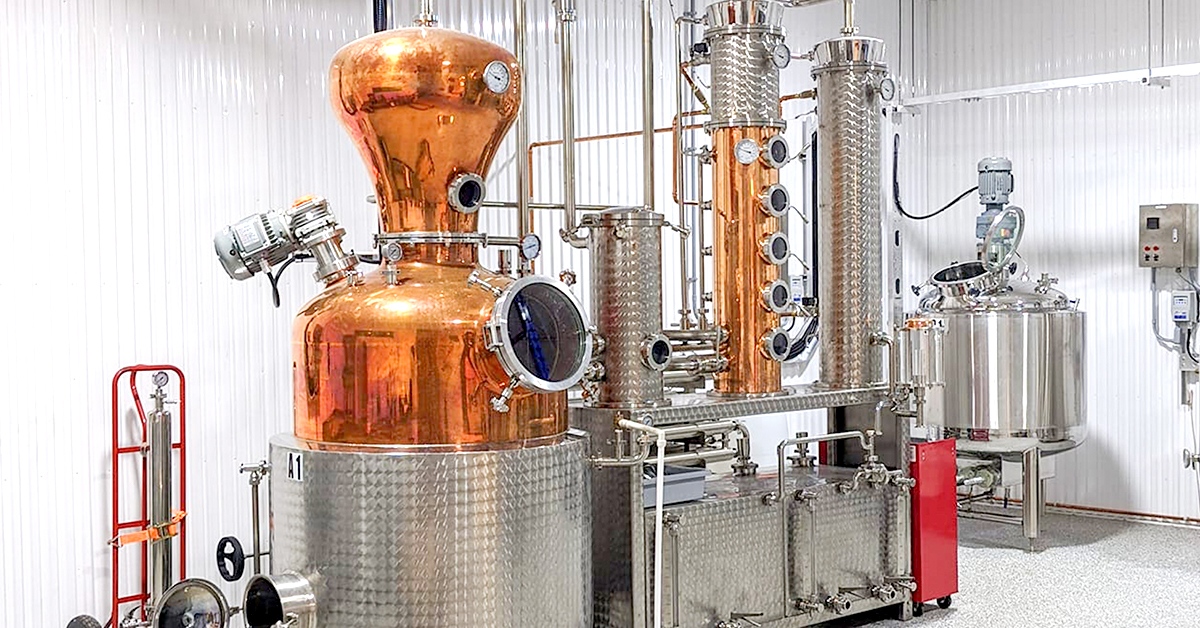
Choosing a still that fits your actual production volume isn’t just about capacity on paper—it’s about how the equipment behaves during a real run. A still that’s too large for your typical batch can lead to sluggish heat-up times, unpredictable cuts, and wasted energy as you wait for the pot to reach a working temperature. On the other hand, undersized copper means you’re constantly cycling through multiple stripping runs just to keep up with fermentation schedules, eating into your time and labor without a meaningful gain in spirit quality. The sweet spot is a still size that lets you comfortably fill it to 75–80% of capacity with your average wash, letting the vapour space work naturally for a clean, focused distillate.
It’s tempting to anchor your decision around a single number—say, a 500-litre still because that’s what your business plan projects in year three. But in practice, distillery output has a rhythm that doesn’t always match the spreadsheet. You might run grain mashes that foam heavily, require a generous headspace to avoid puking, or you might double-distil a delicate gin base where you want only the heart of the hearts. In those cases, a slightly bigger pot gives you the flexibility to manage the foam and make tighter cuts without overthrowing your production timeline. The goal is to pick a size where your routine batch sits naturally below the danger zone—around two-thirds full—so you’re not wrestling the still every time you fire it up.
Don’t overlook the downstream impact of still size on your condensers, your cooling water demand, and even the size of your spirit safe. A larger pot that isn’t being driven hard might deliver such a slow vapour speed that your condenser struggles to knock it all down, or the parrot drip becomes frustratingly thin, making cuts feel like guesswork. The still needs to match not only the wash volume but also the pace at which your operation runs—how many runs per week, how much tank space you have for low wines, and how your team moves through a typical double-distillation cycle. Sometimes a pair of mid-sized stills gives far more day-to-day rhythm than a single large one, because you can stagger stripping and spirit runs without losing a whole day to a single heat-up. The right size isn’t the biggest or the most impressive—it’s the one that disappears into the background and lets your production hum.
Materials Matter: Copper, Steel, and Flavor Profiles
The choice between copper and steel isn't just about heat conduction—it’s a subtle dance with flavor. Copper’s reactivity with certain acidic ingredients, like tomatoes or wine, can actually round out harsh edges, leaving sauces with a gentle sweetness. This isn’t a flaw; it’s a feature that discerning cooks lean into, coaxing depth from ingredients in ways that inert stainless steel simply cannot replicate.
Stainless steel, on the other hand, offers a blank canvas. Its nonreactive nature preserves the intended taste of delicate herbs and citrusy notes, preventing any metallic undertones. When precision matters, such as in a beurre blanc or a light broth, steel’s neutrality lets each flavor component shine without interference, making it indispensable for dishes where purity is paramount.
Yet, the real magic often lies in hybrid construction. Many pans bond a copper core with a stainless steel cooking surface, marrying copper’s unmatched responsiveness with steel’s flavor security. This balance allows for rapid temperature control without sacrificing flavor integrity, proving that sometimes the best taste demands a collaboration of materials rather than a single champion.
Why Exporter Reputation Changes Everything
A single transaction can unfold without a hitch, but it's the exporter's name that decides whether a buyer even clicks 'send inquiry' in the first place. When sourcing across borders, decision-makers rarely gamble on unverified suppliers. The weight of past dealings, whispered warnings in industry groups, and public review fragments collectively form a barrier that either grants instant access or demands months of trust-building. It's not about glossy presentations or aggressive pricing; the real filter is the quiet, persistent judgment of previous clients who've already test-driven the relationship.
The ripple effects go well beyond the initial handshake. Banks, insurers, and logistics partners calibrate their risk exposure based on who they're backing. A respected exporter can negotiate faster letters of credit, enjoy preferential freight terms, and even resolve customs snags with a single phone call. On the flip side, a tarnished record compels everyone to layer on protective clauses and prepayment demands, turning what should be a smooth deal into a bureaucratic grind. In this ecosystem, your standing becomes the invisible tax or subsidy on every shipment.
What makes reputation truly transformative is its ability to compound over long arcs. Each fulfilled contract doesn't just close a deal; it deposits equity into a trust account that future partners can see. Seasoned traders know that in a crisis—a port strike, a raw material spike, a regulatory crackdown—the supplier with the strongest name gets the benefit of the doubt. That goodwill translates into extensions, collaborative problem-solving, and continued orders when others are sidelined. Ultimately, the exporter's name stops being a label and becomes the business itself, rewriting the calculus of risk and opportunity for everyone in the chain.
Hidden Costs That Sneak Up on Distillers
Most distillers budget for grain, barrels, and still time, but the expenses that really catch you off guard are the ones you almost never hear about in planning guides. There’s the ongoing cost of laboratory analysis—something small-scale producers often outsource until they realize they’re paying per batch for basic proofs and congener profiles. Then there’s the little matter of water: not just what goes into the mash but the chilled water for condensation, the hot water for cleaning, and the wastewater treatment fees that local utilities love to tack on once you hit a certain volume.
Another drain on cash is what happens between distillation and bottling. Barrels aren’t just a one-time purchase; you’re paying rent on rickhouse space, insurance that climbs with every aging barrel, and the slow, steady loss to the angel’s share—which can eat 2–5% of volume per year, depending on the climate. And don’t forget the quiet cost of compliance: unexpected label revisions if a formula approval stalls, or surcharges for organic certification renewals that always seem to land right when cash flow is tight. These aren’t dramatic, but they accumulate silently until they rival the headline expenses.
Future-Proofing Your Still for Market Shifts
Stills often get designed for a single product line, which can be a risky gamble when tastes shift overnight. Instead of betting everything on one spirit, consider a setup that lets you pivot without gutting your operation. Modular columns, interchangeable condensers, and flexible plumbing aren't just nice-to-haves—they let you switch from white rum to aged whiskey or experiment with botanical spirits without massive downtime or new equipment costs. The key is building in physical adaptability, so your still becomes a responsive tool rather than a fixed monument to a single style.
Beyond hardware, future-proofing also hinges on how you collect and use data from each run. Even small refinements—like tracking temperature curves, fermentation times, and cut points—can reveal patterns that help you anticipate what the market might want next. If you notice a particular botanical blend suddenly gaining traction among local bars, having detailed records means you can reproduce and tweak it fast, rather than starting from scratch. This kind of operational agility often matters more than chasing every fleeting trend, because it lets you consistently deliver quality while staying open to evolution.
It’s also worth thinking about energy and resource flexibility. A still that can handle multiple fuel sources—or that recaptures heat effectively—gives you breathing room when utility costs climb or regulations tighten. Pair that with fermentation tanks sized to handle varying grain or molasses batches, and you’re better positioned to absorb supply-chain bumps. The goal isn’t to predict the future perfectly, but to build a system that learns and adjusts alongside your market, turning uncertainty into a practical advantage rather than a threat.
FAQ
You need to look at the material quality, typically copper or stainless steel, the number of plates, and the diameter. Also consider the manufacturer’s experience with international shipping, compliance with destination country standards, and after-sales support.
More plates mean higher rectification, giving you a cleaner and higher-proof spirit. Fewer plates retain more congeners and flavor, which is ideal for spirits like whisky or rum where character matters.
Copper reacts with sulfur compounds, removing unwanted aromas and improving the smoothness of the spirit. Stainless steel is cheaper and easier to clean, but it doesn’t offer the same chemical benefits, so many distilleries stick with copper for quality.
Each country has specific safety and material standards for distillation equipment. For example, Europe has CE marking, while the US requires ASME certification. You must verify electrical compatibility and pressure vessel codes to avoid customs delays.
Ask for client references, inspect their manufacturing facility via video call, confirm their export history, and start with a small trial order. Clear communication about lead times, packaging, and incoterms is essential.
Underestimating shipping costs, ignoring voltage differences, lacking local technical support, and failing to confirm dimensions for your facility. Always double-check the still’s specifications against your production goals and space constraints.
A modular design lets you add or remove plates and switch between pot and column configurations. This flexibility saves money in the long run if you want to make vodka, gin, and flavored spirits in the same distillery.
Factor in energy consumption, spare parts availability, and the need for periodic professional maintenance. Choose a still with widely available components rather than proprietary parts that are hard to source internationally.
Conclusion
Choosing a column still isn't just about buying equipment—it's about shaping the very character of your spirit. These stills operate continuously, stripping and rectifying in one run, which allows for precise control over purity and proof. But that precision can also strip away desired congeners if you're not careful, so understanding how a column still works is key to dialing in your flavor profile. Matching the still size to your actual output avoids the common trap of overspending on capacity you'll never use, or, worse, bottlenecking your production. Equally important is the material: copper interacts with sulfur compounds, creating a smoother, more complex spirit, while stainless steel offers durability and cost savings. Often, a hybrid approach harnesses the best of both worlds.
Beyond the technical specs, the exporter you choose can make or break the deal. A reputable exporter is more than a supplier; they're a partner who guides you through installation, compliance, and after-sales support. Look for a track record of transparent transactions and client testimonials that go beyond marketing fluff. Be vigilant about hidden costs—shipping, tariffs, unforeseen modifications—that can bloat your budget. Finally, think ahead. A still that's modular or easily upgradeable allows you to pivot when market trends shift toward new spirit categories. Smart distillers view their column still not as a one-time purchase, but as a long-term investment in adaptability.
Contact Us
Contact Person: Ada Xu
Email: [email protected]
Tel/WhatsApp: 0577-86806088
Website: https://www.dayuwz.com/