

Coal-Based Activated Carbon from China: Key Insights on Quality and Market Growth
2026-08-02
China dominates the global supply of coal-based activated carbon, but not all products are created equal. As industries increasingly rely on this versatile material for purification and filtration, understanding what drives quality and market shifts becomes essential. At Tundrr, we’ve been tracking these trends closely—and here’s what savvy buyers need to know.
Coal’s Hidden Edge: The Geological Advantage Behind Chinese Activated Carbon
In the world of activated carbon, the quality of the raw material often dictates the final product’s performance — yet the geological story behind Chinese coal rarely surfaces in industry conversations. Across Shanxi, Shaanxi, and parts of Inner Mongolia, ancient coal seams trace back to the Carboniferous and Permian periods, when vast swamp forests were buried under sedimentary layers and subjected to intense pressure and heat. This long, steady metamorphism created anthracite with exceptionally high fixed carbon, low ash, and a mineral composition that lends itself to uniform pore development during activation. The result is a feedstock that doesn’t just meet basic adsorption requirements but can be tuned for high-value niches, from ultra-pure water treatment to medical toxin removal — an advantage quietly woven into the rocks themselves.
What truly sets this coal apart is its microstructure, a relic of the original plant matter and tectonic history. Compared to younger coals from other regions, these deposits have already undergone natural devolatilization, leaving behind a carbon skeleton rich in incipient porosity. When processed, they form micropores with remarkable consistency, giving the activated carbon an edge in capturing small-molecule contaminants like phenols and disinfection by-products. Mechanical strength is another overlooked benefit — the same deep-seated geological forces that compressed the seams also imparted a resilience that reduces breakage during handling and reactivation. While global competitors often rely on peat, coconut shells, or lignite, China’s mature anthracite beds have created a supply chain that balances high performance with scalability. It’s a geological gift that positions Chinese activated carbon not as a commodity, but as a precision-engineered material with roots hundreds of millions of years deep.
Beyond Basic Filtration: How Precision Engineering Elevates Product Performance
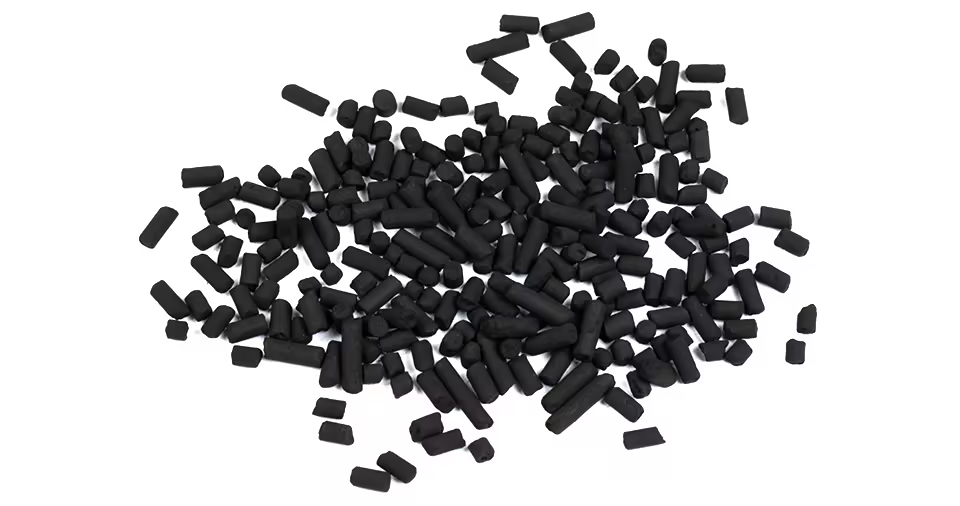
Filtration systems are often judged by their ability to remove impurities, but genuine performance breakthroughs happen when engineering transcends this basic function. Precision engineering transforms a simple barrier into a dynamic component that actively manages flow, pressure, and chemical compatibility. Rather than merely trapping particles, these advanced designs leverage calculated pore structures, optimized media layering, and seamless housing geometries to reduce energy consumption while maintaining consistent output. The result is not just cleaner fluid, but a system-level improvement where every element works in concert to minimize wear, stabilize processes, and extend equipment life far beyond conventional expectations.
The difference lies in the meticulous attention to details that generic filters overlook. Uniform fiber distribution, edge-sealing techniques that eliminate bypass, and end caps that create a flawless seal may seem minor, yet they collectively define how a product performs under real-world stress. Precision engineering accounts for variables such as thermal expansion, pulsating flows, and corrosive chemistries, ensuring reliability in environments where failure is not an option. This holistic approach means a filter becomes an integral part of the machinery, actively contributing to operational stability and reducing unplanned downtime.
Ultimately, elevating product performance through precision engineering shifts the focus from simple cleanliness to functional synergy. The filter is no longer a disposable item but a co-engineered component that enhances throughput, protects downstream processes, and maintains critical tolerances. Users benefit from a noticeable reduction in maintenance frequency, lower total operating costs, and consistent quality that only a truly integrated solution can deliver.
Riding the Global Demand Wave: Export Markets and Evolving Standards
The surge in international appetite for advanced manufacturing goods has reshuffled traditional trade routes and redefined competitive edges. Exporters in sectors like renewable energy equipment, electric vehicles, and precision machinery are finding fertile ground in regions once considered peripheral, from Southeast Asian industrial parks to African special economic zones. Yet this wave is anything but smooth—local certification requirements are shifting underfoot, with authorities updating technical regulations in response to climate commitments and digital integration. A solar inverter that cleared customs in Jakarta last quarter might face new efficiency benchmarks in Nairobi before the shipment arrives.
Standards are no longer static checkboxes but moving targets tied to geopolitical alignments and sustainability pledges. The EU’s Carbon Border Adjustment Mechanism, for instance, doesn’t just ask for a product’s emissions data; it demands a transparent supply chain narrative that many manufacturers are still scrambling to assemble. Meanwhile, emerging economies are leapfrogging legacy norms by crafting their own hybrid standards—blending ISO frameworks with localized performance criteria. The result is a patchwork where a single product line may need to comply with three different testing protocols across rival trade blocs, pushing firms to treat compliance as a dynamic capability rather than a pre-export hurdle.
Winning in this environment means turning standards into signals. Companies that embed evolving regulations into their design cycles early can use conformity as a branding asset, not just a cost. Smart exporters are co-developing thresholds with overseas partners, participating in pilot programs that shape future rules, and training local workforces on both the technical and bureaucratic nuances of approval processes. The demand wave will lift many boats, but those that navigate the undercurrents of regulatory flux will steer farthest.
Industrial Frontiers: Where Chinese Coal-Based Carbon Makes the Biggest Impact
The quiet hum of coal-based carbon runs through some of the most demanding production lines on the planet. From silicon metal smelting that feeds solar panel supply chains to the precision casting of high-strength steel alloys, Chinese supply has carved out a role that few other materials can fill. Its high fixed carbon and low ash profile make it the go-to for furnace operations where purity isn't just a preference—it's the only way to avoid batch failures that cascade into millions in downtime.
Look closer at the electrode paste used in submerged arc furnaces, and you'll see how the physical chemistry of coal-based carbon becomes a strategic advantage. It delivers consistent electrical conductivity and thermal resistance under extreme conditions, often outperforming petroleum-based alternatives in long-cycle smelting. This reliability has pushed it deep into non-ferrous metal industries, especially where Chinese manufacturers have optimized particle sizing and binder compatibility for specific furnace designs—something off-the-shelf imports rarely get right.
Beyond metals, the material has quietly become embedded in advanced filtration and environmental engineering. Activated carbons derived from select Chinese coals now tackle aggressive flue gas scrubbing in waste-to-energy plants and volatile organic compound capture in high-throughput paint shops. The shift isn't about being cheaper; it's about pore structures that can be tuned to match contaminant spectra that generic coconut-shell carbons miss. That kind of tight performance specification is what keeps process engineers coming back.
The Green Mandate: Balancing Production Scale with Environmental Responsibility
Scaling up production often comes with a hidden environmental price tag. Every additional unit churned out demands more energy, more raw materials, and generates more waste. The real challenge isn't just increasing output—it's doing so without leaving a scarred landscape or polluted watershed in its wake. Companies that treat sustainability as an afterthought inevitably face regulatory hurdles, supply chain disruptions, and a public increasingly intolerant of greenwashing.
Forward-thinking manufacturers are redesigning processes from the ground up. Instead of merely bolting on end-of-pipe solutions, they’re investing in closed-loop systems where waste from one stage becomes feedstock for another. Renewable energy integration, modular equipment that minimizes idle time, and real-time emission monitoring are shifting from “nice-to-have” to baseline expectations. This isn’t about sacrificing productivity—smart resource use often uncovers cost savings that boost the bottom line alongside environmental metrics.
The tension between growth and ecology dissolves when responsibility becomes a design parameter, not a constraint. Progressive firms are proving that high-volume output can coexist with, and even enhance, ecosystem health. By treating air, water, and soil as stakeholders in the production equation, they build resilience against climate volatility and resource scarcity. The mandate is clear: scale without stewardship is a liability, but production aligned with planetary boundaries is a competitive advantage that secures long-term viability.
Next-Generation Innovations: What’s Shaping the Future of the Industry
The landscape is being rewritten by a wave of technologies that feel less like incremental upgrades and more like fundamental shifts. We’re seeing autonomous decision-making systems move from controlled labs into messy, real-world environments, where they adapt on the fly without constant human hand-holding. Meanwhile, materials that self-heal or change properties on command are leaving the realm of science fiction, promising to upend how we think about durability and design in everything from infrastructure to consumer goods. It’s not just about doing things faster—it’s about doing things that were previously impossible.
Another quiet revolution is unfolding at the intersection of biology and machine learning. Engineers are borrowing principles from neural networks to decode complex biological processes, leading to breakthroughs like programmable cells that can be instructed to manufacture specific compounds or sense environmental toxins. This convergence is blurring the lines between digital and biological worlds, pushing industries toward solutions that grow, evolve, and even repair themselves. The barrier to entry keeps dropping, too, as open-source platforms and collaborative research models democratize access to tools once locked inside elite labs.
Underpinning all this is a radical rethinking of energy and resource usage. Carbon capture has moved from a niche concern to a competitive battleground, with startups turning captured CO2 into profitable products rather than just burying it. Simultaneously, decentralized power grids are gaining traction, allowing communities to generate, store, and trade electricity with an efficiency that central utilities struggle to match. These shifts aren’t just greenwashing—they’re reshaping entire supply chains and forcing legacy players to rethink their core business models or risk irrelevance.
FAQ
Chinese manufacturers have refined their production processes over decades, focusing on high iodine values and consistent pore structures that enhance adsorption efficiency. The abundance of high-grade anthracite coal ensures a reliable raw material with low ash content.
It often comes at a competitive price due to integrated supply chains and scale advantages, without compromising on key performance metrics. Many buyers find it a cost-effective alternative to coconut shell-based carbon in applications where hardness isn't the top priority.
Leading factories implement real-time monitoring of activation parameters, conduct batch testing for mesh size, iodine number, and moisture, and adhere to international standards like ASTM. Some even offer custom blends tailored to specific filtration needs.
It's especially popular in water treatment, air purification, and gold recovery. Its large surface area and mechanical strength make it suitable for both liquid-phase and gas-phase applications.
Demand has grown steadily, driven by stricter environmental regulations worldwide. Export volumes have risen, with Southeast Asia, the Middle East, and Africa emerging as key markets, alongside traditional buyers in Europe and North America.
Innovation in reactivation services and the shift toward sustainable production practices are gaining traction. Additionally, the push for cleaner drinking water in developing nations continues to open new opportunities.
Some assume it's inferior to coconut-based carbon, but for many uses, coal-based variants offer comparable or better performance, particularly in terms of decolorization and large-molecule adsorption. The key is choosing the right product specification.
Verify third-party test reports, ask for samples before bulk orders, and check the supplier's track record on consistency and delivery. A reliable partner will provide transparent data on raw material origin and activation methods.
Conclusion
China's dominance in coal-based activated carbon is rooted in a geological gift: vast anthracite reserves with elevated fixed carbon and minimal impurities. This natural edge, however, is only part of the story. Manufacturers have moved far beyond basic filtration, employing precision engineering—tight pore-size control, advanced activation kinetics, and surface functionalization—to tailor products for increasingly specialized needs. The result is a portfolio that ranges from high-iodine-value powders for water purification to ultra-hard granular grades for respirators, each batch engineered for consistency in a market that no longer tolerates variability.
Global demand, especially from Southeast Asia and the Middle East, is surging as environmental regulations tighten and industries upgrade their treatment infrastructure. Chinese suppliers have adapted by aligning with evolving standards like NSF/ANSI 61 and the European Drinking Water Directive, solidifying their position in municipal water and air treatment. Beyond conventional applications, coal-based carbon is making inroads into critical industrial frontiers: mercury capture in flue gas, catalyst support in chemical synthesis, and electrode material for energy storage. At the same time, the industry confronts its own environmental footprint—balancing rapid scale-up with responsible mining, emission controls, and a push toward greener activation processes. Looking ahead, innovation centers on redefining the raw material itself through hybrid coal-biomass precursors, waste-derived feedstocks, and smart reactivation cycles that promise higher yields with lower carbon intensity. These advances suggest that Chinese coal-based activated carbon is not just meeting today's standards but actively shaping tomorrow's filtration landscape.
Contact Us
Contact Person: Ellen Zhang
Email: [email protected]
Tel/WhatsApp: +86(21) 2287 6756
Website: https://www.tundrr.com/en/
