Cartoon Lanyard Original Manufacturer Reveals Custom Lanyard Design Secrets
2026-10-19
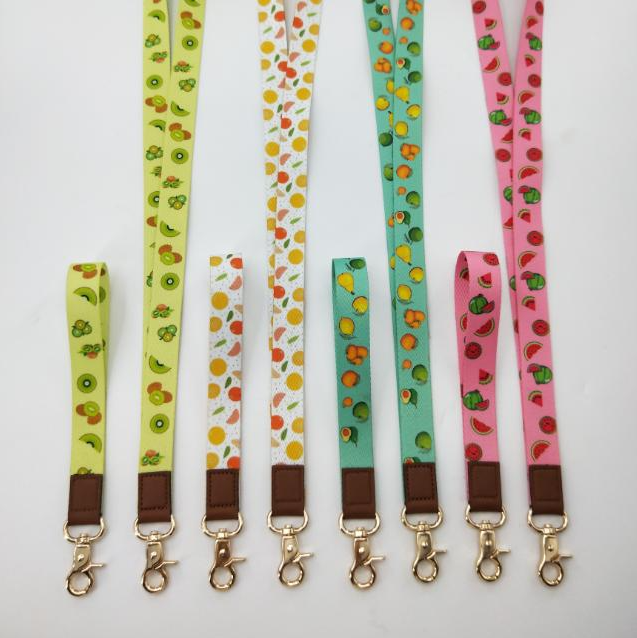
Most people think a lanyard is just a strap with a clip. But ask any artist or event organizer who has tried to turn a cartoon character into a wearable keepsake, and they'll tell you the real challenge is in the details. As the original manufacturer behind countless custom cartoon lanyards, DONGCHUANG knows those details better than anyone. In this post, we're pulling back the curtain on the design secrets that separate a forgettable freebie from a lanyard fans actually want to wear.
What Actually Happens on the Factory Floor Before Your Cartoon Lanyard Takes Shape
At the start of a production run, the machines are still but the air is already busy with the smell of heated plastisol and the low hum of compressors kicking on. Rolled webs of polyester ribbon sit stacked on pallets, each tagged with the exact Pantone color that will later become a cartoon face or a quirky pattern. The prep crew stretches the first lengths across a long curing table and checks for stray fibers or uneven weave. If the ribbon isn't perfectly flat, the print will blur before the design even leaves the screen.
In the printing bay, screen frames are locked into place one by one. Someone has already coated each mesh with photo emulsion and burned the cartoon artwork into it using a UV exposure unit. The squeegee operator tests the ink viscosity on a scrap of ribbon, adjusting with thinner until the blade slides with just enough resistance. Colors are layered in tight registration, never all at once. Pink for the character's cheeks goes down first, then black for the outlines, then a final hit of white as an underbase so the colors stay bright after washing.
Once the printed ribbon has passed through the dryer tunnel and cooled, it gets rolled onto cores and moved to the slitting and crimping stations. Here, a worker checks the repeat length against a printed film positive: if the cartoon's eyes land at 6 cm but the die cuts at 5.8 cm, the whole batch is scrapped. Only after that alignment is confirmed do the metal crimps and plastic safety breakaways get attached. The lanyard you clip around your neck at a convention has survived more small decisions than most people imagine.
The Color and Material Choices That Make Cartoon Characters Pop on a Lanyard
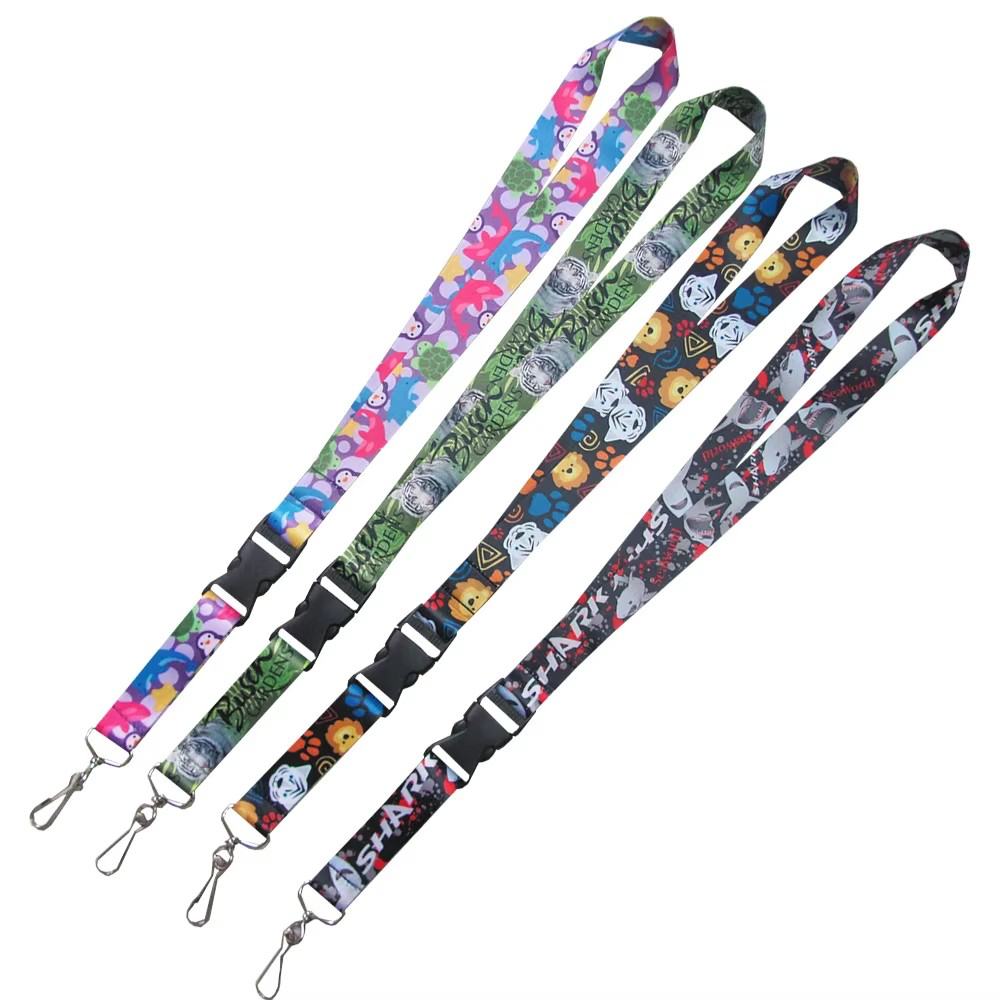
The secret behind a cartoon character that practically leaps off a lanyard isn't just the drawing itself—it's how color and material work together to trick the eye. High-contrast palettes do the heavy lifting: a saturated crimson next to a cool cyan creates a visual vibration that makes flat art feel dimensional. Pair that with a glossy epoxy dome, and the character gains a subtle lens effect, drawing focus to facial expressions or dynamic poses. It's the difference between a printed image and a tiny, wearable spotlight.
Material choice shapes the perceived personality of the character too. A matte, slightly textured PVC gives a soft, storybook warmth—think classic animation stills—while a smooth, high-shine acrylic reads as modern and energetic, almost like a frame pulled from a fast-paced cartoon. Even the lanyard strap itself matters: a woven fabric strap with a slight sheen can complement bright, playful characters, whereas a flat polyester strap tends to mute them. The goal is synergy, where every surface reflects light in a way that echoes the character's mood.
And then there's the unexpected trick: using a color you'd never see in the original animation. A small pop of neon green in the background, or a metallic gold accent on a character's accessory, can make the whole design feel custom and collectible. It breaks the expected palette just enough to grab attention without ruining the character's identity. When the material and color decisions are made this deliberately, the lanyard stops being a simple ID holder and becomes a tiny canvas for favorite characters.
Why Custom Molded Attachments Often Matter More Than the Strap Itself
When someone picks up a bag, a harness, or a piece of tactical gear, the first thing they notice is usually the strap—the wide webbing, the color, the adjustability. But what actually determines whether that item functions under real-world stress is the molded attachment at the end of it. These small plastic or rubber components handle the load transfer, the pivot points, and the repeated flexing that happens every time the strap is pulled, clipped, or released. In many cases, the strap itself is just a length of fabric; the attachment is what gives it a job.
Custom molded attachments allow designers to solve problems that off-the-shelf hardware simply cannot. A generic buckle or D-ring might fit the webbing width, but it won't necessarily align with the angle of a shoulder curve, the thickness of a padded edge, or the way a user's hand naturally grabs the clip. By molding the attachment to match the exact strap geometry and use case, manufacturers eliminate rattling, reduce wear on the webbing, and create a more intuitive connection point. The result is a strap system that feels like a single, unified component rather than two parts that happen to be sewn together.
There is also the matter of failure points. Most strap failures do not happen in the middle of the webbing; they happen at the junction where the strap meets a hard component. A custom molded attachment can distribute tension more evenly, incorporate strain relief into the design, or use a softer overmold to protect the stitching. That kind of refinement is invisible until you compare it side by side with a standard part. Once you do, the difference is obvious: the strap is just the length, but the attachment is what makes the whole system reliable.
Little-Known Printing Methods That Keep Cartoon Artwork from Fading
Most collectors assume fading is inevitable once a print leaves the studio, but a handful of print shops quietly rely on pigment-based inks that suspend color particles in a durable resin. Unlike dye inks, which soak into the paper and break down under UV exposure, these pigments sit on top of a microporous coating and resist light damage for decades. The trick is pairing them with a baryta or cotton rag paper that has no optical brighteners, since those additives can yellow and accelerate color shift.
Another method that rarely gets mentioned outside professional circles is laying down a UV-cured clear coat right after the ink dries. This isn't the thick, glossy lamination you see on cheap posters; it's a thin, matte or satin overprint that contains hindered amine light stabilizers. The coat blocks the most damaging part of the spectrum while letting the paper's texture show through, so the cartoon linework keeps its original crispness without looking plastic-wrapped.
For pieces that will hang in bright rooms, some printmakers go a step further and use a cold press laminate with an optical-grade UV filter built in. It's more common in museum framing than in everyday print runs, and it's subtle enough that most viewers won't notice it. Combined with a low-iron glass frame, this approach can stretch the life of a cartoon print well past what ordinary dye-based output can manage, even in direct sunlight.
How to Match Cartoon Lanyard Width and Breakaway Clips to Real-World Use
Most people pick a cartoon lanyard for the design, then wonder why it digs into their neck by noon. Width should be chosen by what you actually carry, not just looks. A 10–15 mm strap handles a single ID badge or a couple of light keys without twisting. If you clip on a phone, a heavy key ring, or small hand tools, move up to 20–25 mm. The wider webbing spreads the load across your neck and keeps the edges from curling, which matters more than the print when you wear it for eight hours.
Breakaway clips aren’t all the same, and matching one to your day matters. For kids or anyone working around machinery, door handles, or playground equipment, choose a clip that releases with a firm tug, usually in the 5–8 lb range. An office worker who leans over desks all day might prefer a stronger 10–15 lb clip so the lanyard doesn’t pop open every time it catches on a chair arm. Feel the release point before buying—cheap plastic clips often loosen after a few dozen openings, turning a safety feature into an annoyance.
Real-world use means thinking about the whole setup, not just the strap and clip separately. A school nurse carrying a badge and a small whistle does fine with a 12 mm lanyard and an easy-release clip. A custodian with a heavy ring of master keys needs 25 mm webbing and a sturdier breakaway buckle, plus a swivel hook so the keys don’t twist the strap into a rope. If you swap between roles, keep two lanyards—one light and one heavy—instead of forcing a single cartoon strap to do everything poorly.
The Prototyping Step Most Buyers Skip Until a Sample Looks Wrong
Everyone loves the moment a prototype finally arrives. But by then, a lot of decisions have already been locked in—materials, tolerances, surface finishes, assembly sequence. What buyers often skip is the pre-prototype design review that forces you to question whether the part can actually be made the way it’s drawn. It sounds obvious, but it's the unglamorous step that gets squeezed out by tight timelines.
The pattern is almost predictable: the CAD file goes out, the factory quotes it, and weeks later a sample shows up with a warp here, a sink mark there, or a hole that doesn't line up. Only then does someone ask about draft angles, wall thickness, or whether that snap fit can survive more than three cycles. These are questions that should have been answered before tooling was cut, not after. Skipping the design-for-manufacturing pass doesn't save time—it just moves the delay downstream.
What separates experienced buyers from first-timers is not fancy negotiation tactics. They simply put a hard stop between the "design is final" and "send it to the factory" stages. They pull in a tooling engineer or a supplier's process guy for a sanity check. Thirty minutes on a video call, walking through the model and asking "how would you mold this?" saves more money than any renegotiation later. But most people only learn that after the sample looks wrong.
FAQ
It comes down to how the artwork is adapted. Off-the-shelf versions usually stretch a stock image to fit, which muddies faces and lettering. A custom design rebalances line weights, simplifies busy areas, and adjusts spacing so the character reads clearly at lanyard width.
Polyester is the workhorse for this. It's soft enough not to scratch necks, takes dye well for bright cartoon colors, and doesn't fray as quickly as nylon when it's tugged or twisted. For a smoother feel, a polyester with a slight sheen works, but avoid anything too glossy because it shows creases fast.
The secret is choosing the right transfer method. Dye sublimation pushes the ink into the fibers rather than layering it on top, so there's no thick film to crack. If the lanyard has white or light areas in the artwork, a woven or dye-sublimated band with a pre-treated surface holds up much better than screen-printed vinyl.
The safety breakaway placement. It's not just about adding a buckle; where it sits along the strap changes how the lanyard hangs and whether the design gets interrupted. You want the breakaway positioned so it doesn't slice through a character's face or a logo, usually near the back of the neck or lower chest.
Yes, but you need to control the palette rather than just cranking saturation. Pick one or two dominant colors from the cartoon and use the rest as accents. A white or neutral border around the characters also keeps the design from turning into a muddy rainbow when viewed from a distance.
Reduce the number of fine lines and small shapes first. At lanyard width—usually 15mm to 25mm—anything thinner than a pencil line disappears. A good manufacturer will redraw the most important facial features and outlines slightly bolder, while dropping background clutter that only worked at poster size.
Ask for a physical sample with the exact thread or ink colors, not just a digital mockup. Also request a wash or rub test result if they have one, and confirm whether they can match a specific Pantone for your character's main color. If they hesitate on any of those, the production run will likely drift from the proof.
It's usually a dye or ink quality problem, not the design. Cheaper sublimation inks fade quickly under UV exposure. A manufacturer that uses UV-resistant inks and adds a light protective coating to the polyester will keep reds and yellows vivid much longer, even if the lanyard is worn outside daily.
Conclusion
Walking through a lanyard factory before any cartoon design gets approved is not what most buyers picture. The floor is a mix of rapid sampling stations, dye lots being checked under harsh light, and bins of rejected webbing that never make it past the first stretch test. For a cartoon lanyard, the real work starts with how the polyester or nylon is woven and then heat-set, because that determines whether a character's face will stay crisp or turn into a blurry smudge. Color matching is equally unforgiving—screen-printed Pantone references rarely translate directly to thread, so manufacturers often create custom dyed yarns and test them against actual character art, not just a swatch book. The strap itself is only half the story. Many buyers obsess over the ribbon but overlook the molded PVC or silicone attachments that hold a charm or tag. Those little pieces carry the most visual weight: a well-sculpted cartoon head with clean cut lines and a slightly raised outline makes the whole lanyard feel expensive, while a flat, muddy mold ruins the effect even if the strap is perfect.
The printing method is where fading gets decided long before the first wash. Instead of basic heat transfers that crack after a few weeks, a careful manufacturer leans on dye-sublimation for full-color cartoon scenes or high-density woven labels for small logos, both of which survive daily friction without turning pale. Width and breakaway clips are not just afterthoughts either: a 10mm strap might look cute with a tiny cartoon print, but it digs into the neck during a full school day, while a 20mm version spreads the load and lets the artwork breathe. The breakaway clip needs to match the user—too stiff and it fails in a safety pull, too loose and it pops open during normal movement. Then there is the prototype step most buyers skip. A rushed digital proof cannot reveal how a cartoon outline will distort around a curved neck or how the clip's edge will rub against printed fabric. Ordering a single physical sample with the actual clip and attachment attached, then wearing it for a day, exposes problems that no render can predict. That final check is what separates a lanyard that looks good in a photo from one that holds up in a classroom or at a convention.
Contact Us
Contact Person: Bill Huang
Email: [email protected]
Tel/WhatsApp: 8613829102720
Website: https://www.dclanyard.com