

Best Support Rail Choices for Home and Industrial Use
2026-09-23
Choosing the right support rail often comes down to context. A home bathroom handrail and an industrial safety rail may look similar in a catalog, but they face very different daily stresses. This guide walks through the key differences in materials, mounting, and weight capacity so you can pick confidently. Whether you're upgrading a residential space or equipping a production line, you'll see why Suncare has become a go-to source for rails that hold up without looking out of place.
What to Look for in a Support Rail That Handles Both Morning Showers and Heavy Machinery
Start with the metal, not the marketing. A rail that sees daily steam, soap residue, and occasional splashes of cutting fluid needs to be milled from solid 304 or 316 stainless steel, or hard-anodized aluminum. Thin-walled tubing with a shiny chrome wrap will pit within a year. Look for a brushed or lightly textured finish—it hides scratches from dropped wrenches and still wipes clean after a shower.
Next, ignore the cosmetic flange covers and check the actual mounting plate. You want at least three screw points per end, not a single central bolt. The rail should be rated for a static load of 500 pounds or more, with anchors that bite into wood studs, concrete block, or steel framing. In a shop environment, vibration from a lathe or press can loosen standard drywall anchors, so opt for through-bolted or epoxy-set mounting hardware.
Finally, grip matters more than you think. For shower use, a smooth rail becomes slippery with soap; for machinery, you might grab it with oily gloves. Look for a fine knurled or etched pattern that offers traction without chewing up your palm. Diameter between 1.25 and 1.5 inches works for most hands, and if the rail will sit near a machine, choose a model with no sharp edges or protruding set screws that could catch a sleeve.
The Real Differences Between Home Grab Bars and Industrial Support Rails Nobody Mentions
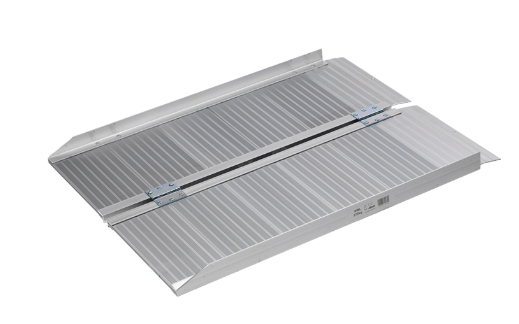
Most people assume a grab bar is a grab bar, but the gap between residential and industrial support rails starts with the finish and tolerance. Home grab bars are often designed to blend into a bathroom, with smooth rounded ends and a coating that resists soap scum and skin oils. Industrial rails, by contrast, are built for warehouse or factory settings where the priority is raw load capacity and visibility. They rarely get the same attention to edge finishing, so the ends can feel sharper, and the surface texture is usually more aggressive to keep a gloved hand from slipping.
Another unspoken difference is how each responds to repeated micro-movements. A residential bar is anchored to studs or solid blocking and is expected to handle steady, downward pressure from a person shifting weight. An industrial rail is often mounted to steel or concrete and may tolerate vibration, impact from carts, or lateral force that would slowly loosen a home installation. That means the mounting hardware isn't interchangeable, even when the bar diameter looks similar.
Finally, the real distinction nobody mentions is ergonomic radius. Home grab bars are usually placed within a narrow comfort range for a seated or standing adult, with diameters around 1.25 to 1.5 inches that feel natural to grip. Industrial support rails can be thicker, colder to the touch, and positioned more for reach than for sustained support. Choosing the wrong one isn't just a style mismatch; it changes how securely your hand locks around the rail when you need it most.
Steel vs. Aluminum vs. Reinforced Plastic: Which Support Rail Material Earns Its Keep
Steel has been the default choice for support rails in heavy industrial settings for decades, and it's not hard to see why. A solid steel rail can take a beating from forklift forks, dropped tools, or the occasional swinging gate without permanent deformation. But that toughness comes with a trade-off: corrosion. Unless it's hot-dip galvanized or coated with a heavy-duty epoxy, steel starts showing rust blooms around welds and mounting holes within a year or two in humid or coastal environments. I've seen maintenance crews spend more time prepping and repainting steel rails than actually using them. If the rail sits indoors in a dry plant, steel's cost-to-strength ratio is hard to beat. Put it outside near salt spray, and you're signing up for a recurring paint job.
Aluminum positions itself as the lightweight, naturally corrosion-resistant alternative. An extruded aluminum rail won't rust, and it's much easier to install because a single person can lift a 20-foot section without a hoist. The downside shows up under load. Aluminum's yield strength is roughly a third of structural steel's, so a heavy impact—like a pallet jack hitting the rail—leaves a visible dent or crease. That deformation can bind sliding brackets or create a sharp edge. In applications where the rail is more of a hand guide than a crash barrier, aluminum makes sense, especially in food processing or pharmaceutical plants where rust is unacceptable. But if your support rail doubles as a bumper, aluminum will start looking like a crumpled soda can after a few months.
Reinforced plastic—typically fiberglass-reinforced polyester or vinylester—earns its keep in chemical plants, wastewater facilities, and offshore platforms. It's completely immune to salt, acids, and alkalis, so there's no coating to scratch and no galvanic corrosion where it meets stainless hardware. The trade-off is stiffness. FRP rails flex under load, which can feel disconcerting if workers are used to rigid steel. Over time, continuous stress at bolt holes can cause micro-cracking, and UV exposure can fade or erode the surface unless a UV-stabilized resin is specified. For highly corrosive environments where maintenance access is difficult, FRP often ends up being the cheapest option over a 10-year lifecycle, despite a higher upfront material cost. But for a loading dock or machine platform that sees regular impacts, it's not a direct substitute for metal.
How to Avoid the Most Common Support Rail Installation Mistakes
Many installations go wrong before the rail is even lifted. Anchoring into drywall without locating a stud or using a suitable wall anchor is the fastest way to end up with a rail that pulls loose under weight. Run a stud finder across the mounting area, and if the studs don't line up, use heavy-duty toggle bolts rated for at least 250 pounds. Never rely on plastic anchors or short screws—those are for picture frames, not something people lean on.
Placement is another area where good intentions miss the mark. A support rail mounted at "standard" height often ignores the actual user's height, grip strength, or the way they transfer weight. For a bathroom grab bar, aim for 33 to 36 inches off the floor, but adjust it after watching the person reach and brace. An angled rail works better near a toilet or shower seat, while a vertical rail helps with balance when stepping over a tub edge. Take five minutes to test the position with the person who will use it.
The last common mistake happens after drilling: forgetting to seal around the mounting holes. In damp rooms, water seeps behind the flange and rots the wall or rusts the screws. Use a silicone bead around each hole before tightening, and choose stainless steel or coated screws. Also double-check for hidden pipes and wires with a scanner before drilling—catching that before it happens saves a much bigger headache.
Matching Load Ratings to Real Life: A Smarter Way to Size Support Rails
Static load charts rarely tell the whole story. A rail that handles 800 pounds on paper can still flex, chatter, or loosen when that load moves, shifts, or sits off-center. Instead of picking a rail by its maximum capacity alone, start by mapping the actual load path: where the weight sits, how often it cycles, and whether impacts or vibrations come into play. This turns a vague heavy-duty requirement into a workable number.
A smarter sizing method uses a simple multiplier on the real-world load rather than trusting the catalog's polished rating. For intermittent, gently applied loads, a 1.5 safety factor often works. For anything that sees frequent starts and stops, side forces, or uneven mounting surfaces, move closer to 3.0 or higher. The goal is not to buy the biggest rail, but to keep deflection small enough that bearings roll smoothly and fasteners stay tight over years of use.
Finally, test the rail in its actual mounting conditions before finalizing the spec. A short piece of aluminum extrusion bolted to a thin sheet may fail long before the rail's rated load is reached. By checking deflection under a representative load and observing how the carriage behaves at the ends of travel, you can correct for real-world weaknesses that no datasheet will highlight.
Why Adjustable Support Rails Are Changing the Game for Homes and Workshops
Most fixed shelving and workbench setups force you to commit to a single layout, even when your needs shift from season to season or project to project. Adjustable support rails break that constraint by letting you reposition brackets, hooks, and entire shelves without drilling new holes or rebuilding the frame. That means a garage wall can hold bulky winter gear in January, then switch to holding lumber racks and tool bins in June with nothing more than a quick slide and lock.
Workshops benefit just as much because the same rail system can carry a heavy vise at elbow height one week, then lower it for seated detail work the next. The rails also handle uneven loads better than static brackets, since you can add or remove supports exactly where stress concentrates. For anyone tired of patching drywall after every rearrangement, this hardware removes the guesswork and makes the workspace feel truly yours.
FAQ
For a bathroom, focus on grip comfort and rust resistance first. A textured or knurled surface prevents slipping when hands are wet, and 304 stainless steel holds up well against humidity and cleaning sprays. Check that the rail is rated for at least 250 pounds, and don't skip wall anchors designed for tile and drywall if you can't hit a stud.
In most industrial environments, stainless steel wins because it resists chemical exposure and heavy impact better. Aluminum is lighter and cheaper, but it dents more easily and can corrode when in contact with certain metals or salts. If your facility handles acids or high humidity, go with 316 stainless; for light-duty indoor guardrails, aluminum is fine.
Most home rails are rated between 250 and 350 pounds, but that number assumes a proper installation into studs or solid blocking. In industrial settings, you'll see ratings over 500 pounds, often tested to OSHA-style standards. The weak point is usually the wall anchor, not the rail itself, so always follow the mounting instructions and use the recommended hardware.
You can, but only with heavy-duty hollow-wall anchors rated for at least twice the expected load. Better yet, use a mounting plate that spans multiple studs or open the wall to add blocking. Screwing directly into drywall alone is dangerous—even a light pull can tear it out.
For constant humidity, 316 stainless steel is the gold standard—it won't rust even near salt water. Powder-coated aluminum also holds up well indoors, but chips in the coating can lead to corrosion underneath. Avoid bare carbon steel unless it's hot-dip galvanized and inspected regularly.
Yes, look for rails made from 316 stainless or marine-grade aluminum with UV-stable powder coating. Outdoor installations also need stainless or coated screws and anchors to prevent rust streaks. Keep in mind that plastic or rubber grips may degrade faster in direct sunlight, so choose metal or silicone components for longevity.
Grab bars are typically shorter, mounted at specific points like beside a toilet or shower entrance to assist with a single movement. Support rails run longer along a hallway or ramp, providing continuous handhold for balance while walking. In practice, many people use the terms interchangeably, but checking the length and mounting style will tell you which one you're looking at.
Wipe them down monthly with a mild detergent and soft cloth, and rinse thoroughly—especially if they're near salt, chemicals, or heavy dust. Inspect for scratches or chips in the coating at least twice a year, and touch up any damage with an appropriate epoxy or zinc-rich paint. Never use steel wool or chlorine-based cleaners on stainless steel, as they can break down the protective oxide layer.
Conclusion
Choosing a support rail that does double duty between a steamy morning shower and a workshop bay isn't about buying the heaviest option. The real split between home grab bars and industrial rails often comes down to mounting details and load path, not just thickness. A bathroom rail needs a corrosion-resistant finish and a grip that feels secure with wet hands, while an industrial rail has to survive vibration, side loading, and repeated impacts. Load ratings printed on the box rarely match the real world: a 500-pound static rating can fail quickly if someone stumbles against the rail from an angle or hangs a tool bag off the end. Sizing the rail means thinking about dynamic force, leverage, and how many mounting points actually bite into structure.
Material choice only makes sense after you know those forces. Steel holds up to serious abuse but needs proper coating or it rusts in humid bathrooms. Aluminum is light and easy to install but can bend under sudden heavy loads. Reinforced plastic resists moisture and stays comfortable to touch, yet it’s usually limited in span and load capacity. Adjustable rails have changed the calculation because they let you align brackets with studs or steel framing on site, cutting down the biggest installation mistakes—anchoring into drywall alone, overtightening fasteners, or ignoring edge distance. Instead of chasing a universal “best” rail, match the material and mounting style to the real use: how often it’s grabbed, how wet the environment gets, and what worst-case load it’ll face.
Contact Us
Contact Person: Frank Chan
Email: [email protected]
Tel/WhatsApp: 0086-13924529088
Website: https://www.suncare-medical.com