

Wholesale Polyurethane Flame Retardant: Essential Buying Tips and Industry Applications
2026-11-02
Spec a polyurethane part that fails a burn test, and the cost isn't just the rejected batch—it's the delayed shipment, the rework, and the bruised reputation. Wholesale buyers of flame retardants know this pressure intimately. But with so many grades, halogenated or non-halogenated, and regional regulations, choosing the right supplier feels like navigating a minefield. That's where a partner like Fortune changes the game. Below, we cut through the noise with practical buying tips and a look at how these additives perform in real industry applications.
Reading a Flame Retardant Data Sheet Without Getting Misled
Reading a flame retardant data sheet feels a lot like translating a foreign language where every word matters but few mean what you expect. The first thing to remember is that most numbers on the sheet are not absolute guarantees, they are results from a specific test under specific conditions. If you see a UL 94 V-0 rating, that doesn't mean the material will never burn, it means it stopped burning within a set time on a small, vertical sample in a lab. Real-world fires rarely behave like lab fires, so treat the sheet as a starting point, not a promise.
Pay attention to the property columns that get buried at the bottom, things like melt drip, smoke density, or heat release rate. A material can pass a flame test yet still produce heavy smoke or flaming drips that spread fire to nearby parts. Some data sheets highlight only the headline rating while downplaying less flattering numbers. If a value is listed as "not tested" or "N/A," ask yourself why that gap exists. Often the missing test is exactly the one that matters for your application, such as glow wire ignition for electrical components or oxygen index for materials used in enclosed spaces.
Finally, compare data sheets from different suppliers side by side, but do not assume the same test method was used. Two sheets can both claim "self-extinguishing" while referencing different standards, sample thicknesses, or conditioning procedures. Check the fine print on test specimen thickness; a 3 mm bar behaving well tells you little about your 1 mm wall section. If the sheet doesn't state the test standard version or conditioning, that omission itself is a red flag. In short, read the whole sheet, question what is absent, and never let a single bold number override your engineering judgment.
Supplier Audits: What Bulk Buyers Often Overlook
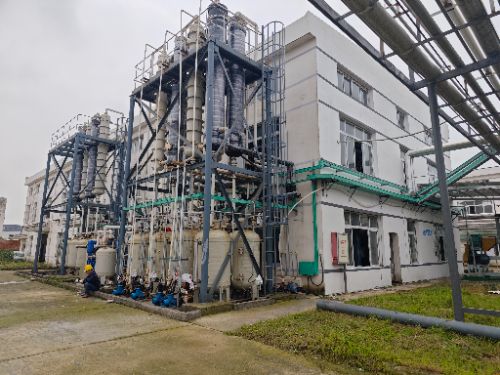
Most bulk buyers walk into a supplier audit with a checklist built around price, capacity, and delivery dates, but they rarely trace the actual origin of raw materials. A supplier might claim that critical components come from a well-known brand, yet quietly switch to an uncertified local workshop during production. The buyer only notices the batch variation when customer complaints start rolling in. A meaningful audit should go at least one level deeper into sub-tier suppliers and verify whether substitute materials follow a documented change notification process.
Another common blind spot is the factory’s contingency capability and workforce stability. A clean production line on audit day doesn’t reflect daily reality. If key processes rely heavily on a few skilled workers, any turnover will quickly show up in quality fluctuations. During the audit, ask to see rework logs and monthly attrition data from the past six months instead of trusting the polished presentation in the meeting room. Equipment maintenance records also tell a more honest story than shiny nameplates—unplanned downtime and patch-up jobs often hide in those brief notes.
Many buyers also fail to monitor supplier financial health and compliance history on an ongoing basis. A one-time on-site pass doesn’t guarantee that the supplier won’t cut corners next quarter due to cash flow problems or face production limits after an environmental penalty. Updating a supplier risk profile regularly—litigation records, credit changes, environmental fines—catches issues earlier than repeating the same annual checklist.
Matching Retardants to Polyurethane Chemistry: Not All PUs Are Equal
Polyurethane is often treated as a single material in flame retardant discussions, but the chemistry behind it varies enormously. The choice of polyol — whether polyether or polyester — along with the isocyanate component and the degree of crosslinking, changes how the polymer decomposes under heat. A retardant that performs brilliantly in a rigid foam might barely slow down a flexible foam or an elastomer. The reason lies in the way different PU structures release flammable gases, form char, or drip during combustion. Ester-based PUs, for instance, tend to break down into smaller fragments that can feed the flame differently than ether-based ones.
Take phosphorus-based retardants as an example. In rigid polyurethane foams, they often promote a protective char layer that insulates the underlying material, which is exactly what you want. But drop the same additive into a flexible foam, and you might end up with unwanted plasticization, loss of resilience, or even hydrolysis over time. Halogenated systems, on the other hand, work through gas-phase radical quenching and can be more forgiving across different PU types, though environmental concerns push many formulators toward mineral fillers like aluminum trihydrate or magnesium hydroxide. Those fillers, however, demand high loadings that can wreck the mechanical properties of soft coatings or thin films.
It's worth remembering that polyurethane chemistry also dictates processing conditions. A retardant must survive the exothermic reaction, remain dispersed, and not interfere with catalysts or blowing agents. In some cases, a combination of a char-forming phosphorus compound and a small amount of a nitrogen synergist works beautifully for a specific polyester-based rigid foam, yet fails completely in a polyether-based spray foam. That's why experienced formulators don't just grab a generic flame retardant off the shelf — they run cone calorimetry, measure smoke density, and test physical properties side by side. Matching the retardant to the precise PU backbone and end-use isn't a luxury; it's the difference between a product that passes and one that fails in the field.
When Cheaper Becomes Costly: Pricing Traps in Wholesale Orders
A wholesale quote that looks unbeatable on paper often hides costs that surface only after the order is already in production. The trap usually begins with a lower unit price that assumes thinner materials, fewer quality checks, or slower turnaround—none of which are obvious when comparing spreadsheets side by side. Buyers who anchor on the initial number end up absorbing those savings as rework, delayed shipments, or inconsistent batches that complicate their own inventory planning.
The deeper issue is that wholesale pricing is never just about the product cost. Minimum order quantities, packaging requirements, and restocking fees can quietly push the real cost per unit far above the headline figure. A supplier might offer a steep discount for a larger volume, but if that volume sits unsold or ties up cash flow, the “cheaper” order becomes a working capital drain. Smart buyers learn to compare total landed cost—including freight, defect allowances, and payment terms—before celebrating a low sticker price.
Small-Scale Trials That Prevent Large-Scale Failures
Launching a full-scale product without testing the waters first is a gamble most teams can't afford. Small-scale trials act as a controlled burn—you deliberately set a tiny fire to remove the fuel that could later cause a wildfire. Instead of betting everything on one massive rollout, you run a pilot with a fraction of the audience, a limited feature set, or a single geographic region. This lets you observe how real users react, where the friction points appear, and what assumptions quietly crumble under actual pressure. The goal isn't to prove you're right; it's to find out where you're wrong before the stakes get high.
A well-designed trial doesn't just test whether the idea works—it tests whether the team's execution can handle the unexpected. You might discover that your onboarding flow confuses early adopters, or that a third-party API behaves differently at even modest scale. These are the kinds of failures that feel minor in a sandbox but become catastrophic when a million users hit them simultaneously. By shrinking the blast radius, you buy yourself room to iterate without public embarrassment or irreversible technical debt. The lessons from a hundred users often save you from the mistakes that would have cost you a hundred thousand.
The key is to treat each small trial as a hypothesis with clear pass/fail criteria, not as a soft launch with vague optimism. Define what signal would make you expand, what signal would make you pivot, and what signal would make you kill the project outright. Then run the experiment with enough rigor to trust the results—randomization, control groups, and honest data collection matter even at small scale. The companies that scale confidently are rarely the ones that avoided failure altogether; they're the ones that front-loaded their failures into cheap, recoverable bursts.
From Foam Seating to Cable Jackets: Where These Additives Earn Their Keep
Drop into a car seat or slump onto a sofa, and the foam beneath you is doing quiet battle against heat, oxygen, and flame. Polyurethane foam—the workhorse inside most cushioning—starts out soft and inviting, but left unprotected it yellows, loses resilience, and becomes a fire hazard. That’s where additive packages come in: halogen-free flame retardants like ammonium polyphosphate or melamine derivatives smother ignition before it spreads, while hindered phenolic antioxidants slow the oxidative breakdown that turns white foam brittle and brown. Tackifiers and cell openers fine-tune the foam’s feel, ensuring the cushion doesn’t collapse after a year of daily use.
Move to the wiring loom under the dashboard or the cable feeding a rooftop solar array, and you’ll find a different set of demands. PVC cable jackets without plasticizers are stiff as board and crack at the first bend. Phthalate-free plasticizers—citrates, trimellitates, or polymeric types—keep the jacket supple from -40°C to 105°C, while calcium-zinc stabilizers neutralize the hydrochloric acid that heat and UV light keep trying to liberate from the polymer chain. In outdoor and industrial runs, carbon black or titanium dioxide act as UV shields, preventing surface chalking and insulation breakdown. For fire-rated cables, intumescent additives expand into a char barrier when things get hot, buying critical minutes for circuit integrity.
FAQ
Consistency in particle size and moisture content matters more than most buyers realize. A reliable product will have tight batch-to-batch variation, low moisture to avoid side reactions with isocyanates, and documented performance in both flexible and rigid foam formulations.
Construction insulation, automotive interiors, and electronics encapsulation lead demand. More recently, cold chain panels and battery pack potting compounds have become significant because they combine flame resistance with long-term thermal aging requirements.
It depends on the end use. Halogenated types often deliver high efficiency at lower loadings, but phosphorus-based options are gaining ground where low smoke, lower toxicity, and easier recyclability are priorities. Check regional chemical regulations before committing.
Some additives act as plasticizers and can soften foam or reduce tensile strength if overused. Others increase viscosity during mixing. Run a full mechanical property panel, not just a UL 94 test, because compression set and tear strength often shift even when flame ratings pass.
Ask for third-party test data from the specific polyurethane system you use, not generic certificates. UL 94 V-0, FMVSS 302 for automotive, and EN 13501-1 for construction are common, but the report must match your density and thickness.
Freight class, minimum order quantities, and storage requirements can outweigh the per-unit price. Some halogenated products need climate-controlled warehousing, and import duties vary by chemical classification. Request total landed cost including disposal of empty packaging.
Start with a small-scale trial in your actual production line, not a lab coupon. Monitor viscosity build, cream time, and demold time, then age samples for at least four weeks to check for migration, surface bloom, or corrosion on metal inserts.
Acoustic foams in public transport, refrigeration insulation, and textile laminates are often overlooked. These niches require a balance of flame retardance with acoustic performance or thermal conductivity, so standard formulations may need custom grades.
Conclusion
Sourcing polyurethane flame retardants in bulk demands a skeptical eye on technical data sheets. A supplier might quote impressive LOI or UL 94 ratings, but those numbers often come from ideal lab conditions using a single PU formulation. Watch for hidden test parameters such as sample thickness, aging protocol, and whether the claim reflects a short self-extinguishing time or true burn-through resistance. Ask for test data on your specific polyol-isocyanate system, including viscosity shifts, foam collapse tendencies, and long-term thermal aging. During supplier audits, go beyond ISO paperwork—check batch-to-batch halogen content, moisture pickup in storage, and whether the retardant has been pre-dispersed for automated dosing lines. Request retained samples from the last three production runs and verify active content on-site with a simple XRF scan if possible. Many bulk buyers skip small-scale trials to save time, only to find that a cheaper powder clogs feed screws or a liquid separates in winter. A 20-kg pilot run before a container order usually costs less than one rejected production lot.
Not all polyurethanes respond the same way. A phosphate ester that works in flexible foam seating may plasticize a rigid spray foam or corrode copper in cable jackets. Polyether and polyester polyols interact differently with halogenated versus phosphorus-based retardants, and aromatic isocyanates can accelerate acid release from some additives. Match the retardant's decomposition temperature to the PU's processing window—too early and you get scorch, too late and the fire barrier never forms. Wholesale pricing traps hide in freight, minimum order quantities, and equivalent products that fail tight tolerance specs. A lower per-kilo price can mean lower active content, forcing higher dosage and raising total landed cost per effective ingredient. The most reliable approach is to build a shortlist of two or three audited suppliers, run comparative trials on your actual line, and negotiate on total landed cost per effective active ingredient. From automotive headrests and mattress foams to appliance insulation and data-cable sheathing, the right retardant choice protects both margins and end-user safety.
Contact Us
Contact Person: WANG SIHAI
Email: [email protected]
Tel/WhatsApp: +86-13815295628
Website: https://www.fortunechemtech.com/index_en.html
