

Three Phase Vibration Motor Company Buying Guide for Reliable Operations
2026-11-02
You can’t see most failure risks in a three-phase vibration motor catalog. That’s why the company behind the motor matters as much as the motor itself. This buying guide focuses on what keeps operations reliable—not just what fits on paper. Among the names worth your attention, Guangling has built a reputation that’s hard to ignore.
What a Balanced Rotor Means for Your Three Phase Vibration Motor
A balanced rotor in a three-phase vibration motor doesn’t mean the unit runs without shaking. The goal is to machine and assemble the rotor so its center of mass sits exactly on the rotation axis. That way, when the eccentric weights are mounted, the only vibration you get is the controlled, predictable force from those weights—not extra wobble coming from the rotor itself.
If the rotor is even slightly off balance, the motor frame absorbs unwanted lateral movement. You’ll notice it as faster bearing wear, higher running temperature, and uneven amplitude at the mounting feet. A properly balanced rotor keeps the air gap between stator and rotor uniform, which smooths out torque delivery and lets the motor maintain a steady vibration output over long duty cycles without the whine and fatigue that imbalance creates.
Why Cheap Windings Fail Faster Than You Expect
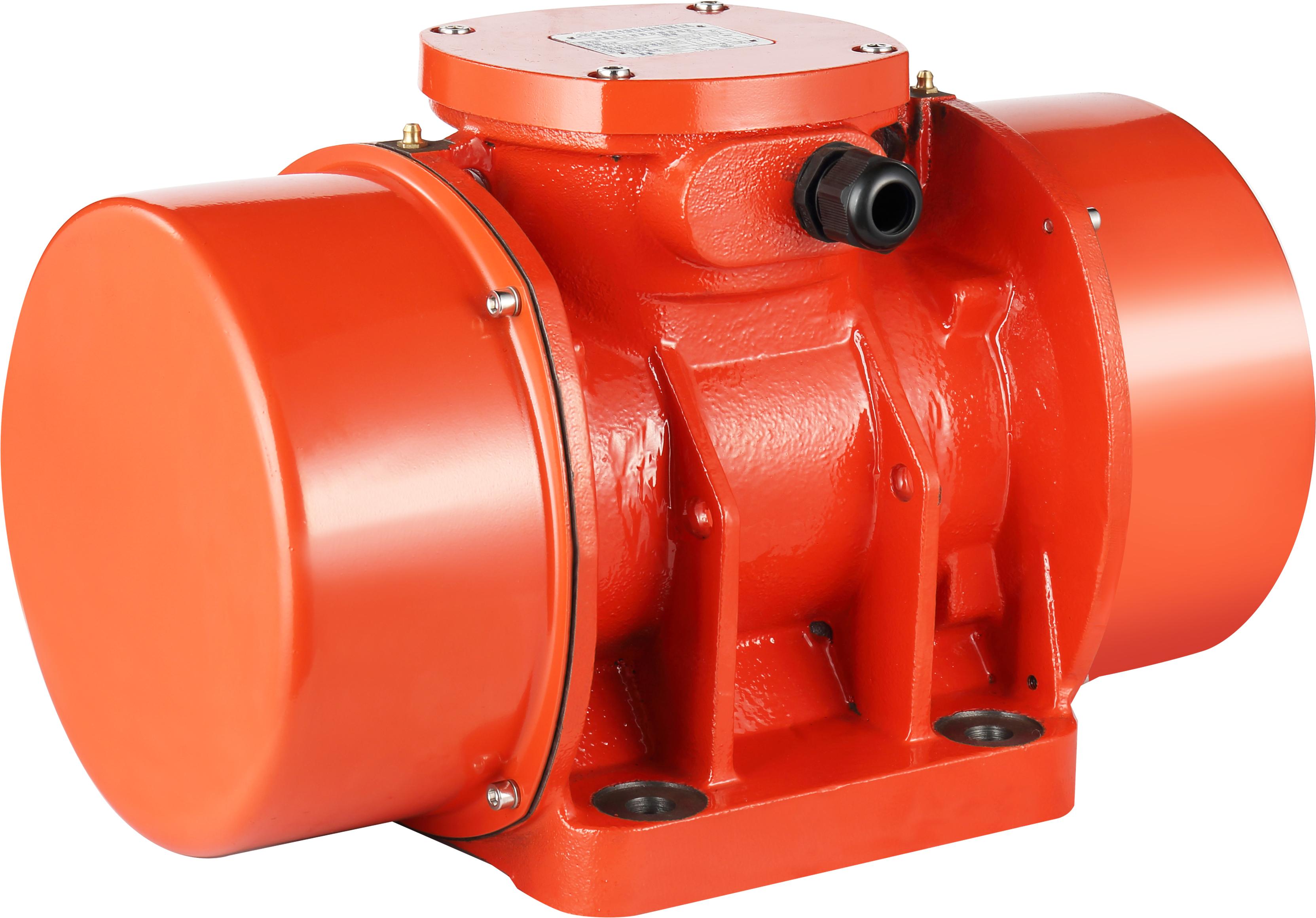
Cheap windings usually start with lower-grade copper that carries more impurities and gets coated with a thinner, less uniform enamel layer. At first, the motor runs fine, but under real loads those tiny inconsistencies turn into local hot spots. Every thermal cycle stresses the insulation a bit more, and soon enough a weak point develops between adjacent turns.
Another common problem is incomplete varnish penetration. In budget production, the impregnating varnish is often applied too quickly or too thinly, leaving air pockets inside the coil. Moisture eventually finds its way into those voids, especially in humid or dirty environments. Once corrosion begins on the copper surface, resistance climbs, heat generation increases, and the winding enters a fast downward spiral.
Vibration and thermal expansion hit poorly wound coils much harder as well. Without proper tension and bracing, individual wires can rub against each other during normal operation. The enamel wears through in spots, and a single bare contact between turns is often enough to cause a short and kill the motor long before its expected service life.
Overlooking Mounting Flexibility Will Cost You Later
Every piece of equipment eventually needs a change in position, angle, or clearance. If your mounting setup only works for one rigid configuration, you'll find yourself improvising brackets, drilling new holes, or paying for custom fabrication the moment the layout shifts. That hidden expense rarely shows up in the initial purchase price, yet it becomes painfully obvious when a simple adjustment turns into a half-day teardown.
Flexible mounting isn't just about saving time—it preserves the integrity of your tools and surrounding surfaces. Repeated forcing of mismatched components leads to stripped threads, cracked bases, and alignment drift. A system that allows you to slide, rotate, or reconfigure without needing new parts means fewer emergency orders and less downtime waiting for a single missing bolt.
Budgeting only for the current installation ignores what the next month or year might bring. Think of mounting flexibility as insurance against changing workflows, added accessories, or unexpected space constraints. Spending slightly more on an adjustable solution today can prevent costly retrofits and unhappy operators later.
The Difference Between Peak Power and Continuous Duty Ratings
Peak power ratings describe the maximum output a device can deliver for a very brief interval—often just a few seconds or fractions of a second—before thermal or electrical limits force it to back off. This figure matters when equipment has to handle sudden surges, like a motor starting under load or an amplifier hitting a loud transient. What it doesn't tell you is whether the unit can keep up that level of output for any meaningful length of time.
Continuous duty ratings, by contrast, specify the output level a device can sustain indefinitely under normal operating conditions without exceeding its designed temperature rise or component stress. This is the number you base day-to-day operation on, because it reflects what the cooling system, insulation, and conductor sizing can actually handle hour after hour.
The gap between the two can be substantial. A generator might advertise 10 kW peak but only 8 kW continuous, meaning it can cover short startup spikes but would overheat if forced to run at 10 kW nonstop. Comparing only peak figures gives an inflated sense of capability, while focusing only on continuous duty understates headroom for transient demands. The practical approach is to size equipment so normal operation stays within the continuous rating and leave peak capacity for occasional, short-duration events.
Can Your Supplier Deliver When Production Stops?
When a line goes down, the clock starts immediately. Every hour of downtime chips away at revenue, customer trust, and delivery commitments. Yet many manufacturers only discover their supplier's true capacity during a crisis. A supplier might have a perfect on-time record in normal conditions but no plan for raw material shortages, equipment failure, or a key subcontractor shutting its doors.
Ask for specifics, not assurances. Can they point to a physical buffer stock, or is 'safety stock' just a spreadsheet figure? Do they have multiple qualified production sites, or does everything run through one plant in one region? A meaningful continuity plan includes tested rerouting options, pre-approved alternate materials, and clear trigger points for escalation—not a generic promise to 'do whatever it takes.'
The most reliable suppliers simulate disruptions before they happen. They run fire drills for their own supply chain, share recovery time objectives, and update contingency plans after every near miss. If a supplier hesitates to provide documented recovery scenarios or cannot name the single point of failure in their process, assume that your production stop will become their learning moment.
Small Design Details That Separate Reliable Motors From Disposable Ones
Look past the horsepower sticker and you'll find the real differences in the bearing pockets. Reliable motors tend to use oil-impregnated bronze bushings or dual shielded ball bearings, not the cheapest sintered iron that wears into dust after a season. On the shaft, a machined snap-ring groove or an adjustable thrust washer keeps end play under a few thousandths of an inch. That little bit of discipline stops the armature from walking back and forth, which chews up brushes and rattles the end bells on lesser units.
Another giveaway is how the windings are treated before the rotor ever spins. In motors built to last, the copper gets a vacuum-dipped varnish or epoxy coating that fills the gaps between turns, locking them against vibration and heat. Disposable motors often skip the vacuum step and rely on a thin spray that flakes off after a few hot cycles. When that happens, coil movement turns into abrasion, and a short follows quietly.
Thermal cutouts are another detail that separates long-haul motors from break-room specials. A dependable motor embeds the thermal protector directly against the windings, where it can sense actual copper temperature instead of ambient air. Combine that with vented end caps that pull air across the stator rather than just around the shell, and the motor can survive a blocked intake or a long stall without melting its own insulation. Cheap designs put the protector on a bracket nearby—good enough for the test bench, useless in a dusty saw or a jammed conveyor.
FAQ
Look beyond the catalog. Ask whether they design and build the motors in-house or simply resell a generic line. A capable supplier will discuss your specific duty cycle, desired stroke, and mounting arrangement, then recommend adjustments to eccentric weights or winding protection. Request real test data from similar applications, not just a standard datasheet, and confirm they stock spare parts locally.
Insulation class alone is not enough. You want to know the temperature rise at your actual load and ambient conditions. F-class is typical, but H-class or better is worth the cost if the motor sits in a hot, dusty environment. Check the frame design for cooling ribs or an independent cooling path, and ask for a thermal test report. Bearings and grease selection matter just as much because heat from friction adds to the winding temperature.
Rated power is only part of the picture. Vibration motors face constant radial and axial loads that regular motors are not built to handle. Early failures usually trace back to undersized bearings, weak rotor shafts, or poor dynamic balancing. A purpose-built vibration motor will have reinforced bearings, a stiffer shaft, and tighter balance tolerances. If a supplier cannot explain these design details, the motor is probably a standard motor with eccentric weights bolted on.
Uneven mounting surfaces and inconsistent bolt torque are the biggest killers. They distort the housing and cause misalignment between rotor and stator. Cable strain relief is another point: without a proper vibration loop or flexible conduit, the leads fatigue and break at the terminal box. Always insist on the manufacturer's installation checklist, which should include torque values, flatness requirements, and grounding instructions.
Ask how they handle emergency repairs and whether they stock common wear parts like bearings, seals, and terminal boxes. A good company will offer installation guidance and troubleshooting support by phone or video, and some can perform vibration analysis on-site or review your motor's data log. Check their warranty terms carefully: if vibration-related failures are excluded, that tells you how much they trust their own product.
The purchase price is only the start. Cheap motors often use non-standard bearings or seals that are expensive and slow to replace. Lower efficiency means higher electricity bills in continuous duty. Frequent breakdowns add labor and unplanned downtime, which usually costs more than the motor itself. Also check whether the supplier charges extra for balancing certificates or thermal test reports, which reliable manufacturers include by default.
Yes, especially for non-standard applications. A company with real vibration engineering experience can help you size the motor correctly, avoid resonance issues with your equipment, and fine-tune the eccentric moment to get the right force without overloading the windings. If they only sell a fixed range and cannot offer any customization or application advice, you are left guessing and often end up with a motor that works but not reliably.
Conclusion
A three phase vibration motor is only as dependable as its rotating assembly. If the rotor isn't balanced from the factory, you'll feel it in premature bearing wear, excessive heat, and vibration patterns that drift outside spec. But balance alone won't save you when windings are wound with thin, low-grade copper and minimal insulation. Cheap windings tolerate less heat and fail sooner, often right after the warranty period. Mounting flexibility is another practical concern: motors with limited foot patterns or non-standard flanges force you to adapt your equipment around the motor, not the other way around. And when comparing specifications, look beyond peak power. A motor that can spike for a few seconds isn't the same as one rated for continuous duty in a demanding environment.
Reliability also depends on who stands behind the product. When a production line stops, you need a supplier that has replacement units, parts, and engineering support ready—not a vendor that disappears after the invoice clears. Finally, small design elements tell you a lot about the manufacturer's intent. Sealed lead exits, proper varnish coverage, robust terminal boxes, and strain relief on cables are the difference between a motor built to last and one built to be replaced. In a three phase vibration motor, these details add up to predictable uptime and lower total cost, which is the whole point of buying for reliable operations.
Contact Us
Contact Person: ZHUO
Email: [email protected]
Tel/WhatsApp: 86-576-86320988
Website: https://www.cnguangling.com