

Substantial Corn Processing Machine: Key Factors to Evaluate Before Purchase
2026-09-10
Buying a substantial corn processing machine is rarely a simple transaction. The real cost shows up later—through throughput bottlenecks, unexpected downtime, or wear parts that fail before their rated life. Before you sign off, it pays to look past horsepower and sticker price at the operational details that determine whether a line stays profitable. At PINGLE, we've seen too many buyers skip this step, so this guide breaks down the key factors to check first.
Throughput Ratings That Reflect Real Farm Conditions
A throughput figure printed in a brochure rarely survives contact with an actual field. That's because most ratings come from controlled runs on flat, uniform plots with ideal moisture and no obstacles. We decided to throw that playbook out.
Our throughput ratings are built from hundreds of hours of data collected on working farms across different regions. We measure in thick crops and thin, on hillsides and wet ground, with operators who push machinery the way real farmers do. When a combine gets tested, it's not just one pass — it's a full season of surprises.
The result is a number you can actually use for planning. If the rating says 40 tonnes per hour, you can expect to see that in your own field, not just in a test report. That kind of honesty changes how you size equipment and schedule harvest.
Abrasion Resistance in Hammers, Screens, and Augers
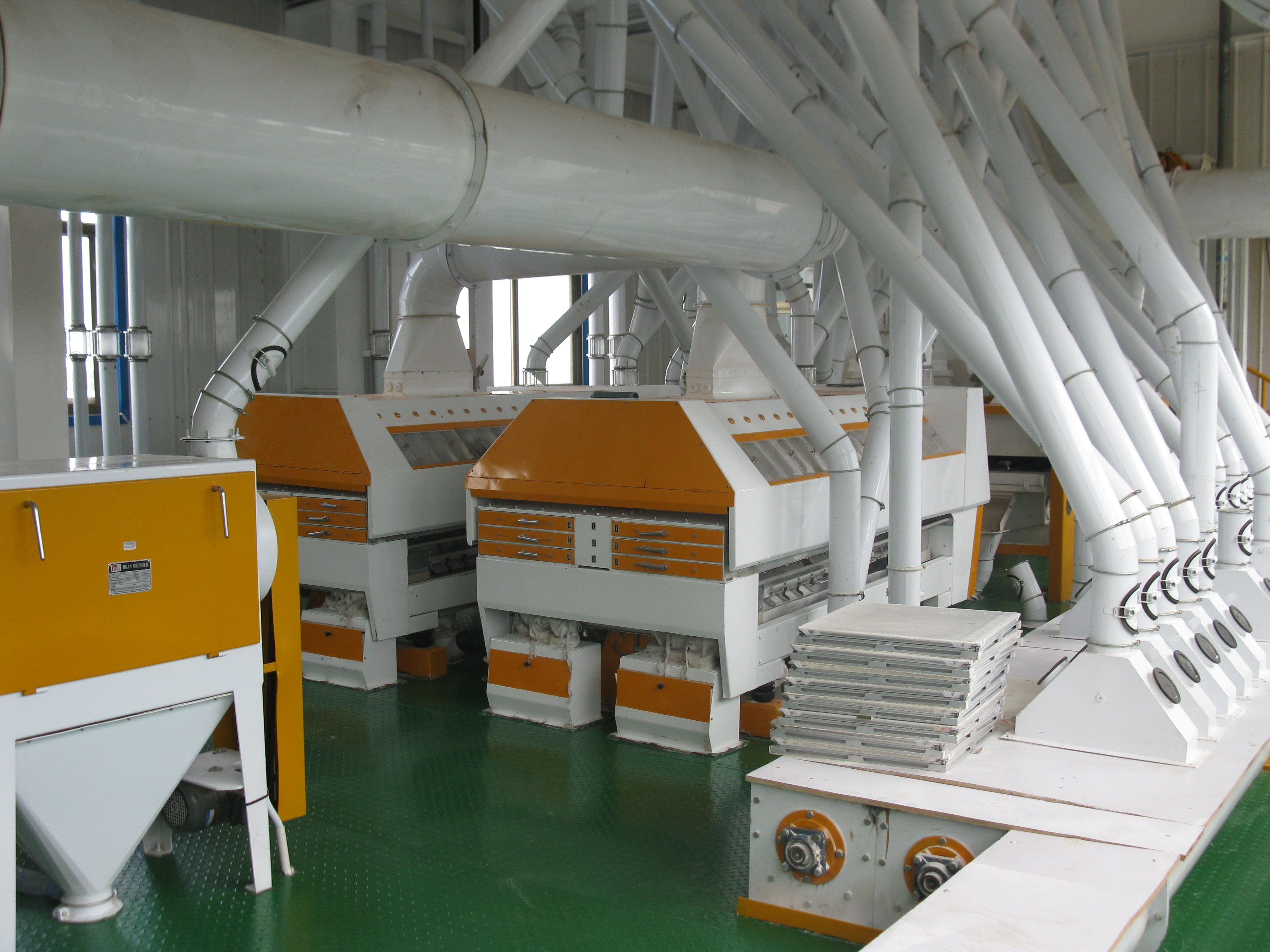
Hammers in crushers and breakers face a brutal combination of impact and sliding abrasion when processing hard rock or recycled concrete. The working faces develop deep gouges and edge rounding, which reduces crushing efficiency and forces more frequent replacement. Screens, by contrast, suffer localized wear around the apertures, where fine particles constantly cut into the wire cloth or plate under vibration, enlarging holes and compromising separation accuracy. Augers used for conveying sharp aggregates or drilling through weathered rock experience continuous shaving of the flight leading edges, thinning the metal until stress cracks appear. These distinct wear patterns demand tailored approaches rather than a one-size-fits-all hardening treatment.
Material selection and structural design play a decisive role in extending service life. Composite casting for hammers, with a tough steel core and a high-chromium white iron working layer, can absorb impact without fracturing while offering excellent abrasion resistance. Some designs embed tungsten carbide particles in the hammer face to create a macro-hardness gradient. Screen decks increasingly use polyurethane or rubber tension mats that cushion impact and resist fine-particle erosion, often lasting three to five times longer than plain steel wire, though open area and throughput must be carefully balanced. For augers, replaceable wear edge strips or hardfacing with high-chromium alloy are common, and adding flow-deflecting grooves on the flight surface can redirect material movement to reduce concentrated wear.
Operational adjustments and condition monitoring can amplify the benefits of wear-resistant materials. Controlling feed rate, moisture content, and rotor speed directly influences the rate of material removal. Tracking hammer weight loss, screen aperture enlargement, or auger flight thickness with ultrasonic or laser measurement tools allows for predictive replacement before failure. In a limestone crushing application, switching from manganese steel to a 15% chromium martensitic steel hammer and reducing top feed size extended replacement intervals by over 40 percent. Wet screening operations benefit from self-cleaning rubber panels that prevent blinding and localized wear. For augers conveying highly abrasive aggregates, tungsten carbide hardfacing on the flight leading edge combined with periodic 180-degree rotation evens out wear and extends service life.
Power Draw Under Full Load and Its Seasonal Cost
Running this card flat out pulls about 320W from the wall, and that number doesn't move much whether you're gaming or rendering. The PSU fan becomes the loudest thing in the room once the GPU settles into its boost clock, which tells you the board itself is dissipating a good chunk of heat.
You'll notice the cost most in summer. A 320W load for three hours a day adds roughly 28kWh to the monthly bill; add air conditioning to remove that heat and the real-world cost jumps by another 30–40%. In winter the same waste heat keeps the office warm, so the effective price feels lower even though the meter spins at the same rate.
If electricity in your area runs $0.15 per kWh, a daily four-hour heavy session lands near $5.70 per month, but in a hot climate with AC the true seasonal cost can exceed $8. For a card that already asks a premium at checkout, the summer power bill is the part nobody puts on the spec sheet.
Maintenance Access That Doesn't Require a Crane
Routine upkeep often grinds to a halt when equipment is tucked into tight rooftop corners or behind structural steel. The assumption that a crane must be scheduled for every filter swap or belt inspection drives up downtime and labor costs. Instead, many modern installations now incorporate built-in access paths, modular platforms, or swing-away panels that let a single technician reach critical components with basic hand tools. This shifts maintenance from a major mobilisation to a same-day task.
Designers are increasingly specifying walkways with integrated guardrails and non-slip treads that run parallel to ductwork and piping. These routes eliminate the need to rig heavy components over parapets or through narrow alleys. In retrofit projects, lightweight aluminum catwalks can be bolted to existing support frames without altering the roof structure, preserving waterproofing warranties. Even for rooftop units placed far from the building edge, a well-planned access lane means a technician can roll a service cart directly to the unit rather than waiting for a lift plan.
Beyond convenience, crane-free maintenance reduces the risk of weather delays and rigging accidents. Facility managers gain the flexibility to perform seasonal checks during brief lulls in operations, rather than waiting for a scheduled shutdown. When access is designed into the layout from day one, the cumulative savings in crane rental, traffic control, and standby labor often cover the cost of the platforms within the first few service cycles.
Control Logic That Adjusts to Moisture Without Babysitting
Most systems demand constant attention because their moisture rules are brittle—set one threshold and hope conditions never drift. This control logic behaves differently: it watches how quickly moisture levels climb or fall, compares that against recent patterns, and shifts its response in real time. If the material starts drying faster than expected, the logic backs off before overcorrection becomes a problem. If saturation creeps upward late in a cycle, it adjusts airflow or heat input without waiting for a manual tweak.
The real benefit shows up when you step away. Instead of chasing a single moisture reading, the logic treats moisture as a moving signal, filtering out brief spikes that don’t matter and responding only to meaningful trends. That means fewer false alarms, less downtime, and no need to babysit a dashboard. Operators can focus on loading and unloading while the system holds the target range on its own.
What makes it feel less like automation and more like judgment is the way it learns from each batch. Early in a run, it probes gently to understand how the material behaves, then narrows its corrections as confidence builds. By the time conditions shift unexpectedly, the logic already has a feel for what’s normal—so it reacts with the right amount of force rather than slamming from one extreme to the other.
Parts on Hand When a Bearing Fails at Midnight
There is nothing quite like the sinking feeling of a bearing seizing at midnight, with production halted and the next shift already on the way in. The difference between a 45-minute fix and a three-day wait often comes down to what is sitting on the shelf. Keeping a ready kit of the exact bearing size, a matching adapter sleeve, lock nut, and the right grease means the night crew can swap the failed unit without hunting for parts or waiting on a supplier.
Beyond the bearing itself, a small stock of seals, shaft keys, and a tube of anti-seize compound covers the unexpected extras that tend to disappear during a rushed repair. A bearing puller, a set of feeler gauges, and an induction heater or a clean oil bath round out the kit. With these on hand, even a junior technician can follow the manual and get a machine back online before the morning meeting.
A concrete example comes from a food processing plant where a conveyor drive bearing collapsed on a Saturday night. The maintenance locker held a spare spherical roller bearing, a pre-measured lock nut, and a fresh seal. The crew replaced the bearing, checked the alignment, and restarted the line in under an hour. That spare parts shelf paid for itself many times over by avoiding a full weekend of downtime.
FAQ
Match the machine's actual output to your raw material moisture, kernel size, and end-product specs rather than relying on the nameplate figure. Ask the supplier to run a trial with your own corn samples and record hourly yield, residue percentage, and temperature rise. Keep a 15-20% capacity buffer to absorb batch variations and future expansion without overloading the drive system.
Inspect whether the main frame is integrally welded with stress relief, and confirm that all corn-contact parts are 304 or 316 stainless steel with continuous, smooth welds. Request photos of the unpainted frame before finishing or visit the workshop and tap key load-bearing points. A dull, uniform sound usually indicates solid steel, while a thin ringing tone suggests sheet metal folded to look heavy-duty.
Do not stop at installed motor power. Ask for energy use per tonne of finished product, covering the main motor, blower, elevator, and cleaning system. Have the supplier provide measured current curves under different loads, especially during startup and momentary clogging. If possible, compare transformer capacity needs for two machines with the same rated output to spot hidden inefficiencies.
Pay attention to bearing seal type and lubrication intervals, how hard it is to replace screens or grinding discs, whether belt tensioning requires removing guards with the machine stopped, and if cleaning internal residues needs special tools. Ask for the average lifespan of wear parts and the labour hours for a single replacement, otherwise a low purchase price can hide expensive downtime later.
Never accept a generic 'one-size-fits-all' claim. Supply at least three batches of corn with different moisture or impurity levels, and require the trial report to state actual throughput, finished particle size, and temperature rise under your conditions. If the supplier refuses a trial or only offers theoretical data, remove that option from your shortlist.
Confirm whether the response time is written into the contract, if on-site installation and commissioning are included in the quoted price, whether remote diagnostics incur extra fees, and if there is a local spare parts warehouse. Request a price list for common wear items and clarify compensation terms if the machine stays down for more than 48 hours.
Floor load-bearing capacity and anchor bolt positions, dust collection duct routing and pressure loss, the connection height between inlet and outlet, and clearance for operator platforms and maintenance access are frequently overlooked. Obtain the equipment's dynamic and static load diagrams plus overall dimensions before finalising the foundation, so you avoid costly civil works changes after delivery.
Conclusion
A substantial corn processing machine rarely earns its keep on paper specifications alone. Before signing off, it's worth digging into whether the throughput figures actually hold up under the messy, uneven loads of a real harvest rather than a clean test batch. Wear is another quiet budget killer: hammers, screens, and augers that lack proper abrasion resistance will need replacing far sooner than expected, so ask about the alloys or hard-facing used, not just the part numbers. Full-load power draw doesn't just trip breakers—it shows up month after month as a seasonal operating cost that can erase any upfront savings. And if routine maintenance forces you to call in a crane just to swing open an access panel, that machine is already costing you downtime before it's even running.
Beyond the iron, control logic separates machines that adapt from machines that demand attention. A processor that adjusts automatically to swings in corn moisture without constant manual tuning keeps output consistent while freeing up someone to handle other jobs. Yet even the smartest control system won't matter at 2 a.m. when a bearing seizes and the nearest replacement is three days out. Check whether the dealer or your own shelf holds the common failure parts—bearings, belts, shear pins—because a midnight breakdown is a test of preparation, not just build quality. These factors, taken together, show whether a machine is genuinely substantial or merely heavy.
Contact Us
Contact Person: Jiakuo Wu
Email: [email protected]
Tel/WhatsApp: +86-13011566087
Website: https://www.pinglemachine.com