

Shoe Eyelets Supplier Criteria Every Footwear Brand Should Know
2026-09-11
Ask any production manager what causes late-season warranty claims, and eyelets rarely make the list—until a batch starts flaking. The real difference between suppliers isn’t the price per thousand; it’s how consistently they meet the criteria you didn’t know to check. At Kingming, those criteria have been translated into a hard-won checklist that goes beyond color and size. If you're still approving eyelets by photos alone, this guide will change how you qualify your next supplier.
Eyelet Alloys That Hold Up Beyond the Sample Stage
Prototype eyelets have a way of flattering their materials. A brass eyelet that looks perfect on a hand-assembled sample can start to gall or deform once it meets a pneumatic setting tool on the line. The alloys that actually survive this transition tend to share a few unglamorous traits: predictable work-hardening, tight grain structure, and enough ductility to take a crimp without micro-cracking. C260 cartridge brass and 304 stainless are common choices, but the real difference often comes down to how the strip was rolled and annealed, not just the alloy number on the spec sheet.
Beyond the sample bench, corrosion and repeated stress reveal weaknesses that never show up in a one-off. Nickel silver and marine-grade stainless hold their finish and resist crevice attack around the barrel, especially in apparel that gets washed or exposed to sweat. Some manufacturers lean on 316L for salt-heavy environments, while others stick with a zinc-free aluminum alloy when weight matters more than absolute strength. The point is to test the exact temper you will run in production, because a softer temper that sets beautifully in the lab can become a reject bin problem after ten thousand cycles.
The real test is not whether an eyelet alloy works once, but whether it behaves the same at 3 p.m. on a Friday as it did during the pilot run. Alloys with inconsistent springback or a narrow forming window tend to drift as tooling warms up, and that is where sample-stage success falls apart. Choosing a material with a forgiving process window and stable mechanical properties from lot to lot is often more important than chasing a marginal gain in tensile strength. That is what separates an eyelet that holds up in a presentation from one that still holds up after a year on the shelf.
Custom Eyelet Molds Without the 12-Week Wait
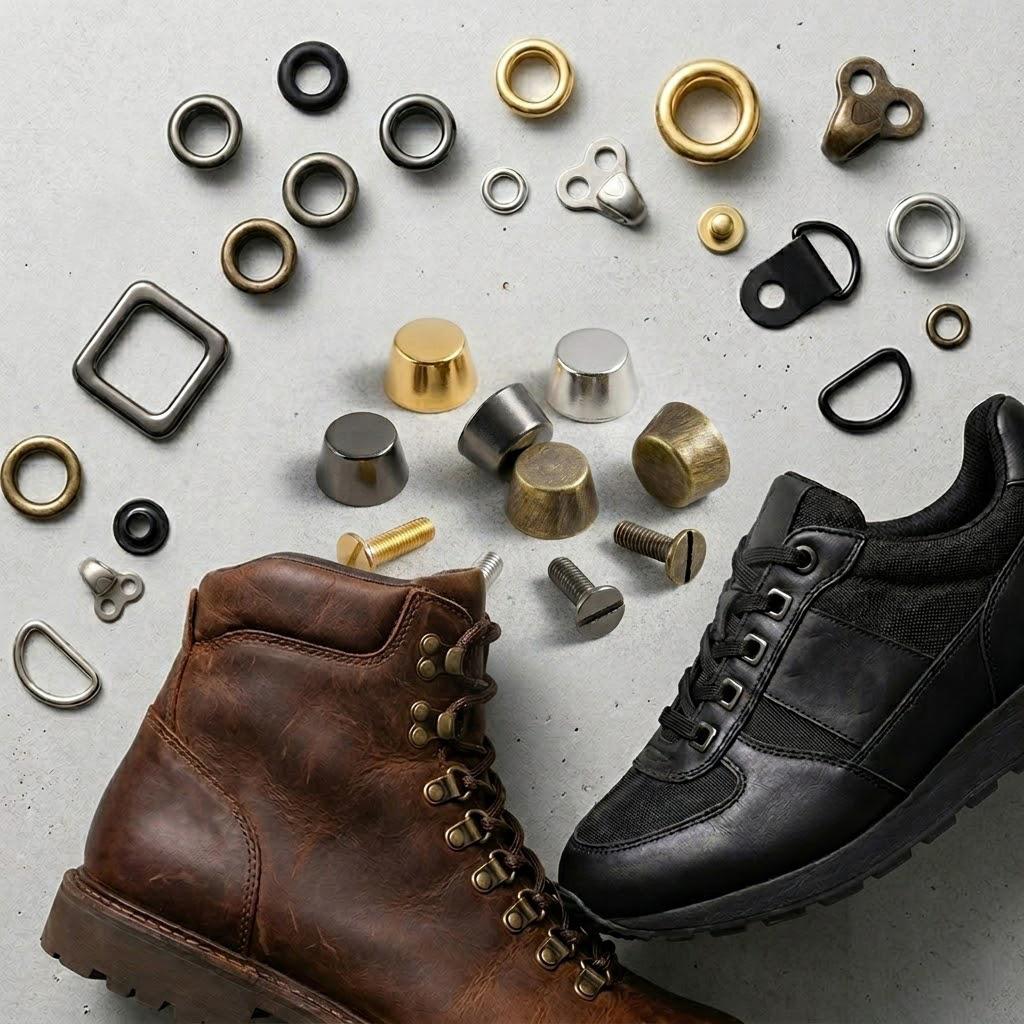
Waiting three months for a custom eyelet mold used to be the industry norm, and it slowed everything down. Our approach scraps that timeline completely. By keeping a dedicated in-house tooling team and using high-speed CNC machining, we turn around fully custom eyelet profiles in days, not quarters. You get the exact geometry your application needs—whether it's an unusual flange shape, a non-standard barrel length, or a specific material flow requirement—without watching your production schedule stall.
The real difference is in how we handle the design-to-steel process. Instead of routing your specs through layers of quoting and outsourcing, we take your CAD file or hand sketch and move straight into mold simulation and cutting. That means fewer back-and-forth emails, no surprise lead-time extensions, and a mold that fits your press the first time. If a revision is needed, we can recut the cavity within a week rather than restarting the clock.
For short-run projects, prototype builds, or rush repairs, this speed changes the math. You don't have to order extra stock of generic eyelets just to cover the wait for a custom mold. And you don't have to compromise on performance. Whether you're working with thin-gauge metals, coated wires, or high-tension fabrics, a mold made for your exact eyelet geometry will produce cleaner set and better holding strength. We simply removed the wait, not the craftsmanship.
Low Minimums That Don't Signal Low Priority
Many buyers assume that a low minimum order means their project gets pushed to the back of the line, handled with less care or rushed through production. That assumption misses how we actually operate. A low minimum is not a signal of low priority; it's an invitation to start small without penalty. Whether your order is 50 units or 5,000, it moves through the same scheduling system, the same quality checks, and the same packing standards. In fact, some of our longest-standing clients began with tiny trial runs that later grew into full-scale production partnerships.
The logic behind accepting low minimums isn't to fill leftover capacity with "good enough" work. It's about giving you a low-risk way to test a new market, a new design, or a new audience before committing to volume. We assign the same engineering support, material sourcing, and communication effort to every order, because a small batch can be the first step in a much bigger story. You don't need to impress us with large quantities to earn our attention—just bring a clear idea and a willingness to begin.
When Eyelet Color Shifts by a Single Pantone Digit
When a factory swaps one Pantone reference for its neighbor on the fan deck, the shift can be invisible on a swatch but loud on a finished eyelet. A digit like 19-4024 versus 19-4025 might separate a cool graphite from a warmer petrol. Because eyelets are small, curved, and often catch direct light, that half-step difference gets stretched across a metallic or coated surface, making the mismatch obvious once laces pull through.
This kind of drift usually starts in the supply chain. A vendor runs low on a base pigment, adjusts the batch, and quietly updates the internal code by one digit without flagging the change. Design teams often catch it only at final assembly, when two production runs meet on the same rack. Retinning or re-dyeing isn’t practical at that point, so the lot gets shipped with visible variation.
To keep a single digit from becoming a costly QC issue, request physical eyelet samples from each new Pantone lot before cutting. Store a master set and compare under the same light box used for fabric approvals. Small as they are, eyelets rarely forgive color drift.
Supplier Audits You Shouldn't Skip on Paper
A supplier audit that only reviews documents and policies rarely captures what actually happens on the loading dock or inside the production line. You can have a beautifully organized quality manual and still ship defective batches. When you skip the physical walkthrough, you miss things like uncalibrated gauges, ad hoc rework stations, or raw materials stored in the wrong conditions—none of which show up in a binder.
Another area that gets glossed over on paper is the supplier’s own supply chain. A certificate of analysis or a signed compliance letter doesn’t tell you if their sub-tier vendors changed last month or if they started buying from a cheaper source with no traceability. Asking for live purchase records and matching them to the approved vendor list is far more revealing than accepting a clean audit checklist.
Pay attention to how the supplier manages change. Many audits focus on the current state, but the real risk shows up when a process, ingredient, or piece of equipment changes after the audit ends. If you don’t verify the change-control log against actual production records—and talk to the people doing the work—you might as well skip the audit altogether. That’s the part that keeps you from being surprised six months later.
Shipping Schedules That Survive Port Congestion
Port congestion doesn't have to wreck schedules if planners stop treating transit times as fixed numbers. The most resilient schedules build in slack at the exact points where queues form: terminal gates, anchorage waiting zones, and customs clearance. Instead of adding a generic 10% buffer across the board, operations teams now track live berth availability and truck turn times, then shift cutoff windows by port. A schedule that assumes a vessel will wait 28 hours outside Los Angeles but only 6 hours in Rotterdam is far more likely to hold.
Another quiet shift is the use of dual-port contingency plans. Rather than locking a shipment to one discharge hub, forwarders pre-book alternate inland routes from neighboring ports and share that plan with drayage partners before sailing. When congestion spikes, cargo can be re-routed to a secondary terminal without renegotiating rates or scrambling for chassis. This pre-arranged flexibility works because it removes the panic-driven decisions that usually blow up timelines.
Some carriers now publish congestion-adjusted arrival windows instead of estimated times of arrival. These windows show a range—often 48 to 72 hours wide—based on historical anchorage delays and current vessel queues. Shippers who plan warehouse labor and truck appointments around the window, not the single timestamp, absorb disruptions without missing customer promises. It’s a small mental shift, but it keeps schedules honest when the port is anything but.
FAQ
The material choice directly affects durability and appearance. Brass is a solid default because it resists corrosion well and holds plating nicely, but if you need extra strength or are making outdoor footwear, stainless steel is worth the higher cost. Aluminum can work for lightweight designs, though it dents more easily. Always ask the supplier for the exact alloy composition, not just a generic material name, because recycled or low-grade alloys can cause premature tarnishing or cracking.
Request salt spray test results rather than relying on a supplier's verbal assurance. A good benchmark is at least 24 hours of neutral salt spray with no visible rust or white corrosion, but for marine or high-sweat environments you might want 48 to 72 hours. Also ask if the supplier runs this test in-house or through a third party, since independent lab reports carry more weight. If possible, get samples and run your own quick test by leaving them in a humid bathroom for a week.
Eyelets have to fit precisely with the hole punch, the washer, and the setting machine. An inner diameter that varies by even 0.1 mm can make lacing too tight or too loose, and outer diameter shifts can cause the eyelet to sit unevenly on the fabric. Reliable suppliers maintain tolerances around ±0.05 mm and use automated inspection systems. Ask for a dimensional inspection report with each batch, not just a pre-production sample, because drift can happen over long runs.
Look beyond basic shiny nickel. A capable supplier should provide matte finishes, antique brass, black oxide, gunmetal, and PVD coatings if you want a more premium look. The finish shouldn't just be cosmetic; it has to bond well to the base metal and resist abrasion from laces. Ask about adhesion tests like the cross-cut tape test and whether the finish contains any restricted substances. Also check if they can do two-tone effects or laser engraving for branding, as that often separates specialized suppliers from general hardware makers.
Large factories often quote MOQs of 50,000 pieces or more per size and finish, which can tie up cash and warehouse space for a small brand. Some suppliers, especially those serving sample rooms or custom shoe makers, will accept 1,000 to 5,000 pieces but at a higher unit price. The key is not to just chase the lowest MOQ; you need to balance inventory risk against per-unit cost and the supplier's willingness to hold stock for repeat orders. Ask if they offer stock-and-release programs where you pay for a larger batch but they warehouse it and ship in smaller monthly quantities.
At minimum, ask for material safety data sheets and a RoHS or REACH compliance statement, especially if you sell in Europe. For physical performance, look for tensile strength test data showing the eyelet can withstand the pull of tightened laces without deforming. If your brand has its own quality standards, ask the supplier to test against your specifications and provide a detailed report with photos and measurement data. A supplier that only sends a certificate of conformance without backing data is often hiding weak process control.
It can make or break a seasonal collection. Many brands want eyelets that match specific zipper pulls, buckles, or logo hardware, and a mismatch becomes obvious under store lighting. Ask the supplier for their color matching process, whether they use Pantone or RAL references, and request a physical color swatch before approving bulk production. A good supplier will keep a digital and physical archive of your approved shades and ensure batch-to-batch color difference is below Delta E 1.0. If they cannot guarantee that consistency, you may end up with returns or costly reworks.
Eyelets are small components, but a delayed shipment can stop an entire shoe line. Standard lead times are usually 15 to 30 days after order confirmation, depending on finish complexity. However, you should always ask about their capacity during peak seasons like back-to-school or holiday production, because many suppliers overpromise and then fall behind. The best suppliers will share a production schedule and send progress updates without you having to chase them. Also check if they can handle a rapid reorder of 5,000 pieces in 7 days for a last-minute style change, as that flexibility is worth more than a slightly lower price.
Conclusion
When vetting a shoe eyelet supplier, the difference between a reliable partner and a costly mistake often shows up in details you won't see on a first sample. Eyelet alloys need to survive repeated lacing tension, humidity, and abrasion long after the prototype stage—not just look shiny in a showroom. A supplier who understands this will offer alloys with proven tensile and corrosion profiles, not vague metal claims. Equally important is the ability to produce custom eyelet molds without dragging your development calendar into a 12-week black hole. Agile suppliers use in-house tooling or modular mold systems, allowing you to test a distinctive eyelet shape in a fraction of the usual lead time. And when minimum order quantities are low, that shouldn't translate to low attention. The best partners treat small runs as a chance to prove consistency, not as an excuse to deprioritize your order.
Color is where many eyelet suppliers stumble quietly. A single Pantone digit off can shift your entire upper's aesthetic, especially under different lighting. Demand a supplier that verifies color with physical chips, digital spectrophotometers, and clear tolerance limits—not just a promise to get close. Beyond the bench, you should audit the supplier's actual facility and quality systems, not just the polished paperwork they send. Check how they handle plating thickness, barrel smoothness, and post-finish inspection. Finally, shipping schedules need to survive real-world chaos like port congestion. Ask how they route, buffer inventory, and communicate delays before they hit your production line. A supplier that answers these questions plainly is one you can build a long-term footwear program around.
Contact Us
Contact Person: Jamie Zeng
Email: [email protected]
Tel/WhatsApp: +86 13728219269
Website: https://www.kmhardware.com