

Professional MNO Core Network Solution for Modern Mobile Operators
2026-09-16
Running a mobile network today isn’t just about coverage maps and spectrum auctions. Behind every smooth call, instant message, or streaming session is a core network that either makes or breaks the user experience. That’s where IPLOOK comes in—offering a professional MNO core network solution built for the realities modern operators face. But what does 'professional' actually mean when your subscribers expect carrier-grade reliability, 5G readiness, and cost efficiency all at once? In this post, we’ll unpack the key elements that set a truly modern core apart, and why more operators are rethinking their infrastructure from the inside out.
A Core That Scales With Subscriber Growth, Not Against It
Most platforms buckle when the subscriber count climbs. Queues slow down, dashboards freeze, and the experience turns sluggish right when you need it most. That's not how we built this core. The backend was designed from day one to spread across nodes without a hitch, so a spike from ten thousand to ten million doesn't trigger a cascade of errors or force a manual migration.
Instead of treating growth as a problem to be managed, the system treats it as a signal to allocate more resources automatically. Read replicas spin up on demand, write paths split by shard keys that stay balanced even when one segment of your audience spikes. The result is a platform that feels identical at launch and at scale—same latency, same reliability, no hidden cutoffs.
This isn't just about surviving big numbers. It's about removing the fear of success. Teams no longer need to pre-provision for hypothetical peaks or hold back on campaigns because the infrastructure might not hold. The core just keeps up, quietly and continuously, letting your subscriber base become a data point rather than a liability.
Cloud-Native by Default, Not as a Marketing Slide
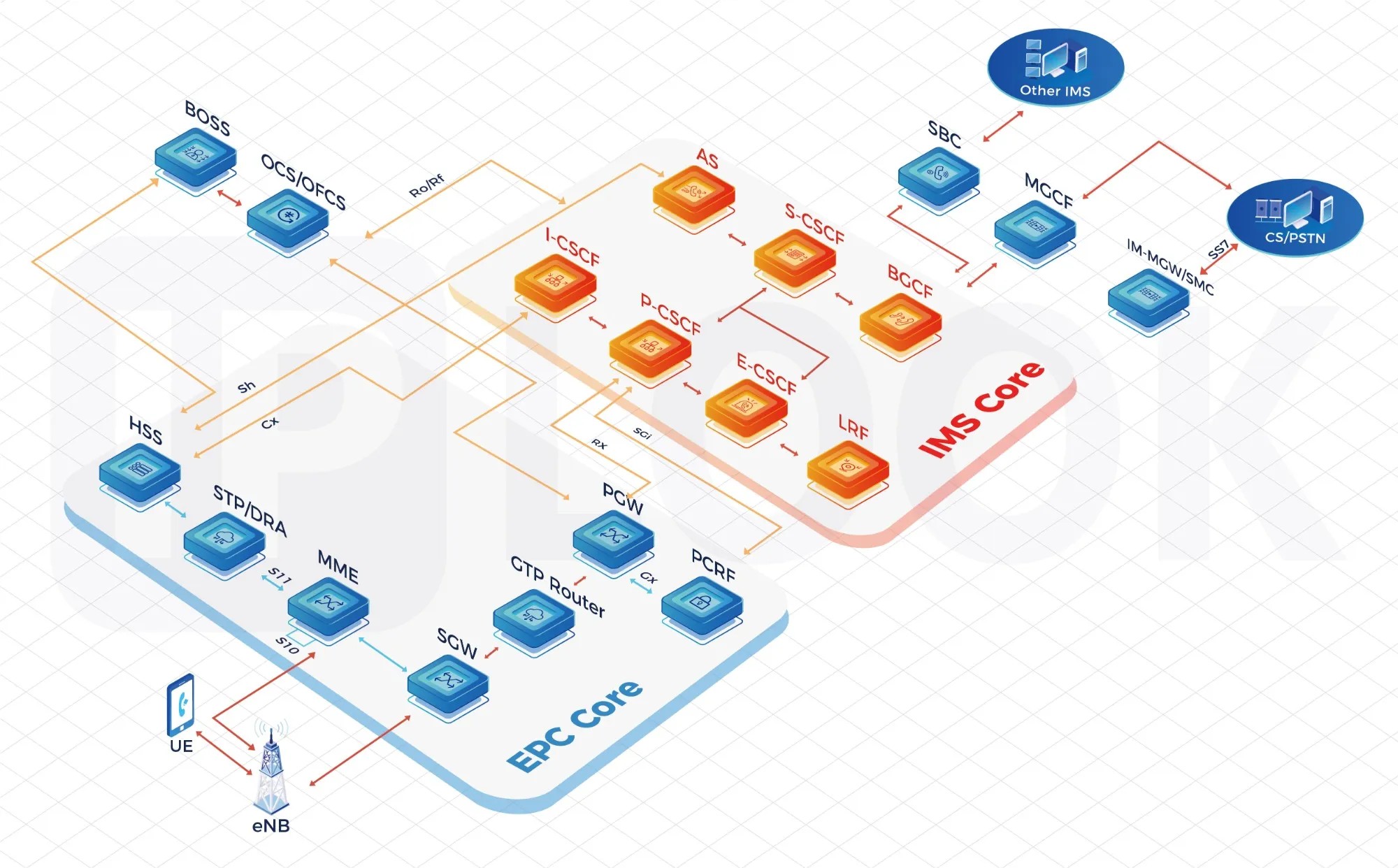
A lot of teams put "cloud-native" on a slide and call it a day. They lift a monolith into EC2, sprinkle in a managed database, and claim transformation. But being cloud-native by default means the architecture itself assumes failure, scales out without manual tickets, and treats infrastructure as disposable. It's not a sticker you earn after a migration project—it's the way the system behaves when nobody is watching.
That default posture shows up in the boring details: services that crash and restart without waking an engineer, queues that absorb load spikes instead of dropping requests, configuration that lives in version control rather than someone's head. When a new service is spun up, it inherits observability, policy, and deployment patterns automatically—not because a wiki says so, but because the platform enforces it. This is the opposite of a marketing slide; it's the result of deliberate, often tedious engineering choices made long before launch.
The teams that actually operate this way rarely talk about being cloud-native. They just ship changes on a Friday afternoon without fear, because their defaults handle the unpredictable. If your cloud-native story starts and ends with a diagram in a pitch deck, you're probably still running a data center with extra steps.
Slicing That Turns a Single Core Into Multiple Business Models
真正的切片不是把功能列表切碎,而是识别同一个核心能力在不同决策链中的价值权重。比如一个数据处理核心,对初创公司可能是节省人力的SaaS订阅,对大企业则是私有化部署加合规审计,对集成商则是按调用量计费的嵌入式模块。三种切片共享同一底层,但客户感知、销售周期和现金流结构完全不同。
这种做法的难点在于保持核心足够稳定,同时允许每个商业模式有自己的边界条件。你需要在工程上把核心抽象成可配置的内核,在商业上为每个切片设计独立的定价锚点和退出机制。否则切片会互相侵蚀——高利润的定制服务会拖垮标准化产品,或者低价API会蚕食高价值咨询。
一个实用的起点是问:同一个核心资产,在客户组织内部的哪个层级、以何种频率被消耗?消耗方式不同,切片就应该不同。按席位、按处理量、按结果交付、按风险共担,这些不是计费方式的差异,而是完全不同的商业逻辑。把单一核心切片成多个业务模型,本质上是把一次技术投入转化为多个独立生存的生意。
Security Architecture That Trusts No One, Including Your Own Network
The traditional perimeter model treats the internal network as a safe zone, but that assumption crumbles the moment a single device is compromised. This architecture removes implicit trust for every connection, whether it originates from a branch office, a cloud workload, or a server rack in the same data center. Each request must pass authentication and authorization checks before touching any resource, and the source IP alone never counts as proof of legitimacy.
Instead of broad VLANs and static firewall rules, the design relies on microsegmentation and identity-aware proxies. A service account trying to reach a database from an unexpected subnet might be challenged, denied, or given just enough access to complete one specific query. Credentials are short-lived, sessions are continuously evaluated, and unusual behavior can trigger step-up authentication or automatic revocation.
This approach also limits lateral movement. If an attacker lands on a user workstation, the next hop to a domain controller or backup server is no longer a given. Every path must be explicitly allowed, and assets that cannot support modern authentication can be placed behind a gateway that enforces the same zero-trust policy on their behalf. The internal network, in effect, becomes just another untrusted transit zone.
Automation That Lets Your NOC Focus on Exceptions, Not Routine
Most network operations centers still burn hours on the same repetitive tasks: restarting services, clearing false positives, chasing down alerts that never needed a human. Automation shifts that workload off the team's plate, leaving only the genuinely ambiguous or high-impact cases for engineers to examine.
Instead of watching dashboards for routine fluctuations, staff can spend their attention on incidents where context matters—partial outages, unusual traffic patterns, or degraded performance that doesn't fit a script. The system handles the predictable stuff and escalates only what requires judgment.
That change in focus has practical effects. Response times improve because engineers aren't buried in noise. Burnout drops when the workday consists of solving real problems rather than clicking through routine tickets. And the NOC starts acting as a decision layer, not a helpdesk for machines.
Interoperability That Keeps Your Vendor Options Open
Lock-in doesn't announce itself—it accumulates through small, seemingly harmless choices like a custom field mapping that only works one way. We design our platform around open, documented interfaces so your team can extend, replace, or connect components without waiting on a vendor's permission.
The real advantage shows up when you need to swap a tool or onboard a new partner. Because our data model follows community standards rather than a proprietary schema, exporting to another system isn't a multi-month project. You can keep the parts that work and change the parts that don't, without rebuilding from scratch.
We also avoid baking in assumptions about which services you'll use next year. APIs stay versioned and stable, and we publish clear migration guides whenever a dependency changes. That means your architecture remains a set of choices you control, not a path you're locked into.
FAQ
It provides a converged packet core with separate control and user plane functions, allowing legacy 2G/3G/4G subscribers and new 5G devices to be served from the same platform. Operators can introduce 5G NSA and SA capabilities gradually without replacing existing nodes, which keeps migration costs predictable.
The architecture includes a cloud-native signaling controller that scales independently and applies intelligent throttling and prioritization per APN or slice. This prevents spikes from low-value IoT traffic from degrading voice and high-priority data sessions, while still maintaining full standards compliance.
It bundles automated network functions, real-time KPI dashboards, and policy-driven configuration templates. Routine tasks like subscriber provisioning, capacity expansion, and fault isolation are reduced from hours to minutes, so engineers can focus on tuning rather than firefighting.
Network slicing is built in from day one. Each slice carries its own QoS profile, security policy, and resource guarantees, so an operator can offer dedicated slices for utilities, manufacturing, or emergency services without deploying a separate core for each use case.
The design uses stateless processing, geographic redundancy, and automated failover across data centers. User sessions survive control-plane restarts, and the system rebalances traffic without manual intervention, which keeps service continuity above carrier-grade thresholds.
It includes a standards-based mediation layer that normalizes intercept and retention feeds from all network functions into a single interface. Operators can apply jurisdiction-specific rules through configuration rather than custom development, reducing legal and operational risk.
Yes. The IMS integration supports VoNR, EPS fallback, and RAT fallback with seamless session transfer. The core coordinates QoS and policy between 4G and 5G radios so calls don't drop when users move between coverage layers.
It was designed around multi-vendor interop and open APIs from the start, not retrofitted. Operators keep the freedom to swap radio vendors, add third-party network functions, or extend automation without being locked into a single roadmap. That changes the total cost of ownership compared with monolithic cores.
Conclusion
Modern mobile operators need a core that grows with them, not against them. This solution is engineered around subscriber-driven scaling, where capacity expands elastically without forklift upgrades. Cloud-native principles are baked into the architecture from day one, not bolted on as a slideware promise. Every component runs as microservices, state is externalized, and lifecycle management follows Kubernetes-native patterns. The result is a core that behaves like a distributed system, not a legacy monolith in a virtual machine costume.
Network slicing becomes a revenue engine, turning one physical core into multiple isolated logical networks tailored for enterprises, IoT, or consumer MVNOs. Security is built on zero-trust principles: no implicit trust between network functions, strict mutual TLS everywhere, and continuous policy enforcement. Automation handles the routine, so NOC teams only touch exceptions. Open, standards-based interfaces keep vendor lock-in off the table, letting operators mix best-of-breed components without rip-and-replace pain.
Contact Us
Contact Person: Shimmy
Email: [email protected]
Tel/WhatsApp: 85253392231
Website: https://www.iplook.com