

Power Conversion System (PCS) Export: A Complete Guide to International Market Opportunities
2026-11-02
The global energy transition is no longer a distant vision—it’s a live export battleground, and power conversion systems (PCS) are the silent engine of this shift. For manufacturers and traders eyeing cross-border growth, knowing where demand is spiking, which standards rule, and how to position your offer can make the difference between spot orders and long-term market control. This guide cuts through the noise to map real international opportunities for PCS export. At UNC, we’ve tracked these corridors closely, and what we’ve learned may challenge a few assumptions about where your next buyer is coming from.
Where Grid-Scale Storage Buildouts Are Pulling PCS Orders Across Borders
Utility-scale storage pipelines in the US have expanded faster than domestic power conversion system manufacturing can match. Developers facing tight interconnection deadlines are quietly sourcing 2-4 MW PCS skids from established Asian suppliers, even when those units require additional UL listing work. That mismatch has turned places like Texas and Arizona into unexpected re-export hubs for containerized PCS arriving from Shenzhen or Busan before final integration.
Across Europe, negative wholesale prices and rising balancing market revenues are pulling larger BESS projects into revenue-stacking models, and those projects need PCS with very fast ramp rates and strict grid-code compliance. A portion of the order flow has shifted toward Chinese OEMs that already carry TÜV and EN 50549 certifications, while some EU-based integrators are importing power stages and doing final assembly in Poland or Spain to satisfy local content expectations. The result is a cross-border supply chain that doesn't always follow the obvious factory-to-site route.
In Australia and parts of Southeast Asia, frequency control and ancillary services are driving shorter-duration storage builds, but local PCS capacity is almost nonexistent. EPCs there frequently bundle PCS orders with battery modules from the same supplier to reduce interface risk, which further concentrates orders among a handful of Asian manufacturers. Tariffs and non-tariff barriers have not stopped the flow; they've just rerouted it through third-party assembly or regional service hubs.
Clearing the Technical Hurdles: Grid Codes and Certifications in Europe and North America
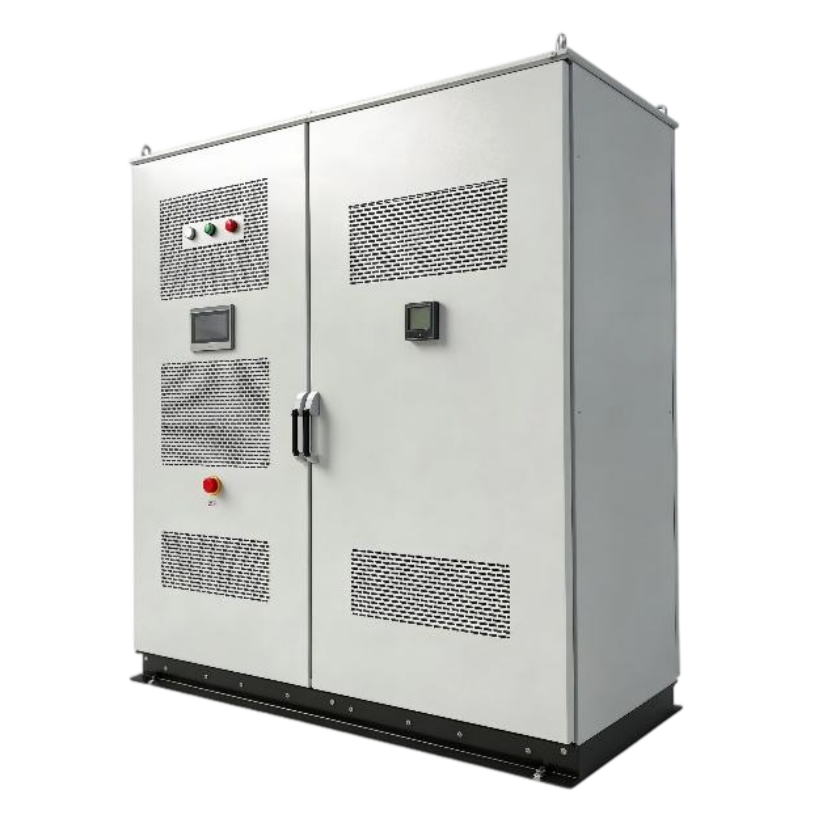
Europe’s grid codes rarely speak with one voice, even under the broader IEC umbrella. A device tuned for Germany’s VDE-AR-N 4105 requirements for reactive power control may still trip over Italy’s CEI 0-21 frequency disturbance curves, forcing manufacturers to maintain multiple parameter sets and repeat low-voltage ride-through or over-frequency derating tests in several countries. The real burden is less about passing a single test and more about designing hardware with enough headroom to satisfy divergent national interpretations of the same basic phenomena.
North America centers on IEEE 1547, but the 2018 revision has not created uniformity by itself. California’s Rule 21 and Hawaii’s legacy interconnection rules often layer additional state or utility-specific test conditions on top of UL 1741 SB certification, so a certificate from a nationally recognized lab does not automatically clear every local interconnection queue. Equipment vendors end up navigating a matrix of standard, state commission, and individual utility requirements, where communication interfaces and voltage/frequency ride-through settings remain common sticking points.
Clearing these hurdles rarely comes from a piece of paper. Treating grid behavior as a design input from the start—making low-voltage ride-through timing, reactive power priority, and frequency-power response curves field-configurable—removes much of the pain later. Working with test labs that understand multiple regional codes can also turn a single test campaign into several market-ready reports, while early involvement in standards working groups often gives manufacturers a clearer view of where European and North American rules are heading before those rules become binding.
Rethinking Supply Chains for Faster Delivery and Lower Tariff Exposure
Speed to market and tariff costs are two forces pushing companies to rethink where and how they manufacture. Traditional supply chains optimized only for lowest unit cost now face delays and unexpected duties that eat into margins. By shifting production closer to end customers or diversifying across multiple regions, businesses can shorten lead times and reduce exposure to sudden trade policy changes. This doesn't always mean abandoning low-cost countries entirely; instead, it involves balancing cost with flexibility and responsiveness.
A practical approach starts with mapping the full value stream to pinpoint where delays and tariff liabilities actually occur. Sometimes a small adjustment, like moving final assembly to a neighboring country or using bonded warehouses, cuts both delivery time and duty burden without a full factory relocation. Companies that treat supply chain design as a dynamic, ongoing exercise rather than a one-time decision stay better positioned when tariffs shift or consumer expectations for fast shipping rise.
Collaboration with logistics partners and local suppliers often reveals options that pure cost models miss. Nearshoring to Mexico or Eastern Europe, for example, can lower tariff exposure under specific trade agreements while offering ground transport that is both faster and more reliable than long ocean routes. The goal is not speed at any price, but a resilient network where faster delivery and manageable tariff costs reinforce each other.
Winning Contracts Beyond Price: Efficiency, Response Time, and Service Networks
Efficiency often gets reduced to cost per unit, but the real advantage is in eliminating hidden delays and administrative friction. A supplier that can cut onboarding time from six weeks to ten days, or reduce invoice discrepancies by integrating workflows directly with the client's procurement system, changes the total cost picture without touching the headline number. Buyers notice when one vendor's quote arrives with a self-service portal and pre-approved compliance documents, because that means fewer internal meetings and less legal back-and-forth. This kind of operational depth makes a slightly higher price defensible.
Response time is not about answering emails quickly. It is about what happens when a production line stalls or a regulatory deadline shifts. A vendor with a documented four-hour escalation path and named local contacts can keep a project on schedule, while a lower-priced competitor might take two days to acknowledge the issue. Decision-makers remember the supplier who had a replacement part moving before the morning meeting ended. That reliability converts into a risk premium that no spreadsheet line captures.
Service networks matter because contracts rarely stay inside one geography. A bidder with technicians in three regional hubs and a pooled inventory system can cover a nationwide rollout without subcontracting to unknown firms. That reach means one accountable partner instead of five. When a client compares two offers, the vendor with local spare parts and field engineers in the same time zone is effectively selling continuity, not just service. The network becomes a quiet argument for paying a bit more.
Off-Grid and Microgrid Niches Where PCS Exporters Can Lead
Many power conversion system (PCS) makers still treat off-grid and microgrid projects as afterthoughts, but that's where the real differentiation hides. Unlike utility-scale deployments that demand identical hardware, these niches reward flexibility—wide DC input ranges, black-start capability, and the ability to pair with diesel gensets or aging lead-acid banks. Exporters who nail those details can sidestep the brutal price war in mainstream storage and carve out defensible territory.
Look at island electrification, for instance. A remote community in the Philippines or Indonesia doesn't need a 40-foot container full of standardized inverters; it needs rugged, humidity-tolerant units that survive salt spray and voltage swings from weak grids. Similarly, mining camps in West Africa running on hybrid solar-diesel systems care less about peak efficiency than about fault ride-through and serviceability without specialized technicians. PCS exporters that build for these realities—think conformal coating, simple diagnostics, and spare part kits included—quietly win repeat orders that big-name competitors ignore.
The key to leading here isn't just hardware; it's the support wrapper. Successful exporters often partner with local integrators who handle installation and maintenance, while the PCS itself comes pre-configured for common microgrid topologies. Offering modular paralleling up to a few hundred kilowatts without complex commissioning software makes a huge difference. That approach turns a commodity power stage into a tailored solution—and that's exactly how you build a moat in markets where word-of-mouth from one village project can open three more.
Structuring Export Partnerships That Survive Policy Shifts and Currency Swings
In export partnerships, the first line of defense against volatility is a contract that bends rather than breaks. Too many agreements freeze terms at signing, assuming stable tariffs and predictable exchange rates. Instead, build in review triggers tied to material changes—say, a 5% currency move or a new import duty—so both sides renegotiate before resentment builds. This keeps the relationship functional even when the rules of the game shift overnight.
Currency exposure rarely disappears, but it can be managed through a mix of financial hedges and operational offsets. Forward contracts lock in rates for committed shipments, while invoicing in a basket of currencies spreads the risk across multiple corridors. On the ground, consider balancing costs and revenues in the same currency by sourcing components locally within the export market. That way, a depreciating local currency lowers your input costs even as it trims the value of incoming payments.
Policy shifts demand more than reactive lobbying. The strongest partnerships maintain a shared early-warning system—regular briefings from trade lawyers, customs brokers, and in-country staff who track regulatory drafts before they become law. When a new tariff or licensing requirement appears, having pre-agreed contingency clauses means you can pivot sourcing or shift final assembly without tearing up the contract. It’s not about predicting every political turn; it’s about making the partnership resilient enough to absorb them without collapsing.
FAQ
A PCS sits between a DC source—usually a battery bank or solar array—and the AC grid or load. In export contexts it manages bidirectional energy flow, handles grid compliance, and often provides reactive power support. Buyers in different regions look for different voltage levels, frequency handling, and islanding capabilities, so understanding those local requirements shapes which models move well.
Demand is uneven but intense in a few pockets. The United States, Germany, Australia, and the UK have robust storage incentives and aging grid infrastructure that reward flexible power electronics. Southeast Asia and parts of Africa are also emerging, driven less by subsidies and more by unreliable grids and off-grid industrial needs. The fastest growth often comes from regions coupling large solar buildouts with storage mandates.
It depends on the destination. Europe leans on CE marking with EN 50549 or VDE-AR-N 4105 for grid connection. North America requires UL 1741 and often IEEE 1547 compliance, plus state-level utility rules. Australia has AS/NZS 4777.2. Some buyers will also ask for IEC 62477-1 safety certification. Skipping local grid codes is a common reason shipments get stuck in customs or fail site acceptance.
Look beyond headline demand. Check interconnection queues, storage deployment targets, import duties, local content rules, and whether competitors have already locked in distribution partners. A useful shortcut is to follow the inverter supply chain—where solar inverter brands are adding storage-ready PCS lines, there is usually enough installer familiarity to shorten the sales cycle.
Tariffs are obvious, but logistics, warehousing, local testing, and warranty service often eat margins. Some markets require in-country repair hubs or spare parts stock. Voltage and frequency adaptations can also add engineering time. Then there are currency and payment risks on multi-month projects. Many first-time exporters underprice because they only compare hardware bill-of-materials cost.
Trade shows still work, but niche energy storage conferences and utility procurement events produce better leads than broad electronics fairs. Working with established EPC firms or battery integrators can get your PCS specified early in projects. Online B2B platforms are useful for smaller distributors, though you have to filter heavily. Local sales agents with grid-code experience often open doors faster than a direct export push.
In mature markets like Germany or California, buyers pay for certified performance, software features, and long-term service—commodity pricing fails. In emerging markets, the upfront price matters more, but there is often room for flexible financing or pay-as-you-save models. Avoid anchoring to your domestic price; instead map what local alternatives cost and decide whether to position as premium, mid-tier, or value.
Expect higher DC voltages, tighter grid-forming requirements, and more integrated systems where PCS functions are embedded into battery containers. Markets with weak grids will demand black start and microgrid capabilities. Trade policies may push regional manufacturing, so export strategies may shift toward licensing technology or shipping components for local assembly rather than finished units.
Conclusion
Grid-scale storage buildouts are no longer a domestic story. Utilities and developers in Europe, North America, and parts of Asia are issuing tenders that pull PCS orders across borders, often faster than local manufacturing can respond. That cross-border pull, however, collides with hard technical realities. A PCS design that passes one grid code rarely slips through another without rework: frequency ride-through, reactive power control, and certification timelines in Germany or the UK differ sharply from those in Texas or Alberta. Exporters that treat compliance as a late-stage checkbox lose months and margin. At the same time, supply chains built around a single factory or a single shipping lane are proving brittle. Tariff exposure and lead times shrink when production is distributed, when power modules and control cabinets are sourced regionally, and when final assembly can shift between hubs without requalifying the whole platform.
Price still matters, but it no longer wins contracts on its own. Buyers increasingly score bids on round-trip efficiency, response time under transient loads, and whether a vendor can put engineers and spare parts within a few hours of a site. That service-network density often decides a tender before the commercial negotiation starts. Off-grid and microgrid segments offer a quieter, higher-margin path: mining operations, island utilities, remote industrial loads, and military or disaster-relief systems need PCS units that can form a grid, not just follow one. Exporters that master black start, seamless islanding, and harsh-environment packaging can lead where larger players hesitate. Finally, the most durable export strategies are built for turbulence. Contracts that tie pricing to transparent indices, hedge currency exposure, and decouple local content requirements from policy promises survive elections, tariff swings, and supply shocks. Partnerships structured around shared service revenue, not just equipment shipments, keep both sides invested when the rules change.
Contact Us
Contact Person: Manager Leng
Email: [email protected]
Tel/WhatsApp: 8613764878967
Website: https://www.unc-energy.com