

OEM Coconut Shell Activated Carbon: A Complete Sourcing Guide
2026-11-02
Sourcing OEM coconut shell activated carbon shouldn’t feel like a gamble. Yet too many buyers discover inconsistent iodine numbers, hidden ash content, and late shipments only after the contract is signed. This guide cuts through the noise—covering everything from raw material traceability to performance testing and supplier audits. Whether you’re scaling up water filtration or launching a new air purification line, you’ll find practical criteria to evaluate partners. At the end, you’ll also see why leading brands trust Tundrr for transparent, batch-consistent supply.
How to Vet an OEM Coconut Shell Activated Carbon Supplier Before You Commit
Start by asking for a detailed breakdown of their coconut shell sourcing. A supplier who can tell you the specific region, harvest cycles, and moisture control steps is far more likely to deliver consistent pore structure than one who simply says “premium shells.” Request photos or batch records from the carbonization line, and pay attention to how they handle ash content and hardness—cheap feedstock often shows up later as premature fouling in your filtration beds.
Next, push beyond the typical spec sheet. Ask for third-party test results from a lab you recognize, not just an in-house certificate. Better yet, request a blind sample from a current production run and run your own iodine, molasses, and abrasion tests. If the supplier hesitates or insists you only evaluate a hand-picked “golden sample,” treat that as a red flag. Real consistency comes from their process controls, not a one-off batch.
Finally, visit the plant or have a trusted inspector walk the floor. Look at how they segregate raw materials, whether sieving and activation temperatures are logged automatically, and how they handle rejected batches. A credible OEM partner will openly discuss past failures and corrective actions. If their answers sound too polished or every batch is “perfect,” you are probably talking to a trading company, not the manufacturer.
Key Specifications Buyers Often Overlook in Coconut Shell Carbon
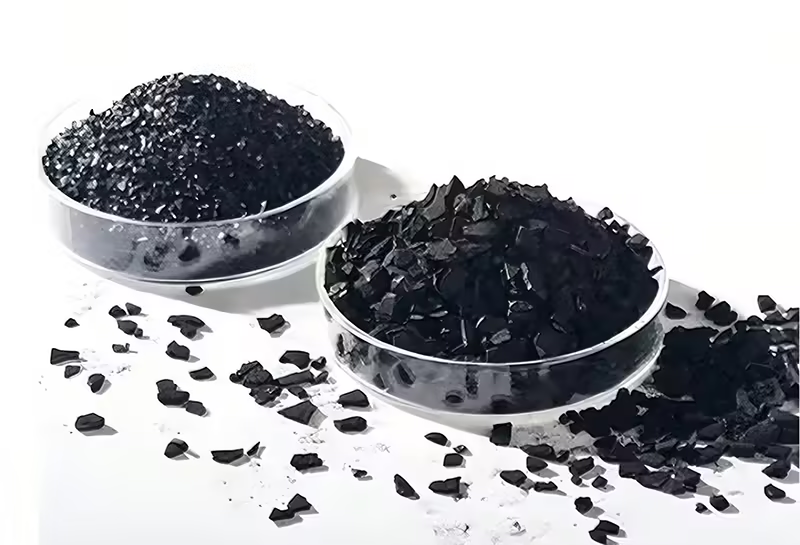
Buyers tend to fixate on iodine or methylene blue numbers, but those figures say little about how the carbon will hold up over months of use. Hardness and abrasion resistance are frequently ignored until filters start shedding fines or pressure drops climb. Coconut shell carbon is naturally harder than coal or wood based alternatives, yet not all batches are equal—low activation temperatures or rushed processing can leave the material brittle, which shortens its service life in applications like drinking water treatment or gold recovery.
Moisture and ash content also deserve more attention than they get. A few extra percent of moisture means you are paying for water instead of carbon, and high ash levels can interfere with adsorption or leach unwanted minerals into process streams. Bulk density and particle size distribution are equally easy to skip: if the granules pack too tightly or too loosely, you end up with channeling or excessive backpressure, neither of which shows up in a standard iodine test.
Finally, check the pH, floaters, and pore structure. A significant pH shift can indicate residual chemicals from activation that may affect sensitive liquids, while a high floater count signals under-activated or contaminated material. Pore size distribution matters because coconut shell carbon is mostly microporous, which is great for small molecules like chlorine or VOCs but less effective for larger organics unless the manufacturer has tailored the activation to widen some pores.
What Makes Indonesian and Philippine Coconut Shell Carbon Different?
The split starts in the groves. Indonesian coconut shell carbon usually comes from older, thicker-walled nuts grown in volcanic soil across Sumatra and Sulawesi. That gives the shell a tighter grain and lower natural moisture. Philippine shell, much of it harvested from coastal plantations in Quezon and the Bicol region, tends to come from fruit picked a bit earlier. The result is a lighter, more porous starting material that carbonizes faster and responds differently during activation.
Processing habits widen the gap. Many Indonesian producers still rely on slow-burning brick or drum kilns, which can push fixed carbon higher but sometimes leaves slight charring unevenness between batches. Philippine processors have moved more aggressively toward continuous rotary kilns. That setup offers tighter control over residence time and temperature, producing a more uniform carbon, though it can sacrifice a little crush strength in the final product.
Those differences show up on spec sheets. Indonesian carbon often carries a small edge in iodine number and hardness, making it a strong candidate for gas-phase filters that demand durability. Philippine material frequently delivers better batch-to-batch consistency and, with proper acid washing, can hit very low ash levels, which suits liquid purification where predictable pore size matters more than raw toughness.
Avoiding Moisture and Ash Pitfalls in Bulk OEM Orders
Bulk OEM orders often fail quietly. Moisture sneaks in through inconsistent drying cycles, while ash content drifts upward when suppliers blend lower-cost filler materials without flagging the change. The result isn't always a rejected batch on arrival—sometimes it's a slow degradation in burn consistency, higher maintenance calls, and customers who stop reordering without telling you why.
A practical safeguard is to lock down both inbound and outbound moisture thresholds in the purchasing spec, then require third-party lab verification from each production run, not just a pre-shipment sample. Pair that with a simple ash check on every third container unloaded at your warehouse. It costs a few hundred dollars per audit, but it catches drift early enough to push back before the material gets mixed into your inventory.
For repeat OEM partners, ask for their raw feedstock sourcing map and drying process logs, not just the finished product certificate. Suppliers that hesitate on those documents are usually masking variability upstream. Negotiating a moisture and ash rebate clause—where off-spec material triggers a per-ton credit rather than a full return—keeps the relationship workable while giving you leverage to demand tighter control on the next order.
Private Label vs. White Label: Which Model Fits Your Market?
To decide between these two, you have to look past the labels. Private label means you're shaping the product from the ground up—choosing materials, formulation, packaging, and often the entire supply chain. White label, on the other hand, is more like taking an existing product and putting your name on it. The difference isn't just about who makes it; it's about how much influence you have over what ends up in your customer's hands.
If your market rewards uniqueness or you're targeting a niche with specific complaints about existing options, private label gives you the room to build something distinct. The trade-off is time and minimum order quantities. White label works better when speed matters more than exclusivity—say, you want to test a new category or serve a price-sensitive segment without committing to product development. It's a lower-stakes way to launch, but you'll likely face more direct competition since others can sell the same base item.
The right fit often comes down to your brand's long-term promise. If you're building authority and can afford to wait for custom production, go private. If you need to move fast, keep costs low, and validate demand first, white label gets you there. Many businesses actually start with white label to learn the market, then shift to private label once they know what their customers will pay a premium for.
Negotiating Minimum Order Quantities and Lead Times Without Surprises
Suppliers rarely set minimum order quantities and lead times arbitrarily, even when the numbers feel that way from the buyer’s side. The first step is to unpack what actually drives those figures. Ask how much of the MOQ comes from raw material purchases, machine setup time, or packaging runs. Once you know the cost structure, you can propose alternatives that keep the supplier whole but lower your exposure: a smaller trial order with a firm commitment to step up if demand holds, or a slight price bump in exchange for a reduced first run. For lead times, most shocks trace back to vague specifications or late internal approvals rather than production itself. Pinning down a design freeze date and shortening your own review cycle often buys back more days than any supplier concession.
Another underused tactic is to share a rolling forecast, even a rough one, instead of asking for a blanket lower MOQ. Suppliers are far more willing to shrink a first order when they can see upcoming volume and plan capacity around it. At the same time, break the lead time into its components: production window, inspection, and shipping. Ask which of those stages can overlap or run in parallel, and get the supplier to flag any sub-component with a lead time longer than, say, 30 days before it turns into a surprise. This shifts the conversation from “can you do better?” to “where exactly does the time go, and which part can we compress together?”
Finally, build the agreement around triggers rather than fixed numbers. Instead of accepting an MOQ of 500 units forever, tie renegotiation to actual demand data, seasonal shifts, or packaging changes. Measure lead time from the moment all approvals and deposits are complete, not from the first inquiry, so accountability sits with both sides. Add a small buffer only where history shows recurring delays, and leave out padded cushions everywhere else. Set a review every quarter to revisit both MOQ and lead time assumptions against real performance. That way, surprises stop being surprises, and the numbers stay tied to reality instead of a one-time negotiation win.
FAQ
Look beyond price. A dependable partner will share batch-level test reports for iodine value, hardness, ash content, and moisture without being asked. They should also explain how they control raw material sourcing—whether the coconut shells come from a consistent geographic region and how they handle seasonal variability. If a factory hesitates to provide samples from current production runs or avoids discussing regeneration capacity, treat that as a red flag.
Iodine value is a useful proxy for micropore volume, but it isn't the whole story. For most OEM applications like air purification or solvent recovery, values between 900 and 1100 mg/g work well. Water treatment often requires 800 to 1000 mg/g depending on contaminants. Don't chase maximum iodine blindly—higher numbers can mean softer granules that break down faster, increasing pressure drop and replacement frequency.
Common options include mesh size distribution, granule or pellet shape, ash and moisture limits, acid-washed or water-washed grades, and impregnation with silver, potassium hydroxide, or other agents. Some factories can also adjust activation time and temperature to shift pore structure toward more micropores or mesopores. Packaging is another lever: custom bags, private labels, pallet configurations, and even pre-filled filter cartridges for specific housing types.
Request a recent third-party lab report covering iodine number, molasses number, hardness, ash, moisture, and particle size distribution. Depending on the end use, NSF/ANSI 61, REACH, RoHS, or food-grade certifications may be necessary. Also ask for a certificate of analysis tied to the exact production lot you will receive—not a generic brochure. If the supplier can't provide traceable batch data, keep looking.
Ask for the geographic source of the coconut shells and how the factory sorts out immature or contaminated shells. High-quality carbon usually starts with dense, mature shells from regions with consistent coconut farming. Inconsistent raw material leads to uneven activation and variable hardness. A factory that owns or controls its carbonization process generally has better quality control than one buying semi-finished char from unknown sources.
A frequent mistake is focusing only on the per-kilogram price while ignoring moisture content—some suppliers ship carbon with 8-10% moisture, which means you pay for water. Another is accepting a sample that doesn't match the production batch. Buyers also forget to lock in rejection criteria for out-of-spec shipments. Clarify packaging, palletizing, loading supervision, and incoterms upfront to avoid hidden costs.
Start with a pilot lot from the exact production line that will handle your full order, not a lab sample. Use the trial to measure real-world performance: pressure drop, dust generation, adsorption capacity over time, and mechanical integrity after backwashing or handling. Then request a pre-production sample from the first large batch and compare it against the approved reference sample before the entire shipment leaves the factory.
Steam activation and chemical activation create different pore structures. Steam-activated carbon generally offers high microporosity and better hardness, which suits gas-phase applications. Chemical activation, often using phosphoric acid or potassium hydroxide, can yield higher surface area but may require more thorough washing to remove residual chemicals. Your supplier should be able to recommend the right method based on your specific contaminant and operating conditions, not just sell what they already have in stock.
Conclusion
Sourcing OEM coconut shell activated carbon isn't just about price per ton; it's about digging into supplier reliability and the specs that quietly ruin batches. Before committing, experienced buyers ask for pilot samples and check how the manufacturer handles post-activation washing, because residual ash and moisture can spike unexpectedly in humid climates. A common blind spot is the iodine number—often quoted high but meaningless if the hardness is low and the carbon crumbles during transport. Then there's the raw material itself: Indonesian coconut shell carbon tends to offer a slightly denser, harder granule with consistent pore structure, while Philippine material can vary more depending on the island and drying methods. If you don't pin down the source region and the carbonization temperature, two suppliers can deliver totally different adsorption curves under the same spec sheet.
Beyond the lab values, bulk orders bring operational traps. Moisture is the classic one—coconut shell carbon left in open storage or shipped without sealed liners can absorb 10–15% water weight, which you're paying for as if it were activated carbon. Ash content is similar: a bargain price often hides 5–8% ash that clogs downstream filters. On the branding side, private label lets you control particle size, packaging, and even impregnation, but it requires a minimum volume that white label doesn't. White label gets you to market faster yet leaves you with no exclusivity, so the same product may appear under a competitor's name. Finally, when negotiating MOQs and lead times, lock in a realistic production window with penalties for delay, and ask how the supplier allocates kiln capacity during peak coconut harvest seasons. A little blunt conversation up front prevents a lot of freight and downtime later.
Contact Us
Contact Person: Ellen Zhang
Email: [email protected]
Tel/WhatsApp: +86(21) 2287 6756
Website: https://www.tundrr.com/en/
