

OEM Aluminum Intake Manifold: What Makes It a Superior Choice for Your Engine
2026-11-02
Factory plastic intake manifolds quietly rob your engine of power—they flex, trap heat, and crack under pressure. An OEM aluminum intake manifold fixes those flaws while keeping direct bolt-on fitment. DDR has refined this upgrade to deliver cooler charge temps and more consistent flow. Before you chase bigger turbos or injectors, find out why the manifold between your intercooler and cylinder head may be the smartest change you can make.
Why Aluminum Beats Plastic Once the Engine Gets Hot
Once the engine bay heats up, plastic components start to lose their composure. Nylon and polypropylene intake manifolds, for example, can soften under sustained high temperatures, leading to warped sealing surfaces and vacuum leaks. Aluminum, on the other hand, holds its shape and dimensional stability far beyond the point where most plastics begin to creep or deform.
Heat also accelerates the aging of plastic through oxidation and thermal cycling. Repeated hot-cold cycles make plastic brittle over time, causing hairline cracks that are often invisible until they cause a failure. Aluminum doesn't suffer from this kind of thermal fatigue in the same way; it expands and contracts predictably, and its oxide layer actually protects the surface from further degradation.
There's also the matter of heat dissipation. Aluminum pulls heat away from critical areas and spreads it across its surface, helping to keep surrounding sensors and wiring cooler. Plastic acts more like an insulator, trapping heat near the source and increasing the thermal load on nearby components. In a confined engine compartment, that difference can mean the margin between a reliable part and a roadside breakdown.
The Hidden Flaws in One-Size-Fits-All Aftermarket Castings
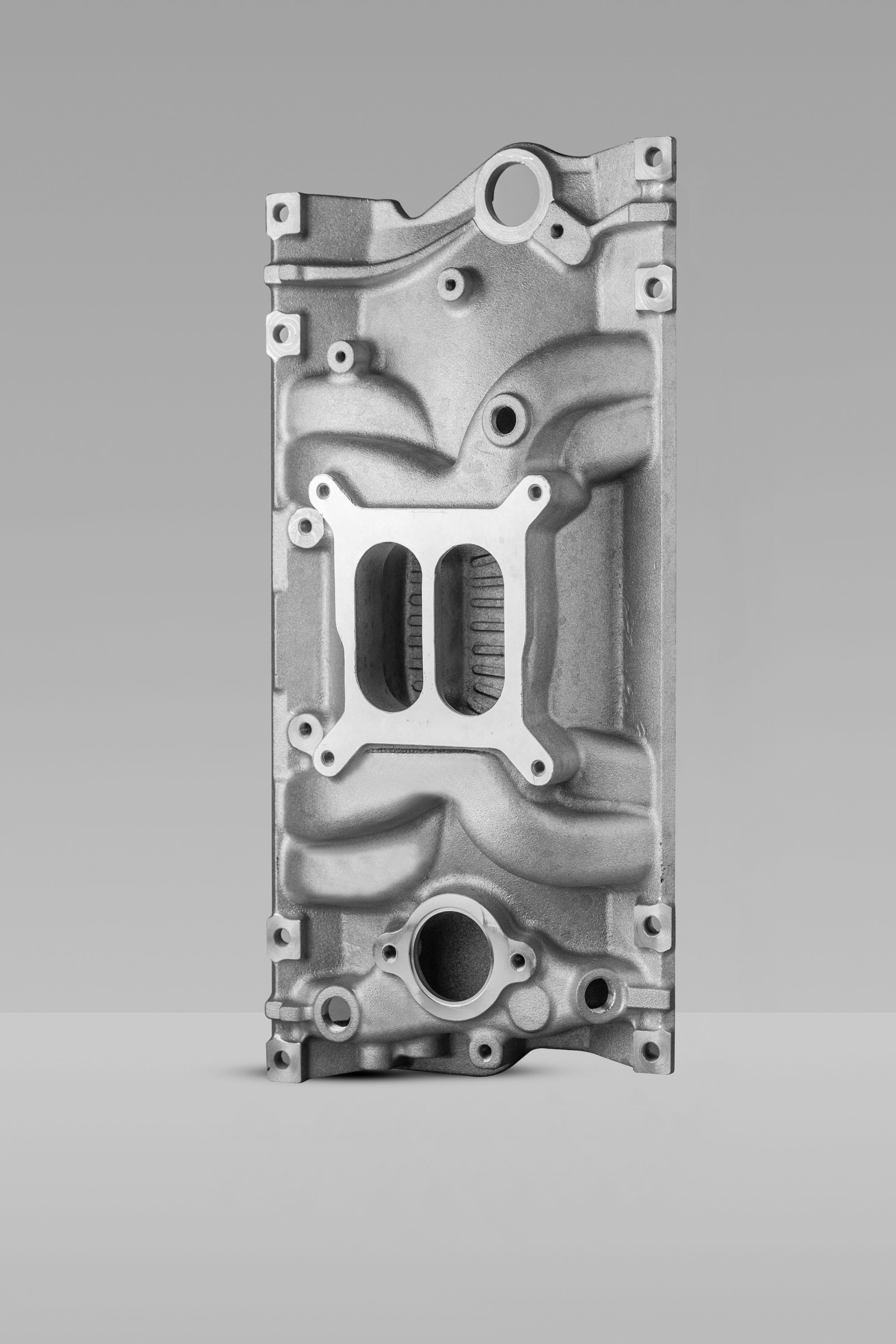
Many aftermarket castings claim to fit multiple applications, but the tolerances that matter are rarely visible. Bolt holes may line up, yet internal passages, mounting bosses, or rib profiles can be off by just enough to create uneven stress or restricted flow. These deviations don't announce themselves until a seal leaks, a flange warps, or a component cracks under load.
Material inconsistencies compound the problem. A casting that looks identical on the outside can hide voids, thin walls, or improper heat treatment beneath the surface. Without the original foundry's controls, one batch may machine beautifully while the next is brittle or porous. That kind of variability turns routine installation into a gamble.
The true cost usually shows up later in downtime, repeat labor, or collateral damage to surrounding parts. What seems like a budget-friendly alternative often ends up more expensive than a properly engineered replacement. Hidden flaws don't reduce the selling price; they just relocate the expense to a less convenient moment.
How Factory Tolerances Keep Every Cylinder Breathing Evenly
The moment a set of pistons starts moving, the difference between a smooth idle and a rough stumble often comes down to variations invisible to the naked eye. Factory tolerances aren't just about hitting a number on a spec sheet—they're the quiet guarantee that each cylinder sees the same volume of air, the same swirl, and the same burn. When a bore is honed a few microns tighter on one side or a valve seat sits a hair deeper, the airflow into that cylinder shifts just enough to upset the balance. Keeping those tolerances consistent means every intake stroke pulls with the same hunger, and every exhaust pulse leaves without fighting the next one.
What many people miss is how these tolerances interact under heat and load. A piston that expands predictably in a bore with controlled clearance will maintain its ring seal, but if the clearance drifts beyond the allowed range, blow-by increases in one cylinder while its neighbor stays tight. That uneven breathing shows up as a faint misfire at part throttle or a lazy response when you roll into the accelerator. Engineers spend an enormous amount of effort mapping how each casting, each machined surface, and each assembled stack tolerates the real-world thermal cycle. The result is a cylinder head and block that breathe as a matched set rather than six or eight individuals fighting for air.
In production, this is less about perfection and more about repeatability. A tolerance that is too tight drives cost and scrappage through the roof; too loose and the engine loses its composure. The sweet spot is a range where every port, every valve guide, every ring land lands within a window small enough that the differences disappear under manifold vacuum. When the fueling and ignition are then tuned around that even airflow, the engine doesn't have to compensate cylinder by cylinder. It simply hums, with all chambers sharing the load as if they were breathing through the same set of lungs.
Heat Soak Is Quietly Robbing Your Throttle Response
Heat soak is one of those issues that never throws a check engine light, yet it can make your car feel noticeably slower after it has been sitting in traffic or parked for a short time. When the engine bay gets hot, everything under the hood absorbs that heat—especially the intake manifold, airbox, and intercooler piping. On the next start-up or during low-speed driving, the intake air passes through those heat-soaked components and picks up a lot of extra temperature before reaching the combustion chamber. Hot air is less dense, so each cylinder gets fewer oxygen molecules per intake stroke.
Your ECU sees the elevated intake air temps and starts pulling ignition timing to protect against knock. That timing pull is exactly what you feel as a lazy or delayed throttle response, particularly right off idle or during part-throttle acceleration. The engine still runs smoothly, but it feels like it has to think for a split second before responding. In stop-and-go driving, the effect compounds because there is not enough airflow through the bay to shed the heat. Once you get moving at sustained speed and cooler outside air starts flowing through the intake path, the temperatures drop and the throttle sharpens up again.
If you notice that your car feels sluggish after a hot restart or a long idle, but then wakes up after a few minutes of driving, heat soak is the likely culprit. It is not a tuning fault or a failing sensor—it is just the reality of hot under-hood air. Heat shielding, vented hoods, better intercooling, and even simple things like avoiding short heat-soaked restarts can reduce the effect. But on a completely stock daily driver, that brief period of soft throttle response is something you either live with or actively manage through driving habits.
A Bolt-On Part That Actually Bolts On Without Modifications
Most aftermarket upgrades come with a hidden tax: you'll need to trim, drill, or file something just to make the new piece sit right. This part breaks that pattern. Every mounting point lines up exactly as the factory intended, and the hardware included matches the original thread pitch and length. You won't touch a grinder or reach for a tap set.
The real difference is in the tolerances. Instead of relying on slotted holes or rubber spacers to absorb misalignment, the bracket contours follow the existing chassis lines within a fraction of a millimeter. That means no fighting the part into place, no elongated holes weakening the mount, and no surprise interference with nearby lines or heat shields. It slips on, the bolts start by hand, and torqueing them to spec is the only step left.
What this gives you is confidence on a Sunday afternoon install. You don't need a lift, a second pair of hands, or a backup vehicle for runs to the hardware store. Pull the old component, set this one in place, and the first thread catches cleanly. For anyone who has spent hours hogging out a bracket hole, that simplicity feels like a luxury.
Long-Term Strength That Survives Boost, Heat Cycles, and Road Salt
Most parts fail not from a single overload but from the steady grind of conflicting stresses. Take a charge pipe that sees 20 psi of boost, then sits in traffic while engine-bay temps swing from freezing to over 200°F, all while winter brine creeps into every micro-crack. The real test isn't a dyno pull—it's surviving five years of that without splitting at a seam or corroding from the inside out.
Heat cycling is where cheap materials give up. Repeated expansion and contraction works on grain boundaries like a fatigue machine, turning tiny inclusions into cracks that eventually open under boost. Road salt accelerates it by attacking any exposed metal, especially where coatings get scratched during install. The fix isn't just thicker walls—it's choosing a substrate and protective layer that move together, so thermal stress doesn't peel the barrier and let chlorides eat away at the structure.
Boost adds a pulse load that magnifies every existing flaw. At 15 psi, a 3-inch tube sees hundreds of pounds of force trying to balloon it, and that force reverses thousands of times per drive. When combined with salt-induced pitting and heat-softened seals, the margin for error disappears fast. The only way to last is to design for the worst week of the year, not the best lap time.
FAQ
The main difference comes down to material stability. Plastic manifolds can warp or crack after repeated heat cycles, especially around mounting flanges. An OEM aluminum casting holds its shape far longer, resists boost pressure better, and doesn't suffer from the same brittle failures over time. You also get a more consistent seal at the gasket surfaces.
On a completely stock engine, gains are usually modest. The real benefit shows up when you start raising boost, adding forced induction, or pushing higher intake air temperatures. Aluminum sheds heat more evenly and doesn't flex under pressure, so it keeps air density more predictable. That translates to steadier power rather than a big peak number.
Cast iron is extremely strong but heavy and slow to release heat. Aluminum gives you most of that structural rigidity at roughly a third of the weight. It also responds faster to underhood temperature changes, which helps avoid condensation pooling in the plenum during cold starts.
It depends on what you value. OEM aluminum manifolds are engineered to match the original port alignment, sensor bosses, and throttle body placement exactly. Aftermarket units often need grinding, adapter plates, or custom tuning. If you want a straightforward install without surprises, the OEM piece usually saves money in labor and frustration.
Very little beyond normal inspection. You should check the gasket seating surfaces for pitting or corrosion every few years, especially if you live near salt water. A light coat of anti-seize on the bolts helps prevent galvanic corrosion between the aluminum manifold and steel fasteners.
Yes, that's one of the strongest arguments for switching. Plastic manifolds can balloon or split at the seams under high boost. A well-made OEM aluminum casting can typically handle 20+ psi without issue, though the exact limit depends on wall thickness and design.
Aluminum absorbs underhood heat more readily than plastic, but it also releases it faster once airflow increases. Wrapping the manifold or using a thermal spacer can reduce heat transfer into the intake charge. In most driving conditions, the difference in intake air temperature is small.
Conclusion
Most drivers only notice their intake manifold when it cracks, warps, or throws a check-engine light. But the material and tolerances of this part matter long before failure. An OEM aluminum intake manifold resists the dimensional creep that softens plastic units after repeated heat cycles; once the engine bay gets hot, aluminum holds its shape, keeping the sealing surfaces flat and the plenum volume stable. That stability translates into even airflow to every cylinder, which is something aftermarket one-size-fits-all castings rarely achieve. Cheap sand-cast replacements often carry core shift, uneven runner walls, and mismatched port entries that skew cylinder-to-cylinder distribution. Factory tolerances, by contrast, are machined to match the original head ports and fuel trim expectations, so each cylinder breathes as the ECU expects it to.
Heat soak is another area where the OEM choice pays off. Aluminum sheds underhood heat more effectively than a thick plastic shell, reducing the intake air temperature rise that dulls throttle response in stop-and-go traffic. And because it is a factory part, it actually bolts on without grinding, spacing, or relocating brackets—something aftermarket direct-fit castings often fail to deliver. Long-term, the material holds up under boost, repeated hot-cold cycles, and road salt exposure far better than both plastic manifolds and porous aftermarket aluminum. The hardware bosses don't strip, the gasket flanges don't warp, and the corrosion resistance is engineered into the alloy and coating, not left to chance. That combination of stable airflow, true fitment, and durability makes the OEM aluminum manifold a superior choice when the engine is pushed hard or simply driven for years.
Contact Us
Contact Person: Shelly
Email: [email protected]
Tel/WhatsApp: 8613967667688
Website: https://www.yongyu.com/