

Lightweight Bendable Stone Wall Cladding Factory: What Sets the Best Manufacturers Apart
2026-09-04
Imagine stone that bends like leather yet holds the timeless beauty of natural rock. Lightweight bendable stone wall cladding is rewriting the rules of architectural design—but not every factory can deliver on that promise. The best manufacturers, like Magic Stone, distinguish themselves through precision engineering, material innovation, and relentless quality control. Before you specify this game-changing material for your next project, here's what truly separates the leaders from the rest.
Where the Stone Actually Comes From, and Why It Matters
Most people picture a generic quarry when they think about where stone comes from, but the reality is far more localized and story-rich. Granite countertops might begin as magma cooling deep under the Brazilian shield, while a marble slab could trace back to a single mountainside in Carrara where Michelangelo once walked. These aren't just geological accidents—the specific mineral mix, the pressure of millennia, and even the local water table all leave fingerprints in the stone's color, veining, and durability.
Understanding the exact origin matters because it directly shapes how the stone behaves in your home. A limestone from Indiana will react to acidic spills differently than a dolomite from Turkey, and a quartzite labeled “white” might vary hugely depending on whether it came from a Brazilian quarry or an Indian one. When you know the source, you can predict staining, etching, and even how the stone will age—turning a pretty surface into an informed choice.
Flexibility Without Cracking: What a Bend Test Should Feel Like
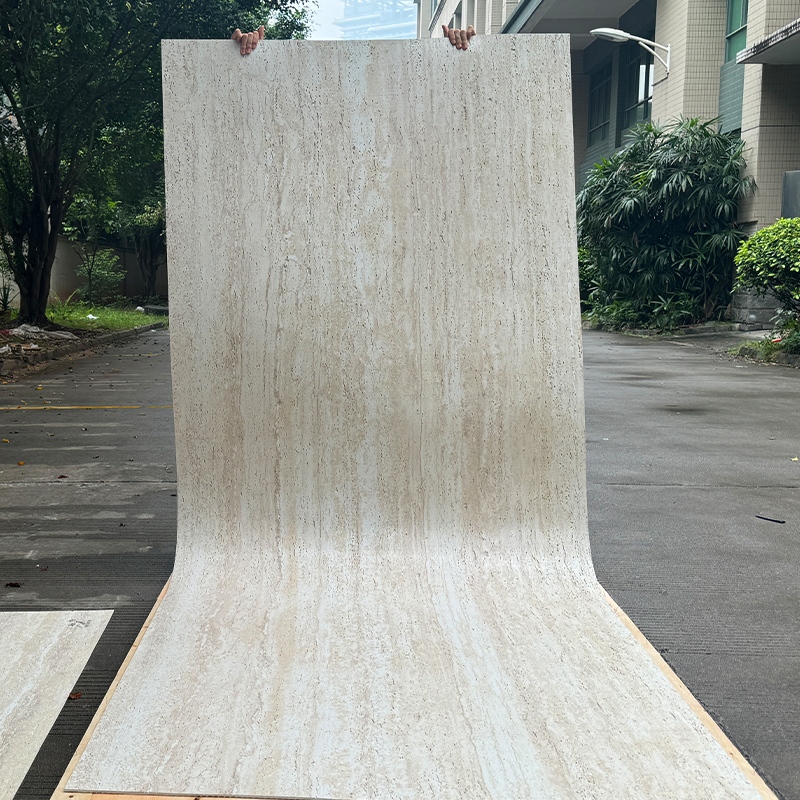
A proper bend test should feel less like forcing a hinge and more like coaxing a smooth arc. When you press a sample between your thumbs and slowly flex it, the resistance ought to build evenly, without any sudden give or hard stop. Your fingertips should never detect a brittle snap, a series of tiny crackles, or a spot that feels dead and unresisting. Instead, the material rolls into the curve as if it had been shaped for that motion, and the surface stays quiet—no whitening, no fine fractures spreading from the fold.
Pay attention to how the material talks back after you release the pressure. A flexible but sound piece will either spring cleanly toward its original shape or hold the curve without signs of fatigue. If it springs back with a crease line that looks chalky or if it hesitates in one section, that's a warning. The bend should feel like pressing a healthy green twig—firm, live, and forgiving—not like flexing a dried-out matchstick that's already making up its mind to break.
Temperature and speed will change the story, of course. A cold sample may feel stiffer and require gentler handling, while a warm one tends to flex more easily and can mask weak points. Run your thumb along the inside of the curve right after bending; a good material will still feel uniform and smooth. Any graininess, raised fibers, or faint ridge forming at the apex means the structure is beginning to yield, and that's exactly what you don't want.
Resin Quality: The Difference Between a Decade and a Season
A season-old resin still carries the brightness of fresh cut—sharp, volatile, eager to release whatever it has not yet learned to hold. It works fine for quick projects, but its edges are unresolved. A decade-old resin has stopped trying to prove itself. The surface has settled into a deeper translucency, and the scent no longer jumps; it waits. That waiting is the whole point.
Time does not just dry resin; it rearranges it. Over years, the lighter fractions evaporate, and the remaining molecules cross-link into a tighter, more stable matrix. What starts as sticky and temperamental slowly becomes dense and predictable. A ten-year piece will hold a polish without blooming, resist cracking when worked, and show a range of color that a younger batch cannot fake. You can accelerate curing with heat or catalysts, but you cannot accelerate the quiet conversation between resin and air.
The real difference shows up under the tool. A seasonal resin fights you—gummy in one spot, brittle in the next. A decade-old resin cuts like hard cheese at the right temperature: no tear-out, no sudden grab. It has already made its mistakes and settled them. For a maker, that means fewer surprises and more control. The extra years are not just age; they are a form of editing.
How Natural Variation Is Preserved Without Repetitive Patterns
Natural variation thrives in systems that refuse rigid repetition. A forest floor never arranges its fallen leaves in strict rows, yet each leaf falls where wind and branch dictate. This organic scatter ensures that no two patches of soil receive identical cover, allowing light, moisture, and decay to distribute unevenly. Such irregularity is not disorder but a form of living logic—every unevenness creates a slightly different microhabitat, and that difference is what lets diverse seedlings find their own footing.
The same principle appears in language, where a speaker may repeat an idea without ever repeating a sentence structure. Emphasis shifts, word order bends, and rhythm swells or recedes according to breath rather than template. This keeps the message alive because the listener cannot predict the next phrase; the variation itself carries meaning. When we strip away repetitive patterns, we leave room for inflection, pause, and the kind of emphasis that only arises when a phrase is shaped for a single moment.
Even in carefully tended gardens, the most resilient plantings are those that allow for drift. A gardener might sow the same species across a slope, but seed depth, sun exposure, and soil compaction vary by inches. These micro-variations mean that when drought or frost arrives, some individuals survive while others fail. The population bends without breaking because no single condition was replicated everywhere. Preserving natural variation, then, is not about avoiding order but about refusing the false comfort of exact duplication.
Consistency Beyond a Single Sample: What to Ask the Factory
One approved sample rarely tells you anything about the next thousand units. If you're serious about consistency, ask the factory how they control variation across runs—not just what the reference sample looks like. Request their in-process inspection records, the tolerance limits they actually hold on critical dimensions or performance metrics, and how often they recalibrate equipment. A factory that hesitates to share this data is often guessing between batches.
Material sourcing is another quiet source of drift. A supplier might switch resin, plating, or even adhesive without telling you until a field failure shows up. Ask whether raw materials are locked to specific vendors, how incoming lots are verified, and what happens when a batch fails incoming QC. The answer you want is a clear rejection protocol and traceability back to a lot number—not a shrug and a promise to "be more careful."
Finally, pin down how the factory defines "acceptable" when nobody is watching. Do they run first-article inspection only, or do they pull samples mid-shift and at the end of a run? Ask for a capability study like Cpk or at least a histogram of recent production measurements. If they can show you the same tight spread across three separate production days, you're looking at consistency. If all they offer is another photo of the same perfect sample, keep asking.
Shipping Support That Keeps Your Timeline From Falling Apart
When a shipment stalls in customs or a tracking number stops updating, your neatly planned schedule can quickly turn into a mess of sticky notes. The support here doesn't vanish after the label is printed. Instead, someone is watching carrier updates, clearance delays, and last-mile hiccups, flagging potential late arrivals before they wreck your delivery date.
If the timeline does start to slip, we'll get on the phone with warehouses and transporters to identify the holdup and map out realistic options—splitting the shipment, switching to air freight, or adjusting the port of arrival. You see every step in the same conversation thread, so you never have to dig through old emails or repeat the backstory.
FAQ
The best ones rely on a mix of finely crushed natural stone, mineral pigments, and a high-flexibility polymer or resin binder. Some add a fiberglass mesh or composite backing to give the panel tear resistance while keeping it thin enough to bend around tight corners.
It typically weighs around 3 to 6 kilograms per square meter, whereas conventional stone veneer can be ten to twenty times heavier. That reduced weight means you can often install it over drywall, plywood, or existing tile without extra structural support.
Yes, if the panel is made properly. Top factories produce sheets that can be bent to a radius of a few centimeters without surface cracks, because the stone layer is thin and bonded to a flexible substrate. You still need to follow the manufacturer's minimum bend radius to avoid stressing the material.
A few things stand out: consistent batch-to-batch color matching, a clean and well-controlled curing process, detailed technical data on flexibility and adhesion, and realistic samples that match the final product. The best factories also let you run small pilot orders before committing to large volumes.
Seams are usually kept tight and filled with a flexible, paintable sealant that moves with the panel. Because the material expands and contracts slightly with temperature, a rigid grout or epoxy can cause edge lifting. Most top manufacturers provide a recommended joint width and sealant type in their installation guide.
It can, but the quality of the resin and UV stabilizers matters a lot. High-grade panels resist fading, freeze-thaw cycles, and moisture intrusion for years. Cheaper versions may yellow or delaminate, so it is worth asking for accelerated weathering test results or real-world project references.
Many can mimic limestone, slate, travertine, or rusted metal, and they often adjust color, texture, and sheet size to match a project. Some even pre-cut panels to fit specific facade layouts or provide corner pieces that bend cleanly without visible notches.
Conclusion
A truly reliable lightweight bendable stone wall cladding factory starts with a transparent sourcing story. The best manufacturers know exactly which quarry their stone comes from and can explain how that geology affects flexibility, color, and long-term stability. When you handle a sample, the bend test should feel like folding stiff leather—there is resistance and a slight give, but no snapping or powdering. That physical response comes from the resin system, and this is where longevity is won or lost. High-grade polyurethane or epoxy resins keep the veneer supple for a decade or more, while cheaper binders turn brittle after a season of sun and rain. You should also look for a factory that respects the stone's natural character instead of forcing repetitive patterns. They mix slabs and slices so each sheet reads like an organic rock face, not a printed wallpaper.
Beyond a single impressive sample, consistency across production matters more. Ask how the factory tests every batch—not just the first run—and what tolerances they hold for thickness, flexibility, and color range. If they hesitate to share batch records or reference orders, that is a warning sign. Finally, shipping support is the hidden layer that keeps your project on schedule. The best manufacturers pack panels in reinforced crates with clear handling instructions, offer partial container options, and coordinate with freight forwarders so your cladding does not sit in customs limbo. In short, the difference makers are raw material traceability, a non-cracking bend, UV-stable resin, natural variation, batch-level consistency, and logistics know-how.
Contact Us
Contact Person: Vito
Email: [email protected]
Tel/WhatsApp: 86 13088879266
Website: https://www.magicstonemcm.com