

Laser Safety Glasses Factory Direct Buying Guide and Quality Checklist
2026-09-15
If you've ever considered buying laser safety glasses straight from a factory, you already know the temptation—lower prices, bulk discounts, and direct communication. But without verified optical density reports, proper certification, and frame fit checks, one bad batch can put your entire team at risk. This guide cuts through the noise with a practical quality checklist you can use before placing any order. For transparent specs and factory-direct accountability, brands like LASERPAIR set a benchmark worth comparing against.
Decoding Optical Density: Match Your Laser's Wavelength Before You Buy
If you’ve picked up a pair of laser safety glasses and assumed the OD number printed on the frame works for whatever laser you’re using, that assumption can leave your eyes unprotected. Optical density is always tied to a specific wavelength—or sometimes a narrow band—because materials absorb and block light differently depending on its energy. A filter rated OD 5+ at 1064 nm might drop to OD 1 or less at 532 nm, even though both are common in labs.
That’s why matching the OD to your actual laser output matters before you buy. Check the exact wavelength, not just the color or the general type. Nd:YAG lasers often produce both 1064 nm fundamental and 532 nm frequency-doubled beams, and a single pair of glasses may not cover both. If you’re using a tunable source, you need to know the full range and verify that the OD stays high across that span—not just at one point.
Look for a specification sheet or graph that plots OD versus wavelength. A reliable vendor will provide this instead of a single catch-all number. Also pay attention to pulse duration and power density; a filter might handle a continuous-wave beam at a given wavelength but fail under short, high-energy pulses. Taking a few minutes to cross-check the numbers before checkout is cheaper than a retinal injury.
Frame Fit and Comfort: Why Your Eyebrows and Temples Deserve a Say
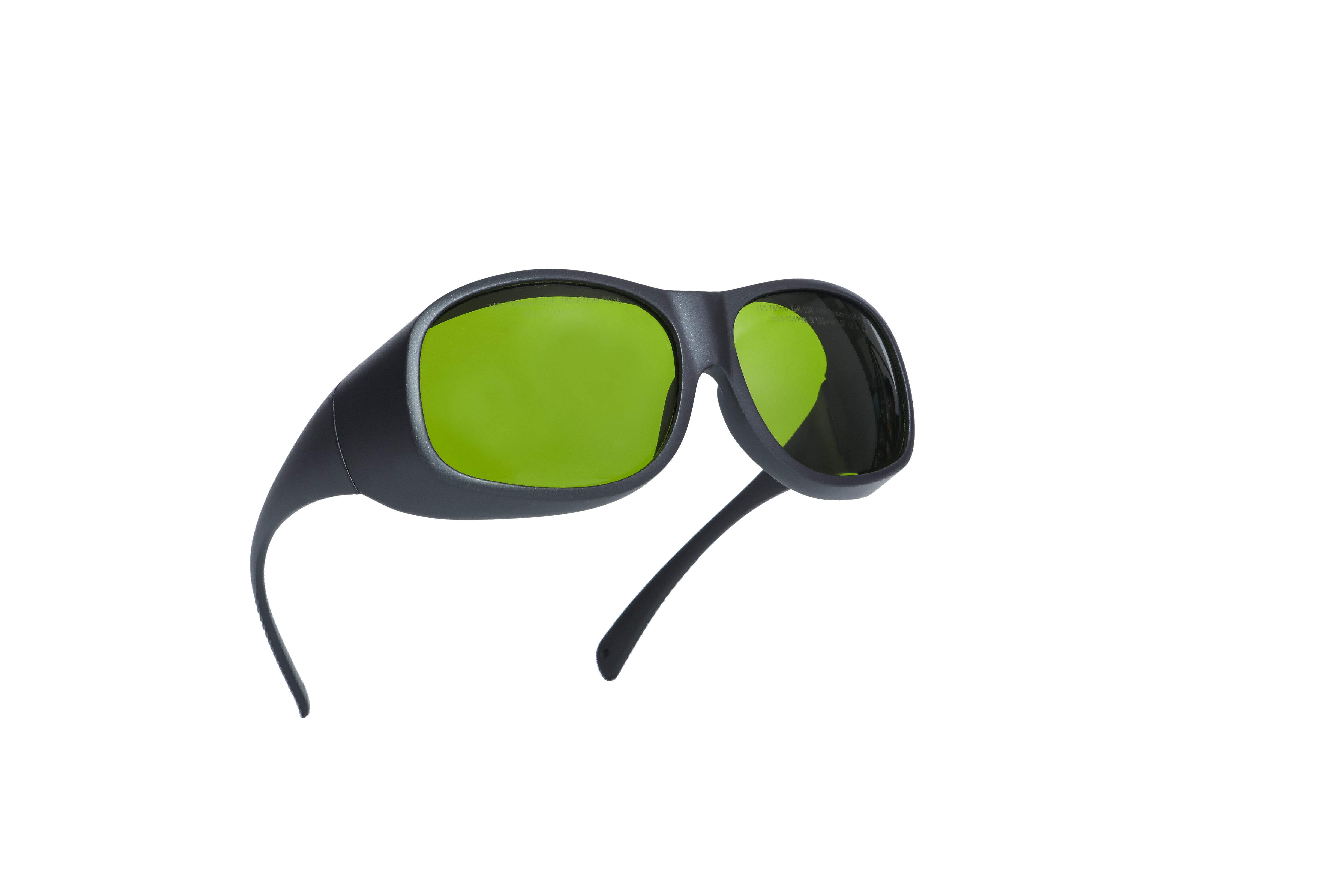
A well-chosen frame does more than sit on your nose—it should feel like a natural extension of your face. Too often, we judge glasses by how they look straight-on in a mirror, ignoring what happens above and behind the lens. Your eyebrows and temples are key players in both comfort and style. If the frame top edge cuts across your brow line rather than following it, your expression can look perpetually surprised or oddly segmented. And if the temples press too hard against the sides of your head, you'll end up with headaches, sore spots behind the ears, and a constant urge to take the glasses off. Paying attention to these two zones turns a basic accessory into something you forget you're wearing.
The relationship between the frame's upper rim and your eyebrows is more flexible than many fitting guides admit. You don't have to match the brow curve exactly; sometimes a straight browline frame over a softly arched brow creates a pleasing contrast. What matters is that the frame doesn't bisect the brow or sit so high that it hides your natural expression. Similarly, temple arms should follow the contour of your head without digging in or flaring outward. Look for frames with adjustable metal cores or gently curved acetate ends that can be warmed and shaped by an optician. A few millimeters of adjustment at the temple bend can mean the difference between glasses that feel like a clamp and ones that rest lightly all day.
Comfort at the temples also depends on frame width and material spring. If the frame is too narrow, the arms bow outward and create pressure points; too wide, and they slide forward every time you look down. Choose a width that matches your face at its widest point near the eyes, then have the temple tips curved just enough to catch the back of your ear without pinching. The goal is even, gentle contact—not a tight grip. When a frame respects your eyebrows and temples, you'll notice it less and appreciate it more, whether you're reading, driving, or just moving through your day.
Certification Claims vs. Reality: Spotting Fake CE or ANSI Marks
A CE mark stamped on a helmet or harness often gives instant peace of mind, yet the symbol itself proves nothing about actual testing. Counterfeiters rely on the fact that few buyers check the accompanying documentation. The real signal is a four-digit notified body number printed next to the CE logo — without it, the mark is almost certainly decorative. Even with that number, a quick search of the EU's NANDO database for that body's scope will reveal if the product category is genuinely covered.
ANSI marks follow a similar trap. A hard hat labeled "ANSI Z89.1" may look official until you notice the missing manufacturer name or lot number. Legitimate certification requires a label inside or underneath the shell with the standard reference, class designation, and production date. Fakes often use a generic sticker on the outside only, or spell out "ANSI approved" — a phrase the American National Standards Institute never uses, since it accredits certifiers rather than approving products directly.
Another telltale sign is mismatched language. A CE mark paired with an OSHA claim on the same label, or an ANSI reference on a European-only product, signals a slapped-together compliance story. Genuine marks come with traceable test reports, lab accreditations, and consistent formatting across the packaging, user manual, and product itself. If any of those elements look photocopied, pixelated, or altered, treat the certification as a sticker, not a guarantee.
Factory Direct Red Flags: What a Middleman Won't Tell You About Pricing
Many buyers assume that going straight to a factory guarantees the lowest price, but middlemen often disguise themselves as factory reps. What they won't tell you is that the so-called "factory price" may already include a hidden commission of 15% to 30% — money you could have saved by dealing with the actual manufacturer.
Another red flag is vague line items on the quote. A legitimate factory breaks down costs for raw materials, labor, and tooling amortization. Middlemen, on the other hand, tend to bury their markup under generic terms like "handling fee" or "service charge." Worse, some will obtain a low price from the real factory, then add a second layer of profit under the guise of a "minimum order quantity discount."
To spot these tricks, ask for the factory's business license and a live video walkthrough of the production floor. Compare quotes for the same product across different channels. If a "factory direct" price seems suspiciously low compared to the industry average, or if the seller gets vague about cost breakdowns, that itself is the biggest red flag of all.
Lens Material Choices: Polycarbonate vs. Glass Under Real Beam Exposure
When an actual beam hits the lens, polycarbonate and glass stop behaving like interchangeable options. Polycarbonate absorbs a surprising amount of energy before it even starts to deform, which makes it forgiving under short bursts of high-intensity light. The trade-off becomes visible after repeated exposure: the surface develops micro-crazing that scatters the beam in unpredictable ways. Glass, on the other hand, stays optically stable far longer, but its rigidity means thermal stress concentrates at the edges instead of dissipating through the material.
Real beam conditions rarely match the neat specifications on a datasheet. Humidity, dust accumulation, and even minor mounting misalignment change how each material responds. Polycarbonate's low density reduces inertia during rapid repositioning, but its softer surface attracts scratches that act as diffraction points under a focused beam. Glass remains harder to damage, yet a single impact point can propagate a crack along the entire axis if the beam creates a sharp temperature gradient.
Choosing between them comes down to reading the failure patterns you are willing to accept. Polycarbonate fails gradually, giving you time to replace the lens before catastrophic scatter. Glass fails abruptly, but until that moment it delivers a cleaner, more predictable beam profile. Neither material wins outright; each simply shifts the point where the system tells you something has gone wrong.
The 5-Minute Quality Checklist: Inspecting Coatings, Edges, and Hinges
Run your palm across coated surfaces first. If the finish feels uneven, catches light differently in one spot, or shows tiny bubbles near screw holes, you've already found the weakest link. A quality coating shouldn't just look uniform from arm's length—it should hold up when your fingers trace the perimeter and around any cutouts. On hinges, watch for paint that's too thick at the joint; that's where chips start within weeks, not years.
Edges tell the truth about manufacturing care. Run a fingernail gently along the top and bottom edges of doors and drawers. A properly sealed edge resists the nail, while a rushed job leaves a slight ridge or a soft, waxy feel. Pay special attention to mitred corners—if the coating pools or dips there, moisture will eventually find a way under the surface. The same check applies to hinge edges: fold the hinge halfway and examine the barrel. Any exposed metal or thin coating along the knuckle means the finish will wear through quickly.
Finally, open and close each hinge three times, slowly. Listen for grinding, and feel for any hesitation. Hinges should move with a slight, consistent resistance—not loose, not stiff. While the hinge is open, check the screws: if the coating around each screw head has cracked or lifted even a hair, that's a sign of over-tightening or a brittle finish. A five-minute pass with these three checks catches most coating failures before they ever reach a customer's home.
FAQ
Start by requesting the factory's test reports for the exact lens and frame combination you plan to order. Look for wavelength range, optical density (OD) rating, and certification marks like EN 207/208 or ANSI Z136.1. Don't accept a generic 'CE' label; ask for the notified body number and verify the report matches the laser types you actually use.
Match the OD to your laser's wavelength and output power. A high-power 1064nm YAG laser usually needs OD 5+ while a low-power 650nm alignment laser might only require OD 2. Check the lens's damage threshold against your laser's pulse duration and max power. If the factory can't provide a detailed attenuation curve for your specific wavelength, move on.
Inspect each lens under magnification for scratches, bubbles, or inclusions. Flex the frame gently to ensure it doesn't warp or crack. Verify that the filter is properly seated in the frame with no gaps at the edges. Do a quick functional test: shine the matching laser wavelength through the lens at close range—any visible transmission means the batch fails and should be rejected.
Often yes, but only when you compare identical specifications. Factories cut out distributor markups, but some reduce costs by using thinner polycarbonate or skipping anti-fog and scratch-resistant coatings. Request the full bill of materials including lens substrate, thickness, and coating layers, then compare it to a known industry benchmark. If the price seems too low, ask what was removed to hit that number.
For the US market, insist on ANSI Z136.1 compliance with the OD and wavelength markings printed on the frame. For Europe, look for EN 207/208 with a CE mark and the notified body's identification number. Ask for the certificate's validity period and the name of the test laboratory. A factory that hesitates or offers only an ISO 9001 certificate without optical testing isn't manufacturing to the claimed laser safety standard.
Check the edge thickness consistency—uneven edges suggest poor molding or lamination. Put the glasses on in a dark room and look at a bright LED; if you see light leaking around the nose bridge or temples, the frame design is faulty. Press the lens lightly with a clean cloth; excessive flexing indicates thin or low-grade material that may not hold up under workshop conditions.
Glass offers superior optical clarity and a higher damage threshold for high-power lasers, but it's heavier and can shatter if dropped. Polycarbonate is lighter, more impact-resistant, and usually cheaper, but it scratches more easily and may show lower OD stability over time with UV exposure. For most moderate-power factory work, coated polycarbonate is a practical choice; for lab or high-power use, specify glass lenses.
Many factories can grind prescription lenses directly or add a prescription insert behind the protective filter. However, the prescription layer must not alter the attenuation curve, so ask for a sample with your prescription and test it at your laser's wavelength. Also check the frame's side shield design—wraparound styles reduce peripheral exposure but can trap heat and reduce ventilation, which matters in long shifts.
Conclusion
When buying laser safety glasses directly from a factory, the first thing that trips people up is optical density. You can't just grab any pair labeled 'laser safe' — the protection needs to match the exact wavelength of your laser, whether that's 532 nm green or 1064 nm infrared. A mismatch means the lens might block the wrong part of the spectrum while letting your actual beam through. Beyond that, lens material matters more than most buyers realize. Polycarbonate is lightweight and impact-resistant, but under sustained high-power exposure it can deform or craze faster than glass, which holds up better optically though at the cost of weight and shatter risk. And don't trust a CE or ANSI stamp at face value — fake certifications are rampant in factory direct channels. Ask for the test report, check the standard number, and verify the lab that issued it.
Once you've narrowed down the technical specs, the real quality check happens in your hands. Run your finger along the lens edge; a rough or uneven edge often points to rushed manufacturing. Check the hinge screws — if they're loose or made of soft metal, the frames will fall apart within months. Coatings are another giveaway: a good anti-scratch or anti-fog layer should be uniform with no streaks or bubbles, and it shouldn't peel when you gently rub it with a microfiber cloth. Comfort matters too. The frame shouldn't pinch your temples or slide down your nose, because if it's uncomfortable you'll end up lifting the glasses off for 'just a second,' and that's when accidents happen. Factory direct pricing can be tempting, but if the quote looks too good to be true, it usually is — a middleman markup isn't the only cost to cut; some factories skip the quality steps we just described to hit a lower number. Check the small details and you'll get glasses that actually protect you, not just a cheap pair with a logo.
Contact Us
Contact Person: Jenny
Email: [email protected]
Tel/WhatsApp: +86 13537713281
Website: https://www.laserpair-safety.com/