

HDPE Pipe Machine Company Guide for Making the Right Choice
2026-11-02
Choosing the right HDPE pipe machine manufacturer can make or break your production line—yet most buyers focus only on price and regret it later. From inconsistent wall thickness to hidden maintenance costs, the wrong decision quietly drains your margins. This guide cuts through the noise, highlighting what actually matters when evaluating suppliers. Among the names that consistently deliver robust, energy-efficient extrusion systems is COMRISE, a brand known for engineering reliability into every line. Read on to learn the key questions to ask before you commit.
Pin Down the Screw Design Before You Pay a Deposit
Once you hand over that deposit, the screw design is effectively locked in unless you're prepared to pay for change orders. Small tweaks like a different drive type, a longer thread, or a coating swap can trigger re-tooling costs and weeks of delay. Most manufacturers won't renegotiate tolerances or materials after you've signed off on the initial spec, so the cheapest time to finalize every detail is before money changes hands.
Go beyond the basic diameter and length. Nail down the head style, recess depth, thread pitch, under-head radius, and whether you need a captive washer or a patch lock. If the screw has to pass through a clearance hole in one part and bite into another, specify the exact engagement length. Don't assume the factory will flag missing information—they'll often fill gaps with whatever is easiest for their tooling, which may not match your assembly.
Send a marked-up drawing, a 3D model, and a physical sample if you have one. Ask for a first-article inspection report before the bulk run starts, but make sure that report is tied to the same revision you approved. If you leave anything vague—like 'standard thread'—you'll likely end up with a generic fastener that almost works but causes field failures later.
Ask for Output Data from a Continuous 72-Hour Run
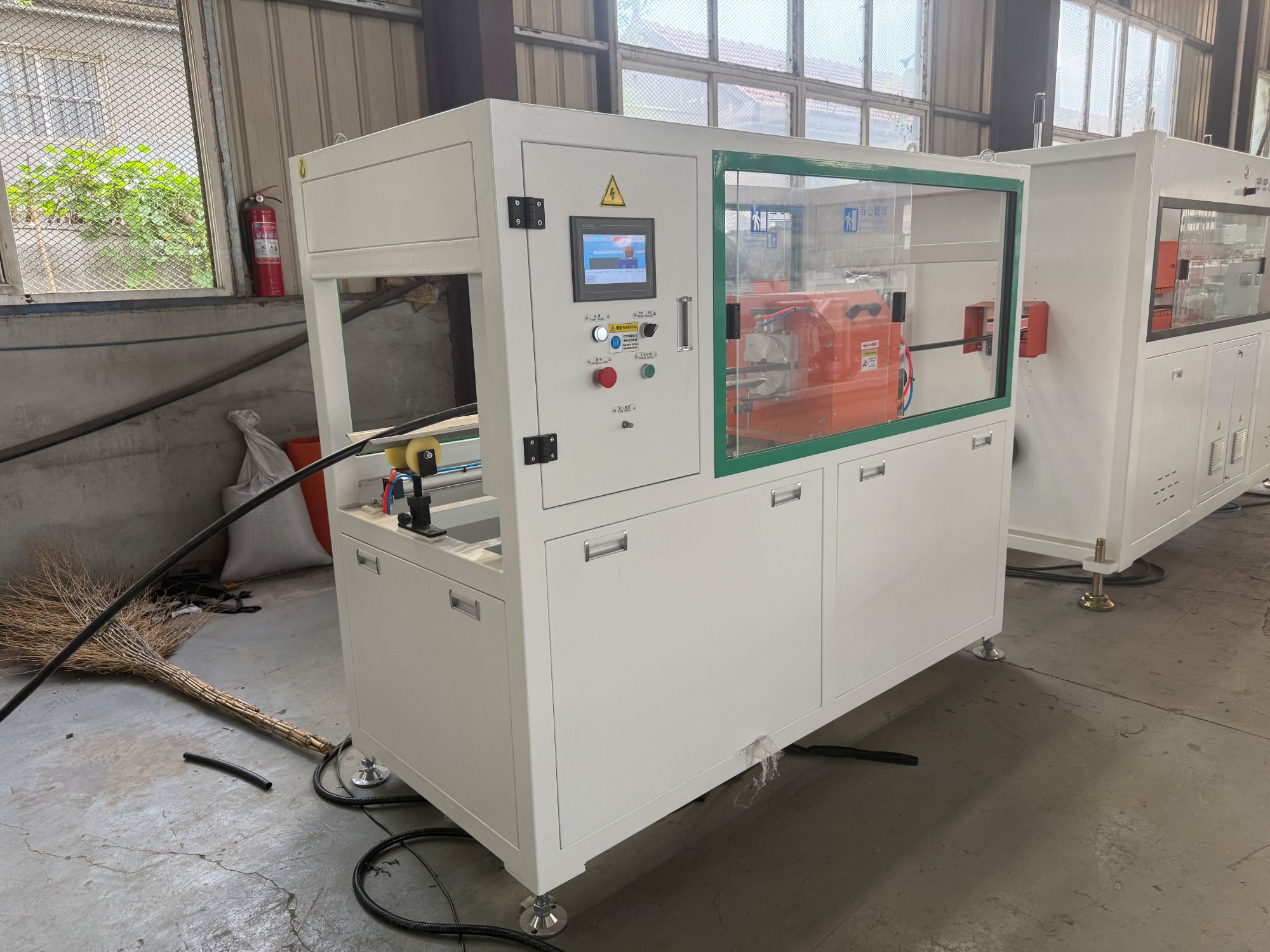
A continuous 72-hour run produces a large volume of sequential output that can be difficult to review manually unless you know what to request. Rather than pulling everything at once, ask for the slices that matter most: start and end timestamps for each full cycle, peak and average values over each six-hour block, and any event flags triggered during the run. This narrows the data to the points where behavior actually changes, making it easier to spot drift or unexpected plateaus.
When you request the output, specify both the resolution and the format you need. For example, one-minute resolution works well for checking short-lived spikes, while hourly aggregates are better for long-term trend lines. Ask for the data as raw CSV or JSON, not as pre-rendered charts, so you can run your own comparisons across multiple 72-hour runs without fighting a dashboard’s display assumptions.
Finally, include a request for the run’s metadata: which configuration files were used, the software version, and any manual overrides applied mid-run. Without that context, even a clean set of output values can mislead you. A single line requesting “configuration snapshot and change log alongside the time series” can save hours of backtracking later.
Find Out Who Actually Machines the Gearbox and Barrel
Many buyers are curious about which factory actually produced the gearbox and barrel in their hands. Brands rarely volunteer machining details, since subcontracting and rebadging are common throughout the supply chain. To uncover the workshop responsible for cutting, heat treating, and finishing, start with the product itself. Look closely at the casting marks — sometimes a mold number, sometimes a tiny stamp left by the machinist. These traces are more honest than any brochure.
Another reliable route is to contact the importer or distributor directly and ask for a certificate of origin or a factory audit report. If the answer is vague, request a visit to the production floor. Real machining shops usually have CNC mills, dedicated fixtures, and inspection benches, not just assembly lines. You can also join industry forums or attend trade shows, where people often share non-public supplier lists. Keep in mind that manufacturers willing to show their machining capability tend to care more about tolerances and material choice.
Finally, don't overlook third-party inspection reports. Independent testing agencies sometimes record the actual machining source of a component. Once you have a few candidate factories, ask for samples or a small trial order and measure the critical dimensions yourself. Only by seeing the tool marks inside the gearbox case and the concentricity of the barrel bore can you confirm who truly controls the machining process. This kind of investigation takes time, but it helps you avoid middlemen flipping finished goods and find a production partner worth keeping.
Compare Energy Consumption per Kilogram of Pipe
When evaluating pipe manufacturing efficiency, energy use per kilogram reveals sharp contrasts between materials. Steel pipe production typically demands between 8 and 15 MJ per kilogram, largely due to the high temperatures needed for smelting and rolling. In contrast, PVC and HDPE pipes usually require only 3 to 7 MJ per kilogram, since polymer extrusion operates at much lower heat levels. This gap narrows, however, when you factor in the lifespan and recyclability of the material—steel can be repeatedly melted down, while plastic often degrades after one or two recycling loops.
A closer look at specific processes shows even more nuance. Seamless steel pipes consume roughly 20 percent more energy per kilogram than welded steel pipes, because piercing and elongating a solid billet takes extra force and heat. For ductile iron pipes, the energy tally sits between 9 and 12 MJ per kilogram, partly due to the annealing step that gives the metal its flexibility. Meanwhile, concrete pressure pipes have surprisingly low embodied energy per kilogram—around 1 to 2 MJ—but their heavy weight means the energy per unit length can exceed that of lighter plastic alternatives.
Practical comparisons should also account for scrap rates and wall thickness variations. A thin-wall HDPE pipe might use only 2.5 MJ per kilogram, yet if it needs 50 percent more material to meet the same pressure rating as a steel pipe, the per-meter energy advantage shrinks significantly. Field data from water utilities indicates that for diameters above 400 mm, the total energy per installed meter often favors steel or ductile iron, despite their higher per-kilogram values. Thus, comparing energy per kilogram alone gives a useful starting point, but a full assessment requires looking at the entire pipe system, including joints, coatings, and expected service life.
Test Their Response Time for a Broken Heater Band
When a heater band fails on a production machine, every minute of downtime cuts into your output. To gauge a supplier's true commitment, place a call or send an email describing the failure in detail—mention the machine model, the band's wattage, and the symptoms. Don't ask for a quote; simply report the break and ask for troubleshooting help. The clock starts now.
Watch what happens next. A responsive vendor will acknowledge your message within an hour, often with a technician on the line or a detailed set of diagnostic steps. They might cross-reference your machine's serial number and suggest a compatible replacement band in stock, then offer rush delivery options. If they ask clarifying questions within the first few hours, that's a positive sign. Silence or a generic "we'll get back to you" after four hours is a red flag.
After 24 hours, evaluate the entire exchange. Did they provide a concrete resolution timeline? Did they follow up without prompting? The way they handle a broken band tells you how they'll handle larger breakdowns. A supplier that treats a small component failure with urgency is likely to treat your entire account the same way.
Look for a Supplier That Shares Die Head Drawings
A supplier that willingly provides die head drawings saves you from guesswork later. Instead of relying on verbal assurances or low-resolution photos, you get to inspect the actual geometry, flow channel dimensions, and material specs before committing to a tooling order. That kind of openness usually signals an in-house engineering team rather than a trading company that simply forwards your request to an unknown factory.
When you ask for these drawings, pay attention to how the supplier responds. Do they send a clean, dimensioned PDF within a day or two, or do they stall and offer only a generic catalog image? The first response tells you a lot about their documentation habits and whether they maintain revision control. A supplier that can share a drawing with tolerances, surface finish callouts, and bolt patterns is far more likely to produce a die head that fits your existing line without endless back-and-forth adjustments.
Of course, some hesitation is understandable if the design is proprietary. But you can still ask for a partial section view or key interface dimensions without exposing their entire IP. If a supplier refuses even that, it may mean they don't actually control the design—or worse, they plan to reverse-engineer something after you pay. Insist on a drawing early, treat it as a basic qualification step, and you'll filter out most of the shops that cause costly delays.
FAQ
The willingness to discuss failure openly. Most companies will show you perfect output, but a dependable one lets you talk to operators who run their lines daily, even if that means hearing about wear parts that need frequent replacement or parameter tweaks that are hard to master.
Ask for the serial number of a machine delivered at least three years ago, then contact the buyer directly. If the company hesitates or gives you a demo unit that has never run production, treat that as a red flag.
Usually in gearbox quality, barrel steel grade, and the thickness of downstream calibrators. A low price often means a shorter screw L/D ratio and thinner vacuum tank walls, which show up as inconsistent wall thickness within the first year of heavy use.
Get a written list of spare parts stocked in your region, not just at the factory. Require a maximum response time for remote diagnostics and a clear procedure for on-site visits, including who pays for travel days if a problem persists beyond two service calls.
It should outweigh maximum output ratings. A machine rated at 500 kg/h that holds ±1.5% wall thickness for eight hours beats one rated at 650 kg/h that drifts by 4% after lunch. Consistency determines how many rejects you produce, not the peak number on a catalog page.
Yes, especially if they are run by engineers who previously worked at a major brand and now customize lines for niche pipe diameters. They often offer shorter feedback loops and more honest advice, but you need to verify their supply chain for long-lead parts like gearboxes and screws.
It can become the difference between a two-day repair and a six-week shutdown. Before you choose a distant company, identify who in your country can align the extruder, replace a heater band, or troubleshoot the PLC. If the answer is only the manufacturer, negotiate a resident engineer clause or consider a supplier with a proven local partner.
Energy consumption per kilogram and screw lifetime are the most inflated numbers. Ask for logged power data from an existing production line over a full week, and request gearbox inspection records after 8,000 hours on a customer site. If those are unavailable, assume the real numbers are 10 to 15 percent worse than stated.
Conclusion
Selecting the right HDPE pipe machine supplier goes beyond comparing catalog numbers. Before you commit any deposit, pin down the screw design and ask exactly how it's matched to your resin and pipe dimensions—this single decision shapes melt stability, output consistency, and long-term wear. Don't settle for theoretical capacity; demand real output data from a continuous 72-hour run, not a short demonstration. The difference between claimed and sustained throughput reveals how well the extruder handles heat buildup, screen changes, and operator pauses. Equally important is tracing who actually machines the gearbox and barrel. A supplier that outsources precision components to unknown workshops may deliver lower repeatability and shorter service life, even if the brand name looks familiar.
After you've verified the core mechanics, shift attention to operating cost and support. Energy consumption per kilogram of pipe tells you more about profitability than the motor's rated power—ask for metered data from real production rather than nameplate estimates. Then test their response time with a simple scenario: a broken heater band at 2 a.m. How fast can they dispatch a replacement or guide your team through a temporary fix? This separates genuine partners from order-takers. Finally, look for a supplier that shares die head drawings without hesitation. That transparency helps your maintenance crew plan cleanouts, order spare parts, and adapt to new pipe sizes. Taken together, these checks give you a practical way to avoid hidden compromises and choose a machine that actually performs in daily production.
Contact Us
Contact Person: LISA LEE
Email: [email protected]
Tel/WhatsApp: +86 13780696467
Website: https://www.qdpipemachine.com