
Custom Executive Office Chair Ideas for a Productive Workspace
2026-11-02
Your chair can either anchor your focus or quietly drain it—there’s rarely a middle ground. Custom executive office chair ideas go beyond picking a color: they’re about matching seat depth to your frame, lumbar support to your spine’s curve, and armrests to the way you actually work. OFCJNS brings that level of personalization within reach, proving a truly productive workspace starts from the seat up. Here’s how to build a chair that works as hard as you do.
Dial In the Backrest Curve to Match Your Actual Posture
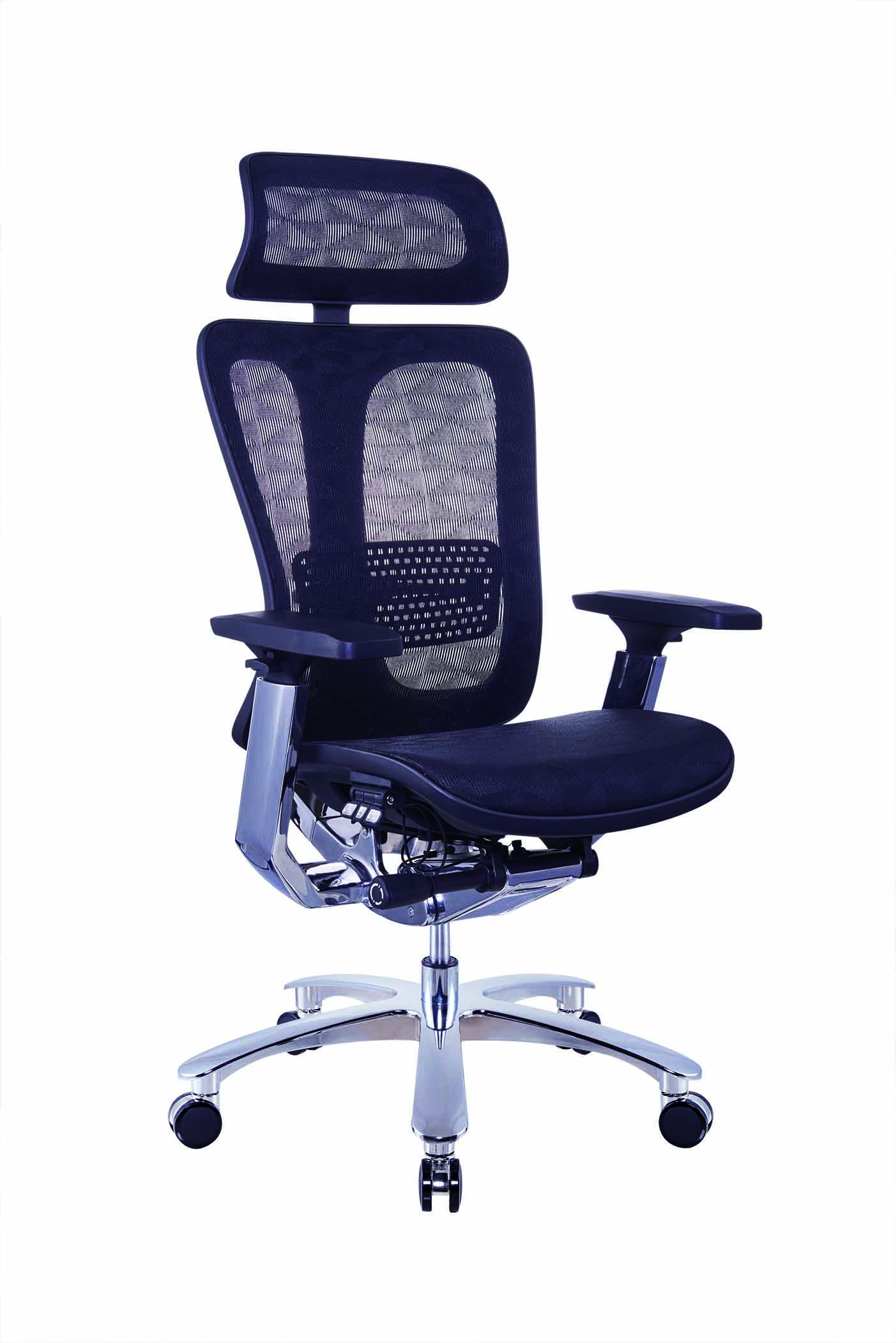
Most chairs ship with a backrest curve set to some “average” spine, but that average rarely matches how you actually sit. Before you assume the chair doesn’t fit, take a minute to loosen the tension control and let the curve drift until it feels like a hand pressing into the small of your back—not shoving you forward. The right position supports without forcing you to change your posture.
If you tend to sit deeper in the seat or roll your pelvis back when you work, a pronounced lumbar bump will feel wrong no matter how much you fiddle with height. Instead, start from neutral, then tweak the curve in small increments while you keep your feet flat and hips pushed back. You’ll know it’s right when the pressure spreads across your lower back, your shoulders drop, and you stop noticing the backrest altogether.
Pick Upholstery That Laughs Off Coffee Spills
Most upholstery fails not because the fabric is cheap but because the weave is too loose. Coffee sinks in before you can grab a towel. Choose tightly woven performance fabrics like solution-dyed acrylic or Crypton-treated polyester—their stain resistance is built into the fiber, not sprayed on top, so spills bead up instead of soaking through.
If you want something softer, a high-quality velvet with a high rub count and a synthetic blend can shrug off liquids if you blot instead of rub. Avoid untreated cotton or linen unless they're specifically labeled as moisture-resistant. Leather is another forgiving route: coffee wipes off with a damp cloth, though a matte or semi-aniline finish beats naked leather for daily abuse.
Test before you commit. Ask for a swatch, pour a little cold coffee on it, wait thirty seconds, blot. If a ring remains, move on. Spill-proof doesn't mean zero effort, but the right upholstery buys you enough time to grab a rag instead of a panic.
Armrest Adjustments for Seamless Keyboard-to-Phone Flow
Most armrests lock you into a single plane, which is fine for typing but terrible the moment you reach for a phone. The first adjustment to check is how far the pad extends toward your keyboard. If it ends too early, your elbow drops when you switch to the touchscreen, forcing a subtle shoulder hike each time. Extending the armrest forward just an inch or two keeps the forearm supported while your wrist floats over the phone, so the transition doesn't feel like two separate postures.
Height matters more than padding. Set the armrest so your elbow stays at roughly a 90-degree angle when your fingers are on the home row. Then, when you slide your hand to a phone mounted beside the keyboard, the arm doesn't need to lift or dip—it just pivots. If your chair has width adjustments, bring the pads close enough that your elbows don't wing out during the reach. That lateral stability is what prevents the little readjustment shuffle that breaks your rhythm.
Finally, pay attention to the pivot point at the elbow, not the wrist. A good armrest lets the forearm rotate without dragging the pad along. If the surface is too grippy or too slick, you'll either fight the material or overshoot the phone. After adjusting, run a test: type a sentence, tap a notification, type again. If you don't feel the need to reposition your shoulders between tasks, the armrest is doing its job.
Casters That Glide Over Carpet and Hardwood Without a Sound
The quietest casters rarely announce themselves. You notice them only when a chair rolls back from a desk without the familiar grind of plastic against wood grain, or when a workbench cart shifts across a room and the only sound is your own breathing. That's the result of careful material pairing: polyurethane treads soft enough to absorb micro-vibrations, yet firm enough to keep their shape under load. On low-pile carpet they don't chatter or catch; on hardwood they leave no scuff trails or dull scratches. The secret isn't just softness—it's a durometer rating tuned to the flooring, plus precision bearings that eliminate the internal rattle cheaper casters develop after a few months.
Homeowners and studio workers often swap out stock casters after one too many midnight trips to the kitchen wakes someone up. The difference comes down to the contact patch. A wider, slightly rounded wheel spreads weight so the caster floats over carpet fibers instead of digging in and snapping them. On sealed hardwood, that same shape prevents the edge from biting when you change direction. Some designs also add a thin nylon core inside the polyurethane, which keeps the wheel from flattening under a heavy cabinet—flat spots are a common source of that rhythmic thump-thump sound people assume is just an old floor.
Beyond the wheel itself, the housing matters. A caster with too much play in its swivel will rattle softly every time you make a small adjustment. Quality versions use a double-ball race or a precision-machined kingpin, so the rotation feels buttery rather than loose. The result is a caster you simply forget about. It doesn't whisper, squeak, or grind—it just moves. And that's the whole point: the best kind of quiet is the one you never have to think about.
Seat Depth Tweaks That Keep Leg Fatigue at Bay Through Long Meetings
Most meeting rooms are set up for the average body, but your thighs don't care about averages. If the seat pan is too deep, the front edge digs into the back of your knees, cutting circulation and forcing you to slump just to find relief. That slump transfers pressure to your lower back and makes your legs feel heavy within the first half hour. The fix starts with a simple test: sit all the way back in the chair, then check the space between the seat front and your calves. You want roughly two to three fingers of clearance. If there's less, you're fighting the chair every minute.
Many people assume a deeper seat means more support, but that only works if your thigh length matches the pan. The real goal is even weight distribution from your sit bones down through the middle of your thighs, without pinching the delicate tissue behind the knee. If you can't change the chair itself, try adding a lumbar cushion to push your hips forward slightly, or use a footrest to raise your knees just enough to shift contact points. A rolled-up towel placed at the small of your back can buy you an inch or two of effective seat depth without any hardware.
For adjustable chairs, don't overlook the seat slider tucked under the front edge. Moving it forward or back even half an inch can change how your pelvis tilts and whether your feet stay flat. After tweaking, pay attention to the moment around the 40-minute mark. If your legs feel twitchy or you catch yourself perching on the edge, that's a signal the depth isn't right. Small corrections made early beat a whole meeting spent shifting and stretching.
Finishes That Whisper Authority Instead of Shouting
There’s a particular confidence in a surface that doesn’t need glare to get noticed. Honed marble with its soft, almost chalky touch reads as established rather than flashy. Brushed brass loses the mirror shine and takes on a quiet warmth that feels less like a trend and more like it has been there for decades. These are finishes that settle into a room instead of demanding the first glance.
The difference often comes down to the way light behaves. A polished chrome bounces light sharply, announcing itself from across the space. A matte black or oil-rubbed bronze absorbs just enough of that light, leaving behind a faint sheen that asks you to come closer. That small shift changes the whole rhythm of a room—authority becomes something you sense rather than something you’re told.
FAQ
Look for a seat depth adjustment that actually moves far enough for your legs, a lumbar pad that can shift vertically and horizontally, and armrests that lock in place instead of drifting. Those small lockable details keep you from fidgeting with the chair every half hour.
Tight-weave wool blends and top-grain leather with a matte finish both resist pilling and creasing well. If your workspace runs warm, skip the full leather and ask for a breathable mesh back panel with leather touchpoints on the armrests and seat edges.
Yes, but the key is dynamic tension. Request a lumbar system that flexes as you recline rather than a static bump. Pair that with a seat pan that tilts upward a few degrees at the front. Many off-the-shelf chairs miss that combo, and it changes how your hips sit through a long afternoon.
Try contrast piping, a fabric panel on the back of the shell, or a low-gloss wood trim under the seat. Those details read as intentional, not gimmicky. One of my favorite setups pairs a charcoal wool body with saddle-colored leather arm caps—it feels executive but not like a bank lobby.
Choose a taller gas cylinder and a footring option so your legs don’t dangle when the seat is raised. A slim armrest profile also helps you slide in and out quickly without knocking the desk. If you use a drafting stool height, make sure the seat depth shortens slightly to reduce pressure behind the knees.
Roughly $900 to $1,600 for a chair built to order with real adjustments. Above that, you’re often paying for exotic veneers or motorized controls you won’t use daily. Below that, many “custom” labels are just color choices on a fixed frame. Ask if the factory changes the frame dimensions—if not, it’s not truly custom.
Quiet-rolling casters for hard floors, a headrest that locks at a forward angle for reading, and arm pads with a slight inward curve. Those sound minor, but they remove constant micro-adjustments. Also consider a seat cushion with a firmer center channel—it reduces heat buildup and keeps you from shifting around during calls.
Conclusion
Most executive chairs seem built for a hypothetical executive, not the one actually sitting through back-to-back calls. A custom chair starts with the backrest curve: dialing it to follow the natural shape of your spine means you stop fighting the chair by hour three. Seat depth is just as personal. Sliding the pan forward or back changes pressure behind the knees, which is usually what makes legs feel heavy halfway through a long meeting. Then the armrests: height, width, and pivot should let you move from keyboard to phone without hitching your shoulders or twisting your wrist. These adjustments sound small, but together they remove the constant micro-corrections that quietly drain your focus.
The parts you touch and hear matter just as much. Upholstery that repels coffee spills isn't about being careless; it's about knowing a morning scramble shouldn't leave a permanent stain on a chair you'll keep for years. Casters can be chosen for mixed floors, so you roll from carpet to hardwood without a clatter or a sudden jolt. And finish matters in an executive setting: matte metal or dark wood in a restrained tone reads as confident, not loud. A chair that whispers authority lets the room's attention stay on the conversation, not the furniture. When every element is chosen around your actual work habits, the chair stops being a generic office item and becomes a quiet part of how you stay productive.
Contact Us
Contact Person: Diff Wang
Email: [email protected]
Tel/WhatsApp: +8613650281199
Website: https://www.ofcmeshchair.com/