

China Expansion Shell Bolt: A Buyer’s Guide to Types, Standards, and Quality Control
2026-11-02
Every year, buyers assume that all expansion shell bolts from China are more or less the same—until a failed anchor forces them to think again. The truth is that types, standards, and quality control vary enormously, and the wrong choice can quietly undermine a project. This guide breaks down what to look for and how Supreme Machinery helps buyers cut through the noise.
What an Expansion Shell Bolt Does Before You Even Choose a Type
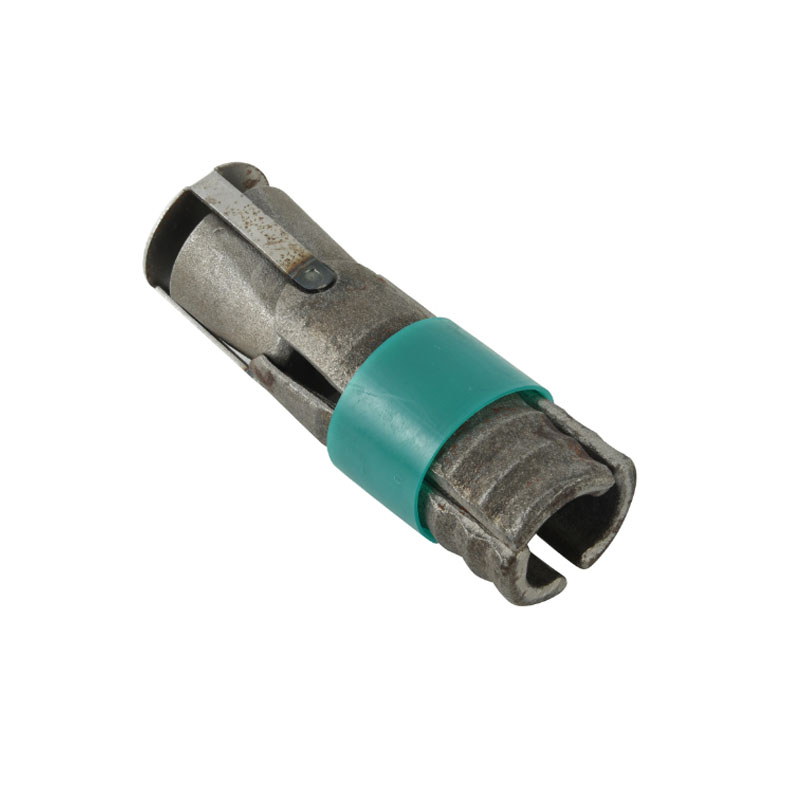
The moment you tighten an expansion shell bolt, the tapered end pulls upward into a split shell. That shell presses outward against the wall of the drilled hole, converting torque into radial force. This is not a chemical bond or a thread cutting action—it is purely mechanical interlock. The harder you draw the bolt, the more the shell wedges itself in place, which is why hole diameter and base material matter far more than the bolt's own coating.
Before comparing zinc versus stainless or deciding between hex head and eye nut, it helps to picture the load path. The bolt's cone forces the shell segments outward, and those segments grip the concrete or masonry around the full circumference. If the hole is too large, the shell cannot expand enough to bite. If the material is crumbly or hollow, the expansion force blows out the sidewall. So the real decision is not about the bolt type first—it is about whether the substrate can hold that outward pressure without cracking.
Another thing expansion shell bolts do quietly is set the stage for failure. Over-tightening can crush the base material, while under-tightening leaves the shell only partially engaged. That is why manufacturers give torque ranges instead of just maximum values. Once you see the bolt as a wedge that works against the hole, choosing a type becomes a matter of matching shell length, thread size, and material to the specific pull-out and shear loads, not just picking a familiar finish.
Types You Will Actually Encounter When Sourcing from China
The first type you’ll run into is the factory that owns its own production lines but has no real interest in small orders. They’ll quote you a price that looks great at 5,000 units, but when you ask for 200, the number either triples or they go silent for a week. These are the ones you meet at trade shows with polished catalogs and a booth full of samples that somehow never match your final specs.
Then there’s the trading company that pretends to be a factory. They’ll send you photos of machines, maybe even a video tour, but the address on the invoice points to an office above a noodle shop in Yiwu. They survive on markups and can actually be useful for mixed-container loads, but only if you’re okay paying 15–20% extra for someone else to manage the chaos.
Finally, you’ll meet the hybrid: a factory that outsources 70% of its components but calls itself a manufacturer. They’ll handle assembly in-house and promise “total quality control,” yet every defect you find traces back to a subcontractor they’ve never met in person. The trick isn’t avoiding them, it’s knowing which type you’re dealing with before you wire a deposit.
Chinese Standards That Matter More Than the Price Tag
Walk through any bustling Chinese market and you'll quickly notice that shoppers don't simply grab the cheapest option. They turn packages over, checking for certification seals, scanning ingredient lists, and asking the vendor pointed questions about origin and warranty. Price matters, but it sits below a deeper set of unspoken standards: authenticity, durability, and the quiet reassurance that this product won't embarrass you in front of family or colleagues. A suspiciously low tag often triggers doubt rather than delight—many assume corners were cut somewhere, perhaps in materials or labor conditions.
Beyond individual goods, these standards shape long-term business relationships. A supplier who undercuts everyone on price but delivers late or with inconsistent quality quickly loses face and future orders. In contrast, a slightly higher quote backed by reliable after-sales support, honest communication, and respect for local customs earns a loyalty that no discount can buy. For anyone selling into this market, the lesson is clear: invest in the quiet indicators of trust—certifications, transparent sourcing, and a willingness to stand behind your work—because those are the real standards that outweigh the number on the price tag.
Simple Quality Checks That Catch Substandard Bolts Early
A bright flashlight and a 10x loupe catch more bad bolts than expensive equipment. Look at the transition area under the head—most failures start there from forging folds or sharp tool marks. Run a fingernail along the thread crests; if it snags or you see flat spots where the thread pitch was rolled wrong, that bolt will cross-thread under low torque. Also check for rust bloom inside the drive recess: hidden moisture there means the batch sat too long after plating.
Get thread gages into someone's hands before the boxes are opened. A GO ring gage should spin down the full thread length with two fingers and no wobble; any resistance means the pitch diameter is off, even if a caliper says the major diameter is fine. Use a NO-GO gage only after the GO passes—many inspectors skip that and accept oversized threads that strip under load. For grip length, make a plywood or steel step gauge with notches at half-millimeter increments. Drop the bolt in and check the shoulder sits flush, not proud.
Hardness testing doesn't need a lab. A set of hardness files works on the receiving dock: if a 35 HRC file skates but a 40 HRC file bites, the bolt is in range for grade 8; if both files skate, it's too hard and likely brittle. Check the plating with a copper sulfate dip—bare steel turns copper-colored within seconds, and patchy copper means the zinc is thin or cracked. Finally, torque a sample bolt into a tapped steel block until yield; a substandard bolt will neck down or snap before reaching 75% of the specified proof load.
Choosing Materials and Finishes for Corrosive or High-Load Jobs
Picking the right base metal usually comes down to two questions: what's eating it, and how hard is it being pushed. For acidic or chloride-heavy environments, 316 stainless often isn't enough once temperatures climb or crevices trap moisture. Moving to a duplex grade like 2205 buys roughly double the yield strength while holding up better against pitting. Where chlorides are severe, nickel alloys such as Inconel 625 or Hastelloy C-276 stay intact long after standard stainless has started to pit. High-load parts add another layer: a material can survive corrosion but still fail from fatigue or galling if the surface isn't treated properly.
Finishes matter just as much as chemistry, sometimes more. A rough, machined surface gives corrosion a head start by holding salts and moisture in micro-valleys. Electropolishing pulls out embedded iron and smooths those peaks, which reduces initiation sites and makes cleaning easier. For sliding or heavily loaded contact, hard chrome and electroless nickel provide wear resistance, but they don't suit every environment—chrome can crack and let corrosives underneath, while electroless nickel loses hardness above roughly 400°F. Thermal spray coatings like tungsten carbide-cobalt work well on shafts and seals, yet they need a properly prepared substrate or they spall under load.
Don't ignore the joints. Dissimilar metal pairs can turn a good material choice into a galvanic cell, especially in wet or salty conditions. Use insulating washers or choose alloys close on the galvanic series. If the job combines both high stress and a corrosive fluid, look beyond static corrosion tables—stress corrosion cracking can take down stainless fasteners and springs that pass a simple immersion test. In those cases, a slightly softer, more resistant alloy frequently outlasts a stronger one that's prone to cracking.
Questions Worth Asking Chinese Suppliers Before You Commit
Before you wire a deposit, get specific about who actually makes the product. A supplier might claim “our factory” but still outsource parts or entire production runs to a nearby workshop. Ask for the physical factory address, which floors or buildings they occupy, and whether the lines you see in photos are theirs. A quick video call during working hours often reveals more than a polished brochure.
Dig into material sourcing and quality control without accepting vague reassurances. If you’re buying electronics, ask which battery cells or chips they use and whether those components have certifications you can verify independently. For textiles or plastics, request the exact composition and test reports from a third-party lab. Then ask what happens when a batch fails—who pays for rework, who covers shipping back, and how they document corrective actions.
Finally, test their communication under pressure. Ask for a sample with a change to the original spec, and see how they handle it. A good supplier will ask clarifying questions, confirm timelines, and send photos at each step. A weak one will say “no problem” to everything, then disappear when you need a straight answer.
FAQ
Chinese factories typically offer three families: standard wedge-and-leaf shells for hard rock, bail-type shells for fractured or soft ground where the borehole wall may crumble, and high-load versions with toothed leaves and larger bearing plates. Your choice depends on the rock mass rating: if the borehole stays stable during installation, a standard shell works; if you see raveling or irregular walls, a bail shell with wider contact area prevents slippage. Always request pull-out test data from the supplier before committing to a design.
Most reputable exporters align with ASTM F432 or EN 1337-1 style performance tests, but domestic production often follows MT/T 285 or GB/T 35056. The gap is not always in the standard itself but in how strictly it's enforced. Ask for the specific standard number on the mill certificate and confirm whether the bolts were tested as a complete assembly, including the shell, wedge, and threaded bar. A factory that only tests the bar alone is not giving you the full picture.
The bolt shaft is usually 40Cr or 42CrMo for high tensile strength, sometimes 20Mn2 for lower cost projects, while the shell leaves are often 45# or spring steel. The critical combination is hardness mismatch: if the shell leaves are too hard, they can shatter during expansion; too soft and they won't bite into the rock. Request a hardness gradient report across the shell, not just a single Rockwell number, and verify the thread rolling process to avoid fatigue cracks at the thread root.
Hot-dip galvanizing is the standard for most mining environments, but you'll also see zinc flake coating, sherardizing, and sometimes epoxy powder coating for highly acidic groundwater. The problem with epoxy is that it can hide surface defects and crack at the expansion point. If you're working in a damp, chloride-rich tunnel, zinc flake plus a wax topcoat tends to outperform plain galvanizing because it doesn't add thickness to the threads. Always ask for salt spray test hours, not just 'pass/fail'.
Look at three things: the leaf thickness consistency, the wedge angle, and the thread runout. Inconsistent leaf thickness means the shell will expand unevenly and lose grip. A wedge angle steeper than about 7 degrees can cause premature slip. And if the threaded section has sharp runout marks from poor lathe work, that's a stress riser waiting to fail. Also check the cotter pin or retaining ring: cheap factories often use a soft wire that breaks during transport, letting the shell slide down the bar.
Ask for a material certificate for the heat number, a dimensional inspection report for every batch, a pull-out test report on the specific bolt model, and a surface treatment certificate with coating thickness measurements. Verify the heat number against the physical stamp on the bolt head or bar. If the factory refuses to show you the testing equipment during a video call, or if the certificates have different dates that don't align with the production schedule, treat it as a red flag. Many factories buy third-party inspection services like SGS or TUV; accept only reports issued in your name.
Yes, mainly around packaging, certification, and inconsistent second-tier suppliers. If you need bolts bundled in specific counts per crate, some factories charge extra for custom palletizing. Certification from a third-party lab can add $300–$600 per batch, and if the factory uses subcontracted heat treatment, traceability becomes messy. Always clarify whether the quoted price includes export-grade plywood crates with moisture barriers, and get a written commitment that the bolts will not be mixed with other buyers' orders during production.
The steel chemistry is often identical because many Chinese mills use the same continuous casting processes as Western counterparts. The difference shows up in quality consistency and after-sales support. A top-tier Chinese factory with ISO 9001 and API Q1 certification can produce bolts that match or beat European products at 30–40% lower cost, but you must audit their process, not just their sample. Low-end suppliers may cut alloy content or skip the shot peening step on the threads, which shortens fatigue life. Request fatigue test data per ISO 3800 or similar, and compare the S-N curve, not just the ultimate tensile strength.
Conclusion
Before comparing types or prices, anyone sourcing expansion shell bolts from China should understand what these anchors actually do underground. The shell expands against the borehole wall as the bolt rotates, locking itself in place before tension is applied to the rock or coal. If that grip fails early, the bolt won't hold regardless of thread strength. Chinese factories typically offer several shell configurations, including two-wing and three-wing types, with bail and wedge designs that suit soft or fractured strata differently. Hard rock calls for stiffer leaves and sharper teeth, while soft ground needs wider contact area to avoid crushing. Checking dimensional consistency and leaf profile is often more revealing than the listed break load.
Chinese standards such as MT/T 942 or GB/T 3098 are worth confirming, but a mill certificate alone is not enough. Simple incoming tests—thread gauge fit, hardness readings on the shell leaves, bend tests that expose cracking, and coating thickness measurements—will catch a surprising number of substandard batches before they reach the job site. For corrosive or high-load applications, 35CrMo or 40Cr steel with hot-dip galvanizing or zinc-nickel plating usually outperforms cheaper Q235 options, but the heat treatment must be verified. Before committing to a purchase order, ask suppliers for traceable heat lot records, a pre-shipment inspection sample, and their actual tolerance range—not just the catalog values. The answers, or the hesitation, tell you more than a polished quote.
Contact Us
Contact Person: Paul
Email: [email protected]
Tel/WhatsApp: 8615067447509
Website: https://www.spironcasting.com