

Calcium Chloride 94% Granules Supplier Checklist for Industrial Buyers
2026-11-02
Not all calcium chloride 94% granules are created equal, and neither are the suppliers behind them. A low per-ton price can hide poor moisture control, irregular sizing, or certificates that don't match the shipment. Before you lock in another order, you need a supplier checklist that looks beyond the spec sheet. Shouguang Golden Chemical shares the same evaluation process we recommend to industrial buyers—so you can spot weak links early and keep your production line moving.
Verifying Actual Calcium Chloride Content Beyond the Label
When you pick up a bag of calcium chloride, the percentage printed on the label often reflects a commercial grade rather than the exact amount of active ingredient you'll actually get. Factors like moisture absorption, manufacturing tolerances, and the presence of other chloride salts can shift the real concentration by several points. For critical applications—think dust control on unpaved roads or ice melting in sub-zero temperatures—relying on the label alone can lead to underdosing and disappointing results.
A straightforward way to verify actual content is by measuring the chloride ion concentration through titration or a calibrated conductivity meter. Since calcium chloride is highly hygroscopic, an unopened bag that feels clumpy or heavier than expected may already have taken on water, diluting its effective strength. In field settings, a simple density check with a hydrometer can quickly reveal whether your liquid calcium chloride stock matches the claimed concentration before you mix it into a brine or spray solution.
For contractors and facility managers, this verification step isn't just about curiosity—it directly affects cost per pound of active ingredient and the reliability of your application rate. A batch that tests at 80% actual calcium chloride instead of the labeled 94% means you'd need roughly 17% more product to hit the same performance target. Keeping a small testing kit on hand, or sampling each new delivery, turns label assumptions into operational certainty.
Granule Shape and Size Consistency for Your Handling Equipment
Granule shape and size directly affect how material flows through hoppers, conveyors, and dosing screws. A narrow particle distribution reduces bridging and ratholing, keeping your handling equipment running at its designed throughput without constant poking or vibration adjustments.
Consistent granules also minimize abrasive wear on elbows, rotary valves, and flexible connections. Irregular or oversized particles create impact points and friction hotspots that quietly degrade equipment life, while uniform granules distribute contact stresses evenly across contact surfaces.
By specifying a tight granule size band and a repeatable shape, you avoid the hidden cost of recalibrating feeders and clearing blockages. Whether you run vacuum conveying or mechanical transfer, matching the granule geometry to your equipment's inlet and chute angles prevents downtime caused by material hang-ups and erratic flow.
Moisture Absorption Rates Under Real Storage Conditions
Real storage rarely matches the clean curves on a spec sheet. A material's moisture uptake in a warehouse swings with daily humidity cycles, stack height, and how tightly pallets are wrapped. Even two bags of the same product can absorb at different rates if one sits near a door and the other deep in a rack.
Temperature plays a quieter role than most assume. Warmer air holds more water, but the driving force for absorption is the difference between the material's moisture content and the surrounding relative humidity. When storage spaces cool at night, condensation can form on surfaces and temporarily spike local absorption—especially in porous packaging or corrugated boxes.
Air movement is another overlooked variable. Stagnant corners allow a humid microclimate to settle around product, while forced ventilation can strip moisture away almost too quickly for some hygroscopic materials. Measuring absorption under those real, uneven conditions gives a far more useful picture than any sealed-chamber test.
How Suppliers Document Batch-Level Quality Control
Batch-level documentation starts with a master batch record that is copied for each production run. Every raw material lot number, weigh ticket, and equipment ID gets written down at the time of use, not reconstructed later. Operators sign and timestamp critical steps such as mixing speeds, temperatures, or pH adjustments, and any deviation from the written procedure is crossed out with a single line, initialed, and explained in the margin. This creates an unbroken chain from incoming ingredient certificates of analysis to the final packaged unit.
Many suppliers also attach a certificate of analysis to each shipment that pulls data directly from the batch record. Instead of listing only pass or fail results, it includes actual measured values for the tests run on that specific lot: viscosity, particle size, microbial counts, or assay potency. If a customer asks about a particular drum or pallet, the supplier can trace the batch number back to the equipment logs, calibration records, and the names of the lab technicians who performed the release testing. The batch record is then archived for the entire shelf life of the product plus a set number of years.
Packaging Integrity and Pallet Stability During Transit
A shipment rarely fails all at once. Instead, small compromises accumulate—box corners soften, shrink wrap loosens, and a slight lean becomes a full collapse somewhere between the warehouse dock and the final mile. Packaging integrity isn't just about crush resistance; it's about how well the outer cartons hold their shape when humidity sneaks into a trailer or when a forklift operator takes a turn a little too sharply. The tape may still look intact on arrival, but if the corrugated walls have bowed inward by even half an inch, the load inside has already started shifting in ways that distribution center audits won't always catch.
Pallet stability, on the other hand, depends on more than a well-built stack. It's the relationship between the box footprint, the board thickness, and the way the stretch film grips the edges under vibration. A pallet that looks solid in the staging area can walk itself apart on a rough stretch of highway if the bottom layer isn't keyed or if the film gauge is too light for the load height. The real test comes at the first cross-dock: when the pallet is shoved, bumped, and re-wrapped by someone who never saw the original packing plan, the weakness shows up fast.
In practice, the most reliable shipments are the ones where packaging and palletization were designed as a single unit, not as two separate decisions made months apart. That means testing the whole assembly—box, carton, pallet, film—on a vibration table set to the same frequency as the actual delivery route. It means choosing a corner board thickness that matches the stack compression, not just whatever the supplier had in stock. And it means accepting that a slightly higher materials cost on the front end is almost always cheaper than a damaged-goods claim, a rejected load, or a customer who quietly switches carriers after the third crushed shipment.
Emergency Response and Handling Details Your Floor Staff Will Appreciate
A laminated one-page card at each register beats a 40-page binder nobody opens during a rush. List the three immediate actions for common incidents—spills, medical episodes, aggressive customers—using exact phrases your team already says, not corporate jargon. Update the card every time a real event reveals a gap, and initial it so staff know someone actually tested the steps.
When something goes wrong, the first person on scene owns the room for thirty seconds. They state what they see, name one colleague to call for help, and tell everyone else exactly where to stand or what to hold. No vague "someone get assistance"—use names and locations. This removes the freeze response and keeps customers from recording a chaotic scene.
Debrief before the shift ends, not three days later. Ask only two questions: what did we handle well, and what would you change next time? Write the answer on the laminated card with a marker. If a serious incident occurs, offer staff the rest of the shift off or a quiet break room with water—recovery is part of the procedure, not an afterthought.
FAQ
Look for a certificate of analysis showing minimum 94% CaCl2, but also check the balance. Top suppliers will state magnesium, sodium, and insoluble content clearly. If the COA only lists CaCl2 and nothing else, ask for the full breakdown before you commit.
Request a sieve analysis from the supplier. The spec should give a narrow particle size range, usually something like 0.2 to 2.0 mm. Also ask for a flowability test result. If they can't provide either, that's a red flag for bridging or clogging later.
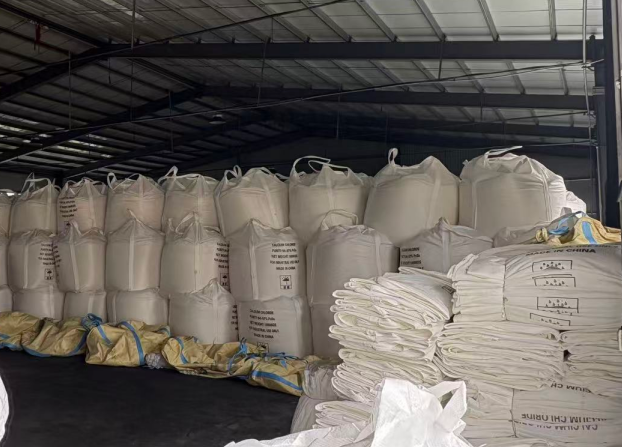
Most suppliers offer 25 kg or 50 lb bags, often with a moisture barrier liner, plus 1-ton super sacks for bulk handling. Make sure the packaging is rated for humid environments or ocean shipment if that applies. Ask if palletization and stretch wrapping are included in the quote.
You want a COA for each batch, an SDS that's less than two years old, and if you're importing, a certificate of origin. For food or water treatment uses, ask about NSF/ANSI 60 or FCC grade documentation. Don't accept a generic 'we meet all standards' without paper.
Ask for the moisture percentage by weight on the COA, and confirm the test method. A good 94% granular calcium chloride should typically run under 1% moisture. If one supplier reports 0.3% and another 0.8%, the lower number can mean less caking and more active product per ton.
Pay attention to container weight limits, especially for 25 kg bags. A 20-foot container can hit weight limits before it's full. Also confirm port of loading, transit time, and who handles demurrage if customs delays occur. Get Incoterms in writing, FOB, CIF, or DAP changes your landed cost significantly.
Yes, but don't settle for a tiny 500-gram sample if your use is sensitive to particle size or caking. Request enough material, like 5 to 25 kg, to run a small trial in your actual process. Some suppliers will deduct that sample cost from the first full order, ask.
Conclusion
Most industrial buyers start with the spec sheet, but a reliable calcium chloride 94% granules supplier checklist goes far deeper than the printed percentage. You'll want to confirm the actual calcium chloride content through independent lab testing or on-site titration, because blends and fillers sometimes slip in under the same label. Granule shape and size are just as critical: if your hopper, auger, or spreader was set up for a specific particle distribution, even a minor shift toward fines or oversized lumps can jam equipment or create dangerous dust. Pay attention to how the material behaves under your own storage conditions, not just the supplier's ideal warehouse. Humidity in your region, open-bag exposure time, and typical turnover rate all affect moisture pickup. A product that stays free-flowing in Arizona may turn into a solid block in coastal Louisiana. Ask for batch-level documentation that goes beyond a generic certificate of analysis. You need to see actual test results for each production run, including moisture content, purity, and sieve analysis, and you need to know whether those tests were done in-house or by a third-party lab.
Packaging is where many otherwise good purchases fall apart. A torn liner or a flimsy pallet wrap can introduce enough moisture during transit to spoil an entire container before it reaches your dock. Check that the supplier uses heat-sealed liners, heavy-gauge woven outer bags, and stable pallet patterns with adequate stretch film and corner boards. Ask for photos or videos of a loaded truck, not just promotional images. Finally, review the emergency response and handling details with your floor staff in mind. A supplier that provides clear, non-generic guidance for spills, dust control, and first aid—and who can answer a phone call when your operator finds a damp bag on a Friday afternoon—is worth far more than a lower price per ton. The checklist is not about finding a vendor that passes a one-time audit, but about building a repeatable inbound process that protects your equipment, your workers, and your bottom line.
Contact Us
Contact Person: Tom Cui
Email: [email protected]
Tel/WhatsApp: +8618663670626
Website: https://www.jinjigoldenchem.com