

Bead Wire Ring Production Line Manufacturer for Reliable Tire Component Manufacturing
2026-11-02
Small enough to hold in your hand, the bead wire ring does a big job: it keeps a tire locked to the rim at highway speed. Get that ring slightly out of spec, and every downstream process feels it. That’s why AUGU AUTOMATION designs bead wire ring production lines around repeatability, not just output. In this post, we look at what separates a line that runs reliably from one that quietly eats into your margins.
Where Wire Meets Wheel: Anatomy of a Bead Ring Line
The bead ring line marks the precise boundary where a tire's internal structure transitions from flexible casing to rigid anchor. At this junction, the rubber casing folds around a high-tensile wire or aramid cord bundle, creating a thickened lip that seats against the rim's inner flange. Under inflation pressure, this line becomes the tire's primary load-bearing interface, transferring tension from the sidewalls into the wheel itself. Without a properly formed bead ring line, even a perfectly seated tire would creep or blow off the rim within minutes of riding.
Manufacturing this line requires careful layering: the bead core is wound, coated with a stiff rubber compound, then the casing plies are wrapped over it before curing. The resulting profile is not a sharp edge but a rounded shoulder, shaped to match the rim's bead seat angle. On most clincher rims, that angle sits near 15 degrees, while tubeless designs use a deeper hook to trap the bead more securely. The bead ring line becomes a sealing surface as well, with the rubber compound formulated to resist both air loss and the slow creep of sealant under heat and load.
In practice, the bead ring line works dynamically. As the wheel rolls through a corner, lateral forces push the tire sideways, and the bead line rotates slightly against the rim, flexing the rubber at the contact point. If the bead core is too soft, the line can stretch and let the tire wander; too stiff, and mounting becomes a wrestling match. Quality tires balance this by using aramid fibers in the bead for high-end builds, while steel wire remains common for everyday use, each shifting the feel and reliability of that critical line where wire meets wheel.
Tension, Twist, and Tolerance: Why Every Millimeter Counts
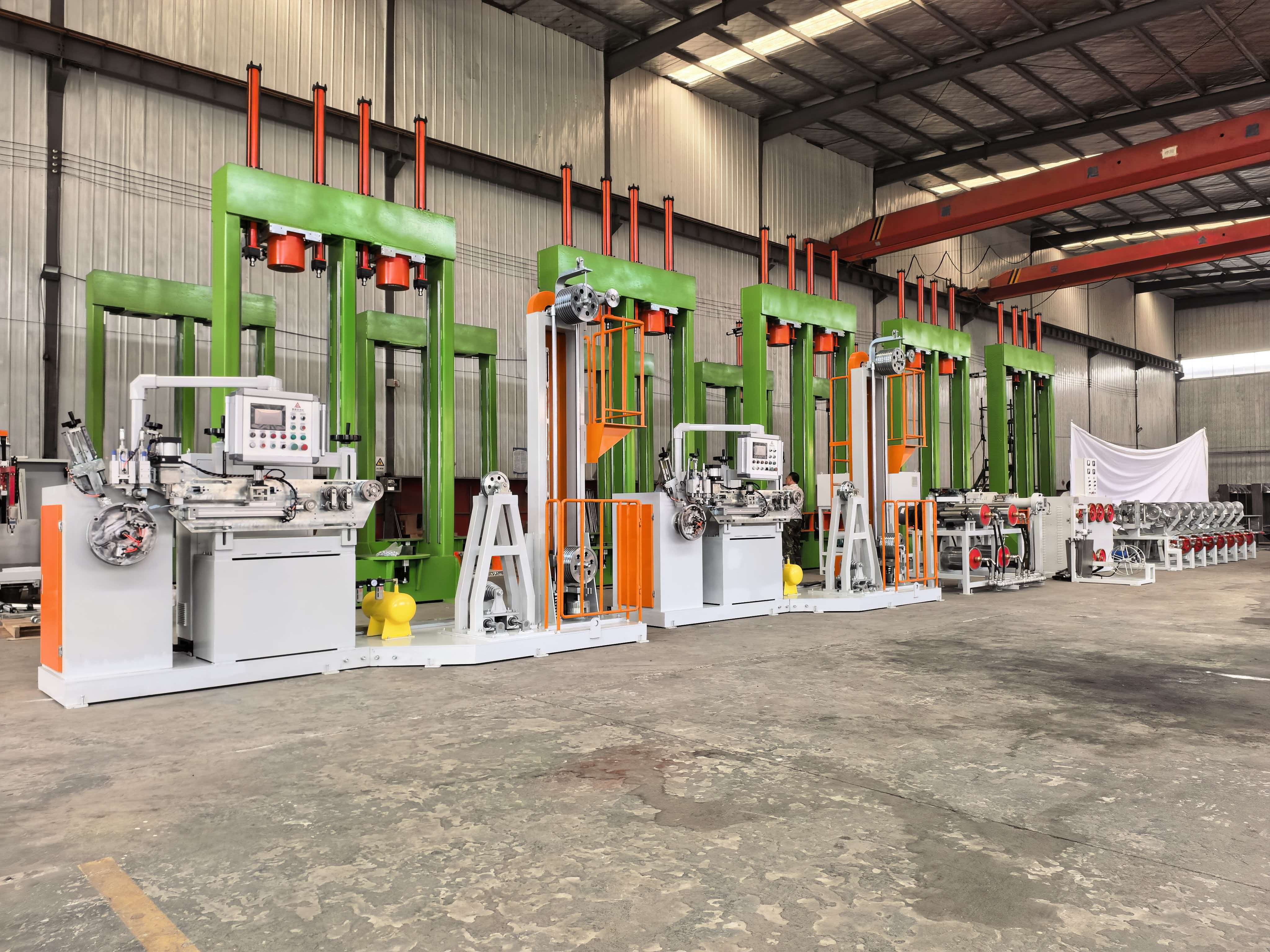
In precision manufacturing, a single millimeter can separate a flawless assembly from a field failure. Tension in fasteners, for example, is rarely uniform across a joint face; even a 0.5 mm variation in bolt hole placement shifts the clamping force enough to create stress risers. Twist, whether from torque on a shaft or thermal expansion in a frame, compounds these micro-deviations until alignment errors accumulate beyond design intent.
The real challenge is that these three variables rarely act alone. A component machined to a loose tolerance may still pass inspection, yet under operational tension it twists just enough to bind against a mating part. Engineers who ignore the interplay end up chasing intermittent failures that only appear after hundreds of load cycles. Treating every millimeter as a functional boundary, rather than a nominal target, forces better material selection and more honest margin calculations.
That mindset shift matters most in assemblies where safety or uptime depends on repeatable motion. When tolerance zones are defined by actual deflection under tension and twist, rather than by catalog values, the design stops fighting itself. The difference is rarely visible on a drawing, but it shows up immediately in fewer reworks, quieter operation, and a longer service life.
Built for Three Shifts: Equipment That Won't Quit Early
Midnight, noon, and the graveyard handoff all look the same to this equipment. It's designed from the start to run straight through three full shifts without a scheduled breather, so the only pause your crew knows is the one between orders.
You won't find delicate parts hiding behind access panels that need a technician on speed dial. Bearings are sealed against dust, frames are overbuilt to shrug off vibration, and thermal cutoffs trigger long after a lesser machine would have thrown in the towel. Operators can focus on output, not on watching for the next failure.
The real proof shows up in the maintenance log—often blank for weeks. Spare parts stay on the shelf instead of in someone's toolbox, and shift changes stop being troubleshooting sessions. That's the difference between equipment rated for occasional use and gear that treats three-shift production as a baseline, not a stress test.
From Payoff to Cure-Ready Rings Without a Single Snag
Clearing the final payment on a ring used to feel like crossing a finish line, only to discover the real race started afterward. Most buyers expected a few hidden steps between the last installment and the moment the ring actually leaves the workshop. We removed that entire stretch. The payoff date triggers an immediate hand-off to the finishing bench, where the stone is checked, prongs are tightened, and the band gets its final polish before it ever reaches your hands. No extra forms, no awaiting confirmation emails, no surprise restocking notices. The ring is simply done and moving.
A cure-ready ring means it arrives sized, cleaned, and ready to be worn the same day it’s received. That matters when the moment isn’t planned around a store visit or a follow-up appointment. Every detail from the initial appraisal to the final clasp check follows a single log, so nothing gets lost between departments. The result is a ring that leaves the payoff stage the same way it enters the proposal: without a single snag.
The Quiet Influence of Bead Rings on Ride Quality
The bead ring lives at the tire-rim junction, where it does more than hold air pressure. Its shape and stiffness establish how the tire's sidewall flexes during the first few milliseconds of contact with a bump. A ring that seats too rigidly can send sharp-edged impacts straight into the suspension, while a slightly more compliant unit lets the tire absorb smaller irregularities before the damper even moves. That distinction rarely shows up in static measurements, but it's felt as a faint harshness or smoothness depending on speed.
Material and winding count also matter. High-tensile steel rings tend to transmit more road texture than fiber-reinforced polymer or multi-strand constructions, which can soften the initial spike. There is also the issue of unsprung weight at the wheel's outermost diameter; even a few dozen grams per ring changes how quickly the tire follows broken pavement. Over tar strips or washboard surfaces, that difference accumulates into either a busy, jittery ride or a more settled one without altering spring rates.
On long highway drives, a well-matched bead ring removes a layer of low-level vibration that drivers often attribute to tire brand or alignment. The change is rarely dramatic at the first turn of the wheel, but after an hour it shows up as less fatigue in the hands and fewer micro-corrections at the steering wheel. That quiet, persistent influence is what separates an ordinary wheel-and-tire package from one that feels expensive.
Tailored Lines, Not Off-the-Shelf Compromises
Most products start with a standard template and then ask you to adjust your expectations around its limitations. That is the quiet compromise baked into every off-the-shelf option—acceptable for some, but never a true fit. Tailored lines take the opposite approach: the starting point is your actual requirements, not a warehouse shelf. Every measurement, material choice, and construction detail exists because it serves a specific need, not because it was convenient to mass-produce.
The difference shows up in the small tensions that generic designs ignore. A collar that sits flush instead of gapping at the back, a seam that follows the natural curve of a shoulder, a length that matches how you actually move—these are not optional luxuries. They are the result of a pattern built from scratch, adjusted through fittings and feedback until the garment stops fighting your body and starts working with it.
What you end up with is not just a better version of a ready-made item. It is a different category altogether: something that was never designed to be all things to all people, so it can be exactly right for one person. That is the whole point of tailored lines—no settling, no workarounds, no quiet compromises.
FAQ
The line uses quick-change forming heads and servo-driven adjustments, so shifting from one ring diameter to another takes minutes rather than hours. Recipe management stores parameters for each tire size, which keeps changeover consistent across shifts.
Inline laser measurement checks ring diameter and roundness after winding, and a vision system flags surface defects before unloading. The control system rejects any ring outside tolerance, so poor parts never reach tire assembly.
Yes. The pay-off and tension control are designed for high-tensile wire, with closed-loop feedback that smooths out tension spikes. Pre-straightening and guide rollers are hardened to handle abrasive wire coatings, which reduces downtime from wire breaks.
It covers the full range. The winding unit accepts wire diameters from about 0.89 mm up to 2.4 mm, and the ring diameter can be set from 12 to 25 inches. Switching between passenger and truck specifications is done through the recipe system without replacing major modules.
We offer remote diagnostics, spare parts stocking agreements, and on-site commissioning. Our engineers also provide operator training focused on changeover and routine maintenance, so your team can keep the line running without waiting for external service calls.
The butt welder uses adaptive current control that adjusts to wire grade and diameter automatically. After welding, the joint is annealed and then drawn through a scarfing unit to remove excess material, leaving a smooth surface that passes the same inline checks as the rest of the ring.
Yes, the control system supports standard industrial protocols such as OPC UA and Profinet. It can report production counts, downtime events, and quality data to your MES, making it easier to track overall equipment effectiveness.
Conclusion
A bead wire ring line brings together raw steel wire and the circular core of a tire in a sequence that has to do more than just form loops. The payoff stand, straightening units, coating stations, winding mandrels, and cure-ready take-offs are arranged so the wire never fights the process. Tension control is not a set-and-forget parameter; it changes with wire diameter, coating thickness, and ambient conditions. Even a half-millimeter drift in ring diameter or a slight twist in the winding path shows up later as a bead that seats unevenly on the rim. That is why the line uses closed-loop feedback on tension and position, not just preset values. The equipment is also built for continuous operation across three shifts. Drive components, guides, and cutting heads are specified for thermal stability and low wear, so the line keeps its repeatability after thousands of rings instead of drifting as bearings heat up.
From payoff to the moment a finished ring drops into a cure-ready tray, the material flow is designed to avoid snags, scratches, or stop-and-start motion that can weaken the wire or disturb the splice. Accumulators and dancer rolls absorb speed differences between stations, so the winding mandrel never has to wait for the next coil. That smoothness matters beyond the factory floor: a bead ring with consistent roundness and splice integrity keeps the tire's bead area stable under load, which has a direct effect on ride quality and steering feel. Rather than adapting a generic wire-forming machine, a manufacturer that builds bead ring lines tailored to a tire plant's specific bead profiles, coating systems, and output targets can eliminate many of the compromises that lead to field failures. The result is not just a machine, but a production line matched to the way a given tire is actually made.
Contact Us
Contact Person: Lareina
Email: [email protected]
Tel/WhatsApp: +86 17561696737
Website: https://www.auguauto.com/